

According to the company’s annual report filed with the Warsaw Stock Exchange, the agricultural holding reported EBITDA of $1.27 million for the first quarter of 2025, a 26.6% decrease from the same period in 2026.
According to the document, the agricultural holding’s revenue for the reporting period decreased by 39.6% to $2.55 million, gross profit by 17.1% to $1.25 million, and operating profit by 24.1% to $1.01 million.
KSG Agro’s net profit for the first quarter was $0.14 million, compared to $3.04 million in the first quarter of last year, when the contribution from the sale of two of the holding’s assets amounted to $1.71 million.
In addition, in the first quarter of this year, the agricultural holding made $0.42 million in investments, which is 11 times more than in the first quarter of last year.
“The Group continues to implement its simple strategy, focusing on one winter crop, three spring crops, and a single breed of pigs… Overall, operating performance is considered satisfactory,” the report states.
According to the report, the crop production segment generated $0.81 million in revenue and a gross loss of $0.12 million in the first quarter, while the swine segment generated $1.66 million in revenue and a gross profit of $1.32 million,
As of the reporting date, KSG Agro had 1,900 hectares of winter wheat and 219 hectares of winter barley.
In 2025, the agricultural holding, which had previously decided to switch to Canadian genetics, purchased an additional 1,300 Canadian sows, enabling it to produce high-quality piglets to be sold as weaners and market hogs, the report states.
The document reiterates that the board of directors is developing a new growth strategy to expand the agricultural holding’s operations in the European Union with the clear goal of concentrating the majority of the group’s assets and revenues in the EU over the next 3–5 years. According to the company, this can be achieved through a series of mergers and acquisitions, as well as financed using equity and debt, including additional share issuances.
“The new strategy focuses primarily on expansion and investment, which reduces the potential risks of investing exclusively in Ukraine and mitigates the negative impact of the current macroeconomic situation in Ukraine on the Group’s business,” the report states.
The company’s net debt as of the end of March 2026 stood at $14.10 million, compared to $14.39 million at the beginning of the year, while equity remained at $8.94 million.
Olbis Investment LTD SA, owned by Serhiy Kasyanov, Chairman of the Board of Directors of KSG Agro, holds 47.83% of the holding company’s shares; 47.57% are in free float on the Warsaw Stock Exchange; and another 4.59% are treasury shares.
KSG Agro is a vertically integrated holding company engaged in pig farming, as well as the production, storage, processing, and sale of grains and oilseeds. Its land bank in the Dnipropetrovsk and Kherson regions totals approximately 21,000 hectares.
According to 2025 results, the agricultural holding increased its net profit by 5.4 times compared to 2024—to $4.23 million—while its revenue decreased by 14.3%—to $18.92 million.
During 2023 and 2024, one of KSG Agro’s main operating subsidiaries issued three series of foreign currency bonds at 7% per annum for a total of $4.38 million, maturing from September 2026 to February 2027.
AGRICULTURAL HOLDING, EBITDA, KSG AGRO, PIG FARMING, Warsaw Stock Exchange
In January–September 2025, the KSG Agro agricultural holding increased its revenue from the sale of live pigs by 48.3% to $9.22 million, compared to $6.21 million in the same period of 2024.
According to the agricultural holding’s report, published on the Warsaw Stock Exchange on Thursday, profits in the pig farming segment for the specified period amounted to almost $1.936 million.
“Despite the war, there is a stable demand for high-quality pork in Ukraine. This summer, our herd was replenished with 500 purebred sows from Danish Pig Genetics, supplied by Breeders of Denmark A/S (Denmark). This made it possible to renew the pig population with 4,000 of the most stable, highly productive F-1 hybrid sows,” said Sergey Kasyanov, Chairman of the Board of Directors of KSG Agro.
He assured that all pork produced at the agricultural holding’s pig farms goes to the domestic market, which makes it possible to effectively ensure Ukraine’s food security during the war.
The vertically integrated holding company KSG Agro is engaged in pig breeding, as well as the production, storage, processing, and sale of grain and oilseeds. Its land bank in the Dnipropetrovsk and Kherson regions is about 21,000 hectares.
According to KSG Agro, it is one of the top five pork producers in Ukraine.
In 2023, the agricultural holding began implementing a “network-centric” strategy, under which it will transition from developing a large location to a number of smaller pig farms located in different regions of the country.
In January-September 2025, KSG Agro received $5.96 million in operating profit and $6.92 million in gross profit, which is 68% and 31% more than in the same period of 2024.

In January-June 2025, the KSG Agro agricultural holding doubled its revenue from the sale of pig farming products compared to the same period last year, to $7.1 million, according to the agricultural holding’s press service.
“The increase in revenue from the sale of pig products was made possible by our focus on a vertical integration strategy, which we began to implement long before the full-scale war. During wartime, a vertically integrated business is more resilient because we can effectively diversify risks. We grow grain crops, process them into mixed feed at our own plant, and fatten pigs. All of the pork produced goes to the domestic market, thus ensuring Ukraine’s food security during the war,” said Serhiy Kasyanov, Chairman of the Board of Directors of KSG Agro.
As reported, in 2025, KSG Agro implemented a program to rejuvenate the livestock at its own pig farm. In June-July of this year, the herd was replenished with 500 purebred breeding sows from Danish Pig Genetics from the supplier Breeders of Denmark A/S (Denmark). As a result, KSG Agro will renew its pig herd this year with 4,000 of the most stable, highly productive F-1 hybrid sows.
The vertically integrated holding KSG Agro is engaged in pig breeding, as well as the production, storage, processing, and sale of grain and oilseeds. Its land bank in the Dnipropetrovsk and Kherson regions is about 21,000 hectares.
According to KSG Agro, it is one of the top five pork producers in Ukraine. In 2023, the agricultural holding began implementing a “network-centric” strategy, under which it will transition from developing a large location to a number of smaller pig farms located in different regions of Ukraine.
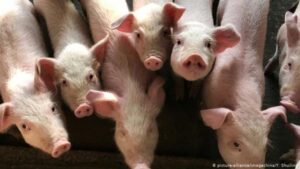
Over the past three decades, pig farming has remained one of the most important components of global agricultural production. It has played a key role in providing the population with animal protein, shaping export flows in Asia and Europe, while remaining vulnerable to global epidemiological risks. Experts Club analysts have studied changes in the global pig population between 1990 and 2023.
“Pig farming is an industry where economics is closely intertwined with biological risks. It is extremely profitable in stable conditions, but it instantly suffers from any disruptions in the veterinary or logistics chain,” said Maxim Urakin, PhD in Economics and founder of the Experts Club information and analytical center.
In the early 1990s, the total number of pigs in the world grew steadily, especially in China, which became the largest producer and consumer of pork. Mass industrial production, urbanization, and high demand for meat in the Asia-Pacific region stimulated capacity expansion. By the mid-2010s, the industry was at its peak: in some years, the number of pigs in the world exceeded one billion. This dynamic reflected the successful commercialization of the industry in China, Vietnam, Brazil, the United States, Germany, and Spain.
However, after 2018, the global pig industry faced one of the most significant challenges in recent decades — the African swine fever (ASF) pandemic. The epizootic, which began in China, spread to dozens of countries and led to a massive reduction in livestock numbers. In China alone, it is estimated that more than 100 million pigs were destroyed. This caused a meat shortage in the global market, price increases, a crisis in feed chains, and a reorientation of international trade.
“After the ASF outbreak, China began to actively reform the structure of pig farming, moving from small farms to large biosecure complexes. This also affected the global market, as demand for safe and controlled meat rose sharply,” Urakin explained.
Europe, in turn, found itself under pressure from environmental legislation and growing animal welfare requirements. In the Netherlands, Denmark, and Germany, the industry declined not only due to disease but also due to political decisions to reduce methane and nitrate emissions. In North America, the situation remained stable, although it was affected by tariff wars, especially in US-China relations.
Today, the global pig industry has partially recovered but remains in a phase of restructuring. China is gradually restoring its livestock population, but on new principles — with strict control of biosecurity, genetics, and investment in innovation. At the same time, more and more countries are investing in alternative proteins — cultured meat and plant-based pork substitutes — which poses long-term risks to the traditional industry.
“The future of pig farming is a symbiosis of biotechnology, sustainable management, and veterinary reliability. Those who cannot adapt will lose the market,” concluded Maxim Urakin.
A detailed analysis of the situation on the pork market and a visualization of global trends can be found in a special video review on the Experts Club YouTube channel.
AGRICULTURAL MARKET, ANIMAL HUSBANDRY, EXPERTS_CLUB, PIG FARMING, URAKIN



