
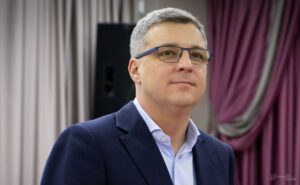
A new digital service from the Kyiv City State Archives has gone live on the Kyiv Services Portal; residents can now submit requests for archival information remotely, according to Valentin Mondriivskyi, deputy head of the Kyiv City State Administration (KCSA).
“We are continuing to digitize city services to make them as accessible and convenient as possible for residents. From now on, you can submit a request to the Kyiv City State Archives, receive an invoice, pay for the service, and track the status of your request all in one place—on the Kyiv Services Portal,” noted Valentin Mondriyevsky.
The new service brings together all the key steps for interacting with the archives within the user’s personal account. With its help, users can request information about births, marriages, or deaths; confirm property rights; obtain information about the renaming of streets, institutions, and other locations; and submit a free-form request regarding documents stored in the Kyiv City State Archives.
According to the Kyiv City State Administration, the official website of the Kyiv City State Archives was also updated in conjunction with the launch of the service.
Individuals, sole proprietors, and legal entities can use the new service. “Submitting an application takes about 10 minutes. After reviewing it, archive specialists assess whether the request can be fulfilled and generate an invoice based on the complexity of the search work. The service is provided within one month,” the Kyiv City State Administration emphasizes.
According to Valentin Mondrievsky, the development of digital services remains one of the city’s priorities. “Online access to archival services is especially important for those who live outside Kyiv or abroad, as well as for those who are unable to visit the archive in person. At the same time, the option to receive the service in person at the Kyiv City State Archive remains available.”
“VF Ukraine” (“Vodafone Ukraine,” VFU), Ukraine’s second-largest mobile operator, increased its net profit by 4.3% in January–June 2026 compared to the same period last year, reaching 2.161 billion UAH.
According to the company’s interim condensed financial statements, its revenue grew by 10.3% to 13.869 billion UAH.
According to the report, gross profit for the first six months of this year rose by 4.4% to 7.998 billion UAH, while operating profit decreased by 2.4% to 4.321 billion UAH.
OIBDA for the first half of 2026 increased by 3.8% compared to the same period in 2025, reaching 7.331 billion UAH, while the OIBDA margin stood at 53%, down from 56% last year.
The mobile operator’s capital expenditures for the first six months of this year decreased by 0.8% to 3.169 billion UAH.
It is noted that during January–June 2026, VF Ukraine provided non-repayable financial assistance to its subsidiary, Farlep-Invest PJSC, in the amount of 160 million UAH, compared to 310 million UAH for the corresponding period in 2025.
According to the report, as of June 30 of this year, the mobile operator’s investments in “Farlep-Invest” were valued at 1.808 billion UAH, in LLC “Frinet”—677.4 million UAH, and in LLC “Ukrainian Network Solutions”—3.242 billion UAH.
VF Ukraine’s equity as of mid-year stood at 15.583 billion UAH, compared to 14.123 billion UAH at the beginning of the year.
The report notes that VF Ukraine’s net profit in the second quarter of 2026 increased by 5.4% compared to the same period last year—to 1.254 billion UAH—amid a 10.3% rise in revenue to 7.102 billion UAH.
In the second quarter of 2026, VF Ukraine’s gross profit rose by 5.9% to 4.212 billion UAH, while operating profit decreased by 1.3% to 2.392 billion UAH.
The company added that in June of this year, it also entered into a supplementary agreement with its parent company, Telco Investments B.V., to increase a U.S. dollar-denominated credit line from the equivalent of 660 million UAH to the equivalent of 1.32 billion UAH. The credit line carries a fixed interest rate of 10% per annum and is due for repayment in 2028. As of the reporting date, the company had received 693.4 million UAH, which was deposited into the mobile operator’s foreign currency account at a foreign bank to repay bond debt.
Among other things, the report mentions the completion of construction of a new submarine cable system across the Black Sea, which will connect Ukraine to the international transit route between Europe and Asia (the “Kardesa” system). Completion is expected within five years, and the total amount of expenditures the company plans to incur is estimated at approximately EUR 65 million.
As of June 30, 2026, project expenses related exclusively to construction-in-progress assets, which were not material for these interim condensed separate financial statements, the company clarified. “An impairment test was conducted, and the results showed no signs of impairment,” the operator emphasized.
As previously reported, “Vodafone Ukraine” increased its net profit by 12% in January–March 2026 compared to the same period last year, reaching 778 million UAH.
In 2025, the company increased its revenue by 14% compared to the previous year—to 27.8 billion UAH—while its net profit rose by 18%—to 4.18 billion UAH.
INVESTMENT, PROFIT, REVENUE, telecommunications, VODAFONE UKRAINE
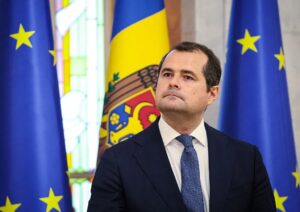
Moldovan Prime Minister Vasile Tofan acknowledges the possibility of rolling blackouts in the country and describes the situation in the energy sector as difficult.
“Perhaps our calls for conservation will be heeded only after the first rolling blackouts. And perhaps it will be difficult for us to bring about such changes until we make the appropriate decision. Some believe it would be wiser not to buy expensive electricity on the exchange but to implement rolling blackouts—that is, a controlled blackout. Then, perhaps, when each of us has to spend half an hour in the evening without electricity, people will better understand the situation, and as a society we will become more economical in our energy consumption,” the prime minister said at a press conference on Thursday.
According to him, the situation in the energy sector remains difficult, and Moldova may lose the ability to purchase even emergency electricity (during peak hours), which it has been buying from Ukraine in recent days.
“Unfortunately, as of August 6, the power supply situation looks very bad—much worse than it is today. And tomorrow, most likely, or very probably, we will not be able to purchase emergency electricity, which costs 2–3 times as much. At least, that is the response we received from Ukrenergo,” Tofan emphasized.
He expressed surprise that on the evening of August 4, despite the government’s calls to conserve electricity, electricity consumption was higher than on the same day the previous week. He suggested that this might be due to objective factors, such as high temperatures.
“Nevertheless, Moldova must change its consumption habits by avoiding the use of energy-intensive household appliances during peak hours, from 7:00 p.m. to 11:00 p.m. I do not rule out that power outages could make us more disciplined in this regard,” Tofan said.
Temporary energy-saving measures during peak hours have been in effect in Moldova since August 4. According to the commission’s decision, government agencies, retail establishments, economic entities, and other categories of consumers are required to take energy-saving measures from 6:00 a.m. to 9:00 a.m. and from 6:00 p.m. to 11:00 p.m.
On July 28, the Moldovan government declared a 30-day state of heightened readiness in the energy and hydrology sectors. This decision was made in light of risks associated with low water levels in the Dniester River.

Foreign banks, buyers, and investors can check the legal details, owners, financial condition, and international business profile of a Ukrainian company in the international D&B database.
A Ukrainian entrepreneur may consider their company well-known and reliable; however, for a new foreign bank, buyer, investor, or procurement specialist, it remains a legal entity whose information needs to be verified.
The verification often begins even before the first meeting. A potential partner may search for the legal name, address, telephone number, date of establishment, status, type of activity, management, ownership structure, subsidiaries, and other corporate relationships.
Additionally, financial indicators, payment behavior, credit ratings, legally significant events, sanctions risks, and the consistency of information obtained directly from the company with independent sources may be analyzed.
The D-U-N-S Number is one of the keys through which foreign organizations can identify a legal entity and obtain related corporate information. Basic data may include the legal name, company type, address, telephone number, as well as information about branches or subsidiaries.
“Companies are accustomed to checking their partners, but they analyze far less often how they themselves look in the eyes of the international market. Managing one’s own business profile should become just as much a part of corporate hygiene as financial reporting, auditing, or the legal verification of documents,” says Maksym Urakin, Director of Development and Marketing at Interfax-Ukraine, Head of the D&B-Interfax-Ukraine business unit, PhD in Economics.
The most common problem is not the presence of negative information, but discrepancies between different sources. For example, a contract may contain one English-language company name, an international database may contain another, while the website may show only a trademark without specifying the legal entity.
Such discrepancies do not necessarily indicate a violation, but they may delay the opening of an account, supplier approval, registration on a platform, investment due diligence, or the conclusion of a contract.
A Ukrainian company should regularly check its own international profile and update it after changes to its address, contact details, manager, name, or ownership structure.
It is also important to ensure that the official website, corporate email, banking documents, contracts, and international records contain consistent information.
D&B business credit reports can be used to assess creditworthiness, payment behavior, ownership structure, and legal events. Such data help creditors, suppliers, and other partners make decisions regarding the terms of cooperation.
Dun & Bradstreet is an international provider of business data and analytics that has been operating since 1841. The company’s data are used in finance, compliance, procurement, sales, marketing, and corporate information management.
The Interfax-Ukraine News Agency became the official representative of Dun & Bradstreet in the Ukrainian market after concluding a licensing agreement. The D&B-Interfax-Ukraine division helps companies obtain a D-U-N-S Number, verify their own data, and work with international business reports. Interfax-Ukraine has been operating since 1992, produces more than 50 information products, and is headquartered in Kyiv.

Prices for apartments and single-family homes in Germany rose moderately in nominal terms in the second quarter of 2026; however, when adjusted for inflation, all major market segments were cheaper than a year earlier.
These figures are contained in the latest update of the German Real Estate Index (GREIX), published by the Kiel Institute for the World Economy on August 6, 2026. The index is based on notarized data on actual transactions provided by local expert real estate appraisal committees.
Compared to the first quarter, apartment prices in Germany rose by 0.3% in nominal terms, while prices for single-family homes rose by 1.8%. The value of apartment buildings fell by 0.9%. Year-over-year, apartment prices rose by 0.4%, and single-family homes by 1.9%. Apartment buildings fell in value by 3.5%.
After adjusting for inflation, the situation looks worse. In real terms, apartment prices fell by 0.9% in the second quarter compared to the previous quarter, while prices for multi-family homes fell by 2%. Single-family homes showed a 0.6% increase.
On a year-over-year basis, declines were recorded across all categories. Real prices for apartments fell by 2.1%, for single-family homes by 0.7%, and for apartment buildings by 5.9%.
Thus, owners of apartments and single-family homes can technically sell their properties for more than they did a year ago. However, the proceeds from such a sale allow buyers to purchase fewer goods and services, as the rise in housing costs lags behind overall inflation.
The most significant real decline was recorded in the multi-unit residential building segment, where nominal prices also fell. At the same time, the authors of the GREIX report caution that the results for this segment are less reliable due to the relatively small number of transactions.
GREIX project manager Jonas Zdralek noted that nominal prices continue to rise, but the pace of growth has noticeably slowed. An additional sign of a cooling market is the increasing frequency with which sellers are adjusting their asking prices in listings.
Among Germany’s largest cities, the most notable quarterly increase in apartment prices was recorded in Düsseldorf—up 1.2%. In Cologne, housing prices rose by 0.1%.
In Leipzig, prices remained virtually unchanged, falling by 0.1%. In Frankfurt am Main, apartment prices fell by 0.6%, and in Stuttgart, by 1.6%.
At the time of this report’s publication, second-quarter data for Berlin, Hamburg, and Munich were still being processed, so it is too early to draw conclusions about the overall market situation in Germany’s largest cities.
More pronounced growth was observed in some medium-sized cities. In Bonn, apartment prices rose by 2.8% compared to the previous quarter; in Münster, by 2.1%; and in Dortmund, by 1.9%. In Bochum, prices fell by 0.5%.
Despite weak price dynamics, buyer activity is on the rise. In the first quarter of 2026, 9.3% more apartments were sold in Germany than a year earlier. The total transaction value increased by 12.1%.
Preliminary data for the second quarter indicate continued growth in the number of apartment purchases, although the pace of recovery has begun to slow. In the single-family and multi-family housing segments, the number of transactions and their total value remain slightly below last year’s levels.
For potential buyers, the current situation means that the German market is gradually emerging from a period of sharp decline in activity but has not yet transitioned to sustained price growth. The increase in price adjustments in listings may also provide buyers with more room for negotiation, especially in cities with weak market dynamics.
GREIX tracks prices in 24 cities and regions across Germany and draws on over 2 million real estate transaction records. To account for distortions caused by differences in property size, condition, and location, researchers use a hedonic pricing model.

Kyiv Electric Railcar Repair Plant JSC (KEVRZ), a subsidiary of Ukrzaliznytsia, reported a loss of 4.48 million UAH for January–June 2026, which is 4.2 times less than the loss recorded in the first half of 2025.
According to the company’s interim financial report published in the disclosure system of the National Securities and Stock Market Commission (NSSMC), its net revenue decreased by 8.8% to 631.73 million UAH.
The plant reduced its gross profit by 27.6% to 33.3 million UAH, generating 7.4 million UAH in operating profit compared to 24.6 million UAH last year.
The company notes that during the reporting period, it sold 19 refurbished electric locomotive sections for 546 million UAH, 61 wheel sets for 24.4 million UAH, and 230 traction motors and auxiliary units for 37.8 million UAH.
As previously reported, the plant ended the first quarter of this year with a loss of 20.2 million UAH, compared to a net profit of 0.48 million UAH for the same period in 2025, despite a 14.6% increase in net revenue to 250.5 million UAH.
KEVRZ was founded in 1868. It specializes in the major overhaul of electric trains for Ukrainian railways, the repair of components and assemblies, electric machines, electric motors, and wheel sets, as well as the manufacture of spare parts.
The plant ended 2025 with a net profit of 70.2 million UAH—4.4 times more than the previous year—and a 34.2% increase in net revenue to 1.703 billion UAH. It repaired 51 electric sections, 223 wheel sets, 538 traction motors, and auxiliary machines.



