
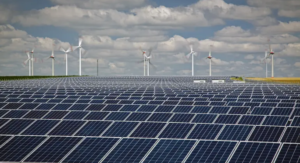
The Kyiv Region Regional Development Agency has signed a memorandum of cooperation with Aydem Holding A.S., one of Turkey’s largest energy investors, regarding the construction of up to 100 MW of renewable energy capacity in the region.
According to a post by the Agency on LinkedIn on Thursday, it will provide comprehensive support to the investor at all stages of the project’s implementation, including identifying the optimal land plot, engaging with local communities, and coordinating with government authorities. Project support will be provided in collaboration with UkraineInvest.
“Our goal is to make the Kyiv region one of the most attractive regions for international investors, where large-scale investment projects are implemented quickly, transparently, and effectively,” commented Nazarii Volyanskyi, director of the Agency.
According to him, the partnership with Aydem Holding A.S. will mark the beginning of new large-scale investments, contribute to the development of the region’s energy infrastructure, and strengthen the Ukrainian-Turkish economic partnership.
The holding company’s website states that it has been operating in the fields of electricity generation, distribution, and retail for 40 years, applying an innovative approach in the energy sector. The primary focus is on renewable energy: hydro, wind, and geothermal sources.
Aydem Holding, ENERGY, INVESTMENT, Kyiv Oblast, RENEWABLE ENERGY
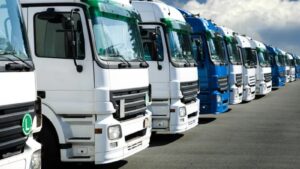
In July 2026, 1,206 new trucks and specialty vehicles were added to Ukraine’s fleet, which is 41% more than in July 2025 and 8.3% more than in June of this year, according to a report by Ukravtoprom on its Telegram channel.
Renault remains the market leader with 297 units, surpassing its June 2026 figure by 50 vehicles.
Citroën ranks second with 117 units (up by 5 units), and Mercedes-Benz ranks third with 114 units (it did not make the top five in June).
Rounding out the top five are Fiat with 107 units (7 more cars) and MAN with 97 units.
As previously reported, last July’s top five were Citroën, Renault, Hyundai, Peugeot, and Mercedes-Benz, with car sales rising by 2% compared to July of the previous year, to 971 units.
According to “Ukravtoprom,” overall, from January through July 2026, the growth rate of sales of trucks and specialty vehicles accelerated to nearly 15% compared to the same period last year, reaching 7,576 new vehicles (for January through June, the sales growth rate was 11%).
As previously reported, according to “Ukravtoprom,” registrations of new trucks and specialty vehicles in 2025 fell by 5% compared to 2024—to nearly 12,300 vehicles.

Ukrainian Foreign Minister Andriy Sibiga stated that Kyiv wants to restore pre-war levels of bilateral trade with Azerbaijan, which currently stands at about $600 million.
According to a correspondent for “Interfax-Ukraine,” Sibiga made this remark at a joint press conference with his Azerbaijani counterpart, Jeyhun Bayramov
“We have set ourselves the goal of returning to pre-war levels in terms of trade. We have now reached about $600 million,” said the minister.
In this context, the foreign ministers agreed to work toward holding the next meeting of the Ukrainian-Azerbaijani Intergovernmental Commission on Economic Cooperation in Ukraine.
The parties held detailed talks on the bilateral and international agenda, Ukraine’s preparations for the winter season, and strengthening energy security in the region.
“Over the past year and this year, we have seen a new dynamic in the strategic partnership between Ukraine and Azerbaijan, with increased contacts at all levels. We view your visit as yet another element of this new and positive dynamic,” noted the Ukrainian diplomat.
The parties paid particular attention to the development of mutually beneficial economic, investment, and humanitarian cooperation. Sibiga stated that Ukraine values investments by Azerbaijani companies and looks forward to expanding their presence and implementing new joint projects.
The diplomats also discussed regional security issues in the South Caucasus and the Middle East. Andriy Sibiga briefed his Azerbaijani counterpart on Ukraine’s peace efforts and highlighted Azerbaijan’s important role in promoting peace and ensuring regional stability.
“We appreciate Azerbaijan’s principled stance in support of Ukraine’s territorial integrity and sovereignty. Ukraine has also always supported and continues to support Azerbaijan’s sovereignty and territorial integrity. This is a constant in our relations,” emphasized the head of Ukraine’s Ministry of Foreign Affairs.
Sybiga expressed gratitude to Azerbaijan, President Ilham Aliyev, and the entire Azerbaijani people for their assistance to Ukraine from the very first days of the full-scale invasion.
“The restoration of civilian infrastructure in Irpin, humanitarian aid, equipment for energy facilities, and much more. We will always remember this,” he assured.

According to The Serbian Economist, based on the latest available official data, the ranking of the average cost of arable land is as follows:
1. Slovenia — 28,348 thousand euros per hectare, data for 2024.
2. Greece — approximately 14,312 thousand euros, 2024.
3. Serbia — 9,583 thousand euros, 2025.
4. Romania — 8.7 thousand euros, 2024.
5. Bulgaria — 8,679 thousand euros, 2024.
6. Croatia — 6,723 thousand euros, 2025.
The data reflects the cost of vacant arable land without buildings or perennial plantings. The periods of statistical observation vary, so the ranking shows the general price level rather than a fully synchronized comparison.
The most expensive land in the region is in Slovenia, where supply is limited and plots are often small and fragmented. In Greece, prices depend heavily on access to water, proximity to the coast, and the possibility of construction. Serbia has already surpassed Romania, Bulgaria, and Croatia in terms of average price, although its figures remain approximately 37% below the EU average.
For foreigners, price is not the only criterion. In Serbia, the direct purchase of agricultural land is almost entirely prohibited. In EU countries, citizens of other EU member states typically have more opportunities, while buyers from third countries may face restrictions, reciprocity rules, or the requirement to purchase through a local company.
Albania, Montenegro, North Macedonia, and Bosnia and Herzegovina are not included in the ranking due to the lack of recent comparable national statistics. Listing prices there may differ significantly from the actual transaction values.
https://t.me/relocationrs/3397
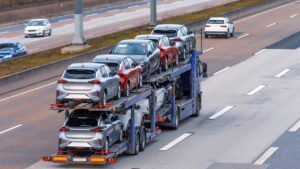
In January–July 2026, Ukraine imported machinery, equipment, and vehicles worth $25.7 billion, accounting for more than 44% of the country’s total merchandise imports, according to the State Customs Service.
The second-largest category was fuel and energy products, with imports totaling $8.5 billion, followed by chemical industry products at $8 billion.
Collectively, these three commodity categories accounted for $42.2 billion, or about 73% of Ukraine’s imports over the seven-month period.
During customs clearance of machinery, equipment, and vehicles, 145.5 billion UAH in customs duties were paid to the state budget, accounting for 28% of the corresponding revenue.
Fuel and energy products accounted for 172.7 billion UAH, or 34% of customs duties, while chemical products accounted for 66.5 billion UAH, or 13%.
Thus, the three largest import categories accounted for about 75% of customs duties.
Total imports of goods into Ukraine in January–July rose by 26.6% compared to the same period last year—to $58.1 billion.
The largest supplier countries were China with $16.8 billion, Poland with $5.5 billion, and Germany with $3.8 billion.
Ukraine’s trade deficit in goods for January–July 2026 amounted to approximately $34 billion, compared to $22.7 billion for the same period in 2025, according to calculations based on data from the State Customs Service (SCS).
Thus, the merchandise trade deficit for the year increased by approximately $11.3 billion, or nearly 50%.
Imports of goods into Ukraine over the seven-month period rose by 26.6%—to $58.1 billion from $45.9 billion a year earlier—while exports increased by only 3.8%—to $24.1 billion from $23.2 billion.
The export-to-import ratio, calculated based on GTS data, fell to approximately 41.5% from 50.5% in January–July 2025.
The bulk of imports consisted of machinery, equipment, and transportation vehicles—$25.7 billion; fuel and energy products—$8.5 billion; and chemical industry products—$8 billion. Collectively, these three groups accounted for about 73% of total merchandise imports.
Food products remained the leading export category at $14.1 billion. Metals and metal products totaled $2.5 billion in exports, while machinery, equipment, and transportation vehicles totaled $2.1 billion.
The largest suppliers of goods to Ukraine were China ($16.8 billion), Poland ($5.5 billion), and Germany ($3.8 billion).
The main markets for Ukrainian exports were Poland ($2.8 billion), Turkey ($2 billion), and Germany ($1.5 billion).



