

Some waste-to-energy plants in China are experiencing a shortage of waste to fuel their capacity amid rapid expansion of the sector and changes in household waste management, according to Chinese media reports.
There are more than 1,000 waste-to-energy plants in the country, and by 2022, their combined waste incineration capacity exceeded the volume of household waste collected (333 million tons versus 311 million tons).
Experts attribute the problem not to the fact that “the waste has run out,” but to excess capacity and an imbalance between where the waste is generated and where the facilities are built. In particular, in China, the share of urban household waste processed by incineration increased to 79% in 2024, and the number of waste incineration facilities, according to Dialogue Earth, increased from approximately 104 in 2010 to about 1,000 at present.
The media notes that some companies are expanding the “geography” of waste delivery to support their operations, switching to industrial waste and resorting to so-called landfill mining – the extraction of “old” waste from landfills for further incineration.
At the same time, statements about the possible import of waste to fill capacity are hampered by existing restrictions: the Chinese authorities have previously announced a complete ban on the import of solid waste from January 1, 2021.
Analysts also point to the risk of misguided incentives: discussions about a “waste shortage” may push the market to try to increase waste volumes, but industry experts emphasize that the priority should remain reduction, reuse, and recycling, rather than increasing waste generation to fill furnaces.

According to Serbian Economist, Serbian President Aleksandar Vucic said that early parliamentary elections in the country could be held in October, November, or December 2026, the Beta agency reported.
According to Vučić, the date of the elections will depend on the agreements of the political participants, if they are ready for dialogue.
Student groups have previously demanded the appointment of early elections, while part of the opposition claims that the authorities are in no hurry to announce them.
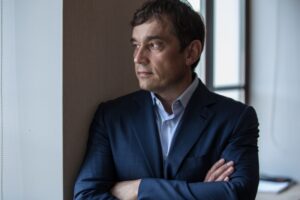
As part of his business goals for 2026, Vasyl Khmelnytsky, founder of the UFuture holding company, plans to establish a training center in the Bila Tserkva Industrial Park, the entrepreneur wrote.
“At the beginning of the year, I always set my goals. I know that I will not fulfill the plan 100% because I cannot predict exactly what challenges 2026 will bring. But goals are necessary — they keep you focused,” Khmelnytsky wrote in a Facebook post.
Among the five business goals he has set are the launch of a school and an art alley at UNIT.City.
In addition, Khmelnytskyi intends to retain and develop his team and pay off at least $10 million in loans.
“Next, I will break these goals down into specific tasks and start taking action,” he said.
UFuture is Khmelnytskyi’s holding company, which brings together his commercial and social projects. It has a diversified portfolio of assets in real estate, infrastructure, industry, renewable energy, pharmaceuticals, and IT. UFuture’s assets are estimated at $500 million, and the total capitalization of the businesses in which the holding company has invested is up to $1 billion.
IP “Bila Tserkva” and “Bila Tserkva 2” were included in the Register of Industrial Parks in 2018.
There are 19 residents operating in the developed territory of the park, including Unilever, InTiCa Systems, Peikko, and Pripravka, which moved from Kharkiv in 2022, as well as the Nova Poshta logistics depot, the Volytsia-Agro grain storage and processing complex, the Plank Electrotechnic electrical fittings factory, and Virastar, a manufacturer of high-altitude equipment for construction work.
As reported, in the summer of 2025, IP “Bila Tserkva” signed an agreement with Gualapack Ukraine, a subsidiary of the Italian company Guala Pack, which manufactures packaging for the food industry, to build a complex of industrial buildings with a total area of about 10,000 square meters for the purpose of relocating the plant, which operated in Sumy and was partially restarted on leased premises in the Ternopil region. The planned investment is EUR12 million.
The UNIT.City innovation park, created in Kyiv on the site of a former motorcycle factory, brings together startups, IT companies, R&D centers, and educational spaces to develop an innovative ecosystem.

The Cyprus Parliament is considering initiatives that could significantly tighten the rules on property purchases by third-country nationals and foreign-controlled companies, amid discussions about housing affordability and the risks of uncontrolled land sales.
In particular, the AKEL party has submitted two bills to the House of Representatives that would introduce measurable restrictions for buyers from countries outside the EU. It is proposed to allow third-country nationals to purchase only one residential property with a size restriction (up to 200 square meters), as well as one office (up to 300 square meters) and one store (up to 200 square meters). At the same time, companies with foreign interests, according to the initiative, should be completely deprived of the right to purchase housing.
Another set of proposals concerns strengthening control over ownership structures: it is envisaged that the ultimate beneficial owner of a transaction will be required to disclose their identity in order to prevent purchases through Cypriot or European companies that are effectively controlled by non-residents from third countries.
AKEL also proposes to ban real estate purchases in areas near critical infrastructure, including ports and airports, as well as in coastal and buffer zones, and to completely ban the sale of forest and agricultural land to foreign buyers from countries outside the EU.
The party says the initiatives aim to protect the right to housing for local households, reduce pressure on prices, and take security factors into account. Discussion of the bills is expected to begin in the relevant committee after the Epiphany holidays.
Who mainly buys real estate in Cyprus
According to the audit service, in 2024, 4,321 transactions out of 15,797 (27.4%) were made by buyers from countries outside the EU, with the report noting that the actual share may be higher due to purchases through companies registered in the EU or Cyprus.
Statistics presented in parliament by Interior Minister Constantinos Ioannou for the period from September 2024 to September 2025 show that the most active foreign buyers are British, Israeli, and Russian, with notable transactions by citizens of Greece, Lebanon, and Romania. In terms of regions, for example, the British led in Paphos (890 purchases), followed by Israelis (683) and Russians (327), while in Limassol, Russians (846) and Israelis (571) were the largest buyers.
Ukrainian citizens have also appeared in the rankings of the top 10 most active real estate buyers in Cyprus in different years.

The UPG gas station chain has relaunched the first 100 gas stations that previously operated under the ANP and Avias brands, the company said in a press release on Thursday.
“The company is steadily expanding its network within the lease of 447 filling stations across the country,” UPG said.
Currently, the relaunched gas stations are already operating in 13 regions of Ukraine — in Kyiv, Kirovohrad, Lviv, Poltava, Odesa, Volyn, Rivne, Mykolaiv, Dnipropetrovsk, Zaporizhzhia, Zhytomyr, and Zakarpattia regions, as well as in Kyiv.
According to a press release, the reopening of the first 100 gas stations has allowed the company to create more than 1,000 new jobs in the regions, with an average of 8 to 11 employees working at each station. Most of the employees at these gas stations are local residents, which contributes to economic activity in the communities. The average salary of employees in the UPG network is UAH 32,100 before tax, which is one of the highest in the industry.
The reopening of 100 gas stations also had a significant economic impact through investments in the restoration and development of critical energy infrastructure. According to the company’s forecasts, thanks to the operation of these stations, UPG will pay an additional UAH 3.6 billion in taxes and fees in 2026.
“The expansion of the network is part of UPG’s long-term strategy, which involves strengthening its presence in the regions, creating jobs, and increasing tax revenues. The implementation of this strategy has been made possible by the company’s consistent work over the past few years, as well as investments in logistics, infrastructure, and cooperation with leading refineries in Europe and the US,” said UPG Group founder Volodymyr Petrenko, whose words are quoted in the press release.
The company continues to gradually launch other leased stations, expanding its presence in the regions. All leased gas stations are planned to be opened during 2026.
UPG is a Ukrainian group of companies specializing in the trade of petroleum products. UPG is one of the three largest operators in Ukraine in terms of the number of stations. The group has its own logistics infrastructure and supplies fuel directly from leading refineries in Europe and the US. The founder of UPG is Volodymyr Petrenko.
ANP, Avias, gas station, UPG

According to the results of 2025, the Agroprosperis agricultural group ranked among the top five exporters of agricultural products from Ukraine, the company’s press service reported on Facebook.
According to the report, the agricultural group exported 3 million tons of agricultural products and processed 20,000 tons of oil products. The ship Agroprospwris 1, which set sail at the beginning of last year, has already delivered grain from Ukrainian ports to ports in Europe, Nigeria, Brazil, and other countries.
“We continue to work, overcome challenges, confidently move towards our goal, and together achieve significant results,” the group assured.
According to a number of industry media outlets, the top five grain exporters from Ukraine in 2024/25 MY include the Kernel agricultural holding, grain traders Louis Dreyfus, ADM, Cargill, and Nibulon.
The Agroprosperis group of companies provides a full range of products and services for growing grain and oilseeds, financing their production, as well as storage and further export. Before the war, it cultivated 430,000 hectares in the Sumy, Chernihiv, Kharkiv, Poltava, Vinnytsia, Zhytomyr, Khmelnytskyi, Ternopil, Rivne, Volyn, and Lviv regions. Its total storage capacity is 800,000 tons of agricultural crops. The group grew and supplied more than 2 million tons of grain and oilseeds for export per year.
Agroprosperis conducts its operations through five divisions: Golden Sunrise (Agro), Bio Agro, Ray Agro, Latagro, New Agro Management, and provides financing to Ukrainian grain producers through Agroprosperis Bank.



