

“Creating an exhibition like this will help us showcase the greatness of Ukraine… Reinterpreting our history, opening up the world of this history, and presenting it through the lens of experts strengthens our international standing. I strongly agree with the lectures by Timothy Snyder (an American historian—IF-U) when he says that the
Trypillian civilization—it is very important to use this term—is part of the European space,” said Foreign Minister Andriy Sibiga at the exhibition’s presentation on the eve of its opening on Thursday.
Sybiga emphasized that the Ministry of Foreign Affairs will make every effort to expand knowledge about the unique Trypillian civilization through UNESCO’s framework.
“In May 2026, we included the ‘Prekukuten-Ariushd-Kukuten-Trypillia’ archaeological and cultural complex on UNESCO’s Tentative List, and we are doing everything possible to have it inscribed on the UNESCO World Heritage List,” said Deputy Prime Minister for Humanitarian Policy and Minister of Culture Tetiana Berezhna.
According to her, it is very important for this exhibition to gain popularity in educational institutions and be promoted in schools.
“Trypillia is one of the components of our identity, just like language. A state and a nation begin with identity,” said Viktor Yushchenko, President of Ukraine (2005–2010).
As reported by a correspondent for the Interfax-Ukraine news agency, virtual reality technology allows visitors to “step into” a world from 7,000 years ago and find themselves inside a reconstructed Trypillian settlement, visit the dwellings of the Trypillians, see the domestic areas, the potter’s workshop, and the sacred zone, and examine everyday household items. Here, visitors can observe how the Trypillians cultivated the land and grew grain, how they prepared and baked bread from it, worked with metal, and created items necessary for daily life. Agriculture, crafts, daily life, and beliefs come together in the VR space to form a comprehensive picture of life in the Trypillian community.
The virtual exhibition features digitized artifacts from the collections of the National Museum of the History of Ukraine, the Kyiv Regional Archaeological Museum, and the Museum of the History of Kyiv: ceramics, anthropomorphic and zoomorphic sculptures, tools, and household items.
The project combines archaeological and historical data, 3D modeling, VR technology, and interactive elements. The exhibition is part of the cultural and educational platform “Ukraine. The World of Trypillia,” which uses popular formats—art books, theater, and VR—to tell the story of Trypillian culture in a new way.
The exhibition was organized with the support of the Ukrainian Cultural Foundation as part of the “Cultural Heritage” grant program and in collaboration with the platform’s general partner—the “MHP-Hromadi” Charitable Foundation.

The cost of grapes in Ukraine in 2026 remained roughly at the same level as last season, despite a significant increase in the cost of fertilizers, plant protection products, fuel, and logistics, which is leading to a decline in the profitability of grape-growing operations.
Tetyana Shmaglyuchenko, head of the company “VIN’S,” discussed this in an interview with the agricultural publication SEEDS.
According to her, prices for most grape varieties have essentially remained at last year’s levels. Only a few large rosé varieties have become slightly more expensive. At the same time, production costs have increased significantly.
Producers cite rising costs of mineral fertilizers, vine protection products, and fuel as the main factors. Logistics have added to the burden, especially for farms in Bessarabia, where transportation costs have risen due to infrastructure damage and restrictions on traditional routes.
The situation is further complicated by a decline in the harvest. According to producers’ estimates, the gross grape harvest at some farms this season could be 20–30% lower than last year. Winter frosts and a cold spring have negatively affected yields.
The war is also directly affecting vineyards in southern Ukraine. Some vineyards have sustained damage as a result of hostilities, falling drone debris, and other war-related factors.
The combination of virtually unchanged selling prices, rising production costs, and reduced harvests is forcing producers to seek additional sources of income.
One such avenue is the further processing of grapes. Farms are investing in the production of fruit leather, raisins, and other products with higher added value, and are using infrared dryers and vacuum equipment to process fruit puree.
Another trend is cooperation with producers of other fruits. This allows for the production of combined products using local peaches, plums, and other raw materials.
Producers are also investing in energy self-sufficiency. In particular, solar power plants are used to power wells and irrigation systems, which helps to partially reduce dependence on external energy supplies.
At the same time, some farms are considering a shift from selling fresh grapes to winemaking. With grant support from the FAO, technical grape varieties are being planted that can later be used for wine production.
Thus, for Ukrainian viticulture in 2026, the key challenge will be not so much a lack of demand for products as the gap between the selling price and the cost of production. Under these conditions, processing allows farms to derive greater added value from their own raw materials while simultaneously maintaining production capacity and preserving employment for workers after the harvest season ends.
Viticulture remains one of the most labor-intensive sectors of horticulture in Ukraine. Most commercial grape production is concentrated in the southern regions of the country and in Zakarpattia, and a significant portion of the industry has been directly affected by the full-scale war.
Source: SEEDS.

Ukraine plans to introduce criminal liability for transferring or receiving bank cards, accounts, and access to them for subsequent use in fraudulent and other criminal schemes.
On September 15, 2026, the Verkhovna Rada adopted in principle Presidential Bill No. 16013, “On Amendments to the Criminal Code of Ukraine and the Criminal Procedure Code of Ukraine Regarding the Protection of Citizens and Their Funds from Illegal Actions Involving Payment Instruments and Bank Accounts.”
A total of 299 members of parliament voted in favor of the bill in its first reading. The bill was registered on September 2 and designated by the president as urgent. According to the Verkhovna Rada, it is currently being prepared for its second reading.
The legislative changes are aimed, in particular, at so-called “drops” or “money mules”—people who transfer bank cards, accounts, account details, or access to online banking to third parties to conduct financial transactions.
The urgency of the issue is confirmed by data from OpenDataBot, published on October 2. Using the “Babusia” court registry search engine, at least 16 convictions were found over the past nearly eight years involving schemes that used drop accounts.
In 81% of these cases, the “drops” were part of schemes related to drug trafficking, and in 19%, to online fraud.
In 75% of the verdicts found, the primary punishment was imprisonment. Sentences ranged from two to ten years, although in eight cases, the defendants were granted probation. In four other verdicts, the primary punishment was a fine.
The fines specified in the court rulings ranged from 98,600 UAH to 850,000 UAH. In one of the identified rulings, the court also ordered the defendant to pay the victim 8.65 million UAH in compensation for material and moral damages.
It is important to note that the presence of a “drop” in the case files does not yet mean that the account holder was convicted specifically for transferring their card or bank details. As OpenDataBot points out, in some of the analyzed verdicts, “drops” were one element of a broader criminal scheme, and the convicted individuals may have played other roles.
Draft Law No. 16013 aims to address precisely this legal loophole; it provides for separate liability for unauthorized transactions involving payment instruments and bank accounts.
However, as of October 2, the bill has not yet become law. It has only passed its first reading, so the final provisions and liability may change as the bill is prepared for its second reading.

According to the Serbian business media outlet Parametar, the Bulgarian state-owned company Bulgargaz has received a 10-year license for wholesale natural gas supplies in Serbia, opening the door for yet another major regional player to compete for Serbian consumers.
As Parametar analyzed, the significance of this decision lies not merely in the emergence of yet another licensed company. Bulgargaz has its own procurement portfolio and access to gas infrastructure in several Central and Southeastern European countries.
The company already holds the necessary licenses and permits to trade and supply gas in Greece, Romania, Hungary, and Slovakia, and operates in Moldova through its subsidiary, Bulgargaz North.
Of particular importance to Serbia is the interconnector with Bulgaria, with a capacity of approximately 1.8 billion cubic meters per year. Via Bulgaria, the Serbian market can receive Azerbaijani gas, as well as LNG arriving in the region through Greek terminals.
Bulgargaz will potentially be able to offer large Serbian enterprises a comprehensive supply package—from LNG procurement and regasification to transportation through Bulgaria and delivery of gas to Serbia.
For now, however, the discussion is limited to obtaining a license. Bulgargaz has not yet announced any major contracts with Serbian consumers. Therefore, the key indicator of a genuine market entry will be the booking of cross-border capacity and the signing of the first contracts.
The Serbian gas market is formally open to competition, but in reality remains highly concentrated. According to the latest complete AERS data for 2024, the state-owned company Srbijagas accounted for about 78% of gas sales to end consumers, Novi Sad-Gas for about 3.9%, Yugorosgaz for 3.2%, and each of the remaining suppliers accounted for less than 2%.
At the same time, the market infrastructure is changing. There are three gas transmission system operators in Serbia: Transportgas Srbija, Gastrans, and Yugorosgaz-Transport. In 2026, Transportgas received an operating license, and Serbia joined the regional platform for booking gas transmission capacity, which should facilitate new suppliers’ access to cross-border routes.
The arrival of Bulgargaz does not in itself mean lower prices or a significant redistribution of the market. However, if the Bulgarian company begins to actually supply gas to Serbian industrial enterprises, the Serbia-Bulgaria interconnector will gradually transform from infrastructure for diversifying supplies into a tool for real competition among suppliers.
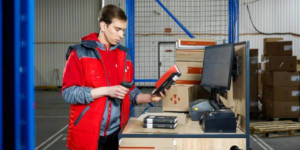
“Nova Poshta” has opened Nova Books—a specially designed book area in its branches featuring business literature for professional and personal development; the pilot program is currently operating at one of its Kyiv branches, the company’s press office reported.
According to the press release, books on economics and business are displayed in a separate showcase with a specially equipped self-service checkout counter. The Nova Books collection is based on business and economics literature selected based on recommendations from Nova Poshta’s Corporate University, as well as the company’s co-owners’ favorite books from their personal libraries.
“We are currently testing this format in Kyiv and are already seeing high demand: in just the first two days, customers purchased about 20 copies of business literature. Among the bestsellers are Donald Norman’s *The Design of Everyday Things* and James Clear’s *Atomic Habits: An Easy and Proven Way to Build Good Habits and Break Bad Ones” by James Clear,” noted Ivan Bilokonny, head of the new product development department at Nova Poshta.
You can purchase your favorite book from the display or online by scanning its barcode on a tablet and paying for the purchase. The purchase takes place without involving clerks or waiting in line. The book service Megogo Books is a partner in the pilot project and is responsible for providing the product selection and distribution.
“Since Megogo Books began operations, we’ve been collaborating with Nova Poshta to bridge the gap between readers and books through fulfillment and fast delivery. For us, Nova Books is a logical extension of this collaboration in a new format and an opportunity to move beyond the digital space,” said Kateryna Kotvitska, Content Director at Megogo Books.
It is reported that Nova Books will soon begin operations at two more locations in Kyiv and will open at 10 locations in the capital by the end of the year, with plans to expand to other regions thereafter. Thanks to Nova Poshta’s extensive network, the project creates a new opportunity for customers and publishers: readers gain access to high-quality books just a short walk from home, while publishers gain a new, convenient distribution channel.
As previously reported, as of July 13, 2026, the company’s network comprised 54,700 service points: 16,800 branches and 37,900 parcel lockers throughout Ukraine.
Nova Poshta’s core business remains the express delivery of documents, parcels, and palletized bulky cargo.

According to the Serbian business publication Parametar, construction of the first phase of a new plant to manufacture electric motors for drones is nearing completion in the village of Kotraža near Lučani. The equipment has already been delivered, some employees have been hired and are undergoing training, and production is expected to begin in early October.
In the first phase, the plant is expected to employ about 50 people; after the completion of all three phases, the workforce will grow to 60–70 employees. Earlier reports mentioned the possibility of expanding the workforce to 150 employees. The plant’s projected production capacity is up to 40,000 motors per month.
Businessman Milenko Kostić stated that the idea to establish the production facility came from Želko Mitrović. For the small town of Dragacheva, the project is significant not only from a technological standpoint: the plant is effectively being created as a new industrial employment hub in a rural area.



