
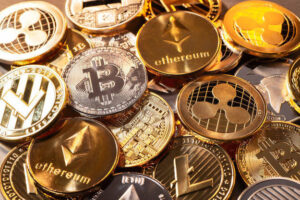
According to Fixygen, the cryptocurrency market ended the week of September 28 through October 2 mostly in positive territory: Bitcoin (BTC) once again surpassed the $86,000 mark, Ethereum (ETH) approached the $2,750 mark, and investors shifted their focus to the outlook for U.S. interest rates and the continued inflow of institutional capital into digital assets.
As of Friday morning, Bitcoin was trading at around $86,500, having risen nearly 3% over the previous 24 hours. During trading, prices approached $87,000. For comparison, on September 25, BTC was trading at around $84,400.
Ethereum traded in the range of $2,740–$2,750 on Friday, compared to approximately $2,670 at the start of the week.
Cryptocurrencies were supported by a decline in expectations regarding further monetary tightening by the U.S. Federal Reserve. Following the release of U.S. labor market data, which came in weaker than expected, Treasury yields fell, and market estimates suggest the likelihood of a Fed rate hike in October has decreased significantly.
The liquidation of short positions served as an additional driver of growth. As Bitcoin rose to $87,000, the volume of liquidations in the cryptocurrency market exceeded $300 million over the course of a single day.
This week marked a continuation of a strong third quarter for cryptocurrencies. From July through September, Bitcoin rose by more than 40%, and Ethereum by more than 70%, although both of the largest cryptocurrencies remain below their all-time highs set in 2025.
Amid the market recovery, Citigroup raised its 12-month price forecasts for the largest cryptocurrencies. The forecast for Bitcoin has been raised to $113,000 from the previous $82,000, and for Ethereum to $3,028,000 from $2,024,000. The bank attributes the revision to increased activity in the cryptocurrency market, changes in the macroeconomic situation, and the resumption of capital inflows into cryptocurrency ETFs.
A key development this week was the continued convergence of the traditional banking system with stablecoins. On September 28, Citigroup and the U.S. crypto exchange Coinbase announced an expansion of their partnership in the field of digital payments.
The companies intend to integrate Citi’s banking infrastructure with Coinbase’s cryptocurrency payment infrastructure. Corporate clients will be able to use solutions for accepting payments in stablecoins and converting them into traditional currencies. The partnership is primarily focused on international settlements and payments operating 24/7.
Another trend of the week was the continued development of rules governing how institutional investors handle crypto assets.
On October 1, the U.S. Securities and Exchange Commission (SEC) proposed a new framework for the custody of digital assets by investment advisors and regulated funds. This proposal aims to establish a specific regulatory framework for the custody of cryptoassets and to define the conditions under which financial institutions may hold digital assets.
Thus, the U.S. regulator is gradually shifting from regulating the crypto market primarily through enforcement to establishing specific rules for digital assets.
At the same time, regulations in the United Kingdom are changing. On September 30, the Financial Conduct Authority (FCA) began accepting applications from cryptocurrency companies wishing to operate under the UK’s new regulatory regime for digital assets.
Companies must submit their applications by February 28, 2027. The UK’s new cryptocurrency market regulatory framework is set to take effect in October 2027.
The market’s attention remains firmly focused on the tokenization of traditional financial assets. One of the key developments in late September was an agreement between the New York Stock Exchange and Blockchain.com to expand access to tokenized U.S. stocks and ETFs.
The parties signed a memorandum of understanding that provides for the possibility of granting Blockchain.com clients access to tokenized securities traded on a dedicated digital platform operated by the NYSE. The project’s implementation will depend on obtaining the necessary approvals from regulatory authorities.
Another notable change is taking place in the stablecoin market. Tether is preparing to bring USDT back into the Bitcoin ecosystem more than a decade after the token effectively left it. This is expected to happen using the new RGB protocol, which allows for the issuance of digital assets based on the Bitcoin network.
At the same time, the stablecoin market continues to face regulatory and sanctions-related risks. A report published this week by the U.S. Senate Permanent Subcommittee on Investigations highlighted the widespread use of USDT by entities linked to Iran to circumvent sanctions. In response, Tether announced its cooperation with U.S. authorities and reported that it had frozen nearly $550 million in USDT linked to Iran in 2026.
Thus, the week highlighted several trends that are currently shaping the crypto industry: the recovery in the value of major digital assets, the return of institutional demand, the integration of stablecoins into traditional banking payments, and the gradual establishment of a comprehensive regulatory framework in the U.S. and the U.K.
In the coming weeks, key factors for the market will remain the Fed’s decisions, the dynamics of U.S. Treasury yields, capital flows into cryptocurrency ETFs, and further U.S. regulatory decisions.
Provided demand remains strong, the $87,000–$90,000 range remains the next key level for Bitcoin. However, cryptocurrencies’ high sensitivity to interest rates and macroeconomic data poses a risk of sharp corrections following strong growth in the third quarter.
Sources: Reuters, SEC, FCA, Coinbase, CoinDesk.

According to the Serbian business media outlet Parametar, Croatia is claiming property worth over $2.7 billion located in Montenegro that remained there following the breakup of Yugoslavia. And this is by no means limited to the well-known training sailing ship “Jadran.”
This was stated by Croatian Minister of Foreign and European Affairs Gordan Grlić Radman during a visit to Montenegro. Zagreb has documentation regarding property that ended up on Montenegrin territory and was sold or transferred to other owners after the breakup of Yugoslavia.
Among these, the minister specifically mentioned military ships, submarines, and a military hospital.
The “Jadran” has become the most well-known part of the dispute. The training sailing ship was built in the 1930s and was used by the Yugoslav Navy. The vessel is currently in Montenegro, while Croatia insists on its return.
But the property dispute is only part of a much broader list of Zagreb’s demands on Podgorica.
The Croatian Ministry of Foreign Affairs lists the following among the unresolved issues:
– the return of the “Jadran” and the settlement of other property claims;
– compensation for former Croatian prisoners of the Morin camp;
– the search for 14 people who are still considered missing in action following the war of the 1990s;
– the investigation and prosecution of war crimes;
– the return of property belonging to Croatian families in Montenegro and the conclusion of protracted court proceedings;
– the preservation of a memorial plaque at the site of the former Morin camp;
– renaming the swimming pool in Kotor named after Zoran Hopčević;
– resolving the maritime border between the two countries.
These issues take on particular significance in light of Montenegro’s EU accession negotiations.
Croatia is already using its status as an EU member state to block the closure of certain negotiation chapters. In September, a planned intergovernmental conference had to be postponed after Zagreb refused to agree to the closure of several chapters.
Currently, Croatia is blocking the closure of chapters related to transport policy, foreign policy and security, the judicial system and fundamental rights, as well as justice, freedom, and security.
Podgorica hopes to conclude negotiations and become the 28th member of the European Union in 2028. However, this date is not guaranteed: the consent of EU member states is required for progress and final accession.
At the same time, Croatia is currently the main source of bilateral demands on Montenegro, which directly affect the negotiation process. There is currently no comparable official set of claims from other EU member states.
This creates a rather interesting situation: the closer Montenegro gets to the EU, the greater the significance of long-standing disputes dating back to the breakup of Yugoslavia.
And Croatia’s property claims, totaling more than $2.7 billion, are now becoming not only a matter of relations between Zagreb and Podgorica but also a potential factor capable of influencing the timing of Montenegro’s accession to the European Union.

Global food prices rose by 1.5% in September compared with the revised August figure, driven by higher prices for grains, vegetable oils, and sugar, according to the monthly report by the FAO (the Food and Agriculture Organization of the United Nations).
The FAO Food Price Index stood at 136 points in September, 2 points (1.5%) higher than the revised August figure. The index was 5.8% higher than in September 2025 but 15.1% below the peak reached in March 2022.
The Cereal Price Index rose by 5.1% compared with August and by 17.2% compared with September 2025. On a monthly basis, global wheat prices rose by 6.3%, reaching their highest level since August 2023. However, the report notes that daily prices declined somewhat toward the end of the month.
“This increase was primarily driven by logistical challenges in the Black Sea region, which prompted importers to turn to alternative suppliers. Drought conditions in some parts of North America ahead of the winter wheat planting season were an additional factor driving price increases,” the document states.
Global corn prices rose 5.6% compared to August and reached their highest level in the past three years. This is due to a projected decline in supply caused by lower-than-expected yields in the U.S. and reduced export capacity in Brazil. “Trade disruptions in the Black Sea region have led to a reduction in corn export supply, while ongoing uncertainty regarding shipping through the Strait of Hormuz has fueled concerns about high costs for fuel, fertilizers, and freight. This exerted additional upward pressure on commodity prices, especially for biofuel production, particularly corn,” the report states.
The price index for all types of rice rose by 1.4% amid higher prices for long-grain rice (indica) due to concerns about weather conditions and a seasonal decline in supply.
The vegetable oil price index in September was 0.9% higher than in August and 18.3% higher year-over-year. The increase was primarily driven by rising global prices for palm oil, which fully offset the decline in sunflower oil prices. Sunflower oil prices fell for the third consecutive month amid forecasts of abundant supply in the Black Sea region; however, ongoing logistical difficulties and limited capacity on alternative export routes prevented prices from falling further, according to the report.
Soybean and canola oil prices remained virtually unchanged over the month.
The meat price index in September fell by 1.1% compared to the revised August figure and is in line with the level from a year ago. This was driven by weaker poultry and pork prices, while beef and lamb prices remained generally stable. Global poultry prices fell amid a significant volume of export supply from Brazil and weaker import demand from the EU. Pork prices declined amid substantial supply in major exporting countries. Australian beef export prices fell amid intensifying competition in the global market, while prices in Brazil rose as demand from the U.S. picked up. Lamb prices remained virtually unchanged.
The dairy price index in September was 0.1% lower than in August. On a year-over-year basis, prices fell by 19.1%.
“The decline in cheese prices was almost entirely offset by rising prices for dry milk, while butter prices remained virtually unchanged,” the report states. “Prices for nonfat dry milk were 33.1% higher than last year’s level, and prices for dry milk rose in all major exporting countries due to sustained import demand, particularly from Asian countries.”
The sugar price index in September was 6.1% higher than in August and 14.7% higher than in September 2025. The index has been rising for the third consecutive month and is at its highest level since April 2025.
The increase is primarily driven by the projected decline in global sugar supply during the 2026/27 agricultural season. In particular, it is expected that a reduction in planted acreage and unfavorable weather conditions during the growing season in the EU will lead to a decline in the sugar beet harvest. A decline in sugar production is forecast for Thailand, and the outlook for India is also less favorable. In addition, delays in the harvest in Brazil’s key sugarcane-growing region due to heavy rains have exerted additional upward pressure on global sugar prices.
The FAO Food Price Index is a weighted average that tracks changes in international prices for five major food commodity groups.
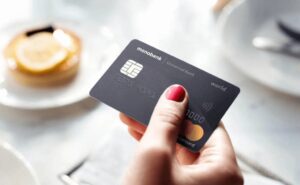
Pensioners who have switched their pension payments to mono will receive 1,000 UAH, after taxes, by the end of the year, according to Monobank co-founder Oleg Gorokhovsky.
“And as soon as they receive their first pension on a mono card, we’ll credit 1,000 UAH to their cashback account. We’ll cover the tax as well. In addition, we’re adding a ‘Medical’ category with 5% cashback for the year,” he noted.
Gorokhovsky emphasized that, according to the law, pensions can be received on a card from the bank of the pensioner’s choice.
As of July 1, 2026, there are 9.98 million pensioners in Ukraine, according to data from the Pension Fund. Eighty-three percent of pensioners—approximately 8.3 million people—receive their payments through banking institutions. The remaining 17% continue to receive their payments through Ukrposhta branches and mail carriers.

At least 16 court rulings mentioning drop accounts or so-called “money mules” have been identified in Ukraine over the past nearly eight years, with drop accounts used in schemes related to drug trafficking in 81% of cases.
This is according to a study by OpenDataBot, published on October 2, 2026, based on data from the “Babusia” court registry search engine as of mid-September.
“Drops” are people who, in exchange for compensation, provide third parties with their bank cards, accounts, or access to online banking. Such accounts can be used to transfer, receive, and subsequently launder funds in various criminal schemes.
According to the study, in 13 of the 16 convictions identified—or 81%—drop accounts were part of schemes related to drug trafficking. Another three convictions—or 19%—involved online fraud.
At the same time, OpenDataBot emphasizes that the mere mention of a “drop account” in a court ruling does not necessarily mean that the bank account holder was convicted specifically for granting access to it. In some cases, drop accounts were merely one element of a larger criminal scheme, while the convicted individuals performed other roles.
Three such convictions have already been identified in 2026. The highest number occurred in 2020—eight. Two rulings were found for both 2019 and 2021, and one more for 2023. No convictions involving such schemes were found in the search engine for 2024 and 2025.
In 12 of the 16 convictions, or 75%, the primary punishment was imprisonment. Sentences ranged from two to ten years. At the same time, in eight cases, the convicted individuals were granted probation.
In four additional verdicts, the primary punishment was a fine. The specific amounts of the fines were specified in six court decisions and ranged from 98,600 UAH to 850,000 UAH.
Kyiv accounted for the largest number of verdicts mentioning “drops”—10 rulings, or 63% of the total. Two more verdicts were handed down in the Odesa region, and one each in the Dnipropetrovsk, Zakarpattia, Kyiv, and Mykolaiv regions.
In some cases, significant amounts of compensation were awarded to the victims. In one ruling, the court ordered 8.65 million UAH in compensation, of which 6.65 million UAH was for material damages and 2 million UAH was for emotional distress.
In two other cases, the defendants voluntarily compensated the victims a total of 42,100 UAH. In two additional rulings, the courts ordered the defendants to pay a total of 29,800 UAH in litigation costs.
Amid the spread of schemes involving the use of other people’s bank accounts, Ukraine is preparing to establish a separate criminal offense for “dropping.” On September 15, 2026, the Verkhovna Rada adopted as a basis Bill No. 16013 on the protection of citizens and their funds from illegal actions involving payment instruments and bank accounts. The bill is being prepared for its second reading.
Source: OpenDataBot – study “In 81% of convictions, ‘dopers’ were part of schemes related to drug trafficking” dated October 2, 2026.

“Creating an exhibition like this will help us showcase the greatness of Ukraine… Reinterpreting our history, opening up the world of this history, and presenting it through the lens of experts strengthens our international standing. I strongly agree with the lectures by Timothy Snyder (an American historian—IF-U) when he says that the
Trypillian civilization—it is very important to use this term—is part of the European space,” said Foreign Minister Andriy Sibiga at the exhibition’s presentation on the eve of its opening on Thursday.
Sybiga emphasized that the Ministry of Foreign Affairs will make every effort to expand knowledge about the unique Trypillian civilization through UNESCO’s framework.
“In May 2026, we included the ‘Prekukuten-Ariushd-Kukuten-Trypillia’ archaeological and cultural complex on UNESCO’s Tentative List, and we are doing everything possible to have it inscribed on the UNESCO World Heritage List,” said Deputy Prime Minister for Humanitarian Policy and Minister of Culture Tetiana Berezhna.
According to her, it is very important for this exhibition to gain popularity in educational institutions and be promoted in schools.
“Trypillia is one of the components of our identity, just like language. A state and a nation begin with identity,” said Viktor Yushchenko, President of Ukraine (2005–2010).
As reported by a correspondent for the Interfax-Ukraine news agency, virtual reality technology allows visitors to “step into” a world from 7,000 years ago and find themselves inside a reconstructed Trypillian settlement, visit the dwellings of the Trypillians, see the domestic areas, the potter’s workshop, and the sacred zone, and examine everyday household items. Here, visitors can observe how the Trypillians cultivated the land and grew grain, how they prepared and baked bread from it, worked with metal, and created items necessary for daily life. Agriculture, crafts, daily life, and beliefs come together in the VR space to form a comprehensive picture of life in the Trypillian community.
The virtual exhibition features digitized artifacts from the collections of the National Museum of the History of Ukraine, the Kyiv Regional Archaeological Museum, and the Museum of the History of Kyiv: ceramics, anthropomorphic and zoomorphic sculptures, tools, and household items.
The project combines archaeological and historical data, 3D modeling, VR technology, and interactive elements. The exhibition is part of the cultural and educational platform “Ukraine. The World of Trypillia,” which uses popular formats—art books, theater, and VR—to tell the story of Trypillian culture in a new way.
The exhibition was organized with the support of the Ukrainian Cultural Foundation as part of the “Cultural Heritage” grant program and in collaboration with the platform’s general partner—the “MHP-Hromadi” Charitable Foundation.



