

Paraguayan vori-vori soup took first place in the TasteAtlas Awards 2025/26 ranking of the world’s 100 best dishes, receiving a score of 4.64 out of 5.
The ranking was compiled based on 453,720 user ratings validated by the system, which were assigned to 11,781,000 dishes from the TasteAtlas culinary guide database.
“Vori-vori” is a thick soup with small balls made of corn flour and cheese. It is usually prepared in meat or chicken broth with vegetables and herbs. The dish is considered one of the most recognizable dishes of Paraguayan cuisine.
Second place went to Neapolitan pizza from Italy, with a score of 4.58. In third place was the Italian dish tajarin al tartufo bianco d’Alba—thin egg pasta with white truffles—which scored 4.52.
The top ten also included the Indonesian goat kebab sate kambing, the Turkish Oltu cağ kebabı, the Greek kontosouvli, the Peruvian arroz tapado, the Serbian komplet lepinja, the Mexican quesabirria, and the Italian pasta dish pappardelle al cinghiale.
Italy had the most entries in the top ten—three. Turkey, Paraguay, Indonesia, Greece, Peru, Serbia, and Mexico each have one dish represented.
TasteAtlas compiles its rankings based on audience ratings, using mechanisms to filter out invalid votes. Therefore, rankings may change as new ratings are submitted.
Ukrainian dishes are absent from the published list of the world’s 100 best dishes. Borscht, varenyky, syrnyky, and other Ukrainian dishes did not make it into this particular ranking.
TasteAtlas is an international online guide to traditional cuisine, local ingredients, and authentic restaurants. The project was founded by Croatian journalist and internet entrepreneur Matija Babić, who previously created the news portal Index.hr. After approximately three years of development, TasteAtlas was officially launched in 2018. The guide’s database includes about 19,900 traditional dishes and local ingredients, as well as over 21,000 restaurants. The project team collects historical and gastronomic information, recipes, critics’ reviews, and recommendations from local experts. TasteAtlas’s goal is to catalog the world’s traditional cuisines and preserve recipes and ingredients that may disappear from everyday use.
TasteAtlas ratings are primarily based on user reviews. The platform states that its system filters out bot votes, mass national voting, and suspicious activity, while giving greater weight to ratings from users whom the system recognizes as experienced and knowledgeable.
TasteAtlas is widely cited by international and national media and is one of the most well-known digital gastronomic guides. However, its rankings are not an official assessment by a professional jury or the equivalent of Michelin stars. They are best viewed as an indicator of the popularity of dishes among the platform’s international audience, rather than as a definitive expert classification of world cuisine.
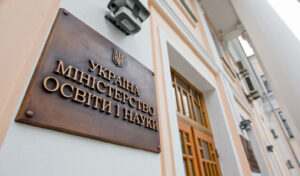
The Ministry of Education and Science of Ukraine has updated the informational website “Ukrainian Education for Children Abroad,” which brings together practical, methodological, and regulatory information for Ukrainian families, educators, and educational centers outside the country. On the platform, parents can learn about four main scenarios for their child’s education: combining a local school with Ukrainian distance learning, attending a Ukrainian educational center on weekends, studying exclusively at a local school, or completing the full Ukrainian curriculum remotely.
For children who are simultaneously enrolled in a school abroad, a Ukrainian studies component is provided. It covers the Ukrainian language, literature, history, and geography of Ukraine, as well as the basics of law. Grades in other subjects may be transferred, taking into account the student’s studies in the host country.
The website also features:
instructions and tables for transferring grades earned at schools abroad;
a sample curriculum for the Ukrainian studies component;
a list of Ukrainian schools offering distance learning classes;
a map of verified Saturday and Sunday Ukrainian schools;
information on the recognition of academic achievements and re-entry into the Ukrainian education system;
resources for educators and leaders of educational centers.
According to the platform, there are over 350 Ukrainian Saturday and Sunday schools operating worldwide. Academic achievements from educational centers verified by the Ministry of Education and Science and the Ministry of Foreign Affairs can be officially recognized by Ukrainian schools.
Separate sections of the resource are designed for parents, teachers, and educational centers. Materials are available for teachers on professional development, recognition of teaching experience, and lesson packages for the Ukrainian studies component.
The updated website is available at: https://www.ukrainian.studies.mon.gov.ua/
The platform is part of the “Children Abroad” state policy, which aims to maintain Ukrainian students’ connection to the national education system, language, and culture, as well as to facilitate their return to school in Ukraine.

As of June 2026, approximately 3.9 million people in Ukraine remain internally displaced, according to a report by the International Organization for Migration (IOM).
“Although the proportion of internally displaced persons has remained at about 12% of the population since 2023, the report shows that the longer displacement lasts, the more difficult it is for families to meet their basic needs. Nearly seven out of ten internally displaced persons have been away from home for more than two years. This indicates the increasingly protracted nature of displacement in Ukraine,” the report states.
At the same time, people continue to be forced to leave their homes: in January–June of this year alone, approximately 132,000 people were forced to flee.
“Stable displacement figures should not be interpreted as a sign of stable living conditions. Many displaced families are depleting their savings, cutting back on essential expenses—including healthcare—and moving to less suitable housing in an effort to meet their basic needs. Long-term support remains essential to help people regain stability and make informed and voluntary decisions about their future,” said Dejan Keserović, Deputy Head of the IOM Mission in Ukraine.
According to the report, 87% of displaced families were forced to resort to at least one coping strategy to manage their situation. Most commonly, people spent their savings (75%), reduced their use of utilities (59%), and cut back on healthcare expenses (53%). One in five households also reported moving to lower-quality housing, and 17% reported being behind on rent payments.
Safety remains the main criterion in people’s decisions about the future: 82% of internally displaced persons indicated that they would like to return home only after hostilities have ceased. At the same time, an increasing number of people are considering the possibility of integrating into the communities where they currently live: the proportion of those interested in local integration rose from 51% in March to 58% in June 2026. This underscores the need to provide support to displaced families where they are, while also monitoring the risks of premature or unsafe returns.
Approximately 2.15 million people, or 56% of all internally displaced persons in Ukraine, come from territories that were fully or partially occupied at the time of the survey. They are more likely to face protracted displacement, significant hardships, and more limited opportunities for return.
“The report’s findings show why emergency assistance alone is not enough. People need long-term support in the areas of housing, livelihoods, access to healthcare, protection, and other essential services. This will help them make informed and voluntary decisions—whether to integrate where they currently live, move to another location, or safely return home when conditions permit,” IOM emphasized.
The report is based on the latest survey of the Ukrainian population, conducted by IOM from April 23 to June 30, 2026, with support from the Humanitarian Fund for Ukraine, the European Union, and the governments of Canada and Sweden.
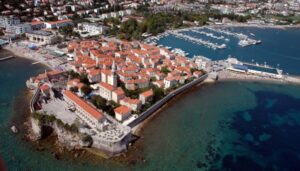
According to Serbian Economist, ancient Roman baths located beneath Church Square next to the Holy Trinity Church in Budva’s Old Town will be opened to visitors for the first time. The archaeological site will be preserved, equipped to receive visitors, and incorporated into the city’s cultural and tourism offerings as part of the international ROMANICA project.
The remains of the baths were discovered after the devastating 1979 earthquake during the restoration of the Old Town. During archaeological excavations in the 1980s, experts led by Professor Mirko Kovačević uncovered bathing pools, the furnace area, and preserved elements of the ancient underfloor heating system.
Despite the research and initial conservation efforts, the site remained closed for decades and was not included in Budva’s tourist itineraries. A stone plaza was later built over the thermal baths, so the ancient part of the city has effectively been hidden from visitors until now.
The project involves further conservation of the authentic remains, creating conditions for tourist access, and implementing digital resources. These resources will be used to show visitors the complex’s original appearance and explain its connection to the Roman maritime and underwater heritage of the Adriatic.
ROMANICA brings together sites of Roman coastal and underwater heritage in Montenegro, Croatia, and Bosnia and Herzegovina. The University of Zadar serves as the lead partner. Other participants in the project include the city of Biograd na Moru, the International Center for Underwater Archaeology in Zadar, the Franciscan Museum of Tomislavgrad, the University of Montenegro, and the municipality of Budva.
The project began on June 15, 2026, and is scheduled to last 24 months. Its total budget is 1.837 million euros.
The project is being implemented as part of the Interreg VI-A IPA cross-border cooperation program “Croatia—Bosnia and Herzegovina—Montenegro” in the area of sustainable and inclusive tourism and culture.
The exact date when the thermal baths will open to visitors has not yet been announced.
Budva is considered one of the oldest urban centers on the eastern coast of the Adriatic. During the Roman period, its port was part of maritime trade routes, and the public thermal baths were used not only for bathing but also as a place of relaxation, meetings, and socializing for residents and travelers.
https://t.me/relocationrs/3337

On Thursday, July 30, Kyiv will host the Ukrainian Investment Congress and the 17th All-Ukrainian Annual Architectural Competition “Interior of the Year 2026.”
The event will take place on the third floor of the “Parkovy” Congress and Exhibition Center at 16a Parkova Road.
The Ukrainian Investment Congress is positioned as a professional platform for investors, developers, representatives of the construction industry, architects, designers, and company executives operating in the Ukrainian real estate market to meet.
According to the organizers, the congress program is expected to attract over 6,000 visitors and more than 100 speakers, feature 15 panel discussions, and include over 50 exhibition booths. The main objectives of the event are to identify partners and investors, present new projects and technologies, develop business contacts, and discuss the prospects of the Ukrainian investment and construction market.
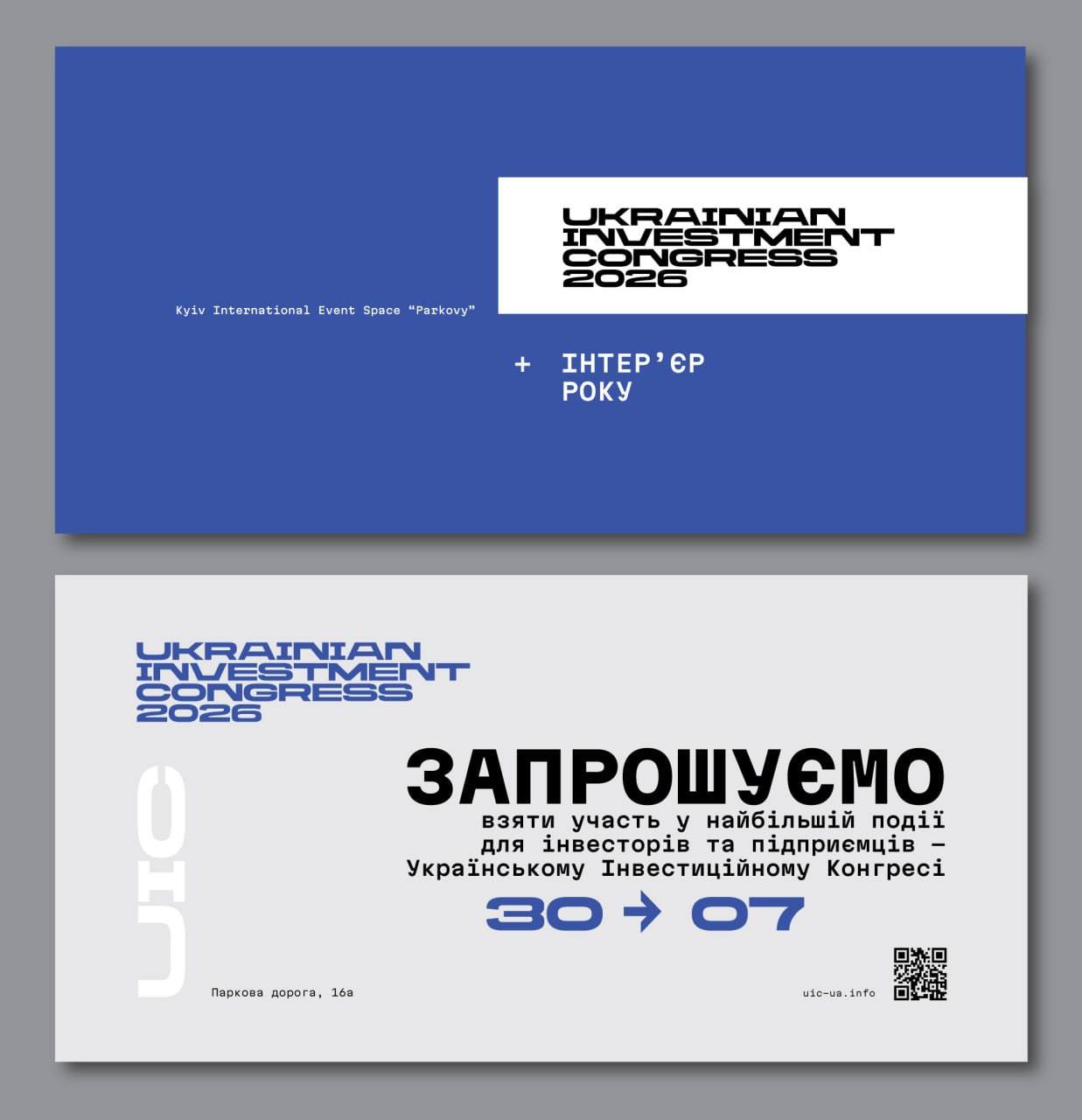
At the same time, the Parkovy Exhibition and Convention Center will host the 17th All-Ukrainian Annual Architecture Competition “Interior of the Year 2026,” organized by the DMNTR media group. The competition brings together interior designers, architects, developers, entrepreneurs, and investors and aims to promote completed architectural and interior design solutions.
The competition features projects for residential interiors of various sizes, private homes, offices, commercial spaces, HoReCa establishments, and public and administrative buildings. Separate categories are dedicated to product design, landscape architecture, lighting, and unbuilt projects and visualizations.
The organizers note that the competition aims to showcase solutions that increase the added value of real estate properties, facilitate their sale, and set new quality standards for residential and commercial spaces.
The event program and registration are available on the website: www.ibc-ua.info/program.
Contact numbers:
+380 77 777 25 47
+380 44 461 91 28
Venue: “Parkovy” Exhibition and Convention Center, 16a Parkova Road, Kyiv, third floor.
Interfax-Ukraine is the information partner.
ARCHITECTURE, CONGRESS, DMNTR, INVESTMENT, KYIV, Parkovy, REAL ESTATE
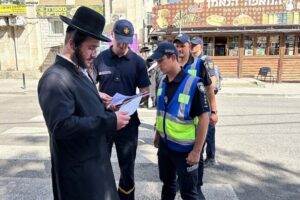
The Ukrainian Ministry of Foreign Affairs recommends that Hasidic pilgrims refrain from traveling to Uman to celebrate Rosh Hashanah.
“Russia’s full-scale aggression against Ukraine, which has been ongoing for more than four years, along with constant, massive rocket attacks on Ukrainian cities and communities, civilian and transportation infrastructure, and ongoing Russian terror, sabotage, and provocations, pose real threats to people’s lives and safety. Under these circumstances, the Ministry of Foreign Affairs of Ukraine urges Hasidic pilgrims planning to make a pilgrimage to Uman to celebrate Rosh Hashanah to take into account that it is impossible to guarantee full security for foreign citizens on Ukrainian territory,” reads a statement released by the ministry’s press service.
The Ministry of Foreign Affairs also noted that a legal regime of martial law is in effect in Ukraine. If pilgrims visit Uman despite the warnings from Ukrainian authorities, they should be aware of restrictions on freedom of movement, curfews, increased patrolling, and a ban on mass gatherings; violators may face enforcement measures.
In addition, other significant risks should be taken into account when planning a trip. Land transportation links with Ukraine remain overloaded, and significant delays are possible due to shelling. In Uman itself, there are not enough civil defense shelters to accommodate large numbers of pilgrims, and there is a shortage of medical personnel and facilities capable of providing qualified medical care.
For further clarification, the Ministry of Foreign Affairs advises contacting the National Police, the State Emergency Service, the Border Guard Service, and the Customs Service, as well as the Cherkasy Regional State Administration and the Uman City Council. Pilgrims who do decide to travel to the city are advised to familiarize themselves in advance with the rules for paying the tourist tax.
Every year on the Jewish New Year, Rosh Hashanah, tens of thousands of Hasidic pilgrims arrive in Uman, Cherkasy Oblast, to visit the grave of Rabbi Nachman, the founder of Bratslav Hasidism. Despite Russia’s full-scale war against Ukraine, the pilgrimage continues, although Ukrainian authorities regularly urge foreigners to consider the security risks. In 2025, more than 35,000 pilgrims arrived in Uman for the Rosh Hashanah celebrations.
Hasid, MINISTRY OF FOREIGN AFFAIRS, pilgrimage, SECURITY, UMAN



