

According to The Serbian Economist, on July 28, the Romanian state-owned company Nuclearelectrica conducted a controlled shutdown of Power Unit No. 1 at the Cernavodă Nuclear Power Plant due to abnormally low water levels in the Danube caused by a prolonged drought.
The decision was made in accordance with safety procedures to protect equipment related to the plant’s cooling system. The unit is scheduled to be reconnected to the national power grid once hydrological conditions improve. If water levels continue to drop, a shutdown of Unit No. 2 may be considered.
In the Romanian section of the Danube, the lowest water level in the last 30 years was recorded at the end of July. The drought has already led to restrictions on irrigation, the suspension of some ferry services, and the grounding of grain barges.
Low water levels have also disrupted passenger shipping. Near the Romanian town of Salca, a Swiss-flagged passenger ship running from Drobeta-Turnu Severin to Vidin, Bulgaria, ran aground. There were 186 passengers and 52 crew members on board. Several attempts to refloat the vessel were unsuccessful.
The problems have also spread to the international river cruise market. Several cruise ships were detained north of Budapest, and tourist cruises on certain sections of the Danube were suspended. The Hungarian company MAHART-PassNave reported an 18% drop in bookings in July and suspended sightseeing routes north of Budapest.
Cruise operator Avalon Waterways canceled several Danube cruises, including select sailings on the “Danube Dreams” and “Danube from Romania to Germany” itineraries.
The shallowing of the Danube has affected more than just Romania and Hungary. In Serbia, due to reduced inflow, production at the largest hydroelectric power plant, “Džerdap-1,” has fallen to 5,000 MWh of electricity per day—or one-third of its usual volume. In certain sections, cargo ships and fuel barges are being loaded to only 30–40% of their usual capacity.
Thus, the prolonged drought has simultaneously created risks for the energy sector, freight transport, and the tourism industry in the countries of the Danube region. The resumption of full-scale operations at nuclear power plants, as well as river cruises and cargo navigation, will depend on precipitation in the upper part of the basin and a steady recovery of water levels.
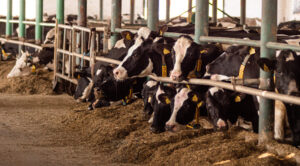
According to experts.news, as of June 1, 2026, there were 1,786,900 head of cattle in Ukraine, including 941,200 cows, the Milk Producers Association reported on June 26, citing preliminary data from the State Statistics Service.
Compared to June 1, 2025, the cattle herd decreased by 383,000 head, or 18%, while the number of cows decreased by 208,000, also by 18%. Over the month, the total cattle herd increased slightly—by 2,100 head—while the number of cows decreased by 3,300.
About 53% of the herd is held by agricultural enterprises, with the remaining 47% held by private households.
In the industrial sector, there were 951,200 head of cattle as of early June, including 391,900 cows. Over the year, enterprises increased their cattle herd by 4% and their number of cows by 3%.
At the same time, private households held 835,700 head of cattle, of which 549,300 were cows. Over the past year, the private sector lost 33% of its cattle herd and 28% of its cows. It is precisely this reduction in livestock holdings by private households that remains the main cause of the overall decline in the country’s figures.
An increase in the number of cows at agricultural enterprises was recorded in 11 regions. The largest increases in herd size were observed in Rivne Oblast (29%), Lviv Oblast (22%), Kharkiv Oblast (13%), Ternopil Oblast (11%), and Khmelnytskyi Oblast (9%). In Kyiv Oblast, the number of cows in the commercial sector increased by 3%.
The largest cattle herds across all farm categories were held in Poltava Oblast—168,000 head, Vinnytsia Oblast—160,000, Khmelnytskyi—143,400, Odesa—131,600, Chernihiv—126,100, Cherkasy—125,400, and Kyiv—105,700 head. These seven regions accounted for approximately 54% of the country’s total cattle population.
The Milk Producers Association attributes the decline in the herd size to low milk purchase prices, rising costs of feed, fuel, and fertilizers, insufficient farm modernization, and the consequences of hostilities. Farms in frontline regions are also forced to transport their livestock to central and western regions.
According to the association’s estimates, approximately 850 of Ukraine’s 1,375 thousand dairy farms require renovation to meet European standards for animal husbandry. The estimated investment need is approximately EUR219 million.
At the beginning of 1991, Ukraine had 24,623,400 head of cattle, including 8,378,200 cows. By early 2001, the cattle herd had declined to 9,424,000 head, and the number of cows to approximately 4,958,000.
In 2013, Ukraine had 4.646 million head of cattle and 2.554 million cows. As of early 2021, these figures stood at 2.874 million and 1.673 million head, respectively.
As of January 1, 2025, the cattle herd was estimated at 2.002 million head, including 1.155 million cows. By the beginning of 2026, these figures had fallen to 1.804 million head of cattle and 1.022 million cows.
Thus, from the beginning of 1991 to the beginning of 2026, the total cattle herd in Ukraine decreased by approximately 92.7%, or 13.6 times. The number of cows decreased by 87.8%, or 8.2 times.
By June 1, 2026, the number of cows fell below 1 million heads for the first time—to 941,200. Compared to 1991, this represents a decline of nearly 89%, or 8.9 times.
When comparing long-term indicators, changes in statistical coverage should be taken into account. Data for 2015–2021 do not include the temporarily occupied Crimea, Sevastopol, and parts of the Donetsk and Luhansk regions, while figures from 2022 also exclude other occupied territories and parts of combat zones.
Despite the sharp overall decline in livestock numbers, industrial dairy farms in relatively safe regions are partially increasing their herds of productive cows. However, this is not yet sufficient to compensate for the mass exodus of smallholder farms from livestock production.
https://www.experts.news/posts/poholivya-vrkh-v-ukrayini-za-rik-skorotylosya-na-18

PJSC “Insurance Company PZU Ukraine” (Kyiv) collected 1.834 billion UAH in net premiums in January–June 2026, which is 59% more than in the same period of 2025 (1.153 billion UAH), according to the insurer’s interim data published in the NSSMC’s disclosure system.
Written premiums for the first half of the year rose by 60.9% to 1.852 billion UAH.
During the reporting period, the company paid out claims totaling 1.785 billion UAH, which is 61.8% more than in the first half of the previous year.
Profit before taxes amounted to 263.6 million UAH (+84%), and taxes paid totaled 35.230 million UAH (+39.2%).
The insurer’s net profit for the first two quarters of 2026 amounted to 228.4 million UAH, which is 93.6% more than in the same period a year earlier.
PZU Ukraine Insurance Company is backed by one of the largest insurance groups in Central and Eastern Europe—the PZU Group, which includes the parent company of PZU Ukraine Insurance Company (PrJSC)—PZU S.A.
According to data from the National Bank, PZU Ukraine ranks 10th in terms of premiums written for 2025 among Ukraine’s non-life insurers (47 companies).

Ukrnafta specialists have developed and implemented their own software suite, WellWorkoverSupervisor, for planning and managing well workovers.
“This solution was developed in-house based on the practical experience of the company’s specialists, taking into account international best practices,” the company announced on Tuesday.
Ukrnafta explained that well workovers are one of the most complex production processes, as working with equipment at depths of several thousand meters requires precise engineering calculations, high-quality preparation, and strict adherence to safety requirements.
Previously, the company did not have a single standardized software tool for such calculations. Some of the work was performed manually or using outdated software, which took more time and increased the risk of errors.
However, engineers from the Well Repair Supervision Division of the Production and Technology Department have developed their own software product that meets the company’s actual production needs.
“Digital transformation is not just about purchasing off-the-shelf IT solutions. It also involves developing our own engineering expertise and creating tools that directly improve production efficiency,” said Bogdan Kukura, Chairman of the Board of JSC “Ukrnafta.”
According to him, the use of WellWorkoverSupervisor has already made it possible to reduce the time required to prepare work plans, minimize the risk of errors in calculations, and improve production safety.
WellWorkoverSupervisor includes over 30 specialized modules and allows users to automate key technical calculations, create graphs and engineering diagrams, generate ready-to-use PDF reports, and utilize a built-in reference guide for pipes, threaded connections, and equipment.
In terms of functionality, the software suite is on par with expensive foreign counterparts, Ukrnafta added.
JSC “Ukrnafta” is Ukraine’s largest oil production company, carrying out a full cycle of activities in the field of extraction: exploration, oil and gas production, the provision of oilfield services, as well as the management of UKRNAFTA, the largest network of gas stations in Ukraine.
The company’s balance sheet includes over 1,106 oil wells and 131 gas wells.
The shareholders of JSC “Ukrnafta” are NJSC “Naftogaz of Ukraine” and the Ministry of Defense of Ukraine. Since 2022, the company has been under state management and is implementing a large-scale business transformation.
By the end of 2025, “Ukrnafta” had become the leader in the extraction industry with a turnover of 99.6 billion UAH, as reflected in Opendatabot’s Index of Top Companies.
The UKRNAFTA gas station network is the largest in Ukraine, comprising nearly 700 stations and ranking among the top three in terms of fuel sales volume. The UKRNAFTA brand now unites networks that previously operated under the Glusco, Shell, and U.Go brands.

The ADONIS Medical Network (Kyiv) is launching a new format for professional collaboration—a free expert consultation for doctors dealing with complex or ambiguous clinical cases.
According to its press release, the consultation provides an opportunity to obtain a second opinion from the ADONIS team of specialists and jointly determine the next steps in the patient’s diagnosis and treatment.
“In medical practice, there are cases where test results or the opinion of a single specialist are insufficient to make a final decision. The patient may require additional tests, consultations with doctors from different specialties, or a review of the treatment plan already proposed. The consultation does not replace the attending physician but helps them obtain additional expert support,” ADONIS notes.

According to Open4business, the United States retained its status as the largest supplier of imported passenger cars to Ukraine in the first half of 2026, accounting for 43% of the total number of imported cars. According to data from the State Customs Service published on July 28, 73,200 passenger cars were imported from the U.S. to Ukraine between January and June.
Germany ranked second among supplier countries, accounting for 17,300 cars, or 10% of total imports. Poland ranked third with 14,600 cars, or 9%.
Collectively, the United States, Germany, and Poland supplied 105,100 passenger cars to Ukraine. These three countries accounted for about 62% of total imports.
Overall, in the first half of the year, cars were imported from more than 50 countries. The total volume of imports exceeded 169,000 vehicles, and their declared value amounted to nearly 96.6 billion UAH.
Customs revenues from passenger car imports reached 32.1 billion UAH.
According to estimates by the Experts Club analytical center, gasoline-powered cars led in terms of customs revenue. They contributed 14.6 billion UAH to the budget, or 45.5% of the total.
Diesel cars generated 8.4 billion UAH, hybrids—7.1 billion UAH, and electric cars—about 2 billion UAH.
Used cars accounted for over 70% of the total number of imported vehicles and generated 17.7 billion UAH in customs duties. New cars accounted for less than 30% of imports and 14.4 billion UAH in revenue.



