

The U.S. dollar is stable against the euro and the yen in trading on Friday, strengthening against the pound sterling.
A day earlier, the dollar fell in price against the world’s major currencies after the publication of the minutes of the Federal Reserve (Fed) meeting in November, which showed that the overwhelming majority of the U.S. central bank sees the need to slow the pace of rate hikes in the near future.
The ICE index showing the dollar’s performance against six currencies (euro, Swiss franc, yen, Canadian dollar, pound sterling and Swedish krone) lost 0.17% on Friday, while the broader WSJ Dollar Index was steady.
The euro/dollar pair is trading at $1.0411 as of 8:10 a.m., up from $1.0413 at the close of the previous session.
The dollar is trading at 138.66 yen against 138.64 yen the day before. The pound fell to $1.2099 from $1.2117.
On Thursday, the dollar fell 0.2% against the euro, 0.7% against the yen and 0.5% against the pound.
“Some of the Fed leaders observed that monetary policy had reached a state in which it was sufficiently restrictive to meet FOMC goals and it would be appropriate to slow rate hikes. The vast majority of meeting participants felt that a slowdown in the pace of the hike would probably be appropriate soon,” the minutes of the Nov. 1-2 Fed meeting noted.
Some of the U.S. central bank leaders, meanwhile, believed that the Fed would have to raise the rate higher than previously planned in order to meet its goal of easing inflation.
They indicated that the rate “will have to reach a somewhat higher level than previously expected,” given the lack of sufficient signals of easing inflation in the U.S. at the moment, as well as the continuing imbalance of supply and demand in the economy.

In recent years, city authorities across Italy have created clever schemes to attract new residents. Recently, the picturesque town of Presicce, in the sunny southern region of Puglia, joined another such program. Officials have promised to pay people up to 30 thousand euros if they move in and settle down in this small village.
Houses for sale in the deal cost from 25 thousand euros. Like other properties for sale throughout Italy, they have long been abandoned.
As an added bonus, officials point to the homes’ incredible location: surrounded by the nature of the Salento area, close to clean beaches and the turquoise clear waters of Cape Santa Maria di Leuca.
Prezicce authorities hope the cash incentive will breathe new life into their depopulated town, where every year there are fewer residents.
“There are many empty houses in the historic center that were built before 1991, we would like to see them become ‘alive’ again, with new residents,” said local councilman Alfredo Palese.
“It’s a shame to see our old neighborhoods, full of history, beautiful architecture and art, slowly becoming empty,” he added.
Alfredo explained that the funds allocated would be divided into two parts: one part would go toward the purchase of the old house, and the other would go toward its restoration, if necessary.
In order to qualify for the €30,000 incentive, buyers must move into Preziccea and purchase one of the pre-1991 properties identified on the city map.
Alfredo said that prices for housing starts at 500 euros per square meter. Thus, about 25 thousand euros should be enough for a house of 50 square meters in need of renovation.
Prezicce is called the “city of green gold” because of the lush olive groves that give top-grade olive oil.
In addition to tours of the underground oil mills, olive oil festivals and food tastings, the town has a museum of peasant civilization with objects from the past.
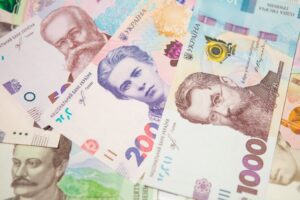
The transition from a fixed to a floating exchange rate with a temporary limitation of daily exchange rate fluctuations within a narrow range is proposed by UC Berkeley economics professor Yuriy Horodnichenko in an article on the analytical platform Vox Ukraine.
“Because of the nature of a fixed exchange rate, potential price distortions and imbalances accumulate over time, and the economy eventually reaches a tipping point where an exchange rate adjustment is needed again. Consequently, another exchange rate correction during a protracted war will almost certainly happen,” he explained the need to abandon this regime.
According to Gorodnichenko, among the imbalances already visible are an increase in the real exchange rate, a gap between the official and cash exchange rates, a lack of attention to the euro (since the EU is Ukraine’s main trading partner) and the political postponement of necessary exchange rate adjustments.
“Given the high sensitivity of inflation expectations to the exchange rate in Ukraine, a free floating exchange rate could entail excessive macroeconomic volatility. Indeed, the hryvnia fluctuated sharply during 2014-2015 after the first Russian invasion. We need an intermediate solution,” said the economist.
In his opinion, limiting daily fluctuations in the exchange rate (for example, 0.1% on any day) could be an acceptable intermediate solution. Among the advantages of this option Gorodnychenko mentioned operational freedom of the central bank, the absence of sharp macroeconomic adjustments and shocks, the NBU’s management of the euro-hryvnia exchange rate during Ukraine’s accession to the EU.
He added that such a regime does not mean a mandatory devaluation of the hryvnia. “The experience of the hryvnia during the COVID-19 crisis highlights how useful this is for Ukraine: after the hryvnia weakened during the first days of the crisis, it eventually strengthened as demand for Ukrainian products remained high. Due to such flexibility the Ukrainian economy felt relatively well in 2020-2021,” reminded the economist.
Gorodnychenko stressed that this policy alone cannot solve all problems, such as the broken mechanism of monetary transmission, and to achieve the desired results it will need to be supplemented by other measures, particularly restricting capital flows, the alignment of interest rates on deposit certificates of the NBU and government bonds.
The economist pointed out that there are other options for intermediate solutions, but they are, in his opinion, less preferable.

Associations uniting motor carriers of Lithuania and seven other European Union (EU) countries are calling for the problem of queues of trucks at the Ukraine-EU border to be solved, the Lithuanian national association of motor carriers Linava has said.
The association estimates that at present there is a queue of over 40 kilometers on the Ukrainian side at one of the border crossings between Romania and Ukraine, over 25 kilometers – on the Ukrainian-Hungarian border, and about 15 kilometers – on the Ukrainian-Slovak border.
Linava, together with the International Road Transport Union (IRU) and its members, has approached the European Commission (EC) with a proposal to introduce priority border crossing lines for International Road Transport (TIR), which would increase the number of trucks crossing the border into Ukraine by 2 to 3 times.
According to Linava Secretary General Zenon Buivydas, waiting for trucks at the Ukrainian border can take up to several days, which, he says, creates a number of problems for trucking firms and truckers alike.
The appeal to the EC and its President was signed by IRU President Radu Dinescu and Secretary General Umberto de Pretto, as well as Buividas and representatives of carriers from Moldova, Ukraine, Serbia, Slovakia, Latvia, Hungary, Turkey, Romania and Poland.

The National Anti-Corruption Bureau of Ukraine (NABU) has put Mikhail Volynets, a Verkhovna Rada MP of the ninth convocation and leader of the Independent Union of Mineworkers of Ukraine, on the wanted list for allegedly entering false information in the 2020 e-declaration for almost 1.79 million UAH.
“The NABU is looking for Volynets Mikhail Yakovlevich, suspected of committing a criminal offense under part 1 of Article 366-2 of the Criminal Code of Ukraine,” reported in the Telegram channel NABU on Thursday.
As reported, the NABU and the SAP informed Volynets of the suspicion under Part 1 of Article 366-2 of the Criminal Code (as amended until July 21, 2021), November 17. “In the declaration for 2020 people’s deputy did not indicate 2 luxury cars, which he used and which by right of ownership belonged to his close relatives, as well as the income of his civil wife in the amount of almost 95 thousand UAH. In total, the amount of undeclared property is more than 786 times higher than the subsistence minimum for able-bodied persons, “- stated in the message.
The SAP notes that the pre-trial investigation was launched by the prosecutor-general on the report of the SAP prosecutors due to the discovery of relevant information during a journalistic investigation. Later, as the prosecutor’s office stressed, this information was confirmed by the materials of the NAPC check and the results of the investigation by NABU detectives.
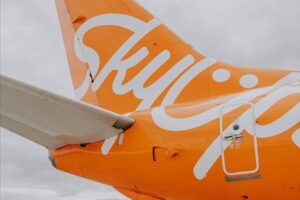
The Ukrainian airline SkyUp Airlines has received TCO (Third Country Operator) authorization from the UK aviation authorities.
As noted in the announcement of the airline, circulated on Wednesday evening, it confirms compliance with the United Kingdom’s requirements in aviation security and allows flights to this country. The authorization does not have a validity period, but it must be confirmed every 24 months.
“The need to obtain British TCO authorization is related to the United Kingdom’s withdrawal from the European Union. If previously the European regulator’s [EASA] authorization was sufficient to carry out flights, then from the beginning of 2023 new documents from the aviation authorities of Great Britain are required,” the airline said.
To get authorization, the airline has provided detailed information on operations, fleet, flight history, internal manuals and data on operational procedures, flight safety management system, etc. The British side has also received confirmation from the State Aviation Administration of Ukraine regarding the authenticity of all the documents provided.
When all procedures were completed, SkyUp received a document certifying compliance with the requirements of the UK Part-TCO Regulations.
From now on, SkyUp can fly to the UK without additional permits.
Earlier this year SkyUp also received the TCO of Switzerland, after which the airline performed a number of flights to this country under the terms of a wet-lease.



