

The U.S., China, and Germany remain the world’s most valuable country brands, according to data from Brand Finance’s annual study.
The company valued the U.S. brand at nearly $34.72 trillion, down 7% from last year’s level. The assessment covers a wide range of indicators, including GDP, investment and tourism appeal, policy and trade regulations, social aspects, and more.
At the same time, the value of the PRC’s brand increased by 7% (to $22.02 trillion), narrowing the gap with the top spot.
Germany ranks third, far behind (-8%, to $4.61 trillion), and the United Kingdom ranks fourth (-5%, to $4.23 trillion).
France moved up to fifth place (-7%, to $3.63 trillion), pushing Japan (-14%, to $3.62 trillion) down to sixth place. Canada (-12%, to $2.41 trillion) moved up to seventh place from eighth last year, Italy (-4%, to $2.3 trillion) to eighth from ninth, and Spain (-4%, to $2.12 trillion) to ninth from tenth.
India fell to tenth place from seventh (-30%, to $1.94 trillion).
The total value of G7 countries’ brands fell by $4.5 trillion over the year due to geopolitical tensions, tariffs, and economic uncertainty.
“The weakening of the Western alliance’s cohesion, combined with persistent inflationary pressures and high energy prices, contributed to a deterioration in sentiment toward a number of major economic powers,” the report notes.
According to a Brand Finance study, Russia, whose brand value fell by 11%, dropped to 25th place from 23rd last year; Kazakhstan (-26%) fell to 45th from 43rd; Uzbekistan dropped to 53rd from 55th; Azerbaijan fell to 74th from 82nd; Belarus – to 86th from 88th place, Turkmenistan – to 87th from 80th place, Georgia – to 91st from 97th place, Armenia – to 105th from 103rd place, and Kyrgyzstan – to 120th from 127th place. Tajikistan remained in 136th place.
Among the top 100 countries, Egypt fell significantly in the ranking—to 51st place from 35th a year earlier; Iran—to 63rd from 50th; Kenya—to 90th from 70th; and Angola—to 94th from 76th. Meanwhile, Costa Rica jumped to 70th place from 81st, the Democratic Republic of the Congo to 72nd from 87th, and Iceland to 80th from 90th.
In total, the ranking includes 192 countries. The total brand value of these countries decreased by 6% over the past year.

The Japan International Cooperation Agency (JICA) has provided a batch of technical assistance to Odesa, according to the Japanese Embassy in Ukraine.
“On May 28, Japan, through JICA, donated eight high-pressure water jets to Odesa’s municipal utilities to help clean and maintain critical infrastructure, thereby strengthening the city’s resilience and recovery. Japan will continue to support the reconstruction of Ukraine and affected communities,” reads a post on social media.
In addition, Japanese Ambassador Masashi Nakagome held meetings with the head of the Odesa City Council, Serhiy Lysak, and the acting mayor of Odesa, Ihor Koval.
Short-lived showers, with some occurring overnight, are expected on Monday night and Tuesday morning, June 1, in the eastern, western, Vinnytsia, and Odesa regions; the rest of the country will remain dry, according to the Ukrainian Hydrometeorological Center.
Winds on ight will be 5-10°C, up to 13°C on the coast; during the day, 15-20°C.
In Kyiv on June 1, no precipitation is expected. Winds will be southeasterly, 5-10 m/s. Nighttime temperatures will range from 6-8°, and daytime temperatures from 18-20°.
According to data from the Boris Sreznevsky Central Geophysical Observatory, for the entire history of meteorological observations in Kyiv, the highest daytime temperature on June 1 was recorded at 31.7° in 1979 and 2011, while the lowest nighttime temperature was 4.1° above zero in 1904.
On Tuesday, June 2, brief showers are expected in western and southwestern Ukraine, with no precipitation elsewhere. Winds will be predominantly southeasterly, 5–10 m/s. Temperatures at night will be 8–13°C, and during the day 18–23°C.
In Kyiv on June 2, there will be variable cloudiness with no precipitation. The wind will be southeasterly, 5–10 m/s. Temperatures at night will be 10–12°C, and during the day 20–22°C.

Ukrainian President Volodymyr Zelenskyy has signed two decrees enacting decisions by the National Security and Defense Council of Ukraine to align sanctions with those of the European Union, according to the president’s press service.
“The synchronization of EU sanctions under the 20th package covers 120 individuals and organizations and imposes economic sanctions targeting key sectors of the Russian economy. Some of them are already subject to Ukrainian sanctions. Today’s decision applies to an additional 16 Russian citizens and 31 companies from Russia, Belarus, the UAE, Kyrgyzstan, Kazakhstan, Uzbekistan, and the temporarily occupied territory of Ukraine,” the statement reads.
Among the individuals are heads of Russian strategic enterprises, state-funded institutions, units of the Russian army, and entities serving Russia in our temporarily occupied territories.
The list also includes Russian defense industry enterprises, manufacturers of electronic warfare equipment, software, and drone components, as well as companies involved in oil, gas, and gold extraction. In particular, restrictions have been imposed on the Russian manufacturer of aerospace products and drone components, LLC
“Atlant Aero,” as well as on the Russian manufacturer of communication systems and components for UAVs and missiles, LLC “Irz-Zvyazok.”
Sanctions have been imposed on companies from the UAE that sell machine tools and laboratory equipment, chemical products, and spare parts for commercial aircraft, as well as on an oil exporter in Belarus.
Ukraine has also imposed restrictive measures on three Russians: Prosecutor Lyudmila Balandina, who was involved in systematic repression and human rights violations against individuals who supported Ukraine or criticized the Russian government; Judge Dmitry Gordeev, also implicated in repression, who issued politically motivated rulings against opposition figures and human rights defenders; and Russian editor and propagandist Maria Sittel, who systematically disseminated disinformation.
Sanctions have also been imposed on 19 Iranian citizens, 7 Sudanese citizens, and 11 Iranian companies involved in Iran’s ballistic missile and drone programs.
“We continue to coordinate sanctions regimes with the EU and our partners. We expect further pressure on Russia and all those who help it sustain its aggression. We are already finalizing joint work on draft EU and partner-state sanctions decisions, including the 21st sanctions package,” noted Vladyslav Vlasyuk, the President’s Advisor and Representative on Sanctions Policy.

The Ukrainian grocery chain Best Market is opening its first store in Prague, continuing its expansion into the European market following the chain’s growth in Poland, according to Czechia Online.
The grand opening of the store is scheduled for June 6. Best Market’s first store in the Czech Republic will be located in Prague 4 on Budějovická Street. According to the publication, the chain is focusing on traditional Ukrainian and Eastern European products: meat products, specialty sausages, smoked and dried fish, pickles, dairy products, and sweets.
Best Market began operations in 2019 with a single store in Kraków, Poland. Over the past few years, the chain has grown to three dozen stores in Poland, targeting both Ukrainian immigrants and local shoppers interested in Eastern European cuisine.
The expansion into the Czech Republic reflects a broader trend in the development of Ukrainian small and medium-sized businesses in Central European countries. After the outbreak of full-scale war, a significant number of Ukrainian entrepreneurs began developing services, retail projects, cafes, stores, and logistics solutions in countries with large Ukrainian communities, primarily in Poland, the Czech Republic, Germany, and Slovakia.
The Czech Republic has become one of the largest centers of Ukrainian migration within the EU. This creates steady demand for familiar food products, culinary concepts, and services tailored to Ukrainians. At the same time, such stores are gradually expanding beyond an exclusively immigrant audience: Eastern European products are becoming appealing to local shoppers as well, especially in major cities.
For Prague, the opening of Best Market means increased competition in the niche of specialty food retail. International and ethnic stores are already operating in the Czech capital, but Ukrainian chains can compete thanks to their recognizable product range, direct work with suppliers, ready-to-eat products, and focus on shoppers seeking regional flavors.
On opening day, the store management plans to host tastings, children’s activities, and meetings with special guests. The first customers are promised gifts, which should help the chain draw attention to the new format in the competitive Prague market.
The development of such projects shows that Ukrainian business in Europe is gradually shifting from adaptation to scaling up. For retailers working with Ukrainian and Eastern European products, the key markets remain countries with a large Ukrainian diaspora, developed logistics, and high demand for a specialized product range.
Best Market is a Ukrainian grocery chain that began operations in Poland in 2019.
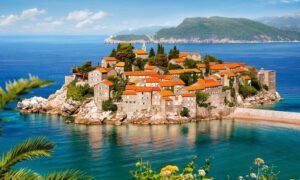
According to Serbian Economist, Montenegro is drafting new regulations for home producers of rakija and other spirits as part of its efforts to align its legislation with EU requirements. Even small producers who make the beverage solely for their own consumption will be required to register with the Customs Service and declare their distillation equipment.
The regulations are contained in a draft of the new law. The law is set to take effect after Montenegro joins the European Union.
According to the draft, an individual will be able to produce up to 50 liters of strong fruit-based alcoholic beverage per year per household without paying excise tax. However, such a beverage may only be used for personal consumption, family members, and guests. The sale of homemade rakija under this regime will be prohibited.
A producer planning to produce more than 50 liters per year or sell the beverage will be required to register as a small distillery and pay excise tax. For strong alcoholic beverages, the rate remains at 1,250 euros per hectoliter of pure alcohol. This corresponds to €12.50 per liter of pure alcohol, and for rakia with an alcohol content of about 50%, approximately €6.25 per liter of finished beverage.
The draft also provides for the status of a small distillery. Such a distillery will be able to produce up to 1,500 liters of pure alcohol per year, which is equivalent to approximately 3,000 liters of 50% rakia. A preferential rate—50% of the standard excise tax on spirits—will apply to such producers.
The new rules significantly tighten control over home production. A small producer will be required to submit an application to the local Customs Service office at their place of residence no later than eight days before production begins. The application must specify the capacity of the still and the production location.
If a producer exceeds the 50-liter limit without notifying customs or begins selling the beverage without registration and excise accounting, the entire batch produced will be considered illegal. In this case, the customs authority may assess excise tax on the entire volume, not just the excess over the limit.
Several types of penalties are provided for violations. First, monetary fines for failure to register, failure to submit a notification, exceeding the permitted volume, and selling without excise clearance. The published materials do not provide an exact scale of fines in euros, but indicate that the new law specifically establishes such penalties.
Second, the violator may be charged unpaid excise tax on the entire volume of alcohol produced. Interest will also be charged on the amount of unpaid excise tax.
Third, the Customs Service will be able to seize illegally produced alcohol and decide whether to sell or destroy it. This measure will apply in cases where production is deemed illegal due to exceeding the limit, failure to report, or selling without registration.
Fourth, customs will be able to seal or confiscate equipment used for the production of strong alcoholic beverages. This measure applies if the distillation apparatus is unregistered or is used to produce more than the permitted volume and to sell without excise accounting.
For Montenegro, this issue has not only fiscal but also social significance. Home production of rakija is a widespread tradition in the country’s rural areas and throughout the Balkans. Therefore, the new rules may cause discontent among some households that are accustomed to producing the beverage for personal consumption without a complicated registration process.
The authorities, in turn, aim to make the market more transparent, curb the illegal sale of strong alcohol, and bring the excise system into line with European standards.
https://t.me/relocationrs/2919



