

According to Fixygen, the cryptocurrency market is entering June with heightened caution: Bitcoin is trading near the $73,000 mark, Ethereum is trading around $2,000, and investors are assessing several risk factors at once—the U.S.-Iran conflict, high oil prices, outflows from crypto ETFs, the upcoming Fed meeting, and the MiCA deadline for crypto companies in the EU.
Following the May decline, the main issue for the market will be not only Bitcoin’s performance but also broader risk appetite. If geopolitical tensions in the Persian Gulf persist, investors may continue to reduce their positions in risky assets, including cryptocurrencies. For BTC, this means the risk of continued trading within a wide range without a sustained recovery, and for altcoins, even greater sensitivity to liquidity.
The first key macroeconomic indicator will be the U.S. labor market report for May, which will be released on June 5. Strong employment data could dampen expectations of Fed policy easing and support the dollar and bond yields. For the cryptocurrency market, this is traditionally a negative combination, as more expensive money reduces interest in assets without a stable cash flow.
The second set of risks is related to oil. A meeting of select OPEC+ countries, which coordinate voluntary production cuts, is expected on June 7. Under normal circumstances, this would be primarily an oil-related event, but currently, the energy factor directly influences inflation expectations, central bank policy, and investor behavior. If the market perceives a risk of an oil shortage or a new surge in prices, crypto assets could come under pressure again due to fears of tighter monetary policy.
On June 10, U.S. inflation data for May will be released. This is one of the month’s key events for Bitcoin and Ethereum. If the CPI shows an acceleration due to fuel and transportation costs, the market may price in fewer chances of rate cuts in 2026 or even begin discussing the risk of further policy tightening. If inflation turns out to be lower than expected, the cryptocurrency market could receive short-term support.
On June 11, the European Central Bank will announce its interest rate decision. This is important for the cryptocurrency market due to the euro, liquidity in Europe, and the overall revaluation of risk assets. Due to high energy prices, inflationary pressures in the eurozone have intensified again, so investors will be closely watching the ECB’s signals regarding its next steps.
The key event of the month will be the Fed meeting on June 16–17. It will be accompanied by updated economic forecasts and FOMC members’ rate expectations. For the cryptocurrency market, not only the decision itself but also the tone of the comments will be important: if the Fed acknowledges inflation risks stemming from oil and geopolitics, Bitcoin may remain under pressure. If, however, the regulator emphasizes the economic slowdown and the need to preserve room for future easing, the market may attempt a recovery.
A separate factor in June will be EU regulation. By June 30, crypto companies must obtain licenses under MiCA rules or risk facing restrictions, blacklists, and regulatory claims. For large players, this may be a step toward legalization and trust, but for small exchanges and providers, it poses the risk of losing access to EU clients.
ETF flows will remain one of the most important short-term indicators. Following an outflow of over $2 billion from Bitcoin ETFs in early June, the market will be watching closely to see if institutional investors return to buying. If outflows continue, it will be harder for BTC to hold above key technical levels. If funds show inflows again, this could signal a stabilization of demand.
The geopolitical front remains the most unpredictable. A U.S.-Iran war, risks to the Strait of Hormuz, the situation in the Middle East, the war in Ukraine, and tensions surrounding global trade could drastically shift investor sentiment. Cryptocurrencies behave erratically under such conditions: sometimes Bitcoin is perceived as an alternative asset, but in the short term, it more often reacts as a risky instrument and falls alongside stocks and the tech sector.
For Ethereum, June will be even more challenging than for Bitcoin. ETH depends not only on the broader market but also on activity in DeFi, NFTs, L2 networks, and demand for spot Ethereum ETFs. If liquidity remains weak, Ethereum may lag behind Bitcoin, while altcoins could exhibit even higher volatility.
The base case for June assumes continued high volatility and Bitcoin trading within a wide range without a clear trend until the release of inflation data and the Fed’s decision. A positive scenario for the market would be a combination of weaker inflation, oil price stabilization, a resumption of inflows into ETFs, and dovish signals from the Fed. A negative scenario would involve a new surge in oil prices, hawkish rhetoric from central banks, increased outflows from ETFs, and escalation in the Middle East.
Thus, June could be a test of resilience for the cryptocurrency market. Bitcoin remains the main indicator of institutional demand, Ethereum serves as an indicator of risk in altcoins, and key external factors will include interest rates, inflation, oil, geopolitics, and regulation in Europe.

The packaging materials manufacturer Pak Van LLC (Bila Tserkva, Kyiv Oblast) has been granted member status in the “Bila Tserkva” Industrial Park, according to the Ministry of Economy, Environment, and Agriculture.
According to the announcement, an agreement on conducting business activities within the “Bila Tserkva” IP was signed between the park’s management company, Astrobild LLC, and Pak Van LLC on May 20, 2026.
“Pak Van” manufactures polymer screw caps and PET bottles, as well as other plastic products for beverages, dairy products, cosmetics, and household chemicals.
The company was registered in May 2015; 100% of its authorized capital is owned by Denis Bondarenko, an entrepreneur registered in the Kirovohrad region.
In 2025, the company nearly tripled its net profit compared to 2024—to 14.6 million UAH—while net revenue grew by 5% to 269.2 million UAH. In the first quarter of 2026, it reported 2.8 million UAH in net profit and 60 million UAH in revenue.
The projects of entrepreneur Vasyl Khmelnytskyi’s holding company UFuture—IP “Bila Tserkva” and “Bila Tserkva 2”—were included in the Register of Industrial Parks in 2018. The parks are home to more than two dozen tenants (including foreign companies).
The total area of the parks is 70.3 hectares, of which 45 hectares have already been developed. More than 85,000 square meters of industrial and warehouse real estate have been commissioned.

A public literary and psychological discussion titled “Masculine and Feminine: A Dialogue Through the Texts of Chingiz Aitmatov and Contemporary Realities,” dedicated to the work of Kyrgyz writer Chingiz Aitmatov, took place in Kyiv under the patronage of the Embassy of the Kyrgyz Republic in Ukraine, according to the embassy’s press service.
“For many Ukrainians, Taras Shevchenko is the voice of the nation. For many Kyrgyz, Chingiz Aitmatov is its intellectual and humanistic face,” said Idris Kadyrkulov, Ambassador Extraordinary and Plenipotentiary of the Kyrgyz Republic to Ukraine, in a comment to the agency during the event.

According to the diplomat, through Aitmatov’s works, the organizers sought to introduce Ukrainians not only to Kyrgyz literature but also to the humanistic values of the Kyrgyz people—respect for others, mutual support, love for loved ones, and responsibility.
The event was organized by the civic platform MÜTEŞEM QIRIM (MQ Community) and was dedicated to International Family Day. Participants began the meeting with a moment of silence to honor the memory of fallen Ukrainian soldiers and civilians.
As part of the event, a video message was shown from the writer’s son, Askar Aitmatov, who expressed support for the Ukrainian people and noted their resilience during the war.
The practical part of the discussion was led by psychologists Gennady Mustafayev and Katerina Goltsberg together with civic activist Leniye Ibragimova. The participants analyzed Aitmatov’s novellas “Jamila,” “My Little Poplar in a Red Scarf,” and “The Red Apple” through the lens of contemporary social challenges, family relationships, and personality psychology.

The event also featured Ukrainian-language editions of Chingiz Aitmatov’s books, an exhibition dedicated to Central Asian culture, and a portrait of the writer by People’s Artist of Ukraine Vasyl Perevalsky.
The organizers emphasized that the event served as an example of cultural diplomacy and humanitarian dialogue between Ukraine and Kyrgyzstan amid the war.

The Ukrainian Grain Association (UGA) has raised its estimate of the potential 2026 grain and oilseed harvest by 1 million tons—to 83.6 million tons, which is 11.6% higher than the 2025 figure (74.9 million tons)—due to increased yields of corn and sunflower, the UGA press service reported on Monday.
“With such a harvest, exports in the new 2026/2027 season could potentially reach 50.8 million tons (the export estimate for the current season is 42.3 million tons). However, this is an optimistic scenario, the realization of which will be possible only if Ukraine’s logistical problems do not worsen due to Russia’s aggression and its constant bombing of Ukrainian transport infrastructure and energy facilities,” the statement noted.
According to the UGA’s estimate, the wheat harvest in 2026 could reach 22.8 million tons (22.5 million tons in 2025), and its exports in the 2026/2027 marketing year (MY) could reach 17 million tons compared to the expected 13.5 million tons in the current season.
The UGA estimates the barley harvest in 2026 at 5.2 million tons (4.9 million tons in 2025), with likely exports of about 2.2 million tons, compared to 1.6 million tons in the current season.
According to the UGA’s forecast, the corn harvest in 2026 will total 32.1 million tons (31.1 million tons in 2025), and exports could reach 27 million tons compared to 22 million tons in the current season.
“Expectations for this year’s corn harvest are positive thanks to favorable weather conditions so far,” the association explained.
The UGA expects the sunflower harvest in 2026 to reach 13.3 million tons, compared to 11.1 million tons in 2025.
“Traditionally, almost all sunflowers will be processed in Ukraine—13.5 million tons. Exports will not exceed 50,000 tons,” the statement said.
In 2026, the rapeseed harvest, according to UGA forecasts, could reach 3.4 million tons compared to 3.2 million tons in 2025, while exports for the 2026/2027 marketing year may amount to only 1.9 million tons.
This year’s soybean harvest is expected to reach 4.9 million tons, which is less than last year’s 5 million tons, while potential exports are projected at 2.3 million tons compared to 2.9 million tons in the current season.
As reported, the U.S. Department of Agriculture (USDA) forecasts wheat and corn exports from Ukraine in the 2026/2027 season at 13 million tons and 23 million tons, respectively, which is 0.5 million tons and 1 million tons more than in the current season.
At the same time, the USDA expects wheat production to decline to 23 million tons from 24.1 million tons last year, and corn production to decline to 30 million tons from 30.9 million tons last year.

The “Silpo” chain has added the ability to purchase tickets for concerts, performances, museums, and other events to its mobile app, the company’s press service reported.
The “Experience Box Office” section is located on the app’s home screen and in “My Account”; it features both partner events and those organized by Silpo, including ‘Festirudy’ and “Bragary’s Chicken Circus.” Events can be filtered by city, date, and category, and purchased tickets will be sent to the user’s email.
The press service emphasized that the “Silpo” chain has become the first retailer in Ukraine to integrate such functionality directly into its app.
Silpo-Food LLC, which operates the Silpo chain, was established in early August 2016. According to information on the website, the chain operates 310 supermarkets in 60 cities across Ukraine and four Le Silpo delicatessens: in Kyiv, Dnipro, Kharkiv, and Odesa.
The founder of the LLC is Retail Capital, a closed-end, non-diversified venture corporate investment fund (100%, Kyiv). The ultimate beneficiary is Volodymyr Kostelman.
Silpo-Food’s revenue for 2025 increased by 13.97% compared to 2024, reaching UAH 106.013 billion, while net profit amounted to UAH 1.205 billion, compared to UAH 154.1 million for the same period the previous year.
It is part of the Fozzy Group, a commercial and industrial group with more than 825 retail outlets throughout the country. The company operates retail chains of various formats: Silpo supermarkets, Fozzy wholesale hypermarkets, Fora neighborhood stores, Thrash! discounters, Bila Romashka pharmacy supermarkets, and E-ZOO pet stores.
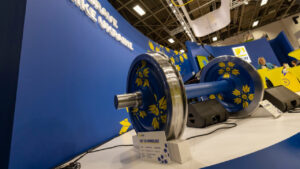
PJSC “Interpipe Novomoskovsk Pipe Plant” (“Interpipe NMTZ,” Dnipropetrovsk region) reported a consolidated net loss of UAH 120.216 million for the January-March period of this year, compared to a consolidated net profit of UAH 6.006 million in the same period last year.
According to the company’s interim consolidated report, which is available to the Interfax-Ukraine agency, net revenue from product sales for this period decreased by 24.9%, to UAH 269.525 million from UAH 269.525 million in the first quarter of 2025.
Retained consolidated earnings as of the end of March amounted to UAH 210.495 million.
It was previously reported that Interpipe NMTZ posted an unconsolidated net loss of UAH 104.411 million for the first quarter of 2026, compared to an unconsolidated net profit of UAH 35.697 million in the same period last year. Unconsolidated revenue from ordinary activities for this period decreased to UAH 69.382 million from UAH 243.431 million in the first quarter of 2025. Retained unconsolidated earnings as of the end of March amounted to UAH 357.504 million.
According to the annual consolidated financial report, NMTZ reported a net profit of UAH 10.161 million in 2025, compared to a loss of UAH 194.563 million in 2024. At the same time, revenue from ordinary activities for the past year increased by 27.3% to UAH 2.808420 billion.
In 2023, Interpipe NMTZ reported a consolidated net profit of UAH 140.327 million.
Interpipe NMTZ specializes in the production of welded pipes for the oil and gas industry, mechanical engineering, construction, and other industrial sectors.
According to the National Securities and Stock Market Commission (NSSMC) data for the first quarter of 2026, Interpipe Limited owns 90.8199% of the plant’s shares, while Lindsell Enterprises Limited (registered in Cyprus) owns 6.2918%.
The authorized capital of PJSC “Interpipe NMTZ” is UAH 50 million, and the par value of a share is UAH 0.25.



