

According to Fixygen, Ulyanovskoye PJSC plans to hold a general meeting of shareholders on May 26, 2026, as stated on the issuer’s website. The company’s website states that the notice of the annual meeting on May 26 was published on April 23, 2026.
In the publicly available excerpt of the notice, the meeting agenda is not detailed. Typically, at annual meetings, shareholders of agricultural issuers review financial statements, results of financial and operational activities, profit distribution or loss coverage, as well as matters regarding the powers of management bodies; however, the specific agenda items for the meeting of PJSC “Ulyanovskoye” require verification against the full text of the issuer’s notice.
Ulyanovskoye PJSC is registered in the village of Ulyanovka, Bogodukhovsky District, Kharkiv Oblast. According to OpenDataBot, the company’s EDRPOU code is 00387097, the date of registration is December 19, 1996, the authorized capital is UAH 10.317 million, and the director is Andriy Ivanov. The company’s primary activity is the cultivation of grain crops, legumes, and oilseed crops.
According to OpenDataBot, PJSC “Ulyanovskoe” reported revenue of 154.914 million UAH in 2025, net profit of 35.308 million UAH, and total assets of 244.081 million UAH at year-end. In 2024, the company generated UAH 189.509 million in revenue and UAH 20.295 million in net profit. The average number of employees in 2025 was 78.
According to OpenDataBot data, the company’s owners include 374 shareholders listed in the securities owners registry. Agra Opportunity Fund Limited is listed as a major shareholder with a 93.1749% stake.
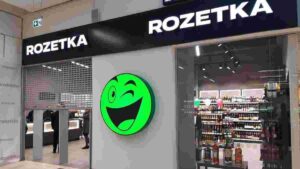
On April 17, the European Bank for Reconstruction and Development (EBRD) approved a EUR25 million long-term loan for the Rozetka corporate group, specifically EUR20 million for Rozetka.ua LLC in Ukraine and EUR5 million for Rozetka EU LLC in Poland, according to the financial institution’s materials.
As noted, EUR10 million of this amount is earmarked for financing the working capital of the group’s Ukrainian and Polish operations, and the bank may provide up to an additional EUR15 million for working capital and potential capital investments in Ukraine and Poland.
The project will receive partial first-loss risk coverage from the European Union under the Ukraine Investment Facility (UIF), which supports “green” investments in key economic sectors and promotes recovery during the war.
According to the bank’s assessment, the project will also contribute to the reintegration of veterans and other vulnerable groups, while the “green” component of the financing involves the purchase of energy-efficient household appliances.
The loan will provide the Rozetka Group with longer-term financing not available on the local market, support the early-stage development of its Polish operations, and help strengthen HR policies, skills development, and women’s participation in the company.
As reported with reference to YouControl, companies within the Rozetka corporate group generated a total of UAH 30.2 billion in revenue from January to September 2025, accounting for 76% of the total revenue of the 10 largest online retailers.
Rozetka was founded in 2005 in Kyiv by Vladislav and Irina Chechotkin. Later, a fund managed by Horizon Capital became a co-owner of the company. Currently, the company operates as a multi-category online marketplace and is developing a network of its own stores.

According to Fixygen, PJSC “Production and Experimental Plant of Organic Fertilizers” (PJSC “VEZOD,” Kyiv Oblast) will hold its annual general meeting of shareholders via remote voting on May 25, 2026, as reported in the NSSMC’s information disclosure system.
According to the issuer’s announcement, the list of shareholders entitled to participate in the meeting will be compiled as of May 20, 2026. Voting will begin on May 15 at 11:00 a.m. and end on May 25 at 6:00 p.m.
The draft agenda includes consideration of the report of the CEO of PJSC “VEZOD” for 2025, the report of the supervisory board, approval of the results of financial and economic activities for 2025, the distribution of profits or the procedure for covering losses, as well as approval of the company’s annual report for 2025.
The draft resolution on the distribution of financial results provides for the approval of the company’s financial and operational results for 2025, and that no dividends be accrued or paid for the year. The announcement states that this is proposed to ensure the company’s stable operations, finance its current needs, and support its further development.
Shareholders are also being asked to give their preliminary consent to significant transactions that the company may enter into within one year of the date the resolution is adopted. This includes, in particular, financial assistance agreements, loan and deposit agreements, agreements securing the fulfillment of obligations, transactions involving movable and immovable property, land plots, and vehicles, as well as lease, contract, leasing, transportation, storage, and repair agreements. The maximum aggregate value of such transactions is set at 50 million UAH.
PJSC “Production and Experimental Plant of Organic Fertilizers” is registered in the village of Vyshenky, Boryspil District, Kyiv Region. According to OpenDataBot, the company’s EDRPOU code is 05421381, its date of establishment is March 5, 1998, its authorized capital is UAH 1.224 million, and its director is Olena Kornachuk. The company’s primary activity is the manufacture of machinery and equipment for agriculture and forestry.
According to OpenDataBot, VEZOD’s revenue in 2025 amounted to 2.581 million UAH, its net loss was 281,400 UAH, and its assets at year-end were 582,500 UAH.

The aviation company FED JSC (Kharkiv) ended January-March 2026 with a net profit of UAH 17.08 million, which is 6.7 times less than the corresponding figure for January-March 2025.
According to the company’s interim report published in the disclosure system of the National Securities and Stock Market Commission (NSSMC), its net revenue increased by 9.7% to UAH 336.6 million.
“FED” generated nearly UAH 57 million in gross profit compared to UAH 101.9 million a year earlier, while profit from operating activities decreased by 6.2 times to UAH 22.9 million.
Retained earnings as of April 1, 2026, exceeded UAH 1.5 billion. FED’s current liabilities amounted to UAH 663.1 million, while long-term liabilities stood at UAH 204.5 million.
JSC “FED” is one of Ukraine’s leading enterprises. It specializes in the development, production, maintenance, and repair of equipment for aviation, space, and general engineering applications.
The average number of full-time employees as of April 1, 2026, was 964.
In 2025, FED increased its net profit by 3.4% compared to 2024—to UAH 187.6 million—while net revenue grew by 26.5%—to UAH 1.05 billion.
As reported, by the end of this year, FED will pay shareholders UAH 40 million in dividends, amounting to nearly UAH 5,150 per share. Over 98% of the shares in JSC “FED” are owned by the company’s director, Viktor Popov.
According to its annual report, agricultural holding IMC posted $67.5 million in net profit for 2025, allowing the company not only to improve on its 2024 result ($54.6 million) but also to effectively return to pre-war profitability levels.
According to the published trends in key KPIs, following a record-breaking 2021, when profit reached $75.9 million, the holding went through a period of significant decline: in 2022, a loss of $1.1 million was recorded, which deepened to $21.0 million in 2023.
The company’s consolidated revenue in 2025 amounted to $190.5 million, which is 4.8% higher than the pre-war 2021 figure ($181.7 million), although it is slightly lower than the 2024 result ($211.3 million). EBITDA reached $95.8 million in the reporting period, indicating a recovery in operating efficiency following a critical drop to $3.2 million in 2023.
The report pays particular attention to deleveraging: the holding’s total debt at the end of 2025 fell to $17.9 million, the lowest level in the past five years (in 2021 – $32.8 million, peak in 2023 – $45.7 million). The net debt-to-EBITDA ratio remains consistently negative (-0.3), while the current ratio has risen to a record 4.6.
“The group’s further development in 2026 will depend on the course of the war, but for now we are focusing on improving business efficiency by implementing the results of our own R&D department and adhering to the “IMC SMART GREEN” strategy, which involves decarbonization and investments in the acquisition of agricultural land in Ukraine,” the holding’s report states.
According to the document, in 2026, IMC plans to focus on growing three crops: corn (58% of planted area), sunflowers (23%), and wheat (19%). The company also aims to further reduce its debt burden to $10.7 million by the end of this year. In export logistics, shipments via seaports will remain a priority while maintaining a stable share of rail transport.
IMK specializes in growing grains, oilseeds, and milk production. The company cultivates approximately 120,000 hectares of land in the Poltava, Chernihiv, and Sumy regions. Currently, the agricultural holding ranks among Ukraine’s most efficient agricultural producers in terms of yield and profitability per hectare.
The IMK integrated group of companies operates in the Sumy, Poltava, and Chernihiv regions. The holding’s priority areas of activity are crop production (growing corn, wheat, and sunflowers) and grain storage. The group’s land bank is divided into five clusters and totals 115,000 hectares. IMC’s grain storage capacity is 554,000 tons. The holding company has its own fleet of trucks, grain railcars, and high-performance agricultural machinery. The group’s shares have been listed on the Warsaw Stock Exchange since May 2011. The company is ranked among the TOP 100 largest landowners in Ukraine.
According to Serbian Economist, the Chinese industrial group TBEA is considering Serbia as a potential location for establishing transformer production facilities geared toward exporting to the European market. Negotiations between Serbian authorities and the company’s management in Tianjin have moved beyond preliminary discussions and shifted to more concrete talks regarding an industrial project.
The possibility of opening a manufacturing facility in Serbia is being discussed, one that will focus not only on equipment assembly but also on deeper localization—including technology transfer, the development of a local supply chain, and workforce integration.
TBEA’s interest in Serbia is driven by several factors. First, the country offers proximity to EU markets without the full cost burden characteristic of the European Union itself. Second, growing logistics links and a free trade agreement with China make Serbia a convenient platform for both the supply of components and the export of finished products.
The overall situation in Europe adds particular significance to the project. Demand for transformers and grid equipment is growing amid the integration of renewable energy, electrification, and the modernization of transmission networks, while a shortage of production capacity is already becoming one of the constraints on infrastructure programs. Against this backdrop, the potential establishment of a new plant in Serbia could partially relieve pressure on European supply chains.
For Serbia, such a project would mean not just an influx of investment, but deeper integration into the European energy industry.
TBEA is one of China’s largest industrial groups in the field of high-voltage equipment, transformers, and energy infrastructure. The company operates in the power transmission and distribution, power machinery, solar energy, and industrial equipment segments and is one of the key providers of solutions for large-scale grid and energy projects in China and beyond.
https://t.me/relocationrs/2741



