
Ferrexpo, a mining company with assets in Ukraine, reported a net loss of $211 million, which is 4.2 times higher than the 2024 figure ($50.03 million).
According to the report on consolidated unaudited results for 2025, the operating loss for the past year amounted to $197 million, compared to an operating profit of $18 million in 2024.
Revenue for 2025 was $787 million, compared to $933.263 million in 2024 (a 16% decline). Meanwhile, EBITDA was $28 million compared to the adjusted figure of $69.310 million for 2024 (a 60% decrease).
Ferrexpo’s capital expenditures in 2025 amounted to $49 million, compared to $101.688 million in 2024.
Cash balances as of the end of 2025 were $47 million, compared to $100.835 million as of the end of 2024.
The announcement states that these financial results are unaudited and remain subject to the completion of the Group’s audit procedures, as well as approval by the Company’s Audit Committee and Board of Directors. As of the date of this announcement, these unaudited, consolidated financial results were prepared on a going concern basis; however, this basis of preparation is contingent upon the successful completion of the planned fundraising.
As reported, Ferrexpo ended the first half of 2025 with a net loss of $196.004 million, whereas in the same period of 2024 it recorded a net profit of $55.490 million. The pre-tax loss for this period amounted to $186.899 million, whereas in January–June 2024 there was a pre-tax profit of $75.671 million. Revenue in the first half of 2025 decreased by 17.5% to $452.607 million. Meanwhile, EBITDA amounted to $3.890 million compared to $79.043 million at the end of June 2024 and $69.310 million at the end of 2024.
Cash and cash equivalents as of the end of June 2025 amounted to $52.262 million, as of the end of June 2024 – $115.131 million, and as of the end of 2024 – $105.919 million.
In 2024, Ferrexpo reported a net loss of $50.03 million, which is 41% less than the 2023 figure ($84.753 million). Revenue for 2024 was $933.263 million, compared to $651.795 million in 2023 (a 43.2% increase). Meanwhile, EBITDA was $69.310 million, compared to the adjusted figure of $98.871 million for 2023. Cash balances as of the end of 2024 were $100.835 million, as of the end of 2023 – $108.293 million, in 2022 – $106.397 million, and as of the end of 2021 – $117 million.
Ferrexpo ended 2023 with a net loss of $84.753 million, compared to a net profit of $219.997 million in 2022, which is four times lower than the profit for the pre-war year of 2021 ($870.993 million). Revenue for 2023 amounted to $651.795 million, while in 2022 it was $1.24849 billion (a decrease of 47.8%). At the same time, EBITDA fell by 83% to $130.242 million compared to $765.113 million in 2022.
Ferrexpo is an iron ore company with assets in Ukraine. Ferrexpo owns 100% of the shares in Poltava Mining, a 100% stake in Yeristiv Mining, and a 99.9% stake in Bilaniv Mining.
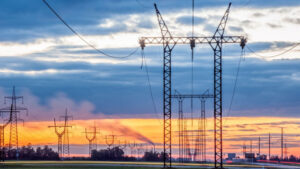
Between April 13 and 19, Ukraine reduced electricity imports by 21%—to 114,900 MWh, according to the DIXI Group analytical center, citing data from Energy Map.
“At the same time, exports increased more than fourfold—from 2,200 MWh to 10,300 MWh—but these volumes remain insignificant and occur only during specific hours of temporary surplus, without affecting the supply of domestic demand,” the center noted.
Throughout the week, Russia continued its attacks on energy infrastructure. In particular, on April 16, another massive shelling of the power grid took place, with energy facilities in Kyiv and the southern regions as the main targets.
At the same time, weather conditions partially stabilized the situation in the power grid. A gradual rise in temperature and sunny weather contributed to a decrease in electricity consumption and an increase in solar power generation, which allowed for partial compensation of the losses caused by Russia and helped avoid large-scale blackouts.
According to DIXI Group data, electricity imports from April 13 to 19 decreased by 15–27% across all sources. At the same time, supplies from Slovakia remained absent for the second week in a row.
Hungary accounted for the largest share of imports—61.8 thousand MWh, or 53.8%. Romania accounted for 27.8 thousand MWh (24.2%), Poland for 24.7 thousand MWh (21.5%), and Moldova for 0.6 thousand MWh (0.5%).
At the same time, electricity exports remained limited and were carried out exclusively during specific hours of surplus—primarily during nighttime and daytime periods with lower load.
Positive net migration will remain the main factor partially offsetting the European Union’s natural population decline in the coming decades, according to Eurostat projections.
According to Eurostat estimates, between 2025 and 2100, the EU is expected to see 253 million births and 409.8 million deaths, equivalent to a natural population decline of 156.7 million people. At the same time, total net migration over the same period is expected to add 103.7 million people, which will partially offset the demographic decline.
This is precisely why, as Eurostat emphasizes, high and sustained positive net migration remains the sole driver of population growth for those countries where the population will still be increasing by 2100. In some cases, migration can slow down aging, as the proportion of working-age people is often high among migrants.
At the same time, statisticians note that the impact of migration is ambiguous. In some countries, the influx of migrants of retirement age may, on the contrary, exacerbate population aging, and negative net migration can accelerate this process if younger and economically active residents leave the country.
Overall, under the baseline scenario, the EU population will grow slightly until 2029 and then begin a gradual and increasingly noticeable decline, reaching 398.8 million people by 2100, compared to 451.8 million in 2025.
Eurostat specifically emphasizes that this is not a forecast in the strict sense, but rather a “what-if” scenario based on maintaining the underlying assumptions regarding fertility, mortality, and migration throughout the projection period.

By 2100, the population will decline in 18 European Union countries, with the sharpest declines expected in Latvia, Lithuania, and Poland, according to Eurostat data.
Under Eurostat’s baseline scenario, Latvia’s population will decrease by 33.9%, Lithuania’s by 33.4%, and Poland’s by 31.6% by the end of the century compared to 2025. A significant decline is also expected in Germany, Slovenia, Finland, and the Czech Republic, where the decline will be around 10%.
At the same time, population growth is projected only in nine EU countries by 2100. The population will increase by more than 25% only in Luxembourg and Malta—by 36.4% and 26%, respectively. Growth of 10–20% is expected in Sweden and Ireland.
Despite the overall population decline, Germany, according to Eurostat estimates, will remain the most populous EU country in 2100 with 74.7 million inhabitants. It will be followed by France with 67.2 million and Spain with 49.8 million people.
The statistical office notes that differences between countries will be significant both in terms of when peak population is reached and the scale of subsequent decline or growth.
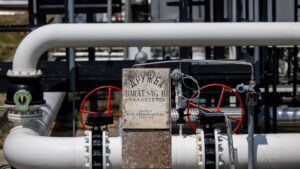
On Wednesday, after 12:00 p.m., Ukraine resumed oil transit via the Druzhba pipeline, according to a source close to the Ukrainian government who spoke to the online portal “Energoreforma.”
“At 12:35 p.m., oil transit was launched. Pumping has begun,” said the source speaking to “Energoreforma.”
He has not yet specified the volume of the transit.
As reported with reference to Slovak Economy Minister Denisa Saková, the resumption of supplies via the Druzhba pipeline to that country is expected on Thursday morning.
Hungary and Slovakia have not received Russian oil via the Druzhba pipeline since January 27 of this year due to damage to the pipeline caused by Russian shelling. Earlier, Hungarian Prime Minister Viktor Orbán stated that he would not lift his veto on the €90 billion EU loan for Ukraine until oil supplies are restored.
Péter Magyar, leader of the Tisza Party, which won the elections in Hungary, called on Ukrainian President Volodymyr Zelenskyy to ensure the Druzhba pipeline is restored as soon as possible.
The day before, the Kremlin stated that Russia is technically ready to resume transit through the Druzhba pipeline to Hungary.
Hungarian MOL announced on Wednesday, April 22, that the state-owned JSC “Ukrtransnafta,” responsible for operating the Ukrainian section of the Druzhba pipeline, had officially notified it of the completion of repair work on the Druzhba pipeline, as well as the termination of the force majeure circumstances that had been in effect since January 27, 2026.
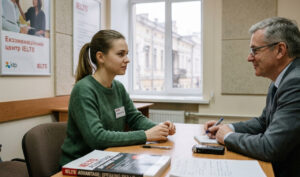
For many test-takers and professionals, the IELTS exam is seen as an academic challenge, but for introverts, the real test begins even before the pen touches the paper. It starts in a small room, face-to-face with the examiner.
The Speaking Section lasts 11–14 minutes, during which you must not only demonstrate your knowledge of grammar but also be an “interesting conversationalist.” But what if your comfort zone is silence, and questions about your hobbies or childhood memories make you want to just nod politely and leave?
Today we’ll explore how to turn introversion into your superpower and score high on the IELTS Speaking test by using a strategic approach instead of emotional openness.
There is a misconception that to get a high score on the IELTS, you need to be a charismatic speaker who loves being the center of attention. In reality, examiners don’t evaluate your personality; they assess four specific criteria: None of these points require you to be the life of the party. Moreover, extroverts’ excessive talkativeness often leads to a loss of focus and structural errors, whereas introverts’ tendency toward analysis can be a decisive advantage.
The biggest barrier for an introvert is the need to talk about themselves. When you are asked: “Describe a time when you were very busy”, you might think: “I don’t want to share anything personal” or “Nothing that interesting has ever happened in my life.”
Solution: Treat the Speaking section as a role-playing game. You don’t have to be 100% honest. The examiner isn’t verifying the facts of your biography. They’re assessing your ability to construct sentences.
Case #1: Alexei and “Boring” Questions Alexei is an IT specialist accustomed to giving concise answers. When asked “Do you like your neighbors?”, he usually replied simply “Yes, they are quiet”. That’s a 5.0-level answer. We changed the approach: Alexei began using the “Answer + Extension + Example” structure. Instead of thinking about his actual neighbors, he imagined an ideal scenario. His answer became: “Actually, I would say that I have a very positive relationship with them. Even though we don’t interact much, which I personally prefer, they are incredibly respectful of my privacy. For instance, they never make noise late at night, which is crucial for my focus.” Result: 7.5 in Speaking thanks to the logical expansion of his thought.
In the first part of the exam, questions usually concern your daily life: home, work, studies, the weather. For an introvert, this may seem too simplistic or, conversely, an intrusion into personal space.
The “Paraphrase the Question” Technique When you need to buy some time to think, don’t stay silent. Use introductory phrases that will help you get into the flow:
● “That’s an interesting question, let me think for a second…”
● “To be honest, I haven’t thought about it much before, but I suppose…”
These “fillers” sound natural and give your brain the necessary 2–3 seconds to formulate a response without creating an awkward silence.
The second part—the Cue Card—is a real challenge. You need to speak for 2 minutes without stopping. Introverts often run out of ideas after just 40 seconds.
The “Mind Map” Method During the 1-minute preparation time, don’t write full sentences. Sketch out the structure. Divide your story into: Case #2: Maria and the Fear of Public Speaking Maria had to describe a memorable trip. She started worrying that her story about a trip to the Carpathians was too simple. We advised her to shift the focus from events to describing her feelings (which is more natural for introverts). She used rich vocabulary to describe nature and inner peace. Instead of a dry list of places, she created an atmospheric narrative that allowed her to speak easily for over 1.5 minutes.
The third part of the exam involves discussing abstract and global topics. And this is where your tendency toward deep reflection becomes your main strength. The examiner is no longer interested in what you had for breakfast; they want to know your opinion on climate change, education, or technology.
Use the OREO structure:
● O (Opinion): State a clear opinion.
● R (Reason): Explain why you think so.
● E (Example): Give an example (it can be fictional).
● O (Opinion/Conclusion): Summarize what you’ve said.
This creates a sense of academic maturity and confidence, even if you feel uncomfortable inside.
● Try to be “too” energetic. If you start gesturing unnaturally or laughing loudly, it will only drain your energy and throw you off track. Stay calm and focused—that’s also a sign of confidence.
● Give one-word answers. “Yes” or “No” is a death sentence for your score. Even if the question seems like a closed-ended one to you, always add “because…”.
● Correct every minor mistake. If you made a mistake with an article—move on. Constant self-correction disrupts fluency.
Remember that the examiner is not a judge, but a person whose job is to give you the opportunity to demonstrate your knowledge. They are often tired themselves after dozens of candidates, so your clear, structured, and calm response will be a real gift to them.
Before starting the Speaking section, take a few deep breaths. Remind yourself: “I’m not here to be liked as a person. I’m here to show how well I master English grammar”. This shift in focus from the personal to the technical is incredibly liberating.
We understand that every student has their own unique learning style, and the approach to teaching must be tailored accordingly. Our Business Language English courses are built on the principles of individual progress and psychological comfort. We don’t just teach you grammar—we help you find your own “voice” in English, whether you’re a natural speaker or someone who values every word. Thanks to our methods and experienced instructors, you’ll be able to turn exam preparation into an engaging process of self-improvement, where every lesson brings you closer to your dream score. Together, we’ll prove that your reserved nature isn’t a hindrance, but rather the foundation for deep and high-quality knowledge that you’ll be able to confidently demonstrate on the exam.



