

According to Fixygen, JSC “NTK ”Elektropribor” will hold a general shareholders’ meeting on April 10, 2026, in a remote format. Key agenda items include the approval of financial statements, operating results for 2025, and other corporate governance decisions.
The company operates in the instrument manufacturing and scientific and technical development sectors. The company is known as a manufacturer and developer of automation systems and measurement equipment. According to Opendatabot, control over the company is concentrated among private Ukrainian shareholders; detailed ownership stakes require clarification based on the latest disclosure.
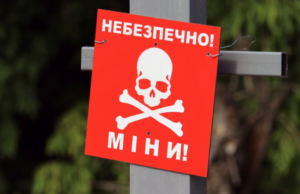
Over 130,000 square kilometers of Ukrainian territory remain dangerous due to landmines, but since the start of Russia’s invasion in 2022, over 40,000 square kilometers have already been returned to use, and nearly 10,000 square kilometers are planned for demining this year, Prime Minister Yulia Svyrydenko reported.
“Today, on International Mine Awareness Day, we note that Ukraine remains the most heavily contaminated country in the world with explosive ordnance—over 130,000 square kilometers of territory are potentially dangerous. The largest areas are in the Kharkiv, Kherson, Mykolaiv, and Donetsk regions,” she wrote in a Telegram post on Saturday.
Meanwhile, the prime minister reported that since the start of the full-scale invasion, Ukraine has returned 40,700 square kilometers to use, including 15,100 hectares of agricultural land, which were cleared under the state program “Humanitarian Demining.”
According to her, Ukraine is changing its approaches to demining, reducing costs, and utilizing Ukrainian robotic systems. This year, plans are in place to return nearly 10,000 hectares to use, primarily agricultural land. The list was compiled for the first time using the GRIT prioritization system, she noted.
“We are developing the market for demining operators: their number has grown from 74 to 134, in particular thanks to the involvement of the private sector alongside the State Emergency Service and the State Specialized Service,” the Prime Minister writes.
In addition, a program is in place to compensate individuals and self-employed farmers for the cost of demining, so applications can be submitted through the State Agrarian Register.
The Soul of Soil campaign is ongoing, promoting products from demined areas and supporting humanitarian demining.

According to Fixygen, the cryptocurrency market began the week by regaining key levels, and Bitcoin once again tested the $70,000 mark—the first such move in the past week and a half.
By midday, the asset was holding near $69,700, showing moderate growth and confirming the continuation of upward momentum following the previous consolidation phase. The session’s local high reached $70,250, signaling a return of buyer interest in the market.
Prices are being supported by the overall news backdrop, including discussions of a possible de-escalation in the Middle East. Potential negotiations for a temporary ceasefire are perceived by the market as a factor reducing global risks, which is traditionally favorable for risk assets, including cryptocurrencies.
At the same time, geopolitical uncertainty persists, keeping volatility at elevated levels. Reduced liquidity due to the Easter holidays in Europe and Asia remains an additional factor, amplifying price swings but not altering the overall picture of a gradual recovery.
As a result, the market is showing cautious optimism: current levels serve as a balancing zone where the foundation for further movement is being formed. If the macroeconomic outlook remains neutral or improves, Bitcoin could consolidate above $70,000 and continue moving toward new local highs, whereas negative signals could return the asset to a consolidation range without breaking the medium-term trend.

According to Fixygen, PJSC Pivdenenergomontazh will hold a general shareholders’ meeting on April 11, 2026, at 11:00 a.m. in Kyiv at 4 Beresteiskyi Ave. The agenda includes annual financial statements, performance results, and current corporate matters.
The company specializes in installation work in the energy and industrial sectors. Such companies are important for the construction and repair of power units, substations, and infrastructure facilities. According to Opendatabot, the company is controlled by private Ukrainian owners associated with the engineering and contracting businesses.

According to Fixygen, PJSC “Insurance Company ‘Ultra-Alliance’” will hold its annual general meeting of shareholders on April 28, 2026, via remote participation. The main items on the agenda include approval of the 2025 performance results, financial statements, and other corporate governance decisions.
The company operates in the Ukrainian insurance market. For mid-sized insurers, key indicators remain capital adequacy, the quality of the insurance portfolio, and compliance with regulatory standards.

Starting May 20, 2026, the short-term rental market in Bulgaria will face stricter regulations: new EU-wide rules will require mandatory registration of properties and data sharing between platforms and the government, which could lead to the mass removal of illegal listings from Airbnb and Booking.com. The source of these changes is EU Regulation 2024/1028 on the collection and exchange of data regarding short-term rentals, which takes effect on May 20, 2026. Its goal is to increase transparency in the sector, simplify the identification of landlords, and provide national authorities with a tool to monitor compliance with local requirements.
According to Boris Pavlov, chairman of the Bulgarian Association of Tourism Real Estate and Innovation, about half of the current short-term rental listings in Bulgaria may disappear from platforms if owners do not register properly. This primarily concerns the shadow market segment, which has operated without full administrative and tax legalization.
Bulgarian law already requires that short-term rentals be registered as tourist accommodations rather than as ordinary private rentals. To do this, as industry guidelines indicate, municipal registration, submission of guest data via the ESTI system, and payment of tourist tax are typically required. New EU regulations are tightening controls specifically at the level of digital platforms, which will be required to work only with properly registered properties.
For the real estate and tourism markets, this has a dual effect. On the one hand, part of the supply may indeed leave the platforms in the coming months, which will support prices in the legal segment and strengthen the position of professional operators. On the other hand, stricter market filtering should increase the sector’s transparency, tax collection, and the predictability of rules for investors.
Against this backdrop, Bulgaria is entering a phase of a more formalized short-term rental market, where the key advantage will be not simply the availability of a property, but its full compliance with local and European regulations.



