

According to the Interfax-Ukraine Culture project, “this year, the competition received 179 applications from publishers around the world—experts at the Ukrainian Book Institute received 18 more applications than last year. A total of 176 projects submitted by 119 publishers from 44 countries passed the technical screening. Based on the evaluation results, the Expert Council approved 100 translation projects. According to the plan, all of them will be published this year,” the Institute stated in its announcement.
It is noted that the most translations are planned into Polish—9 publications, English—8, Serbian—7, followed by Czech and German—6 publications each, and 5 books will be published in Arabic, French, and Italian.
“In total, Ukrainian books will be translated into 30 languages. In addition to those mentioned, the list includes Slovak, Spanish, Lithuanian, Latvian, and Macedonian—4 books each; Greek, Croatian, Bulgarian, and Georgian—3 each; and Swedish, Azerbaijani, Portuguese, and Bengali—2 each. One book each will be published in Finnish, Romanian, Hebrew, Japanese, Estonian, Hungarian, Danish, Albanian, and Bosnian,” the UIC reported.
The Institute noted that foreign publishers were most interested in the book on modern warfare *Hemingway Knows Nothing* by Artur Dron; specifically, it will be published in Swedish, Polish, Lithuanian, English, Slovak, Georgian, French, and Portuguese.
In addition, Illarion Pavliuk’s mystical detective novel *I See You Are Interested in Darkness* will be available to Finnish, Czech, Polish, Romanian, and Azerbaijani readers, while Sofia Andrukhovych’s *Amadok* is set to be published in French, Spanish, Lithuanian, and Azerbaijani.
A detailed list of the winning projects is available at the link: https://docs.google.com/spreadsheets/d/1LqUVQOfAiPASGYxuIpLqJwjTnj3giqZsaIOWIYO2eRg/edit?gid=0#gid=0
As reported, 75 new translations of Ukrainian books have been published as part of the Translate Ukraine 2025 program.
https://interfax.com.ua/news/culture/1156991.html
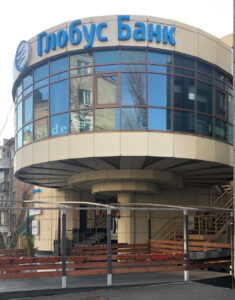
According to Fixygen, JSC “Globus Commercial Bank” will hold its annual general meeting of shareholders on April 27, 2026, via remote participation. The list of key issues to be discussed includes approval of the bank’s performance results, financial statements, distribution of financial results, and decisions regarding corporate governance. The bank discloses relevant information in a special section for shareholders.
Globus Bank was registered by the National Bank of Ukraine on November 29, 2007. The bank operates as a universal commercial institution, serving corporate and private clients.
https://www.fixygen.ua/news/20260406/kb-globus-priznachiv-zbori-aktsioneriv-na-27-kvitnya.html

The ADONIS Medical Group’s private higher education institution (PHEI) has begun recruiting for its residency program. As Lilia Ponamaryova, ADONIS’s Vice Rector for Strategic Development, told Interfax-Ukraine, the residency program is conducted at ADONIS’s modern medical centers, which are equipped with state-of-the-art equipment.
As part of the new recruitment drive, training programs are now available in the following specialties: surgery, neurology, otorhinolaryngology, dermatology and venereology, orthopedics and traumatology, general practice—family medicine, obstetrics, and gynecology.
Interns will work under the supervision of experienced physicians who serve as mentors and impart practical skills and clinical experience.
“We eagerly await new interns who are eager to develop, learn, and work in modern medicine. ADONIS creates all the conditions for professional growth and the start of a successful medical career,” said Ponamaryova.
She noted that the institute already has a successful track record of training interns, and a systematic training model has been developed at the university that combines theory, clinical reasoning, and real-world practice.
ADONIS emphasizes that the residency program is focused on training doctors who work according to the principles of evidence-based medicine, confidently make clinical decisions, and are ready to work with patients from the very first years of their professional careers.
“Our goal is not simply to produce a certified specialist, but a doctor who thinks critically, analyzes, and takes responsibility for clinical decisions. That is why interns are fully engaged in practical work and learn directly in a clinical setting. A high-quality internship is a key stage in a doctor’s development, and we continue to refine our training programs in line with modern medical standards and the needs of the healthcare system,” said Ponamaryova.
The private higher education institution “Institute of General Practice – Family Medicine” was established in 2007 by the ADONIS medical group to train specialists who will receive a state-recognized diploma in the field of specialized and general medical practice. The institution holds a valid license for medical practice.
Founded in 1997, Adonis is a multidisciplinary medical center for adults and children. The medical group includes seven modern clinics in Kyiv and the region, over 80 medical specialties, its own laboratories, surgical centers, inpatient facilities, and departments staffed by specialized professionals.
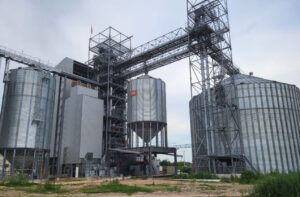
KMZ Industries (Karliv Machine-Building Plant, Poltava Oblast) will manufacture and install a complete set of elevator equipment for an oil extraction plant in Lviv Oblast, the plant announced on its website.
“KMZ Industries won a tender to manufacture and install a complete complex of elevator equipment for an oil extraction plant in the Lviv region. As part of the project, KMZ Industries’ own installation teams will install the equipment, and the process control systems division will install software to automate the elevator’s operation,” the statement said.
The scope of supply includes two conical silos with a diameter of 11 m (each with a storage capacity of 1,856 cubic meters), four conical silos with a diameter of 7.3 m (with a capacity of 584 cubic meters), and one conical silo with a diameter of 5.5 m and a capacity of 261 cubic meters.
A Brice-Baker grain dryer with a capacity of 11 tons/hour for corn at 10% moisture removal is provided for grain drying. It will be gas-fired, equipped with an aspiration system, and fully automated.
The project also includes conveying equipment with a capacity of 50 tons/hour—bucket elevators, chain scraper conveyors, and screw conveyors. A PreClean separator with a capacity of 125 tons/hour will be installed for preliminary grain cleaning.
The plant emphasizes that it uses galvanized steel from European manufacturers SSAB (Sweden), Voestalpine (Austria), and Wuppermann (Germany) to manufacture key equipment components.
“Conveying equipment is manufactured from galvanized steel with a zinc coating of 275 g/sq. m, while other equipment has a coating of 450 g/sq. m. The silo roof and grain dryer troughs have a protective coating based on magnesium and zinc, whose corrosion resistance is seven times higher than that of conventional zinc,” KMZ Industries reports.
The plant also notes that under a state program, agricultural producers and processors are eligible for a 25% reimbursement of the cost of its elevator equipment.
The plant does not disclose the cost of the equipment.
KMZ Industries is the largest manufacturer of grain storage equipment in Ukraine and produces a full range of products, including silos, grain dryers, conveying equipment, and separators, as well as providing automation and installation services.
According to the company, it has built over 5,000 facilities. KMZ Industries silos with a total capacity of over 12.5 million cubic meters are currently in operation.
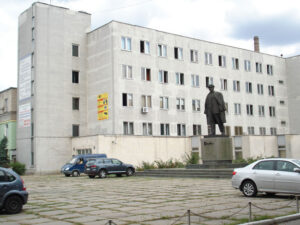
According to Fixygen, Energetik Power Plant PJSC will hold a shareholders’ meeting on April 28, 2026, via remote participation. The agenda includes the approval of financial statements, performance results, and other corporate matters.
The company operates in the industrial and energy sector and is involved in the manufacture or maintenance of energy equipment. Companies of this type are an important part of the country’s repair and manufacturing base.

PJSC “Ukrainian Bacon” (Kostiantynivka, Donetsk Oblast) reported losses for 2025, which it plans to cover using future profits, the company announced in the disclosure system of the National Securities and Stock Market Commission (NSSMC).
The draft resolution of the general meeting of shareholders, scheduled for April 30, 2026, provides for the waiver of the accrual and payment of dividends for the past year.
Shareholders are being asked to approve the director’s report on the results of operations in 2025, recognizing them as satisfactory, as well as to approve measures to improve the company’s financial condition.
Achieving profitability has been identified as the priority for 2026.
In addition, the agenda includes a motion to remove Maksym Pysarev and Dmytro Makhota from the Unified State Register (USR) as persons authorized to act on behalf of the company without a power of attorney.
According to data from the OpenDataBot service, the revenue of PJSC “Ukrainian Bacon” in 2025 fell by 79.5% compared to the previous year—to 95.84 million UAH. The net loss amounted to UAH 107.39 million, compared to a profit of UAH 147.11 million in 2024. Thus, the negative trend in net income reached 173% (a decrease of UAH 254.5 million). The value of assets decreased by 45% to UAH 568.09 million, while total liabilities decreased by 33.3% to UAH 713.3 million. The company’s authorized capital is UAH 1.0005 million.
PJSC “Ukrainian Bacon” was founded in 2008. It produces meat products under the “Bashchynsky” and ‘Europroduct’ trademarks, as well as under the “Nasha Ryaba” brand and a number of private labels (“Auchan,” METRO, etc.).
Since October 2021, the company has been part of Yuriy Kosyuk’s MHP agricultural holding. Previously, the owner was PJSC “Myronivsky Hliboproduct.” During this period, there was a change in leadership from long-time director Mykhailo Bashchynskyi to Olena Reznik, and later to Dmytro Makhota. Since November 2025, Oleksii Nosov has held the position of director.
Production facilities are located in the Kramatorsk district of Donetsk Oblast. Due to military operations, the plant’s operations have effectively ceased: while the workforce numbered over 1,900 people in 2021, by the end of 2025, the number of employees had dropped to 2.



