

On April 2, Ukrainian Defense Industry JSC announced a tender for voluntary medical insurance services for employees.
According to a notice on the Prozorro e-procurement system, the estimated cost of the services is 3.9 million UAH.
The deadline for submitting bids is April 13.

Prices for existing housing in Italy rose by 1.5% in the first quarter of 2026 compared to the previous quarter, with the average asking price reaching €1,891 per square meter. This is according to a report by the analytical division of idealista.
According to the source, price increases were recorded in 80% of the country’s administrative centers. The most notable quarterly increases occurred in Belluno (8.7%), Cremona (6.9%), and Lecco (6.4%). Among major cities, Bari, Cagliari, Rome, Bologna, Catania, and Florence showed positive trends, while Naples saw a slight decline of 0.4%.
Milan remains Italy’s most expensive city, as before, with a price of €5,192 per square meter. It is followed by Venice—€4,897 per square meter, Bolzano—€4,869, Florence—€4,602, and Bologna—€3,717. Rome ranks sixth at €3,369 per square meter. The most affordable cities were Caltanissetta—€653 per square meter, Ragusa—€730, and Biella—€752.
At the regional level, price growth has spread across nearly the entire country. A quarterly decline was recorded only in Molise and Basilicata, while the strongest growth was seen in Valle d’Aosta—4%, Veneto—3%, as well as Liguria and Tuscany—2.2% each. Trentino-Alto Adige remains the most expensive region at €3,266 per square meter, while Molise is the least expensive at €911 per square meter.
The market maintains positive momentum across most of Italy, though macroeconomic factors—including interest rates and inflation—may influence it in the coming months. The idealista index itself is based on asking prices published in listings, not on the actual prices of completed transactions. The methodology also excludes auction properties and atypical listings, and the median price is used as the benchmark.
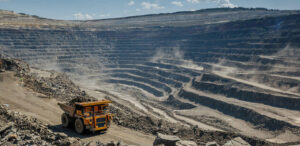
“Demurinsky Mining and Processing Plant” LLC (MMPP, Dnipropetrovsk Oblast), which extracts titanium and zirconium ores and was confiscated from Russian billionaire Mikhail Shelkov, increased its net loss by 2.5 times in 2025 compared to 2024—to 278.673 million UAH.
According to information from the State Property Fund, net revenue from the sale of products (goods, works, services) last year decreased by 15%—to UAH 154.067 million.
The main type of activity is the extraction of other non-ferrous metal ores (activity code under the Classification of Economic Activities: 07.29).
Demurinsky GOK LLC is one of the largest mining and processing enterprises in Ukraine. Registered on May 30, 2001, the company has been developing the Vovchanske complex placer titanium-zircon deposit in the Dnipropetrovsk region (Northern and Central deposits) since 2006.
Preliminary beneficiation is carried out at the open-pit mine, followed by mineral separation at the processing plant. The reserves of ore sands in the deposit, categorized as B+C1, amount to 22.8 million cubic meters with an average grade of 9%: 1,614 thousand tons of ilmenite, 520 thousand tons of rutile, and 181 thousand tons of zircon.
The company holds a special subsoil use permit for the extraction of titanium-zirconium ores suitable for the production of zircon, rutile, ilmenite, disten-silimanite, and staurolite concentrates. The permit is valid until July 29, 2031. The company also holds permits for discharges, water use for high-risk operations, and others (total number of permits: 23).
Main product range: KDSZ distene-selimanite concentrate; ilmenite concentrate; rutile concentrate; staurolite concentrate; KTSZ zircon concentrate.
The asset (single lot) includes: 100% corporate rights and claims.
As of December 31, 2025, the GZK’s accounts payable amounted to UAH 142.504 million.
The state’s share in the LLC is 100%.
The LLC’s authorized capital is UAH 39,621,414 thousand.
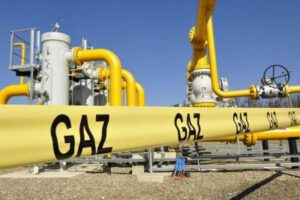
Ukraine, which entered the 2025/26 heating season with gas reserves of 13.2 billion cubic meters, imported an additional 4.6 billion cubic meters to get through it, First Deputy Prime Minister and Minister of Energy Denys Shmyhal said.
“Ukraine has successfully completed the heating season, despite Russia’s numerous attempts to destroy our energy system. This was achieved, in particular, thanks to the accumulation of sufficient resources,” he wrote on Saturday in a Telegram post following the results of a meeting of the Winter Headquarters for the Elimination of the Consequences of the Energy Emergency.
The Minister of Energy noted that the capacity of the Trans-Balkan Corridor had been increased to 4.2 billion cubic meters of gas per year
Shmyhal also reported that in 2025, Ukrainian gas production amounted to 16.97 billion cubic meters, which is 2.4 billion cubic meters more than forecast, with the private sector demonstrating growth of over 14%.
He added that all nine nuclear power plant units were operational with a total installed capacity of 7,835 MW, and thanks to the maximum electricity import capacity being increased to a record level of 2,450 MW, approximately 3.6 billion kWh were imported in December–February.
The country had sufficient coal reserves throughout the winter: 2.4 million tons of coal were stockpiled, which is 0.8 million tons more than planned, the First Deputy Prime Minister also noted.
He did not specify what gas and coal reserves Ukraine had at the end of the heating season.
According to former Energy Minister Olha Buslavets, since mid-March of this year, gas withdrawal from UGS facilities has shifted to a small injection of about 2 million cubic meters per day. Natural gas reserves in Ukraine’s UGS facilities stood at 9.6 billion cubic meters at the end of March, which is 4.0 billion cubic meters higher than last year, Buslavets wrote on Facebook.
The industry publication ExPro estimated gas production in 2024 at 19.12 billion cubic meters.

According to Fixygen, Company Invest Finance LLC will hold a general meeting of shareholders on April 23, 2026, via remote participation. The main agenda items concern the company’s performance, financial reporting, and future management.
The company operates in the finance and investment sector. According to Opendatabot, its owners are private Ukrainian investors, and ownership is concentrated among a limited group of participants.

Purchase prices for sunflower seeds in Ukraine rose by 500 UAH/ton over the week and currently stand at 31,000–32,000 UAH/ton (or $620–640 per ton excluding VAT for 50% oil content) delivered to the plant, according to the Ukrainian Electronic Grain Exchange.
Analysts noted that the positive trend is driven by a $5 per ton increase in the price of Ukrainian sunflower oil—to $1,295–1,305 (delivery to Black Sea ports)—amid rising demand from the biofuel industry.
At the same time, oil is a global growth driver, with prices exceeding $100 per barrel following U.S. President Donald Trump’s televised address. The promise to end the war with Iran within two to three weeks failed to meet analysts’ expectations of an immediate cessation of attacks and a shift to negotiations, keeping energy prices at high levels.
“Processors continue to actively build up sunflower seed stocks amid increased sales by farmers, hoping for further growth in sunflower oil prices following other vegetable oils in the near future. At the same time, demand for meal has not yet increased, as feed grain prices remain stable at low levels, and South America is increasing its supply of soybean meal,” exchange experts said.
According to experts, due to low processing rates in the first half of the season, as of March 1, sunflower stocks in Ukraine stood at 3.5 million tons, which is 1.4% higher than last year’s figure. This will allow for an increase in production rates, full utilization of plant capacity before the start of the rapeseed season in July, and taking advantage of favorable global market conditions.
At the same time, competition from South America is expected to intensify in April, as buyers actively shift their focus to the new harvest. As of March 27, Argentina had already harvested 61% of its sunflower acreage and is increasing exports to the EU. In Brazil, 75% of the soybean acreage has been harvested (compared to 82% last year), and the export forecast for March stands at 16 million tons, compared to 10.7 million tons in February.
According to the Ukroliyaprom association, sunflower oil production in Ukraine for the 2025/2026 marketing year is projected at 4.6 million tons, which is 10% less than the previous season’s figure. Exports may decline by 6.4% to 4.4 million tons amid the lowest sunflower yield in the last 10 years. At the same time, foreign exchange earnings from exports are rising due to favorable global prices.
Sunflower prices in Ukraine rose by 500 UAH per week



