Business news from Ukraine

Business news from Ukraine

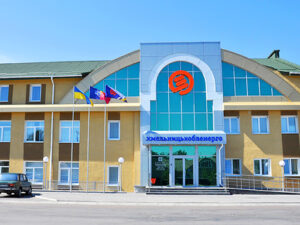
Kropyvnytskyi Oil Extraction Plant to hold shareholders’ meeting on February 16 to approve auditor

According to Fixygen, PJSC Kropyvnytskyi Oil Extraction Plant (EDRPOU code 00373869) will hold an extraordinary general meeting of shareholders on February 16, 2026, in the form of a survey (remotely), the company said in a statement.

According to the document, the date for compiling the list of shareholders eligible to participate in the meeting is set for February 11, 2026. Voting will be conducted by submitting ballots through depositary institutions, with the start date of voting set for February 6, 2026, and the end date for February 16.

The agenda includes two items: approval of the meeting rules and appointment of an auditor for the mandatory audit of the company’s financial statements for 2025 (the draft decision mentions the auditing company Crow Ukraine).

PJSC Kropyvnytskyi Oil Extraction Plant is registered in Kropyvnytskyi (30 Urozhayna St.), and its main activity is the production of oil and animal fats (KVED 10.41). Its authorized capital is UAH 105.53 million. The company’s revenue for 2024 amounted to UAH 698.79 million, its net financial result was a loss of UAH 17.51 million, and its assets at the end of 2024 amounted to UAH 789.31 million.

, , ,

Iron ore exports from Ukraine fell by 34% in January

In January this year, Ukrainian mining companies reduced exports of iron ore raw materials (IORM) in physical terms by 34.4% compared to the same period last year, from 3 million 132,403 thousand tons to 2 million 54,539 thousand tons.

According to statistics released by the State Customs Service (SCS) on Tuesday, 2 million 220.646 thousand tons of iron ore raw materials were exported in December.

In the first month of the year, foreign exchange earnings from iron ore raw materials exports decreased by 35.1% to $160.246 million.

Exports of raw materials were mainly to China (35.09% of shipments in monetary terms), Slovakia (17.56%), and Poland (16.89%).

In addition, in January 2026, Ukraine imported 180 tons of mineral resources worth $26 thousand from Poland (76.92%) and Italy (23.08%), while in January 2025, it did not import these products.

As reported, in 2025, Ukrainian mining companies reduced their exports of mineral resources in physical terms by 8% compared to the previous year, to 30 million 995.363 thousand tons from 33 million 699.722 thousand tons, and foreign exchange earnings decreased by 16.6% to $2 billion 337.765 million from $2 billion 803.223 million. Exports were mainly to China (44.98% of shipments in monetary terms), Slovakia (17.15%), and Poland (16.09%).

In addition, in 2025, Ukraine imported $95 thousand worth of raw materials in the amount of 130 tons from the Netherlands (46.32%), Italy (36.84%), and Norway (13.68%), while in the previous year it imported 2,042 tons worth $414 thousand.

In 2024, Ukraine increased its exports of raw materials by 89.8% compared to 2023, to 33 million 699.722 thousand tons, and foreign exchange earnings grew by 58.7%, to $2 billion 803.223 million UAH. In 2024, Ukraine imported mineral resources worth $414 thousand in a total volume of 2,042 thousand tons, while in 2023, 250 tons of these raw materials were imported worth $135 thousand. In 2023, exports of iron ore raw materials decreased by 26% in physical terms compared to 2022, to 17 million 753.165 thousand tons. Foreign exchange earnings amounted to $1 billion 766.906 million (a decrease of 39.3%). A total of 250 tons of iron ore raw materials were imported for $135,000.

,

Imports to Ukraine rose by 22% to $6.7 bln in January, while exports remained at $3.2 bln

Imports of goods to Ukraine in January 2026 amounted to $6.7 billion in monetary terms, while in January 2025 this figure was 22% lower at $5.5 billion, in January 2024 – $5.1 billion, and in January 2023 – $4.8 billion, according to data from the State Customs Service of Ukraine (SCS).

According to data published on Tuesday on the SSU’s Telegram channel, in monetary terms, exports of goods remained at the 2025 level and amounted to $3.2 billion, while in 2024 this figure reached $3.4 billion, and in 2023 – $3.1 billion.

“At the same time, taxable imports amounted to $4.4 billion, which is 66% of the total volume of imported goods. The tax burden per 1 kg of taxable imports in January 2026 was $0.5/kg,” the report said.

The SSU noted that China imported the most goods to Ukraine, worth $1.9 billion, followed by Turkey, worth $703 million, and Poland, worth $623 million.

In turn, the most goods were exported to Poland, worth $358 million, Turkey, worth $276 million, and Italy, worth $232 million.

Of the total volume of goods imported into Ukraine in January 2026, 69% of the categories were machinery, equipment, and transport – $2.7 billion (14.8 billion hryvnia, or 24% of customs revenue, was paid to the budget during customs clearance), fuel and energy products accounted for $1.1 billion (UAH 26.6 billion, or 43% of revenues), and chemical industry products accounted for $869 million (UAH 7.1 billion was paid, which is 11% of customs payments).

The top three most exported goods from Ukraine were food products ($2 billion), metals and metal products ($286 million), and machinery, equipment, and transport ($253 million).

The State Customs Service added that in January 2026, UAH 187.1 million was paid to the budget from customs clearance of exports of goods subject to export duties.

, ,

Vietnam has made it more difficult for foreigners to obtain residence cards

The Vietnamese authorities have changed the procedure for applying for Temporary Residence Cards (TRCs): from February 2026, it will only be possible to submit documents directly within the country if you have an LD2 (work) or TT (family member) visa. Holders of other visas, including business visas, must now first go through the mandatory stage of converting their visa to the appropriate category before applying for a TRC.

According to estimates by the international consulting company Fragomen, the introduction of this additional step will increase the processing time for TRCs by approximately two weeks. Experts recommend first obtaining a work permit and then applying for the appropriate type of entry visa to avoid delays in legalizing your status.

The change effectively establishes a stricter “chain” of migration control: work permit – work visa – residence card, which increases the risks for those who enter on an e-visa or a “start-up” business visa and only then apply for work documents.

According to the World Bank (UN estimate on international migration), in mid-2024, there were about 326,400 international migrants (born outside the country) living in Vietnam, which corresponds to approximately 0.3% of the population.

At the same time, Vietnam received a record 21.2 million foreign visitors in 2025, with the largest markets being China (5.28 million), South Korea (4.33 million), Taiwan (1.23 million), the United States (849,000), Japan (814,000), India (746,500), Russia (689,700), Cambodia (687,100), Malaysia (573,700), and Australia (548,500). Ukraine is not included in the top 10 markets in the summary.

Two new sugar factories to be built in Uzbekistan

In March, Egypt’s largest company, Nile Sugar, will launch a project in the Jizzakh region to grow sugar beets, process them, and produce sugar products. This was announced by Laziz Kudratov, Minister of Investment, Industry, and Trade of Uzbekistan, in an interview with the Uzbekistan 24 TV channel.

According to him, the project envisages the production of up to 200,000 tons of sugar per year. The total investment is estimated at $450 million and will be implemented in the form of foreign direct investment.

Minister of Agriculture Ibrohim Abdurakhmonov specified that the President had instructed to speed up the implementation of the project.

“Instructions have been given to take the project under separate control and start its implementation as soon as possible. All the necessary documents have been drawn up, land plots have been allocated, and investments are ready,” he said.

In 2024, the Ministry of Agriculture reported that 50,000 hectares of land had been selected in the Ghalaral and Farish districts of the region for growing sugar beets and 170 hectares for the construction of a sugar factory.

On January 23 this year, Laziz Kudratov met with Nile Sugar CEO Emad Farid. Following the negotiations, the parties signed a final protocol confirming their readiness to continue coordinated work on the preparation and implementation of joint projects. The document provides for the clarification of project parameters, financing conditions, and the agreement of further steps to expand practical cooperation.

It is expected that the implementation of the agreements reached will allow moving to the practical stage of cooperation with Nile Sugar, ensure the phased launch of joint projects, and attract modern agro-industrial and processing technologies with further localization of production in Uzbekistan.

More details

,

Ukraine could increase agricultural exports to $100 bln by investing in processing

Ukraine could increase its annual agricultural exports from $24.2 billion to over $100 billion by shifting from exporting raw materials to increasing the production of deeply processed products, which would require $85 billion in investments, said Leonid Kozachenko, president of the Ukrainian Agrarian Confederation (UAC).

“We have the best opportunities among other countries, as almost 30% of the world’s black soil is concentrated in Ukraine. However, it is surprising that a country like the Netherlands, with 4.5 times less land, produces food and derivative products worth about $108 billion. They use less than 20% of their own raw materials, import 80%, but rank 2nd or 3rd in the world, while we, with our raw materials, are only in the third ten,“ he said at the conference ”Profitable Agribusiness 2026.”

According to the expert, the total capitalization losses of the agricultural sector from the Russian Federation’s military aggression are currently estimated at more than $120 billion, while direct losses amount to $11.5 billion. In particular, almost 4.7-5 million hectares of land remain mined or contaminated with heavy metals. Livestock losses amount to 5 million chickens, 350,000 pigs, and 150,000 cows. In addition, more than 7,000 units of agricultural equipment and hundreds of logistics facilities have been lost.

Kozachenko expressed confidence that if the genetic potential of plants and animals is realized by at least 90%, Ukraine will be able to reach production levels of 150 million tons of grain and oilseeds, 25 million tons of milk, and up to 10 million tons of meat.

To realize this potential, according to the UAC president, Ukraine needs to attract $85 billion in investments over the next 10 years. These funds should be directed towards the development of the food, pharmaceutical and perfume industries ($37 billion), livestock farming ($18 billion), crop production ($8 billion), irrigation restoration ($7 billion) and bioenergy development ($5.5 billion). Another $10 billion should be allocated to logistics, horticulture, and greenhouse farming.

To stimulate the development of the agricultural sector, the UAC proposes introducing land and network connection incentives for deep processing plants, introducing a 25% subsidy for equipment, and creating a specialized mortgage banking institution. It is also proposed to involve international companies in the certification of products according to European standards directly in Ukraine.

“We have found financial resources of over $50 billion that were ready to be given to us to create the first mortgage bank in Ukraine. We have everything we need to launch this mechanism, so let’s work together to convince officials to start using it. We really need to cross the $100 billion gross output threshold, and this should be our strategic priority for the next decade,” Kozachenko emphasized.

The UAC president also announced joint proposals from a number of agricultural associations to accelerate the privatization of state-owned enterprises that can be involved in processing chains and to stimulate the development of industrial parks with special fiscal conditions. In particular, agricultural associations propose introducing subsidies of 10% for enterprises that use domestically produced deep-processed raw materials in their production and providing state guarantees to foreign creditors for the purchase of technological equipment.

An important aspect remains the digitization of the industry, in particular the creation of digital platforms for entering global markets, following the example of the Ukrainian resource Allbiz, which specializes in e-commerce and structuring offers in the B2B sector, as well as the introduction of European licensing practices through accredited offices of international certification companies, the UAC president concluded.

, ,