

The Amber Dragon Ukraine Infrastructure Fund I SCSp (Luxembourg) may acquire the Cypriot company Banoran Holdings Limited, which owns several Ukrainian companies involved in the Power One distributed energy project. According to information from the Antimonopoly Committee of Ukraine on its website, it granted the fund the relevant approval on Thursday, March 26.
Amber Dragon Ukraine Infrastructure Fund I, managed by Dragon Capital and Amber Fund Management Limited, announced its first project in Ukraine, Power One, at the Ukraine Recovery Conference in Rome in July 2025 (URC2025).
Later, Power One signed a loan agreement with the European Bank for Reconstruction and Development (EBRD) for €22.3 million to build 68 MW of decentralized generation capacity in Zakarpattia Oblast. This initiative also received €3 million in grant funding from the EBRD Crisis Response Special Fund, which is supported by the Norwegian government.
The project involves the installation of three gas piston units (36.8 GVA) and three energy storage systems (31.5 GVA) across six sites. Projects at three sites were scheduled to launch in November 2025, and at the other three in April 2026.
According to information from YouControl, Banoran Holdings currently owns four LLCs: “Power 1,” “Power 1 Center,” “Power 1 Lviv” (all three in Kyiv), and “Power Forest” (Zhytomyr).
In turn, Banoran Holdings is owned by the family trust of Tomas Fiala, the founder and chairman of the investment company Dragon Capital.
The AMCU’s issuance of a permit to Amber Dragon Ukraine Infrastructure Fund I is a step toward fulfilling prior agreements to transfer the project to this fund.
Additionally, it was reported that Power One’s operating partner is the company “Nedzhen,” owned by former head of NPC “Ukrenergo” Volodymyr Kudrytskyi and his colleague Andriy Nemirovskyi.
Amber Dragon Ukraine Infrastructure Fund I has a target volume of 350 million euros. In January of this year, the fund announced its first closing of €200 million, in which the European Bank for Reconstruction and Development (EBRD), the European Investment Bank (EIB), the International Finance Corporation (IFC) of the World Bank Group, Swedfund, and Impact Fund Denmark participated.
Yevgen Baranov, Managing Director and Head of Infrastructure at Dragon Capital, announced at URC2025 in Rome in July 2025 that over the past year, Dragon Capital and Amber have built a robust portfolio of projects capable of absorbing even more capital than the fund plans to raise.
The fund’s presentation at URC2025 noted that its strategy involves investing in controlling stakes or co-investing with like-minded partners, with an average investment size ranging from €20 million to €50 million.
In December, Baranov clarified that the focus is primarily on energy projects, but also on transportation and digital infrastructure, as the war has created “huge shortages.”
“When we talk about projects ranging from €30 million to €50–70 million, that is the range where we feel most comfortable. And starting in January or February of next year, we will begin investing more actively,” Baranov said late last year.
Dragon Capital is one of Ukraine’s largest investment groups in the field of investment and financial services, providing a full range of investment banking and brokerage services, direct investments, and asset management for institutional, corporate, and private clients. The company was founded in 2000 in Kyiv. According to Fiala, the group’s investment portfolio includes nearly 50 different companies or real estate projects. From 2015 to 2021, the company invested approximately $700 million in Ukraine, excluding reinvestments; in 2025, it invested nearly $100 million and plans to exceed this figure in 2026.

According to Fixygen, it was a volatile and nervous week for the crypto market. Midweek, Bitcoin managed to reclaim the $70,000 mark amid a short-term improvement in global risk sentiment following news of a pause in the potential escalation surrounding Iran; however, by the end of the week, the momentum faded, and the market fell again. As of March 27, Bitcoin was trading around $66,200, and Ethereum around $1,987.
Geopolitics remained the main external driver. At the start of the week, the market rallied following reports of U.S. strikes on Iranian infrastructure: Bitcoin rose above $70,000 and at one point tested the $71,700 range. But then this relief rally began to run out of steam, as the market returned to the fundamental question: how sustainable is the easing of tensions, and will oil prices resume their upward trend?
The second major factor of the week was the U.S. regulatory agenda. Last week, Citigroup lowered its 12-month price targets for Bitcoin and Ethereum, directly linking this to the stalled progress of crypto legislation in the U.S. At the same time, the market reacted negatively to news of a compromise on the Clarity Act, which discusses banning yields on stablecoin balances: against this backdrop, Circle and Coinbase shares fell sharply, and the issue itself reminded the market once again that the “regulatory bull scenario” has not yet materialized.
Technically, the week showed that the $70,000 level for Bitcoin remains more of a battleground than a solid support. A number of market reviews indicated that the return above this mark was not confirmed by strong volume, and by the end of the week, traders’ attention shifted to the major $18.6 billion options expiration. That said, one positive development was the decline in BTC supply on exchanges to a seven-year low, which is typically interpreted as a signal of long-term coin holding rather than immediate selling.
For Ethereum, the week turned out to be weaker than for Bitcoin. ETH participated in the rebound along with the rest of the market, but pressure on it remains stronger: Citi separately noted weak user activity on the network and a more modest set of potential catalysts compared to BTC. Against the backdrop of the current price below $2,000, this makes ether more sensitive to any new deterioration in risk appetite.
If we summarize the week using FIXYGEN’s logic, the picture looks like this: the market remains alive, liquid, and ready for quick rebounds, but so far lacks a single strong driver of its own. It continues to trade as a mix of risk assets and macro hedges, reacting not so much to internal crypto news as to oil, the dollar, the Fed, and headlines from the Middle East.
Here is Fixygen’s short-term forecast for the coming days: – For Bitcoin, the key zone remains the $65,000–$72,000 range. As long as the market stays above the midpoint of this range, the consolidation scenario—with attempts to retest $70,000–$71,000—remains in place. However, if geopolitical tensions escalate again or the dollar continues to strengthen, the market could easily revert to a steeper correction. This conclusion is analytical, based on current prices, market behavior over the past week, and the broader news backdrop.
For Ethereum, the near-term outlook appears more cautious. Without a clear shift in U.S. regulatory policy and without a return to a broader risk-on sentiment, ETH is likely to continue underperforming Bitcoin. In a positive scenario, Ether could quickly return to the zone above $2,000, but in the short term, it remains a more vulnerable asset than BTC. This is also an analytical conclusion based on the current ETH price, weekly dynamics, and Citi’s assessment of weaker fundamental momentum for the network.

The combined profits of China’s large industrial companies in January–February 2026 rose by 15.2% compared to the same period last year—to 1.02 trillion yuan ($147.6 billion), according to a report by the National Bureau of Statistics (NBS). Industrial enterprises with annual revenue exceeding 20 million yuan are considered large.
The growth was the strongest for this period since 2018, notes Trading Economics.
Profits of state-owned companies increased by 5.3% over the first two months of this year, while those of private companies jumped by 37.2%.
Significant profit growth in January-February was recorded in the computer and communications equipment manufacturing segment (3-fold) and ferrous metal production (2.5-fold), as well as in the chemical industry (+35.9%).
By the end of 2025, the profits of large industrial enterprises increased by 0.6%.

PJSC Keramprom (Artemivka village, Donetsk region), which is engaged in clay mining in the Donetsk region, reported a net profit of UAH 8,102,607 for 2025, compared to UAH 33,457,947 in 2024.
According to the company’s announcement in the NSSMC’s information disclosure system regarding the remote holding of the general meeting of shareholders on April 29, there are 10 items on the agenda.
In particular, the plan is to review the report of the supervisory board and the company’s CEO for 2025, the auditor’s conclusions, and to adopt the relevant decisions. In addition, the meeting will approve the results of financial and economic activities, the annual report for the past year, and the distribution of profits. Furthermore, preliminary consent will be sought for the company to enter into significant transactions.
Draft resolutions, copies of which are available at the Interfax-Ukraine agency, propose distributing the net profit for 2025 in the amount of 8,102,607 thousand UAH as follows: 980,490 thousand UAH to be allocated for dividend payments, and 7,122,117 thousand UAH to be retained as undistributed profit. In addition, a portion of the company’s undistributed profit for 2015–2024 in the amount of 80,719,914 thousand UAH is to be allocated for dividend payments.
To pay dividends totaling 81,700,404 thousand UAH, approving the dividend amount per one ordinary registered share of the company at 260.17 UAH. Dividends are to be paid directly to shareholders no later than November 4, 2026.
As reported, Keramprom posted a net profit of UAH 33,457,947 for 2024, which is 10.93 times higher than in 2023 (UAH 3,059,435).
PJSC “Keramprom” (Artemivka village, Donetsk region) was established in 1997 and is engaged in clay mining. The company’s production capacity is up to 300,000 tons per year. According to information on the company’s website, the company is currently developing the “Chilne” deposit of white refractory clays in the Kostyantynivka district of Donetsk Oblast.
According to the State Registration Service data for the fourth quarter of 2025, the shares of the company are owned by Valery, Igor, and Boris Bevzenko (49.8708%, 30.2515%, and 8.9999%, respectively), and Anatoly and Larisa Popov (5.1757% each).
The authorized capital of PJSC “Keramprom” is UAH 25.75 million.

According to the Interfax-Ukraine Culture project, at least six bookstores closed in Ukraine in March alone, including in Vinnytsia, Kropyvnytskyi, and Kyiv, as reported by Viktor Kruglov, publisher and CEO of the “Ranok” publishing house, on his Facebook page.
After analyzing the published information and the situation in the book market, journalists from the “Culture” department of the Interfax-Ukraine agency sought comment from Artem Bidenko, chairman of the board of the Ukrainian Publishers Association.
“The market situation is difficult: people are buying less and less, while book production is becoming more expensive. Bookstores, both small and large, have already begun to close. Books are becoming unprofitable for retailers because they take up space and don’t sell well,” said Artem Bidenko, chairman of the board of the Ukrainian Publishers Association, in a comment to Interfax-Ukraine.
According to Viktor Kruglov, bookstores in Vinnytsia and Kropyvnytskyi—which opened in 2023–2024 amid a wave of enthusiasm and expectations of state support—have closed permanently.
In addition, next week “Yakaboo” is closing its only brick-and-mortar location at the Main Post Office on Khreshchatyk, and the publishing house “ArtBooks” is liquidating its flagship bookstore on Velyka Vasylkivska Street due to unprofitability.
Earlier, “Knyholand” closed its bookstore in the underground shopping center on Maidan Nezalezhnosti, and the future of the bookstore in Rusanivka, Kyiv, remains uncertain.
Additionally, according to Kruglov, the owner of the bookstore “My Bookshelf” announced the closure of the business, while the “Ridit” and “Sens” chains reported losses in the millions for the year.
According to Bidenko, in January–March, the average receipt at bookstores fell by nearly half: whereas shoppers previously chose 3–5 books, they now select 1–2.
Against the backdrop of falling demand, publishers are forced to offer significant discounts in an attempt to recoup at least part of their investment, but this does not solve the systemic problem.
“For retailers, books are becoming economically unprofitable: they take up space, require specific storage conditions, yet sell significantly worse,” he explained.
According to the expert, the next stage could be a payment crisis in the industry, which will first affect publishers and later printing houses.
“These are signs of a systemic crisis in the market that cannot be overcome without government intervention,” Bidenko emphasized.
He also noted that one of the key reasons for the rising cost of books is the increase in production costs.
“Raw materials are imported, logistics are complicated, and there is a shortage of personnel in both transportation and printing houses. All of this increases costs and, consequently, the final price of books,” he said.
Piracy in the e-book and audiobook sector remains a separate factor putting pressure on the market.
“About 80% of digitized content is illegal. Because of this, it is impossible to objectively assess real demand: we don’t know whether people are reading more in digital format or simply buying fewer books and reading less in general,” noted Bidenko.
He added that certain segments, particularly children’s literature, have been in crisis since the start of the full-scale war.
Assessing government policy, Bidenko stated that the market currently sees no practical implementation of the declared support.
“So far, these are just statements. There are no real actions, although we expect the situation to change. If these tools start working, the market will be able to return to pre-war levels and resume development. Without state participation, the publishing industry, which is subsidized in most countries, will not be able to function stably,” he concluded.
Text: Olga Levkun
https://interfax.com.ua/news/culture/1154870.html
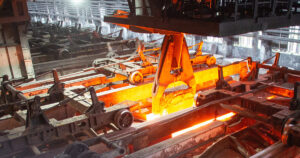
The Zaporizhzhia Metallurgical Plant “Zaporizhstal” has allocated 9.8 million UAH for the first phase of major repairs to “Slab 1150” and BTLS-1680 (continuous thin-sheet mill) in the hot rolling shop.
According to information released by the company on Thursday, stable rolling begins with properly functioning mills. Such repairs are carried out in stages throughout the year.
During the first stage, the “Slabbing 1150” received new spindles for the horizontal roll stands, the hydraulic system was repaired, the roll stand assemblies were restored, as well as certain sections of the roller tables and the transmission gearbox. On the BTLS-1680, the gearbox of stand No. 2 was repaired with the replacement of shaft assemblies, the drive line of one of the stands was restored, the gear roller was replaced, partial repairs were performed on the coil box, the coiler assemblies were repaired, and the chains of individual sections of the roller table were replaced.
It is noted that repair specialists from the plant’s departments, with the assistance of hydraulic specialists from Kametstal, completed the planned work ahead of schedule.
At this stage, UAH 9.8 million was allocated for the work; the next stage of the overhaul is scheduled for the fall.
Zaporizhstal is one of Ukraine’s largest industrial enterprises, whose products are in high demand among consumers both in the domestic market and in many countries around the world.
Zaporizhstal is a joint venture of the Metinvest Group, whose main shareholders are PJSC System Capital Management (71.24%) and Smart Steel Limited (23.76%). Metinvest Holding LLC is the management company of the Metinvest Group.



