

According to the Interfax-Ukraine Culture project, at least six bookstores closed in Ukraine in March alone, including in Vinnytsia, Kropyvnytskyi, and Kyiv, as reported by Viktor Kruglov, publisher and CEO of the “Ranok” publishing house, on his Facebook page.
After analyzing the published information and the situation in the book market, journalists from the “Culture” department of the Interfax-Ukraine agency sought comment from Artem Bidenko, chairman of the board of the Ukrainian Publishers Association.
“The market situation is difficult: people are buying less and less, while book production is becoming more expensive. Bookstores, both small and large, have already begun to close. Books are becoming unprofitable for retailers because they take up space and don’t sell well,” said Artem Bidenko, chairman of the board of the Ukrainian Publishers Association, in a comment to Interfax-Ukraine.
According to Viktor Kruglov, bookstores in Vinnytsia and Kropyvnytskyi—which opened in 2023–2024 amid a wave of enthusiasm and expectations of state support—have closed permanently.
In addition, next week “Yakaboo” is closing its only brick-and-mortar location at the Main Post Office on Khreshchatyk, and the publishing house “ArtBooks” is liquidating its flagship bookstore on Velyka Vasylkivska Street due to unprofitability.
Earlier, “Knyholand” closed its bookstore in the underground shopping center on Maidan Nezalezhnosti, and the future of the bookstore in Rusanivka, Kyiv, remains uncertain.
Additionally, according to Kruglov, the owner of the bookstore “My Bookshelf” announced the closure of the business, while the “Ridit” and “Sens” chains reported losses in the millions for the year.
According to Bidenko, in January–March, the average receipt at bookstores fell by nearly half: whereas shoppers previously chose 3–5 books, they now select 1–2.
Against the backdrop of falling demand, publishers are forced to offer significant discounts in an attempt to recoup at least part of their investment, but this does not solve the systemic problem.
“For retailers, books are becoming economically unprofitable: they take up space, require specific storage conditions, yet sell significantly worse,” he explained.
According to the expert, the next stage could be a payment crisis in the industry, which will first affect publishers and later printing houses.
“These are signs of a systemic crisis in the market that cannot be overcome without government intervention,” Bidenko emphasized.
He also noted that one of the key reasons for the rising cost of books is the increase in production costs.
“Raw materials are imported, logistics are complicated, and there is a shortage of personnel in both transportation and printing houses. All of this increases costs and, consequently, the final price of books,” he said.
Piracy in the e-book and audiobook sector remains a separate factor putting pressure on the market.
“About 80% of digitized content is illegal. Because of this, it is impossible to objectively assess real demand: we don’t know whether people are reading more in digital format or simply buying fewer books and reading less in general,” noted Bidenko.
He added that certain segments, particularly children’s literature, have been in crisis since the start of the full-scale war.
Assessing government policy, Bidenko stated that the market currently sees no practical implementation of the declared support.
“So far, these are just statements. There are no real actions, although we expect the situation to change. If these tools start working, the market will be able to return to pre-war levels and resume development. Without state participation, the publishing industry, which is subsidized in most countries, will not be able to function stably,” he concluded.
Text: Olga Levkun
https://interfax.com.ua/news/culture/1154870.html

The Zaporizhzhia Metallurgical Plant “Zaporizhstal” has allocated 9.8 million UAH for the first phase of major repairs to “Slab 1150” and BTLS-1680 (continuous thin-sheet mill) in the hot rolling shop.
According to information released by the company on Thursday, stable rolling begins with properly functioning mills. Such repairs are carried out in stages throughout the year.
During the first stage, the “Slabbing 1150” received new spindles for the horizontal roll stands, the hydraulic system was repaired, the roll stand assemblies were restored, as well as certain sections of the roller tables and the transmission gearbox. On the BTLS-1680, the gearbox of stand No. 2 was repaired with the replacement of shaft assemblies, the drive line of one of the stands was restored, the gear roller was replaced, partial repairs were performed on the coil box, the coiler assemblies were repaired, and the chains of individual sections of the roller table were replaced.
It is noted that repair specialists from the plant’s departments, with the assistance of hydraulic specialists from Kametstal, completed the planned work ahead of schedule.
At this stage, UAH 9.8 million was allocated for the work; the next stage of the overhaul is scheduled for the fall.
Zaporizhstal is one of Ukraine’s largest industrial enterprises, whose products are in high demand among consumers both in the domestic market and in many countries around the world.
Zaporizhstal is a joint venture of the Metinvest Group, whose main shareholders are PJSC System Capital Management (71.24%) and Smart Steel Limited (23.76%). Metinvest Holding LLC is the management company of the Metinvest Group.
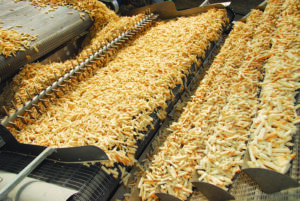
Over the course of 20 years in the Central Asian market, the Star Brands Group (Flint, Chipster’s, BigBob) has established four production facilities in Kazakhstan and is preparing to expand into Uzbekistan, said Star Brands Director of Strategic Marketing Yevgen Razuvayev at the Forbes Ukraina Exporters Summit.
“In our case, everything was built against the odds. In 2006, we entered Kazakhstan but couldn’t find a single logistics company or distributor capable of ensuring a nationwide presence in a country that stretches over 3,000 kilometers from east to west. So we became our own first national distributor: our ‘rapid response team’ of 13 people went there and learned about the new culture and customs right on the ground,” Razuvayev said.
The speaker paid special attention to the transformation of logistics chains due to Russian aggression. According to him, Star Brands made a fundamental decision to completely cease operations and exit the Russian market as early as 2014–2016, without waiting for this to become a widespread trend among large businesses.
“I’ll let you in on a secret: we exited that market back in 2014, when it wasn’t ‘extremely popular.’” “We realized we wouldn’t be able to ensure normal logistics from Ukraine to Central Asia, since the main route—the railway—ran through the territory of the aggressor country, which we don’t even want to mention. Transit became impossible without a critical increase in the product’s price,” the manager emphasized.
It was precisely the logistics blockade and the impossibility of safe transit through Russia that prompted the creation of our own production facilities directly in Kazakhstan. Currently, four Star Brands sites are operating successfully there, specifically for the production of crackers and potato chips, which allows the company to maintain a competitive cost of goods sold in the region.
“Logistics matters more for our product than it does for metallurgy. When we sell chips, we’re essentially ‘transporting air.’ That’s why logistics costs are extremely important in our production costs. If you don’t have a truly unique product, then when you calculate your capabilities ‘bottom-up’ and ‘top-down,’ the numbers just don’t add up. It takes a special talent to build a business where logistics ‘eat up’ the entire margin,” Razuvayev explained.
The marketing director also urged Ukrainian exporters to “stop looking only toward the European Union” and turn their attention to the East, specifically to Uzbekistan, whose population already exceeds that of Ukraine.
“Uzbekistan is a country undergoing remarkable changes. From a completely closed-off territory, it is transforming into a market with enormous potential. For us, it serves as a springboard for further development in Eastern countries. Look to the East—that’s the real Asia, where there are countless opportunities,” he concluded.
Star Brands is an international trading and manufacturing group of companies founded in 1995 in Dnipro. The holding operates as a vertically integrated structure with a full cycle of production, logistics, and marketing, and unites 33 production sites. The group includes the distribution company “Concept” with a portfolio of over 50 international brands, its own logistics company “Logistic American,” and the Star Brands Asia division for business development in Central Asian countries.
The group’s portfolio includes 32 brands, among which are the snack brands Flint, Chipster’s, BigBob, and “San Sanich,” the grocery brands “Khutorok” and La Pasta, as well as the non-food brands SoHo and Zeffir. Products are exported to 35 countries worldwide, including the EU, the U.S., and the Baltic states.

In the soybean segment of Ukraine’s oil and fat industry, positive trends continue in the 2025/26 marketing year in terms of both physical volumes and foreign exchange revenue, according to the Ukroliyaprom association.
According to the association’s data, from September to February of the current season, foreign exchange revenue from soybean oil exports rose by 19.3% compared to the same period of the previous marketing year.
Revenue from soybean meal exports for the same period increased by 21%, while physical volumes of meal shipments rose by 38%.
The association attributes the growth in the soybean segment to increased domestic processing and the industry’s overall shift toward higher-value-added products.
“Ukroliyaprom” notes that it was precisely the increase in soybean and rapeseed processing that helped the industry mitigate the effects of the decline in sunflower yields and maintain stable operations at processing facilities.
According to the association, oil and fat products account for 34.4%, or $7.737 billion, of Ukraine’s agricultural and food exports totaling $22.515 billion, confirming their systemic role in the country’s foreign exchange earnings.

Rapeseed oil exports from Ukraine in July–February of the 2025/26 marketing year increased 2.2-fold compared to the same period last season, while foreign exchange earnings rose 2.7-fold, according to the Ukroliyaprom association.
The association also reported a sharp increase in the rapeseed meal segment. Over the first eight months of the season, exports of rapeseed meal increased 2.3-fold, while foreign exchange revenue rose by 85%.
Ukroliyaprom views this trend as evidence of the industry’s strategic shift from exporting raw materials to selling products with higher added value.
According to the association’s assessment, it was the increase in rapeseed processing, along with soybeans, that made it possible to offset the shortage of sunflower seeds and maintain oilseed processing plants’ capacity utilization at a stable level.
At the same time, the industry continues to operate under difficult conditions. Among the main risks, the association cites restrictions on energy supply, risks to exports via seaports, and the vulnerability of rail logistics.
Overall, oil and fat products remain one of the key items in Ukrainian exports. According to Ukroliyaprom, they account for 19.2% of total goods exports, or $7.737 billion.

Ukrainian oil and fat industry companies expect sunflower oil exports to decline by 6.4% in the 2025/26 marketing year—to 4.4 million tons from 4.7 million tons the previous season, according to the UkroliyaProm association.
According to the association’s estimates, sunflower oil production this season will also decline by 10%—to 4.6 million tons, down from 5.1 million tons in the previous marketing year.
The association explained that the decline in the sunflower segment is linked to the lowest sunflower yield in the past 10 years, which fell by 16.8%, as well as a 7.8% reduction in harvested acreage.
At the same time, despite the decrease in physical shipment volumes, foreign exchange revenue from sunflower oil exports is growing thanks to higher global prices.
According to data from the National Scientific Center “Institute of Agricultural Economics,” the profitability of sunflowers in 2025 stood at 54.7%, which remains one of the highest indicators among agricultural crops and is second only to rye at 56.4%.
Ukroliyaprom emphasized that additional pressure on the industry is being exerted by energy capacity constraints due to shelling of critical infrastructure, threats to the operation of deep-water ports, and attacks on the railway network, which is vital for exports to EU countries.



