
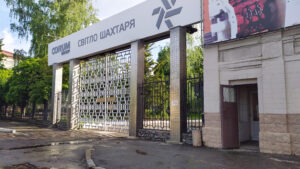
JSC “Kharkiv Machine-Building Plant ”Svitlo Shakhtaria,” which is part of DTEK Energy’s machine-building assets, plans not to distribute the profit earned in 2025, according to information included in the agenda for the company’s general meeting of shareholders on April 27, published in the NSSMC’s information disclosure system.
“The profit earned based on the company’s performance in 2025 shall not be distributed,” states the draft resolution on this matter.
As previously reported, the shareholders also decided not to distribute the profit for 2024.
The amount of net profit earned by the company in 2025 is not specified in the notice; however, according to data from the YouControl project, it amounted to UAH 89.57 million—5.3 times less than the 2024 figure.
Retained earnings as of the beginning of this year amounted to UAH 575 million.
At the meeting, shareholders plan, in particular, to appoint Standard-Audit LLC as the auditor of the financial statements for 2026 and 2027 and to set the cost of its services at no more than UAH 169,500 per year (excluding VAT).
The plant’s main specialization includes scraper conveyors, loaders, coal mining combines, and underground transformer substations.
According to YouControl, the plant’s revenue decreased by 17.6% last year compared to 2024, down to UAH 1.57 billion.
“DTEK Energo” is an operating company responsible for coal mining and coal-fired power generation within Rinat Akhmetov’s “DTEK” holding.
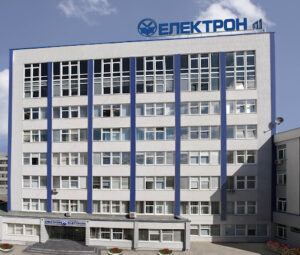
JSC “Concern-Electron” (Lviv) ended 2025 with a consolidated net profit of UAH 17.22 million, which is 3.3 times less than the corresponding figure for 2024, according to the company’s financial statements.
According to the consolidated financial report published on the group’s website, net revenue for the past year decreased by 10.4% to 671.1 million UAH.
In addition to the parent company, the “Concern-Electron” group includes 12 assets, and according to the financial statements of the parent company, JSC “Concern-Electron,” it reduced its net profit by more than four times last year—to 12.6 million UAH, with net revenue amounting to 0.39 million UAH (the same as in 2024).
According to the draft resolutions of the general meeting of shareholders scheduled for April 27, the Concern plans to allocate UAH 15 million for dividend payments at a rate of UAH 1 per share (with a par value of UAH 3.5).
“The financial results allow for the payment of dividends to shareholders in an amount no less than last year,” the company’s report states.
The owners of more than 5% of the shares of JSC “Concern-Electron” are President and Chairman of the Management Board Yuriy Bubes (5.6% of shares), Chairman of the Supervisory Board Serhiy Medvedev (5.05%), as well as Viktoria Starodub (11.5%) and Mykhailo Sholomitsky (6.43%).
According to the report, the manufacturer of car heaters and heat exchangers, “Sferos-Electron,” recorded the highest sales and profit figures within the concern in 2025, increasing its net revenue by 15% to UAH 250 million and its net profit by more than 45% to UAH 43 million.
At the same time, one of the group’s main assets—the vehicle manufacturer Electronmash Plant LLC—reported a 2.9-fold drop in net revenue to 84 million UAH and a loss of over 23 million UAH.
However, the report notes that last year the plant delivered the first four trolleybuses with autonomous range to Ivano-Frankivsk, and in March 2026 delivered another five to the carrier.
“According to the requirements of the contract documentation, the trolleybuses must provide an autonomous range of at least 15 km. At the same time, thanks to the implementation of modern technical solutions, the actual range in autonomous mode exceeds 50 km,” the concern states.
Work is also continuing on the contract to supply 17 trolleybuses to Ternopil (funded by the EBRD) and 9 electric buses to Uzhhorod.
Contracts have also been signed for the delivery of 48 low-floor buses with Euro 6-compliant engines to Lviv and five buses to Rivne.
“The plant plans to manufacture and deliver these buses in 2026,” the document states.
In addition, Elektrontrans LLC completed a project to retrofit ten Lviv trolleybuses with an autonomous driving system. In 2025, six such trolleybuses were transferred to Lvivelektrotrans.

According to Serbian Economist, the authorities in Kotor, Montenegro, welcomed a group of 40 children from Ukraine aged 14 to 18, who arrived in the city as part of a humanitarian visit organized with the participation of the municipality and the Ukrainian Embassy in Montenegro.
According to a municipal announcement, the children are staying in Kotor from March 23 to 28, and the Ukrainian association “Dobro djelo” also participated in organizing the trip. At an official reception at the Byzantine Palace, the guests were welcomed by the Mayor of Kotor, Vladimir Jokić; the Ambassador of Ukraine to Montenegro, Oleg Gerasymenko; the Chairman of the Municipal Assembly, Vojin Batuta; Deputy Mayor Stojan Milović; and the Secretary for Culture, Sports, and Community Activities, Tatjana Krieštorac.
As Jokić noted, the host’s mission is to give the children at least a few days of peace and a sense of a normal childhood, interrupted by the war. During the meeting, city representatives emphasized that they want the stay in Kotor to become a bright memory for the Ukrainian teenagers and a time of respite from the realities of war.
The Ukrainian Ambassador to Montenegro thanked the municipality and residents of Kotor for their support, emphasizing the importance of such initiatives for children experiencing the consequences of war.
A packed program was prepared for the guests, including visits to Kotor’s museums, a boat ride around the bay, a trip to Perast, a tour of St. Tryphon’s Cathedral, a trip to Plavi Horizonti, a walk along the city’s fortress walls, as well as sports and other group activities.
https://t.me/relocationrs/2518

As of the end of 2025, there were 7,500,944 foreigners in Spain with valid residence permits, which is 4.5% more than a year earlier. These figures were published by the Permanent Immigration Observatory (OPI) under Spain’s Ministry of Inclusion, Social Security, and Migration.
Of this number, 3,804,191 individuals held an EU or EFTA citizen registration certificate, 3,497,284 resided in the country with a residence permit under the general migration regime, and another 199,469 people were in Spain on a TIE card under the Brexit agreement for British nationals and their family members.
Among holders of EU registration certificates and related documents, the largest groups were citizens of Romania—1,136,518 people, Italy—514,054, and the United Kingdom—382,474. Together, these three nationalities accounted for 51% of this category of foreigners with residence permits.
In the segment of foreigners with residence permits outside the EU regime, the largest national groups, according to OPI, were citizens of Morocco, Colombia, and Argentina. At the same time, the total number of foreigners in this segment increased by 9% over the year, or by 288,253 people.
Separately, Spain updated its statistics on Ukrainians. According to OPI data, as of December 31, 2025, 338,576 Ukrainian citizens with valid residence permits were living in the country. The figure was published in January 2026 in a special report on Ukrainian citizens.
Thus, Spain continues to host one of the largest populations of foreign nationals with legal residency status in the EU, and Ukrainians remain one of the most prominent national groups within this demographic.

The Norwegian government is tightening its rules regarding refugees from Ukraine: men aged 18 to 60, with some exceptions, will no longer be granted temporary protection in the country; this change will take effect shortly (Relocation).
“Since the fall of 2025, too many people have arrived in Norway, especially young men. Norway has already accepted the largest number of Ukrainians in Scandinavia, and Norwegian municipalities are reporting strain on the service delivery system and a shortage of housing. “That is why we are tightening the restrictions,” said Minister of Justice and Emergency Situations Astrid Hansen. “We also consider it important that as many people as possible remain in Ukraine to join the defense effort and support the functioning of Ukrainian society,” she added.
The change in regulations will mean that men aged 18 to 60 will no longer be covered by the temporary collective protection mechanism, under which temporary residence permits are granted based on a group assessment. Those applying for asylum will have their applications processed in the usual manner.
The government has provided for certain exceptions to these stricter requirements.
“First, they will apply only to new applicants and will not affect those who already have temporary collective protection in Norway. The stricter requirements will also not apply to minors or men over 60 years of age, men who have documented proof of exemption from military service or are clearly unable to perform it, or individuals evacuated under the medevac program. An exception is also made for men who are the sole caregivers for accompanying children or children in Norway. This applies only to the child’s father or another close family member,” the government statement noted.

The Romanian government has approved an emergency decree declaring a state of emergency in the oil and petroleum products market for the period from April 1 to June 30, 2026, and has introduced a package of measures to protect the economy and the population. The key measure involves price controls through restrictions on commercial markups. The maximum aggregate markup across the supply chain for gasoline, diesel, and certain raw materials used in their production is capped at 50%, and penalties ranging from 0.5% to 1% of a company’s annual turnover are imposed for exceeding these limits.
Romanian authorities explain that the emergency measures are being introduced amid rising global oil prices, increased insurance and logistics risks, and the country’s high dependence on imports.
As of March 27, fuel prices in Bucharest were:
gasoline: 9.19–9.23 lei per liter (about 1.85–1.86 euros);
diesel fuel: 10.26–10.36 lei per liter (about 2.06–2.08 euros).
Economist Adrian Negrescu warned that if external pressure persists, prices for premium diesel could rise to 12–13 lei per liter (about 2.4–2.6 euros).



