
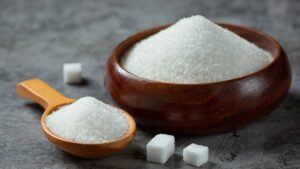
JSC “Lynovychi Sugar Plant ‘Krasnyi’ (Chernihiv region), part of the ”Gals Agro” group, plans to retain a loss of UAH 664,000 incurred as a result of operations in 2025, the company reported in the NSSMC’s disclosure system.
The relevant issue has been included on the agenda of the annual general meeting of shareholders scheduled for April 18. According to the draft resolution, shareholders also intend to approve the results of operations for the past year and hear the supervisory board’s report.
The shareholders will also consider a proposal to grant preliminary consent for significant transactions to be conducted within one year of the decision’s adoption. This refers to transactions whose value exceeds 25.00% of the company’s asset value as per the latest annual financial statements, with a maximum aggregate value of UAH 48.80 million. The list of such transactions includes obtaining loans, credits, and other banking products; pledging or mortgaging property; providing guarantees for third-party obligations; as well as the purchase, sale, rental, and leasing of property.
According to data from the Opendatabot service, JSC “Lynovychi Sugar Plant ”Krasnyi” reduced its revenue by 2.67% in 2025—to UAH 211.28 million—while its debt obligations decreased by 15.97%—to UAH 180.13 million. The company’s assets decreased by 18.13% over the year to UAH 159.82 million, while the number of employees decreased by 6 to 151.
JSC “Lynovychi Sugar Plant ‘Krasnyi’ (Chernihiv Oblast) is part of the ”Gals Agro” agricultural holding and specializes in the production of white crystalline sugar, molasses, and beet pulp. The current sugar beet processing capacity is approximately 2,800 tons per day, which allows the company to process an average of 170,000 tons of raw materials and produce over 23,000 tons of finished products per year.
The beneficiaries of the plant are Serhiy Kravchuk, Vadym Vaisapir, Mykhailo Yevstratov, Volodymyr Havrylenko, and Mykola Havrylenko. The main shareholder of the enterprise, with a 73.38% stake, is Gals Agro LLC.

The Ukrainian group of companies Kormotech, a manufacturer of dog and cat food, expects revenue of approximately €200 million by the end of 2025, with exports currently accounting for 30% of sales, said co-owner and CEO Rostislav Vovk at the Forbes Ukraina Exporters Summit.
“We are currently working very hard on this (increasing the export share – IF-U). I am confident that by 2028–2029, we will increase our export sales to at least 45% of our turnover and continue to grow from there. In other words, for us, internationalization means that the majority of our revenue comes from foreign markets,” Vovk noted.
According to the CEO, the company is currently actively expanding its presence in the U.S. Last year, revenue in the U.S. market was approximately $4 million, but the plan for this year calls for growth to over $10 million. The products are already available on Amazon and the specialty retailer Chewy, as well as in 150 stores in the New York area and neighboring states. Vovk added that “this is precisely why we are in the United States—to understand which trends will reach Europe in a few years.”
Assessing competitiveness, the CEO noted that Europe currently lags behind the U.S. in innovation by five to seven years. For Ukrainian businesses, expansion is a way to “gain a foothold” to ensure the company’s stability regardless of the domestic situation in the country, energy supply issues, or veterinary risks.
In Europe, Kormotech’s strategy is focused on 15 countries in Central and Eastern Europe. The priority markets are Romania, Bulgaria, and the Baltic states. In particular, in Lithuania—which the company considers its “second home market” due to the presence of its own factory there—the manufacturer already controls 10% of the market.
Vovk named Bulgaria and Romania as the most promising markets in the region, as they are growing rapidly and the company’s products are ideally suited to the needs of local customers. According to him, experience in Ukraine allows the company to anticipate competitors’ moves and the stages of development in these markets.
The company’s CEO emphasized that expansion into new markets requires long-term investment—five to eight years of operating without profit to successfully compete with multinational giants. The manufacturer continues to invest in diversification and uses its own profits for development in EU countries.
In terms of capital, Kormotech is exclusively considering an acquisition strategy and is currently seeking suitable targets. The expansion is financed through internal funds and credit lines from the EBRD and Raiffeisen Bank. At the same time, the company remains a family business: according to the “family constitution,” bringing in outside investors is only possible for a minority stake, with the owners retaining the mandatory right to buy it back in the future.
“We are building a century-old company, so we cannot afford to ‘shoot in all directions at once.’ Our path is to establish corporate governance where shareholders have systematic control, and the business develops as a large family structure, following the example of Mars or Walmart. (…) My main advice to my past self is not to expect very quick victories, not to enter Poland right away due to the extremely fierce competition in the discount market, and not to be afraid of mistakes, because without them it would be impossible to achieve what we have now,” Vovk concluded.
Kormotech is an international family-owned company with Ukrainian roots, founded in 2003. It produces cat and dog food under the brands Optimeal, Club 4 Paws, Delickcious, Meow!, Woof!, and My Love. It has production facilities in Ukraine and the EU, and its product range includes over 650 items. The company’s products are available in 55 countries worldwide, both under its own brands and under the brands of partner companies.
According to published information, the company’s strategic goal is to become one of the top 30 global pet food manufacturers by 2029, with annual revenue of EUR500 million, of which EUR300 million is planned to come from European markets.

Ukrainian honey producer BEEHIVE (part of the EFI Group) is considering opening production facilities in Europe due to the European Union’s reinstatement of import duties on honey, which has led to the company losing ground in the European retail market, said BEEHIVE General Manager Semen Gagarin.
“When the 17.3% tariff was reinstated, we didn’t expect it. At one point, our margin dropped by 20% at the base level, and we started getting pushed out of retail chains—we were left with only 10–15% of the list of retailers we had previously. For us, this was a real ‘cold shower,’” he said at the Forbes Ukraina Exporters Summit.
According to Gagarin, entering complex markets, particularly the British Morrisons chain or the German REWE, requires significant preparation. He emphasized that for Ukrainian honey to make it onto the chain’s shelves, the manufacturer had to offer extreme terms. Specifically, in Germany, the company was forced to provide a “55% margin for the chain” to have a chance of gaining entry.
The general manager explained that BEEHIVE used a “top-down” pricing model in the EU, taking into account competitors’ pricing policies. Under this model, if the product’s cost price is EUR1, the shipping price to the EU must be EUR1.5, and the final shelf price for the consumer will reach around EUR2.5.
“We always work based on the shelf price and the competitor’s price: if their price is EUR3, we need to be a little cheaper to give the buyer a reason to vote for us with their money,” he said.
Assessing the competitive environment, Gagarin noted that Ukrainian producers have to compete with European family-owned companies that have a 150-year history. Since honey is largely a commodity, unique taste or a price advantage become key success factors. To ensure stable expansion, he advised his colleagues to first capture the maximum share of the local Ukrainian market in order to have the financial cushion needed for costly investments in marketing and product listings abroad.
Currently, the company sees two paths forward: either wait for Ukraine’s full EU membership, which would eliminate customs barriers, or localize production directly in Europe.
“Exporting is expensive, exporting takes time, and exporting is complicated. But it’s doable if you have a ‘margin buffer,’ are ready to invest in trading houses, and hire ‘native speakers’ who will communicate with clients in their own language,” Gagarin concluded.
EFI Group (Effective Investment Technologies), founded in 2007, implements business projects in Ukraine. Its investment areas include healthcare and medtech, the paper, food, and woodworking industries, and the supply of agricultural products. Most of the group’s assets are export-oriented and hold international FSC, IFS, and BRC certifications.
The company’s businesses include Feednova, a producer of animal fats and feed additives; the “Beehive” honey production plant; the “Medical Star” honey retail chain, the Zhytomyr Cardboard Plant, the cardboard packaging manufacturer “Sem Ecopack,” the timber processor “Forest Technology,” the agricultural products supplier “Efi Agro,” and the online medical hub Doc.ua.

Pharmacy sales in Ukraine for January-February 2025 rose by 8.3% in monetary terms compared to the same period in 2025—to more than 39.014 billion UAH, while in volume terms they decreased by 7.2%—to nearly 176,866 thousand packages, according to data from a study conducted by Business Credit and reported to the agency “Interfax-Ukraine.”
According to the data, the weighted average price of the pharmacy basket in January-February 2026 was 220.58 UAH per package, which is 16.67% higher than during the same period a year earlier.
At the same time, pharmacy sales of medicines during this period increased by 10.8% in monetary terms—to more than 31.396 billion UAH—and by 2.25% in volume terms compared to the same period in 2025, reaching 138 million packages.
The weighted average retail price of medicines for the first two months of 2026 was 227.5 UAH per package, which is 8.5% higher than in January–February 2025.
At the same time, pharmacy sales of dietary supplements in the first two months of 2026 increased by 12.46% in monetary terms, to nearly 4.6 billion UAH, while in volume terms they decreased by 17.3%, to 14.717 million packages. The weighted average price in this segment rose by 35.9% to 309.64 UAH per unit.
As reported, pharmacy sales in Ukraine for 2025 increased by 14.23% in monetary terms compared to 2024—to more than 220.287 billion UAH, while in volume terms they decreased by 2.25%—to nearly 1.135 million packages. The weighted average price of items in the pharmacy basket at the end of 2025 was 194.68 UAH per package, which is 16.86% higher than a year earlier.
At the same time, pharmacy sales of medicines during this period increased by 12.79% in monetary terms—to nearly 170.318 billion UAH—while in volume terms, they decreased by 0.2% compared to 2024, to 808.546 million packages.
The weighted average retail price of medicines at the end of 2025 was 210.65 UAH per package, which is 13% higher than at the end of 2024.
The pharmaceutical company “Farmak” remains the leader in retail sales in 2025 among domestic companies, with sales of nearly 10.978 billion UAH. The top 5 also included the pharmaceutical company “Darnitsa” (7.473 billion UAH), “Kyiv Vitamin Plant” (KVZ, nearly 6.842 billion UAH), ‘Arterium’ (5.975 billion UAH), and “Pharma Star/Acino” (2.9 billion UAH).

The introduction of a 10% export duty on soybeans and rapeseed will reduce the profitability of these crops, leading to a 30% reduction in soybean acreage in 2026, experts from the American Chamber of Commerce (ACC) reported during a press briefing in Kyiv.
“Our forecasts indicate a possible 30% reduction in soybean acreage compared to the previous season. The export duty acts as an economic barrier, making the cultivation of this crop less attractive to producers. Farmers won’t take losses every year—if the financial result is negative, they’ll simply change their crop mix,” the experts explained.
The business association noted that under normal conditions, corn could be an alternative, but currently its investment appeal is also in question due to rising production costs.
“Prices for fuel and fertilizers have risen significantly, particularly due to the escalation of the situation surrounding Iran and the blockade of the Strait of Hormuz. This significantly increases farmers’ costs for growing corn, which, combined with the low profitability of oilseeds due to tariffs (on soybeans and rapeseed – IF-U), puts farmers in a difficult position ahead of the spring planting season,” the briefing participants emphasized.
Experts expressed confidence that if regulatory policy does not change, there is a risk that farmers will abandon rapeseed and soybean cultivation in the long term. This will lead to domestic processors, who lobbied for the introduction of tariffs to obtain cheap raw materials, eventually facing a physical shortage of those materials due to reduced production.
As reported, pursuant to Law No. 4536-IX of July 16, 2025, a 10% export duty on rapeseed and soybeans was introduced in Ukraine effective September 4, 2025. The document provides for a gradual reduction of the rate by 1% annually, starting January 1, 2030, to 5% by 2035. At the same time, the law includes a preferential regime for direct producers and cooperatives, who are exempt from paying the duty when exporting their own-grown products.
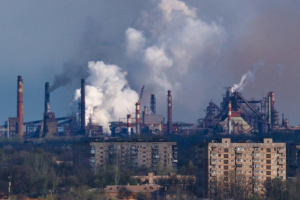
At the end of 2025, Ukraine ranked 95th out of 143 countries and territories in the global air pollution ranking published by the Swiss company IQAir. According to IQAir’s global press release, in 2025 only 14% of the world’s cities met the World Health Organization’s recommendation for an annual average PM2.5 concentration of no more than 5 micrograms per cubic meter, while 130 out of 143 countries and territories exceeded this benchmark.
The IQAir global release also notes that the five most polluted countries in the world in 2025 were Pakistan, Bangladesh, Tajikistan, Chad, and the Democratic Republic of the Congo. The most polluted city in the world was Lonhi in India, while the cleanest was New Woodville in South Africa.



