

The introduction of a 10% export duty on soybeans and rapeseed will reduce the profitability of these crops, leading to a 30% reduction in soybean acreage in 2026, experts from the American Chamber of Commerce (ACC) reported during a press briefing in Kyiv.
“Our forecasts indicate a possible 30% reduction in soybean acreage compared to the previous season. The export duty acts as an economic barrier, making the cultivation of this crop less attractive to producers. Farmers won’t take losses every year—if the financial result is negative, they’ll simply change their crop mix,” the experts explained.
The business association noted that under normal conditions, corn could be an alternative, but currently its investment appeal is also in question due to rising production costs.
“Prices for fuel and fertilizers have risen significantly, particularly due to the escalation of the situation surrounding Iran and the blockade of the Strait of Hormuz. This significantly increases farmers’ costs for growing corn, which, combined with the low profitability of oilseeds due to tariffs (on soybeans and rapeseed – IF-U), puts farmers in a difficult position ahead of the spring planting season,” the briefing participants emphasized.
Experts expressed confidence that if regulatory policy does not change, there is a risk that farmers will abandon rapeseed and soybean cultivation in the long term. This will lead to domestic processors, who lobbied for the introduction of tariffs to obtain cheap raw materials, eventually facing a physical shortage of those materials due to reduced production.
As reported, pursuant to Law No. 4536-IX of July 16, 2025, a 10% export duty on rapeseed and soybeans was introduced in Ukraine effective September 4, 2025. The document provides for a gradual reduction of the rate by 1% annually, starting January 1, 2030, to 5% by 2035. At the same time, the law includes a preferential regime for direct producers and cooperatives, who are exempt from paying the duty when exporting their own-grown products.

Experts from member companies of the American Chamber of Commerce in Ukraine (the Chamber) urge the Verkhovna Rada of Ukraine (the Parliament) to promptly consider and adopt the relevant amendment to the Law of Ukraine “On the State Budget of Ukraine for 2025,” as reflected in the draft Law of July 14, 2025, No. 13439-3, “On Amendments to the Law of Ukraine ”On the State Budget of Ukraine for 2025“ regarding financial support for the security and defense sector and addressing priority issues” (draft Law). The amendment provides for the allocation and provision of additional state support to ensure the uninterrupted operation of rail transport.
In the opinion of the Chamber’s member companies, such a decision is extremely important today for the railway industry and related industries (agricultural, metallurgical, energy, construction, and others), as it will enable additional financial resources to be attracted to ensure the stable operation of rail transport in conditions of significant funding shortages, as well as prevent the suspension of the operational activities of JSC Ukrzaliznytsia, the deterioration of service quality, and the disruption of logistics chains.
Experts from the Chamber’s member companies welcome the approval of the draft law by the relevant Verkhovna Rada Committee on Budgetary Issues for further consideration in the second reading and hope for a prompt resolution of this issue during the current plenary week. After all, in the context of a full-scale war, ensuring the uninterrupted operation of rail transport is of strategic importance, playing a key role in the transportation of goods, ensuring the mobility of the population, and supporting the country’s economic activity.
84% of the American Chamber of Commerce companies in Ukraine have employees serving in the Armed Forces of Ukraine, said Andy Hunder, President of the American Chamber of Commerce.
“Today, 84% of the American Chamber of Commerce companies in Ukraine have employees serving in the Armed Forces of Ukraine. This means that 9 out of 10 companies have defenders,” he said at the Ministry of Veterans’ Summit “Veteran’s Path from Military Service to Civilian Life” in Kyiv on Monday.
According to him, the issue of veterans’ reintegration is a key one for ATP.
“It is important to create conditions in which these defenders will become economically active again, will be able to realize their knowledge and skills in peaceful life,” Gunder emphasized.

The American Chamber of Commerce in Ukraine and member company Sayenko Kharenko are delighted to invite you to join our traditional Blood Donation Day.
During these challenging times of the full-scale war in Ukraine, the need for life-saving blood donations has never been more critical. Each drop of blood donated can make a significant difference and help save lives.
Join us and encourage your colleagues, friends, and relatives to participate.
Please follow all the rules and recommendations to get prepared for donating blood.
Please take your passport and identification code with you. Citizens of other countries can also be donors if they have a residence permit in Ukraine and an identity document.
*DonorUA is an automated social platform for recruiting and managing blood donors designed to promote the blood donor movement in Ukraine.
Due to security reasons, venue details will be provided one day in advance. The location has an underground shelter.
Mark your calendars for a meaningful and impactful event – AmCham Ukraine Blood Donation Day!
Our team can’t wait to see you on November 10.
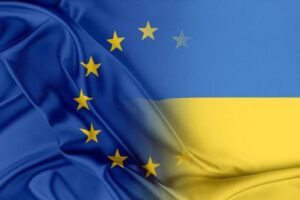
The status of a candidate member of the European Union will give impetus to a new trajectory of Ukraine’s GDP growth and a positive signal to investors, Andriy Hunder, President of the American Chamber of Commerce in Ukraine (ACC), believes.
“The EU candidate status will kick-start a new GDP growth trajectory, while at the same time providing huge morale for post-war economic transformation and reform implementation. Such a move sends a positive signal to investors that Ukraine is moving in the right direction,” he said in a comment to the agency. Interfax-Ukraine.
“There is no future for transparent business in Russia. At the same time, companies will see Ukraine as a priority for post-war investment,” Gunder said.
He also expressed confidence that with a positive decision on such a status by the EU members, Ukraine will make every effort to implement all the necessary reforms as soon as possible. In particular, to introduce real and effective judicial reform, the rule of law, fair justice and the establishment of a level playing field for business.
“We will see a comprehensive approach to creating a strong state and a competitive economy,” Andrei Gunder stressed.
“The message on the status of Ukraine’s candidate for membership in the European Union is clear – Ukraine is returning home. Ukraine is returning to the European family of peoples, the values it shares, and, once and for all, is moving away from the yoke of Russia’s cruel suffocation,” he said.
Acceleration of Ukraine’s membership in the European Union by approximating national legislation in the field of competition, customs, healthcare, protection of intellectual property rights, media, etc. to EU legislation is one of the key priorities for member companies of the American Chamber of Commerce in Ukraine for the post-war economic recovery of Ukraine, added the ACC President.
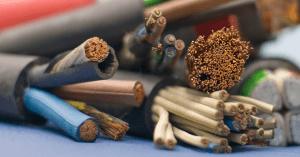
The American Chamber of Commerce in Ukraine urges members of the Interdepartmental Commission on International Trade (ICIT) not to introduce special measures in the form of the special duty on imported wires to Ukraine, regardless of the country of origin and export, the Chamber said in a Monday press release.
On March 29, 2021, the Ministry for Development of Economy, Trade and Agriculture of Ukraine published the Basic Facts and Conclusions on the Special Investigation on the Import of Wires to Ukraine Regardless of the Country of Origin and Export. According to the basic facts and conclusions, the Ministry recommends introducing special measures in the form of the special duty of 23.5% for three years (with the subsequent liberalization).
“The potential introduction of the special duty on import will in fact, turn into the extra tax to be paid by the telecommunication industry. It will adversely affect mobile operators’ investment capacity because instead of investing in infrastructure, mobile operators will have to pay additional duties,” the Chamber said.



