

Gas and propane stoves remain a significant source of air pollution in residential homes and significantly exacerbate the long-term impact of nitrogen dioxide (NO₂) on households. This is the conclusion reached by a group of researchers led by Stanford University in an article published in December 2025 in the journal PNAS Nexus.
The study, titled “Integrating indoor and outdoor nitrogen dioxide exposures in US homes nationally by ZIP code,” combines data on outdoor air pollution with estimates of emissions from gas stoves inside homes. According to their calculations, the average total long-term NO₂ exposure for households with gas stoves in the U.S. is about 10 ppbv, while for households with electric stoves it is about 8 ppbv; for the heaviest users of gas stoves, the figure can reach 18 ppbv or higher.
The authors note that for approximately 22 million people in the U.S., the level of long-term NO₂ exposure would fall below the World Health Organization’s recommended guideline if they reduced their use of gas and propane stoves or switched to electric ones. The study also indicates that gas stoves are responsible for over 99% of cases where the WHO’s short-term NO₂ guideline is exceeded in residential spaces.
According to Stanford, the risk is particularly high for small homes and apartments, as well as for households where stoves are used intensively and where ventilation is inadequate. The university emphasizes that as outdoor air quality improves, indoor sources of pollution, including kitchen appliances, are becoming an increasingly important factor for health.
Nitrogen dioxide is linked to an increased risk of asthma, chronic lung disease, preterm birth, diabetes, and lung cancer, according to Stanford’s explanations and accompanying materials for the publication. Against this backdrop, researchers believe that switching to electric stoves can significantly reduce the harmful effects of indoor air pollution.

FC “Liberty Finance” considers the National Bank of Ukraine’s decision to revoke licenses to be unlawful and will seek their reinstatement through legal proceedings
In connection with the National Bank of Ukraine’s notice dated March 24, 2026, regarding the revocation of Liberty Finance FC’s license to operate as a financial company and its license to conduct cash foreign exchange transactions, we deem it necessary to inform the public of the following.
1. FC “Liberty Finance” disagrees with the relevant decision of the National Bank of Ukraine and considers it illegal.
2. The company operates exclusively within the legal framework and within the scope of the licenses issued by the regulator. The information regarding two unlicensed transactions conducted by employees of Liberty Finance FC, which the regulator used to justify its decision, is untrue. Such situations are fundamentally impossible in our customer service branches due to our transparent operational model.
3. At the time of the license revocation, Liberty Finance FC is in the process of actively challenging the NBU’s previous decisions in the Kyiv Administrative Court.
4. We are confident in our position, so we will defend the business reputation of Liberty Finance FC and seek the reinstatement of the revoked licenses through legal proceedings.
Despite the current situation and regulatory pressure, our company guarantees the full and timely fulfillment of its obligations to clients.
All agreements and contracts entered into prior to the publication of the NBU’s decision remain in effect.
FC “Liberty Finance” has sufficient liquidity to ensure financial stability and to make all necessary payments in full.
Our position is consistent, and our next steps will be aimed at protecting the legitimate interests of Liberty Finance FC and our clients.

Shareholders of VUSO Insurance Company (Kyiv) plan to approve a resolution at the meeting scheduled for April 29 to allocate UAH 20.013 million from the remaining net undistributed profit for 2024, which totals UAH 98.811 million, for the payment of dividends.
As the company reported in the disclosure system of the National Securities and Stock Market Commission (NSSMC), the remaining undistributed profit for 2024 in the amount of UAH 78.799 million will remain undistributed.
The meeting agenda states that dividends will be paid at a rate of UAH 0.73 per share. Dividends will be paid in full directly to shareholders in accordance with the procedure established by law within six months from the date of the relevant resolution by the general meeting of shareholders.
In addition, the shareholders plan to approve the results of financial and economic activities (annual financial statements) for 2025. And to leave the profit earned by the company in 2025 undistributed.
As reported, at a meeting held from December 4 to 9, 2025, the shareholders of IC “VUSO” decided to allocate UAH 20.013 million of the confirmed undistributed profit for 2024, amounting to UAH 118.824 million, for the payment of dividends. The remaining profit for 2024, amounting to 98.811 million, is to be retained.
VUSO Insurance Company was founded in 2001. It is a member of the Motor Transport Insurance Bureau of Ukraine (MTIBU) and the Ukrainian Insurance Federation (UIF), a participant in the Direct Loss Settlement Agreement, and a member of the Nuclear Insurance Pool.
In 2024, the company collected UAH 3.462 billion in gross premiums, which is 29.3% more than in 2023; the company’s net premiums increased by 25.55% to UAH 3.105 billion, and net earned premiums by 15.83% to UAH 2.737 billion. It paid out UAH 1.414 billion to clients, which is 45.40% higher than the volume of insurance payments and reimbursements for 2023.
As of January 1, 2025, the insurer’s assets increased by 25.76% to UAH 1.917 billion, equity by 22.45%
to UAH 755.839 million, liabilities increased by 28.01%—to UAH 1.161 billion,
cash and cash equivalents—by 36.09%, to UAH 758.730 million.

According to a report by Relocation.com.ua, Sweden has established a timeline for gradually tightening its citizenship rules: most of the new requirements are proposed to take effect on June 6, 2026; mandatory language and social studies tests—in October 2027; and the mechanism for revoking citizenship in certain cases—on January 1, 2028. This is outlined in a report by KPMG Sweden, prepared based on government initiatives and investigative materials submitted to the Swedish Ministry of Justice.
Under the proposed changes, the standard residency requirement in Sweden before applying for citizenship will increase to eight years from the current five. For spouses of Swedish citizens, the period of cohabitation required to qualify for application will rise to seven years instead of three, provided that the Swedish spouse has held citizenship for at least five years.
At the same time, a requirement for financial self-sufficiency is being introduced for the first time. Applicants will be required to demonstrate a stable income from employment or business, and prolonged receipt of unemployment benefits may serve as grounds for denial. Exceptions are proposed for retirees and students with good academic standing.
Starting in October 2027, a mandatory state test is planned to be introduced, which will assess not only knowledge of the Swedish language but also understanding of the structure of Swedish society. As an alternative, high scores on the Swedish for Immigrants program may be accepted.
Another area of tightening concerns the so-called “good conduct.” Citizenship may be denied to individuals convicted of or suspected of serious crimes, as well as repeat offenders. Separately, the commission proposed allowing the revocation of citizenship for individuals with dual citizenship starting January 1, 2028, in cases of particularly serious crimes or the submission of knowingly false information when applying for a passport.
It is important to note that this currently refers specifically to the government’s package of proposals and the timeline for their anticipated implementation, rather than a fully completed legislative reform. As early as January 2025, the Swedish government stated that it wanted to make the process of obtaining citizenship more stringent and link it to deeper integration into society.
https://relocation.com.ua/sweden-tightens-citizenship-rules/

The ‘Kopeika’ retail chain announced in early March 2026 that it had acquired the Odessa-based “Gourmet” chain, which comprises nine mini-markets, according to the Ukrainian Retailers Association.
“The acquisition of ‘Gourmet’ will allow us to strengthen our position in the central and tourist-friendly areas of Odessa, expand our coverage, and offer shoppers an even more accessible and convenient format for daily shopping,” said Dmitry Bogdanov, director of the “Kopeika” chain, as quoted in the statement.
According to the press release, the total retail space of the “Gourman” chain’s stores is 1,500 square meters. “Kopiyka” has already begun the phased preparation to transition the acquired retail locations to the new brand. Upon completion of the integration, the “Kopeika” chain will have 127 stores, including seasonal locations and a store in Kherson.
According to Opendatabot, in 2025, the “Kopiyka” chain increased its net revenue by 19.5% to 4.3 billion UAH and its net profit by 31.6% to 24.2 million UAH.
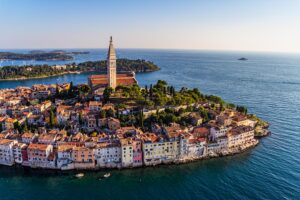
According to the publication Parametar, Croatia has become the most popular European Union country for Serbian citizens to relocate to, according to Eurostat data. In 2024, approximately 46,000 residence permits were issued to Serbian citizens in EU countries for the first time, of which about 14,500 were in Germany and about 10,000 in Croatia.
Croatia was followed by Austria and Slovenia, where Serbian citizens received approximately 4,000 initial permits each, as well as Slovakia, with about 2,500.
More broadly, from 2013 to 2024, 494,048 Serbian citizens moved to EU countries. The rate of emigration accelerated during this period: while approximately 0.33% of Serbia’s population moved to the EU in 2013, the figure rose to about 0.70% by 2024.
According to Eurostat, in 2024, EU countries issued a total of 3.5 million first-time residence permits to non-EU citizens, which is 8.3% less than the previous year. Against this backdrop, the Serbian migration flow remains particularly prominent in the labor migration segment, which explains the high figures for Croatia and Germany as markets with sustained demand for labor.
The Croatian destination stands out particularly not only because of its geographical proximity and the country’s EU membership, but also due to the relatively low language barrier. The Serbian and Croatian languages are almost completely mutually intelligible, and this is likely also one of the factors facilitating the relocation, job search, and daily adaptation of Serbian citizens in Croatia.



