

Iryna Starominska, Chairwoman of the Board of JSC “UNIVERSAL BANK,” was named the winner of the “Financier of the Year” category as part of the 30th anniversary nationwide “Person of the Year 2025” program.
Starominska has over 25 years of professional experience, the last 16 of which she has spent in leadership roles in the banking sector. She has headed Universal Bank since 2017.
One of the bank’s key projects during this period was the 2017 launch, in collaboration with the Fintech Band team, of the digital banking service monobank, which operates under Universal Bank’s banking license.
As of early June 2026, the monobank ecosystem had over 10.7 million customers, making it one of Ukraine’s largest digital financial services. The project has also been included twice in CNBC’s “Top 250 Fintech Companies in the World” ranking.
The development of monobank has become one of the most notable examples of the transformation of the Ukrainian banking market, where traditional banking infrastructure has been combined with remote services and mobile financial technologies.
Universal Bank is listed among Ukraine’s systemically important banks. According to information provided by the organizers of the “Person of the Year” program, as of the end of 2025, the bank ranked third in Ukraine in terms of retail deposits and second in terms of its retail loan portfolio, and was also among the top five most profitable Ukrainian banks.
For five years, Starominska has also been ranked among the most influential women in Ukraine’s fintech sector. In her management role, she focuses on the development of digital banking services, the automation of operations, and the implementation of technological solutions for retail customers.
Charitable and social projects remain a separate area of activity for Universal Bank and monobank. According to data provided by the award organizers, from the start of the full-scale invasion through April 2026, the total amount of charitable aid provided by the bank and its team exceeded 497 million UAH.
Of this amount, approximately 386 million UAH was allocated to support the Armed Forces of Ukraine, military units, and charitable foundations that assist the army. Another approximately 111 million UAH was allocated to cultural and social projects. The bank also participates in charitable initiatives alongside the UNITED24 fundraising platform and other foundations.
Universal Bank operates in the Ukrainian banking market as a universal financial institution serving both individuals and businesses. Since 2017, the bank has been a partner of Fintech Band in the development of monobank. The bank is part of the TAS Group and is included in the list of systemically important banks in Ukraine.
Open4Business is an information partner of the nationwide “Person of the Year 2025” program.
BANK, FINANCE, FINTECH, MONOBANK, UKRAINE, UNIVERSAL BANK, Старомінська

As of September 1, 445,300 hectares had been planted with winter rapeseed in Ukraine, which is 18% more than on the same date last year, according to the ASAP Agri analytical agency.
The highest rates of winter rapeseed planting were recorded in the Vinnytsia, Khmelnytskyi, and Ternopil regions.
At the same time, Ukrainian farmers have begun planting winter wheat—as of September 1, the first 8,900 hectares had been planted. Sowing of winter barley has also begun, but the work is still in a very early stage—less than 1,000 hectares have been sown.
The areas planted with winter wheat and barley may shrink compared to last year, notes ASAP Agri.

According to Fixygen, the line between traditional banks and the crypto industry is rapidly blurring. In March 2026, Kraken Financial received a Federal Reserve master account, becoming the first digital bank with direct access to the U.S. payment infrastructure.
Kraken already operates as a special-purpose bank in Wyoming and, at the same time, holds over 100 active regulatory licenses in more than 30 countries.
On the other hand, traditional banks are exploring the possibility of issuing their own stablecoins and tokenized deposits. JPMorgan is studying the possibility of issuing a stablecoin, and similar projects are being discussed by Bank of America, Wells Fargo, and other banks.
Even crypto companies are beginning to obtain federal banking licenses: in August, the U.S. OCC granted World Liberty Financial preliminary approval to establish a national trust bank to handle stablecoins and store assets.
As a result, in a few years, the distinction between a “bank” and a “crypto exchange” may no longer be defined by the range of services offered.
Both sides aim to provide services such as asset custody, payments, stablecoins, trading, tokenized securities, credit products, and international settlements.
The main battle will center on who can keep customers within their own financial infrastructure—JPMorgan, Coinbase, Kraken, or the new digital banks.
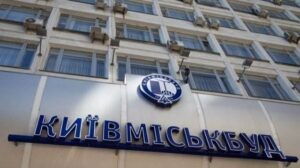
PJSC “Kyivmiskbud” Holding Company contributed 81,364,000 UAH to the state and local budgets between April 1, 2023, and March 31, 2026, the company’s press service reported.
“Kyivmiskbud” once again demonstrates transparency and financial discipline. Even under challenging anti-crisis conditions, the company remains a conscientious taxpayer. We operate transparently, comply with legal requirements, and are systematically moving forward,” said Yuriy Tykhonovych, acting chairman of the holding company’s board of directors.
From July 8 to August 18, 2026, “Kyivmiskbud” underwent a scheduled on-site audit by the Main Directorate of the State Tax Service in Kyiv. The audit examined compliance with tax, foreign exchange, and other laws for the period from April 1, 2023, to March 31, 2026, as well as the timeliness of payments of the unified social contribution (USC) from July 1, 2021, to March 31, 2026. A corresponding report was drawn up based on the results of the inspection.
During the specified period, “Kyivmiskbud” paid 81,364,000 UAH to the state and local budgets, of which land rent amounted to 28,086,000 UAH; Unified Social Contribution (USC) – 20,830,000 UAH; personal income tax (PIT) – 17,764,000 UAH; land tax – 6,143,000 UAH; real estate tax – 5,199,000 UAH; military levy – 3,304,000 UAH; income tax – 34,850 UAH.
At the same time, late payment of land rent for 2023 in the amount of 647,800 UAH was identified, the company’s losses for the reporting period were reduced, and additional income tax for the third quarter of 2023 in the amount of 1,833,000 UAH was assessed.
As previously reported, Kyivmiskbud’s balance sheet includes 24 construction sites where more than 120 residential buildings at various stages of completion have been erected. The total area of unfinished construction exceeds 548,000 square meters. The developer began restoration work in March 2026 at a number of sites. In July, the “Podol Grad” residential complex was commissioned. Five more projects are at an advanced stage of completion (the “Freedom” residential complex, the “Twin House” residential complex, the “Oberig-2” residential complex (Building 1), the “Rainbow” residential complex, and the “Gvardeysky” residential complex).
Active construction and installation work is underway at four additional sites.
Kyivmiskbud Holding Company was established in 1994 on the basis of the assets of the state-owned municipal construction corporation “Kyivmiskbud” by consolidating controlling stakes in 28 enterprises and other assets into its authorized capital. It comprises 40 joint-stock companies in which the company holds shares, as well as six subsidiaries and 51 companies with associate member status.
According to data from the National Securities and Stock Market Commission (NSSMC), the Kyiv City Council is the majority shareholder of Kyivmiskbud Holding Company PJSC.

Fozzy Group is restructuring its logistics operations and opening new stores; there are currently 1,614 job openings, according to Lyubov Ukraintseva, HR Director at Silpo
“We currently have more than 1,600 job openings throughout Ukraine. We are actively looking for people to join the Silpo and Fozzy Group Logistics teams. The past few weeks have brought us many new challenges. In the wake of the Russian attacks, we are rapidly restructuring our logistics to ensure goods reach supermarket shelves on time. At the same time, we continue to open new Silpo stores. In the last week alone, we opened three supermarkets and hired 170 “Outstanding Performers” for them. So there’s a lot of work to be done. And we need a lot of people,” she wrote on LinkedIn.
The HR director specified that there are currently 1,614 open positions: 940 in logistics, 535 in supermarkets, and 139 in production. The company is primarily looking for loaders, receiving clerks, sales associates, cooks, bakers, order pickers, and mid-level managers.
“I’d like to clarify one thing in particular. Recently, there have been reports in the media that Fozzy Group has suspended hiring office staff. It’s important to note that we are continuing to hire people for our supermarkets, logistics, and production facilities,” she noted

The number of foreign nationals with residence permits in Albania reached 32,163 by the end of 2025, a 46.6% increase compared to the previous year, according to data from the Albanian Institute of Statistics (INSTAT).
By comparison, 21,940 foreigners held residence permits in 2024, and 21,460 in 2023. Thus, in the last year alone, the number of foreign residents increased by more than 10,000 people.
Albania’s total permanent population as of January 1, 2026, was 2.336 million people, a decrease of 1.16% over the past year. Thus, the growth in the foreign population is occurring simultaneously with the ongoing decline in the country’s total population.
However, determining the exact current number of all foreigners actually residing in Albania is more difficult than determining the number of residence permit holders. INSTAT explicitly notes that the country does not yet have a unified population registry, and annual demographic estimates are based on several data sources. The most recent national census, conducted in September 2023, counted 15,210 residents with foreign citizenship or without citizenship out of a total population of 2.402 million. These figures cannot be directly compared with the administrative statistics on residence permits for the end of 2025 due to differences in dates and methodology.
By the end of 2025, the largest group among foreigners with residence permits was citizens of Kosovo—6,284 people, or 19.5% of the total. They were followed by citizens of Italy (4,065), India (2,886), and the Philippines (2,401).
Ukrainians are not included in this top four, but their presence in Albania has its own specific characteristics. During 2025, Ukrainian citizens submitted 312 applications for residence permits, accounting for about 2% of applications from the main countries of origin. By comparison, Russians submitted 442 applications.
However, the actual number of Ukrainians living in Albania is higher than the number of standard residence permit holders. On April 10, 2026, the Albanian government allowed Ukrainian citizens to enter without visas and remain in the country without a residence permit until March 30, 2027. This rule also applies to Ukrainians already in the country.
Thus, Ukrainians can legally reside in Albania without being included in INSTAT’s main statistics on foreigners with residence permits. Therefore, the figure of 32,160 people primarily reflects holders of residence permits, rather than absolutely all foreign citizens who are actually in the country for an extended period.



