
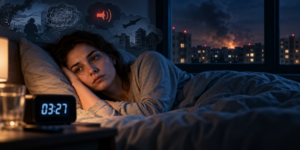
Chronic stress, air raid alerts, and the constant anticipation of danger disrupt the quality of sleep among Ukrainians. Even after a relatively quiet night, a person may wake up feeling tired. A regular routine, reduced evening activity, and timely diagnosis of sleep disorders can help restore proper rest.
Getting a full night’s sleep has become a serious problem for many Ukrainians amid the ongoing war. Air raid alerts, explosions, and the need to constantly monitor the situation disrupt normal rest patterns. At the same time, difficulties may persist even on nights when there is no immediate threat.
According to a sociological survey conducted in June 2026, cited by the ADONIS Medical Center, 38% of Ukrainians surveyed reported a deterioration in their sleep quality compared with the beginning of the year, with 14% reporting a significant deterioration. Another study on the impact of the war on sleep showed that signs of insomnia were observed in 44% of participants, while clinically significant insomnia was found in 27%.
Why the body cannot relax even at night
Sleep is an important physiological process necessary for the body’s recovery, the functioning of the nervous system, memory, and the ability to regulate emotions. Regular awakenings caused by air raid alerts and explosions disrupt its structure, reducing the quality of rest even when a person manages to fall asleep again.
However, external circumstances are not the only cause of these problems. Under prolonged stress, the nervous system may remain in a state of heightened alertness even when there is no immediate danger.
As Valerii Kozlov, a leading neurologist of the highest qualification category at the ADONIS Medical Center, explains, a person may go to bed in silence, but internal tension continues to interfere with relaxation, falling asleep, and maintaining uninterrupted sleep.
As a result, even after spending seven to eight hours in bed, a person does not always feel rested. Sleep may be shallow and fragmented, and its restorative function may be reduced.
Therefore, the absence of nighttime attacks does not in itself guarantee proper rest: the body needs time to emerge from a state of constant readiness for danger.
Why insomnia and frequent nighttime awakenings occur
Brief awakenings are part of normal sleep, and people often do not even remember them. A problem arises when they become frequent, when it is difficult to fall asleep again afterward, and when fatigue and a feeling of exhaustion persist in the morning.
The causes may vary: chronic stress, anxiety, an irregular daily routine, or medical conditions that affect sleep quality.
Obstructive sleep apnea syndrome deserves particular attention. In this condition, breathing during sleep periodically stops or becomes significantly restricted. The body responds with brief awakenings that the person may not be aware of. As a result, sleep becomes less restorative despite being of sufficient duration.
Another common situation is severe fatigue during the day combined with an inability to fall asleep in the evening. This is because physical and emotional exhaustion are not always accompanied by sleepiness. Internal tension and anxious thoughts can keep the nervous system in a state of arousal.
Excessive caffeine consumption, especially in the afternoon, becomes an additional factor.
Thus, not all sleep disorders can be explained solely by psychological causes. If problems persist, it is important to identify their source.
How chronic sleep deprivation affects health and work performance
Lack of sleep affects more than just how a person feels in the morning. With systematic sleep deprivation, it becomes more difficult to concentrate, remember information, respond quickly to changes in circumstances, and make decisions.
Irritability and emotional instability may also increase, the number of everyday mistakes may rise, and work performance may decline.
Pronounced daytime sleepiness poses a particular danger to drivers and people whose work requires constant concentration.
At the same time, attempting to compensate for sleep deprivation with a single long night’s sleep does not always produce the desired result. After an extended period of insufficient sleep, the body may need more time to recover.
Therefore, not only the duration of an individual night’s rest but also the overall regularity of sleep is of key importance.
How to restore a sleep routine during wartime
According to Valerii Kozlov, under conditions of constant external threats, it is not always possible to fully control the duration and quality of nighttime rest. Nevertheless, following several recommendations may help stabilize the routine.
First, it is important to maintain a regular wake-up time. Whenever possible, people should get up at approximately the same time each day to establish a more stable circadian rhythm.
Second, it is necessary to get enough natural light and maintain moderate physical activity during the day. This helps support a normal sleep-wake cycle.
Third, it is advisable to gradually reduce activity in the evening. It is worth limiting intensive news consumption immediately before bedtime and avoiding activities that increase emotional tension.
Fourth, caffeine consumption should be monitored. Coffee and other beverages containing caffeine in the afternoon may make it more difficult to fall asleep.
Fifth, a short daytime nap is acceptable after a particularly difficult night. However, prolonged rest closer to the evening may make it harder to fall asleep the following night.
At the same time, any recommendations for improving sleep must take safety requirements into account. During an air raid alert, it is necessary to follow established safety rules and proceed to a shelter, even if this means forcibly interrupting nighttime rest.
It is also important not to place excessive demands on oneself: during wartime, restoring a normal routine may be a gradual process.
When sleep disorders require medical attention
If difficulty falling asleep, frequent nighttime awakenings, or a feeling of unrefreshing sleep recur regularly, affect everyday life, and prevent proper recovery, it is advisable to consult a specialist.
Loud snoring, pauses in breathing during sleep noticed by others, waking up with a feeling of insufficient air, and pronounced daytime sleepiness require particular attention. These signs may indicate sleep-related breathing disorders that require specialized diagnosis.
Sleep disorders may also accompany neurological, cardiovascular, endocrine, and other diseases. Therefore, persistent fatigue should not automatically be attributed solely to stress.
One method of objectively assessing sleep is polysomnography. During this overnight study, equipment records sleep structure, breathing, heart rhythm, blood oxygen saturation, and other physiological indicators.
Such an examination is particularly important when sleep apnea is suspected. However, polysomnography is not necessary for everyone with insomnia: the appropriate diagnostic method is determined individually after consultation with a doctor.
Sleep diagnostics: capabilities of the ADONIS Medical Center
For the examination of patients with suspected sleep disorders, the ADONIS Medical Center offers two diagnostic options: polysomnography performed at the clinic under the supervision of medical personnel and home monitoring using portable equipment.
The choice of method depends on the patient’s complaints, the suspected cause of the disorder, and medical indications.
Timely diagnosis makes it possible to go beyond addressing individual symptoms and determine why sleep has stopped providing the body with adequate recovery.
During wartime, quality sleep remains an important factor in maintaining physical health, emotional resilience, and work performance.
If persistent fatigue and nighttime awakenings become habitual, they should not be considered an inevitable part of everyday life: it is necessary to assess one’s health and select an individualized approach to restoring sleep.
Source: ADONIS Medical Center. This material was prepared based on recommendations from neurologist Valerii Kozlov.

ADONIS Medical Center launched its sleep lab on October 26, 2026; the facility will specialize in the diagnosis and treatment of sleep disorders, according to the medical network’s press office.
The lab offers patients two types of testing: overnight polysomnography in a specially equipped clinic room and at-home sleep studies using portable diagnostic equipment.
Polysomnography allows for a comprehensive assessment of physiological processes during sleep, including sleep structure, breathing, heart rate, and blood oxygen saturation levels. During overnight testing at the clinic, medical staff monitor the equipment’s operation and the quality of the recorded data.
According to the medical center, the room for overnight studies is located directly within the clinic’s shelter, which ensures that the examination is not interrupted during air raid alerts.
For at-home testing, the patient receives a portable device and instructions on how to use it. After the procedure is complete, the equipment is returned to the clinic for analysis of the collected data.
A medical report is prepared within 2–3 business days. Afterward, the patient can consult with a neurologist, who will explain the test results and provide recommendations for further treatment.
If necessary, specialists from various fields—including cardiologists, neurologists, endocrinologists, and psychotherapists—will be involved in the diagnosis and treatment.
ADONIS notes that this specialized examination may be relevant for people who experience regular loud snoring, sleep apnea, frequent nighttime awakenings, morning headaches, constant fatigue upon waking, or excessive daytime sleepiness. Such symptoms may indicate, among other things, obstructive sleep apnea.
The opening of the laboratory comes amid a decline in sleep quality among some Ukrainians due to the full-scale war, constant stress, and nighttime air raid alerts.
The ADONIS Sleep Laboratory is located at: Kyiv Oblast, Sofiivska Borshchahivka village, 90 Akademika Shalimova St.
ADONIS is a Ukrainian network of multidisciplinary medical centers for adults and children, founded in Kyiv in 1997. The network provides medical services across numerous specialties, including diagnostics, outpatient care, and surgical treatment. According to the company, its network includes medical centers in Kyiv and the Kyiv region.

The ADONIS Medical Center has launched a specialized Cough Center, which combines the diagnosis and treatment of patients with persistent, recurrent, or unexplained coughs.
According to the medical network, the new center focuses on a comprehensive approach to patients whose cough persists for a long time, recurs after treatment, or may be associated with several conditions at once.
ADONIS notes that a chronic cough can have various causes and is not always related solely to respiratory tract diseases. Possible factors include allergic conditions, bronchial asthma, the aftereffects of infections, ENT disorders, gastroesophageal reflux, and other conditions; therefore, in some cases, consultation with several specialists is necessary to determine the cause of the symptom.
The Cough Center’s approach involves a systematic diagnostic process that brings together doctors from relevant specialties and conducts the necessary tests within a single medical network. Once the cause is identified, a personalized treatment plan and follow-up care regimen are developed for the patient.
The creation of a specialized center allows for the diagnosis of chronic cough to be focused in one place and reduces the number of visits the patient must make to different specialists and for various tests.
ADONIS has been operating in Ukraine since 1997. According to the company, the network comprises six medical branches in Kyiv and the Kyiv region and provides services in 89 medical specialties. The network includes outpatient centers, laboratories, surgical units, and inpatient facilities. The company employs more than 1,800 specialists.
Source: ADONIS Medical Network

The ADONIS network of medical centers has reopened its branch at 8-B Raisa Okipna Street in Kyiv following renovations to the premises and medical facilities, as well as the installation of new diagnostic and treatment equipment.
According to a press release from ADONIS on July 30, 2026, the center is once again seeing adult and pediatric outpatients, providing diagnostic services, and has resumed operations at its same-day surgery unit.
The diagnostic and pediatric departments are located on the first floor of the medical center. Patients have access to CT scans, X-rays, mammograms, ultrasound diagnostics, and laboratory tests conducted in the center’s own laboratory.
Consultations are provided by pediatricians, family physicians, infectious disease specialists, allergists, pulmonologists, and orthopedic surgeons. Under the National Health Service of Ukraine’s (NSZU) medical guarantee program, patients with a health declaration can receive free consultations with a pediatrician and a family physician. The center also conducts screenings under the “Health Screening 40+” program.
The Department of Clinical Research and the educational center are located on the second floor. Patients can participate in clinical trials conducted at ADONIS. The center is also used for medical resident rotations and continuing professional development events for healthcare professionals.
The fourth floor houses the adult outpatient clinic, the same-day surgery unit, endoscopy, dentistry, and rehabilitation medicine. Consultations are provided by more than 20 specialists in various fields, including internists, cardiologists, gastroenterologists, endocrinologists, gynecologists, urologists, surgeons, neurologists, ophthalmologists, breast specialists, and otolaryngologists.
The branch also offers dermatology, trichology, dermatosurgery, non-invasive cosmetology, and regenerative medicine. For the diagnosis of skin and hair conditions, the clinic uses the HEINE DELTAone dermatoscope, the Aram Huvis API digital trichoscope, and a Wood’s lamp.
The day surgery department performs minimally invasive procedures and treatments on an outpatient basis without the need for extended hospitalization. The endoscopy department offers diagnostic procedures, including those performed under sedation.
The Dental Department provides therapeutic and surgical care for adults and children. Dental treatment under sedation is also available. The network plans to further expand the range of medical services at the renovated branch.
The medical center is located about a seven-minute walk from the “Livoberezhna” metro station. It is open Monday through Friday from 8:00 a.m. to 8:00 p.m., Saturday from 8:00 a.m. to 7:00 p.m., and Sunday from 9:00 a.m. to 5:00 p.m.
ADONIS is a Ukrainian network of multidisciplinary medical centers for adults and children, founded in Kyiv in 1997. The network’s first private cardiology and family medicine practice was opened on Raisy Okipna Street. According to the company, by 2026 the network will include medical centers in Kyiv and the Kyiv region and will offer services in 89 medical specialties.

The ADONIS Medical Network (Kyiv) is launching a new format for professional collaboration—a free expert consultation for doctors dealing with complex or ambiguous clinical cases.
According to its press release, the consultation provides an opportunity to obtain a second opinion from the ADONIS team of specialists and jointly determine the next steps in the patient’s diagnosis and treatment.
“In medical practice, there are cases where test results or the opinion of a single specialist are insufficient to make a final decision. The patient may require additional tests, consultations with doctors from different specialties, or a review of the treatment plan already proposed. The consultation does not replace the attending physician but helps them obtain additional expert support,” ADONIS notes.

As the company told the “Interfax-Ukraine” news agency, the new service is designed to ensure continuous medical support for patients and a timely response to changes in their condition outside the hospital.
Home care services include the development of an individualized medical monitoring plan, visits by a nurse or paramedic, in-home doctor consultations, diagnostic procedures, monitoring of the patient’s condition, and, if necessary, the involvement of specialized physicians.
In addition, home care services include the option of emergency hospitalization in the event of a deterioration in the patient’s condition.
“The home care service is designed for patients who require medical assistance outside the clinic, particularly those with limited mobility, a need for regular monitoring, or undergoing rehabilitation. This format allows for a comprehensive approach to treatment without hospitalization, providing patients with high-quality medical care in the comfort of their own homes,” Adonis noted.
Adonis is a multidisciplinary medical center for adults and children, founded in 1997. The medical group includes seven modern clinics in Kyiv and the surrounding region, over 80 medical specialties, its own laboratories, surgical centers, inpatient facilities, and departments staffed by specialized professionals.



