
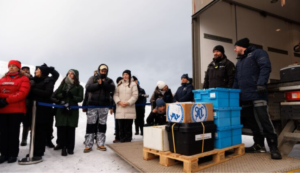
Ukraine has transferred 773 seed samples of ten agricultural crops from its national collection to the Global Seed Vault on the Svalbard archipelago in Norway.
The samples transferred to the Arctic seed vault include triticale, barley, buckwheat, millet, peas, white lupine, vetch, Sarepta mustard, alfalfa, and clover. These samples represent valuable genetic resources from Ukrainian plant breeding, which are essential for developing new varieties, adapting agriculture to climate change, and ensuring food security.
According to the National Academy of Agrarian Sciences of Ukraine (NAAS), the seeds were prepared by the V.Y. Yuryev Institute of Plant Growing and the Ustymiv Experimental Station of Plant Growing. Scientists selected the most valuable samples and ensured their testing, packaging, and documentation under wartime conditions.
“Preserving the national plant gene pool is a matter of our national security and ensuring food stability for future generations,” emphasized Taras Vysotsky, Minister of Agrarian Policy and Food of Ukraine, as quoted by SEEDS.
According to him, transferring the duplicate collection to an international repository will protect the unique achievements of Ukrainian plant breeders from risks associated with the war.
This transfer marks the second such event in Ukraine’s history. The previous deposit of Ukrainian seeds on Svalbard took place in 2012.
According to the Delegation of the European Union to Ukraine, these two transfers have ensured the backup storage of genetic material representing approximately 10% of the national seed collection.
Ukraine’s National Plant Genetic Bank contains over 154,300 samples of 2,002 plant species. Of these, approximately 56,900 samples are of Ukrainian origin. The collection includes genetic material from cereals, legumes, oilseeds, forage crops, and other agricultural crops.
Preserving this collection is of strategic importance for agricultural science. Genetic diversity enables breeders to develop new varieties that are resistant to drought, diseases, temperature fluctuations, and other adverse growing conditions.
Following the outbreak of full-scale war, Ukraine’s system for conserving genetic resources came under threat due to hostilities, damage to scientific infrastructure, and the risk of losing unique collections.
To protect the seeds, the Food and Agriculture Organization of the United Nations (FAO), with financial support from the European Union, implemented a program to establish backup storage facilities in collaboration with the National Academy of Agrarian Sciences of Ukraine (NAAS) and international partners.
As part of this initiative, 51,000 seed samples were evacuated to the western regions of Ukraine, and in November 2025, a permanent backup center was opened, equipped with modern laboratories and specialized infrastructure for the long-term storage of genetic material.
Storing part of the collection on Svalbard provided an additional layer of protection. In the event of damage to or loss of Ukraine’s primary collections, the backup samples can be used to restore genetic resources.
At the same time, the transferred seeds remain the property of Ukraine. The international repository ensures their storage without transferring ownership rights to the genetic material.
Ukraine has also acceded to the International Treaty on Plant Genetic Resources for Food and Agriculture, which entered into force for the country on August 12, 2026. This creates additional opportunities for international scientific cooperation and the protection of agricultural biodiversity.
The Svalbard Global Seed Vault is located on the Norwegian archipelago of Svalbard, above the Arctic Circle, and has been in operation since 2008. It was established for the long-term backup storage of genetic resources of agricultural plants from around the world.
According to the vault’s administration, as of 2026, it holds more than 1.4 million seed samples provided by gene banks and scientific institutions from various countries.
During the October 2026 ceremony, 21 research institutions from various regions of the world donated samples. In total, the repository received more than 16,000 new samples.
The project is supported by the Norwegian government, the Nordic Genetic Resource Center (NordGen), and the international organization Crop Trust. Its primary goal is to ensure the restoration of crop varieties in the event of wars, natural disasters, man-made disasters, or other threats to plant genetic diversity.
Sources: SEEDS, publication dated October 16, 2026; V. Ya. Yuryev Institute of Plant Growing, National Academy of Agrarian Sciences of Ukraine; Svalbard Global Seed Vault, announcement dated October 14, 2026.
agricultural sector, FOOD SECURITY, plant breeding, SEEDS, UKRAINE
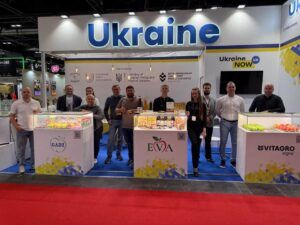
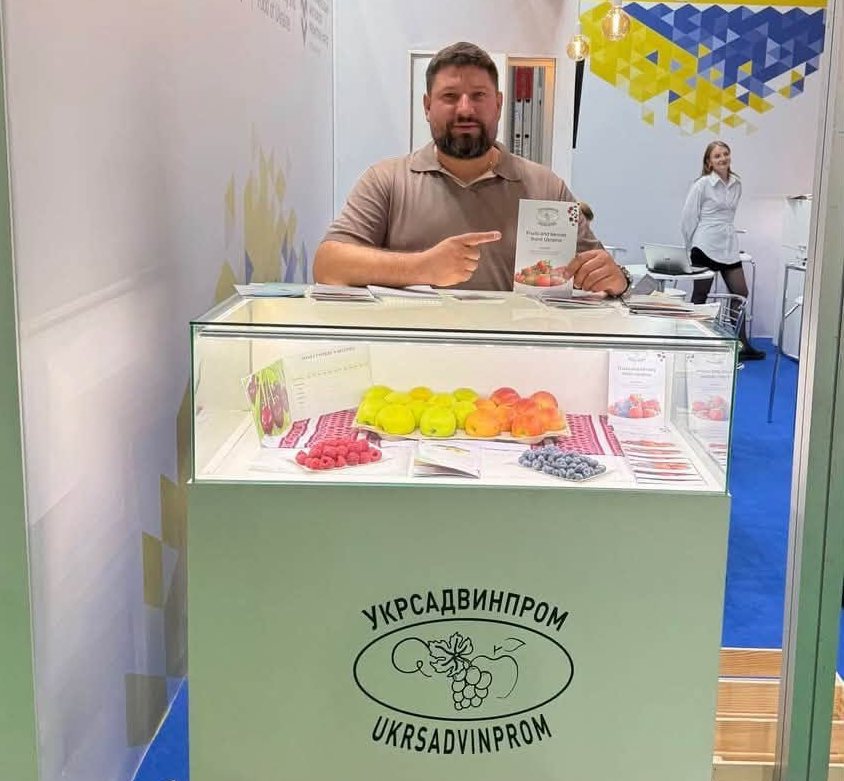
Ukrainian fruit and vegetable producers presented a unified national booth at the international Fruit Attraction 2026 exhibition, which is taking place October 6–8 in Madrid, according to Volodymyr Pechko, honorary chairman of the “UKRSADVINPROM” public association.
According to him, Ukraine’s participation in the exhibition has not only promotional but also practical export significance, as it gives producers the opportunity to work directly with international buyers, importers, retailers, and distributors.
“For Ukrainian producers, this is an opportunity to directly present their products to international buyers, find new partners, establish export contacts, and demonstrate that the Ukrainian horticulture and berry sector continues to operate, develop, and enter international markets even amid the war,” Pechko noted.
Fruit Attraction is one of the largest international trade shows in the fruit and vegetable sector. It is organized by IFEMA MADRID and FEPEX. In 2026, the exhibition will be held for the 18th time and has brought together approximately 2,500 companies from 78 countries. The exhibition covers 162,000 square meters, and organizers expect over 121,000 trade visitors from more than 150 countries.
The Ukrainian national pavilion features “Vitamin 2025,” the “Gadz” farm, “Agrarian Company 2004” LLC, “Gribnyi Biznes” LLC, “Alta Kraina,” the “Korsun” agricultural firm, the “Vladam” farming enterprise, the “Yu-Food” public association, and the “UKRSADVINPROM” public association.
The national pavilion is organized by the “UKRSADVINPROM” Public Association, headed by Volodymyr Pechko. The organization represents the interests of Ukrainian producers in the horticulture, berry, grape, winemaking, and nut sectors.
According to Pechko, participation in such international events allows not only individual companies to be represented but also helps shape a cohesive image of Ukraine as a reliable producer and exporter of high-quality agricultural products.
The national pavilion was organized with the support of the International Trade Centre as part of the EU4Business project, funded by the European Union, under the patronage of the relevant Ukrainian ministries and the Embassy of Ukraine in Spain.
Fruit Attraction is being held in Madrid from October 6 to 8. The exhibition covers the entire fruit and vegetable supply chain—from the production of fresh fruits and vegetables to processing, packaging, logistics, technology, and international trade.
agricultural sector, EXPORTS, Fruit Attraction, HORTICULTURE, UKRAINE, UKRSADVINPROM, ПЕЧКО
Starting October 16, 2026, Ukraine will temporarily suspend the acceptance of applications for government grants to establish and develop orchards, berry farms, vineyards, and greenhouse operations.
According to EastFruit, agricultural producers planning to take advantage of government support this year may submit an application through October 15.
The acceptance of applications is scheduled to resume in the first quarter of 2027. Funding to continue the program has been allocated in next year’s state budget.
According to data provided by EastFruit, 61 decisions have already been made in 2026 to award such grants totaling 300 million UAH.
Specifically, 40 decisions totaling 170 million UAH relate to the establishment and development of orchards, berry farms, and vineyards. Another 21 decisions totaling 130 million UAH were approved for the development of greenhouse farming.
To date, 34 grants for projects in the fields of fruit growing, berry farming, and viticulture have been fully funded, totaling 137 million UAH. Another 19 grants totaling 123 million UAH have been funded for the development of greenhouse operations.
The state-supported projects call for the creation of 428.4 hectares of new perennial plantings and 31.5 hectares of modular greenhouses.
Their implementation is also expected to create 282 permanent and 5,518 seasonal jobs.
Farmers who do not manage to submit their applications by October 15 (inclusive) will be able to apply for a grant once the application period reopens in 2027.
The 2026 state support program for horticulture and greenhouse farming provides grants of up to 7 million UAH per project, but not exceeding 70% of the project’s cost. For enterprises in de-occupied and frontline territories, the share of state funding may reach 80%. Applications are submitted through the “Diya” portal.
agricultural sector, GRANT, greenhouse, HORTICULTURE, UKRAINE

Nataliia Haidt has been appointed Executive Director of the Association “Union of Dairy Enterprises of Ukraine” (UDEU) effective October 2, 2026, the association’s press service reported.
Haidt has two higher education degrees — in economics and law — as well as experience in managerial positions at state-owned enterprises and commercial organizations. Since 2021, she has cooperated with UDEU as an expert and project manager.
Among her main tasks in the new position, Haidt named representing the interests of the dairy business before the government, the Verkhovna Rada and international partners, as well as adapting the industry to the requirements of the European Union.
“Ukraine’s dairy industry operates amid war, energy instability, a shortage of personnel, a logistics crisis and other challenges. At the same time, we face the task of harmonization with the requirements of the European Union. Each of these crises is a challenge for the entire chain: from farm to shelf,” Haidt noted.
According to her, UDEU will continue to promptly communicate the position of industry enterprises to the authorities and international partners and propose practical solutions to the problems of the dairy sector.
“The strength of the dairy business in this difficult time lies in unity and cohesion,” the new Executive Director emphasized.
The previous Executive Director of UDEU, Arsen Didur, completed his work in the position on September 30, 2026.
The Association “Union of Dairy Enterprises of Ukraine” represents the interests of dairy industry enterprises and participates in interaction between business and state authorities on the regulation and development of the dairy sector.
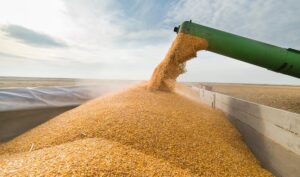
As of September 29, Ukrainian farmers had harvested 34.3 million metric tons of grain and legumes from 7.1 million hectares, or 61% of the projected area, according to the press service of the Ministry of Agrarian Policy and Food.
The average yield for grains and legumes is 48.2 centners per hectare.
The harvest of wheat, barley, and peas has already been completed. A total of 26 million metric tons of wheat were harvested from 5.11 million hectares at an average yield of 50.8 centners per hectare; barley—6.6 million metric tons from 1.48 million hectares (44.6 tsentner per hectare), and peas—812,300 metric tons from 301,900 hectares (26.9 tsentner per hectare).
Corn harvests totaled 789,000 metric tons from 153,300 hectares at a yield of 51.5 centners per hectare; millet—75,400 metric tons from 32,800 hectares (23 centners per hectare); and buckwheat—44,700 metric tons from 34,700 hectares (13 centners per hectare).
The largest volumes of grains and legumes were harvested by farmers in the Odesa region—5.6 million metric tons, the Dnipropetrovsk region—2.76 million metric tons, and the Mykolaiv region—2.65 million metric tons.
At the same time, farmers harvested over 8.4 million metric tons of oilseeds. In particular, the rapeseed harvest is complete—3.87 million metric tons were harvested from 1.33 million hectares at a yield of 29.1 centners per hectare. Sunflower seeds yielded 3.36 million metric tons from 1.66 million hectares (20.3 centners per hectare), and soybeans yielded 1.22 million metric tons from 571,400 hectares (21.3 centners per hectare).
The sugar beet harvest is ongoing: 296,500 metric tons have been harvested from 5,800 hectares at an average yield of 511.2 centners per hectare.
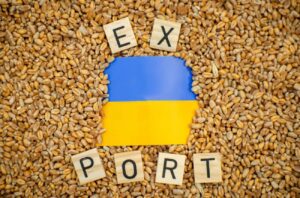
Yevgen Osipov, CEO of the agricultural holding “Kernel,” anticipates—in a stress scenario—a 12-million-metric-ton decline in grain production in Ukraine next year due to a possible reduction in planted acreage by farmers, if no solution is found within the next six months to resume exports, according to a correspondent for the Interfax-Ukraine news agency.
“It is difficult to make such forecasts today. We hope that some solutions will be found in the next six months. If no practical solution is found, then, objectively speaking, the area under cultivation will be reduced. In such a stress scenario, we estimated this would result in a shortfall of 12 million metric tons of grain next year,” he said at the “Forbes Ukraine” Economic Resilience Forum in Kyiv on Wednesday.
According to Osipov, with seaports closed, Ukraine will be able to export only about 20 million metric tons of the 50 million metric tons of agricultural products needed—that is, 40% of the required volume—so companies are having to pivot to other business models.
“Based on our own experience with the most recent export corridors, about 50% of the operations were inefficient; we need to find new ways. Because right now, for businesses, it’s a matter of building a new business model. In other words, the old business model doesn’t work there anymore. That’s why, for our part, we’re focusing on processing and exporting processed products,” Osipov noted.
According to him, under its new business model, “Kernel” is focusing on exporting smaller volumes of products with higher added value, while retaining the ability to purchase oilseeds from Ukrainian farmers, pay them, and export processed products.
Osipov also added that, due to security and logistical constraints as well as external factors, it is currently not realistic to expect that the Danube ports will be able to handle the same volume of shipments that Ukraine had in 2022–2023.
As previously reported, in its September report, the U.S. Department of Agriculture (USDA) raised its estimate for this year’s wheat production in Ukraine by 0.6 million metric tons compared to the August forecast—to 26 million metric tons—and its estimate for other grains (excluding wheat and corn) by 0.5 million metric tons, to 7.29 million metric tons, and maintained its corn production forecast at 31.8 million metric tons. Thus, the USDA estimates Ukraine’s total grain production this year at 65.09 million metric tons.



