

In the 2025/26 season, Ukraine significantly increased domestic rapeseed processing—to 43% of the harvest, compared to 16% a year earlier, according to “Agribusiness Today.”
Of the approximately 3.3 million metric tons of rapeseed available, Ukrainian companies processed about 1.4 million metric tons, while about 1.9 million metric tons were exported.
The shift in market structure is already affecting shipments to the European Union. Ukraine is exporting fewer rapeseed seeds while simultaneously increasing shipments of products with higher added value.
During the first eight weeks of the new season, Ukrainian rapeseed oil exports to the EU increased approximately fivefold—to 24,000 metric tons. According to the publication’s estimates, processing about 60,000 metric tons of seeds was required to produce this amount of oil.
During this period, Ukraine accounted for about 56% of rapeseed oil imports into the European Union.
Thus, the Ukrainian rapeseed sector is gradually shifting its business model: instead of primarily exporting raw materials, an increasing portion of the harvest is being processed domestically into oil and meal.
This allows most of the value added to remain in Ukraine while reducing processors’ dependence on imported raw materials and the need to utilize other oilseed crops at processing facilities.
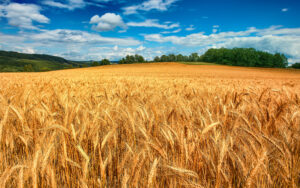
As of August 18, Ukrainian farmers had threshed 6.6 million hectares, or 56% of the projected area, and harvested over 30.8 million metric tons of grain from the new harvest, with an average yield of 46.8 centners per hectare, according to the press service of the Ministry of Agrarian Policy and Food.
As of the same date in 2025, 6.18 million hectares had been threshed, the statement noted.
Wheat was threshed from 4,855.25 thousand hectares, yielding 23,822.36 thousand metric tons, with an average yield of 49.1 centners per hectare. Barley was threshed from 1,437.17 thousand hectares, yielding 6,239.99 thousand metric tons, with an average yield of 44 centners per hectare. Peas have been harvested from 295,66 thousand hectares, with 779,02 thousand metric tons collected and an average yield of 26.3 centners per hectare. Millet has been harvested from 1.2 thousand hectares, with 2.7 thousand metric tons collected and an average yield of 22.5 centners per hectare.
In terms of harvest volumes of early grain and legume crops, the Odesa, Kirovohrad, and Mykolaiv regions are currently leading.
In Odesa Oblast, 4,819.70 thousand metric tons were harvested from an area of 1,188.8 thousand hectares (wheat—3,223.30 thousand metric tons; barley—1,311.50 thousand metric tons; peas—284.90 thousand metric tons).
In the Kirovohrad region, 2,418.30 thousand metric tons were harvested from an area of 555.7 thousand hectares (wheat—1,923.80 thousand metric tons; barley—412.50 thousand metric tons; peas—82.0 thousand metric tons).
In the Mykolaiv region, 2,326,10 thousand metric tons were harvested from an area of 653.8 thousand hectares (wheat – 1,631,80 thousand metric tons, barley – 587.5 thousand metric tons, peas – 106.80 thousand metric tons).
The highest grain yields are currently being recorded in the Khmelnytskyi (69.9 centners per hectare), Sumy (59.8 centners per hectare), and Vinnytsia (59.5 centners per hectare) regions.
Rapeseed has already been threshed from 1,318.64 thousand hectares, yielding 3.7 million metric tons of seeds with an average yield of 28.5 centners per hectare.
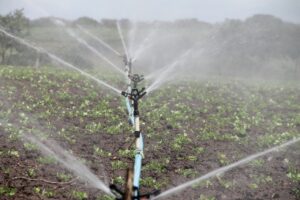
The Program of Activities of the Cabinet of Ministers of Ukraine calls for increasing the area under actual irrigation in Ukraine to 200,000 hectares by 2027, according to the program.
To this end, in 2027, the government plans to introduce long-term planning for the development of hydraulic land reclamation and to establish operators for state-owned irrigation and drainage systems.
The program also calls for the integration of data from the State Water Cadastre and other natural resource cadastres into the State Land Cadastre based on up-to-date geospatial data from the national geospatial data infrastructure in 2027.
A specific objective for 2026 is to ensure the continuity of agricultural production harvesting and transportation under martial law to preserve the harvest and minimize losses.
In addition, the government plans to provide open access to the Public Cadastral Map in 2027, taking into account the security situation, and to introduce long-term planning for Ukraine’s rural development.
According to the Accounting Chamber, there are 253 state-owned irrigation systems in the territory controlled by Ukraine, with a total designed area of 791,800 hectares; however, in 2024–2025, actual irrigation covered less than 15% of this area. At the same time, according to the State Agency for Land Reclamation, Fisheries, and Food Programs, as of early August 2026, water supply contracts had been signed for the irrigation of nearly 76,600 hectares of farmland, and more than 66,000 hectares had already been irrigated.
As previously reported, on August 17, the Cabinet of Ministers of Ukraine approved the Government Action Program. Verkhovna Rada Chairman Ruslan Stefanchuk stated that parliament will review the Program in the near future in accordance with established procedures.
agricultural sector, GOVERNMENT, irrigation, land reclamation, land registry
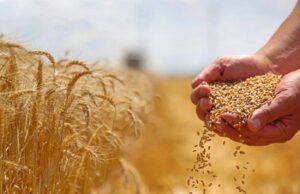
The Ukrainian Cabinet of Ministers’ action plan calls for increasing the share of processed goods in Ukraine’s agricultural export mix to 63% by 2027 and raising the volume of agricultural exports by at least $4 billion.
To achieve this goal, the government plans to expand the use of state support mechanisms for Ukrainian agricultural producers of goods with a significant share of imports and to open new markets for at least 10 new commodity lines by 2027.
It is also planned to introduce the position of agricultural attaché in 2027, along with a new instrument to guarantee loans for processing through the Partial Agricultural Loan Guarantee Fund.
A separate priority is to increase the level of processing of agricultural waste and raw materials—particularly from crop and livestock production—into biofuels.
The Ministry of Agrarian Policy’s programmatic goal is to transform the agricultural sector into a highly productive, technologically advanced, innovative, and investment-attractive industry with high added value and a significant share of processing.
As reported, on August 17, the Cabinet of Ministers of Ukraine approved the Government Action Program. Verkhovna Rada Chairman Ruslan Stefanchuk stated that parliament will review the Program in the near future in accordance with established procedure.
According to the Ministry of Economy, Environment, and Agriculture, by the end of 2025, processed products accounted for 47.8% of Ukraine’s agricultural exports, while raw materials accounted for 52.2%. In 2024, this ratio stood at 40% and 60%, respectively.
Agricultural exports, agricultural sector, EXPORTS, GOVERNMENT, PROCESSING
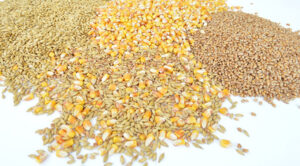
As of August 12, 2026, Ukraine had exported, since the start of the 2026/27 marketing year (MY, July–June), 2.952 million metric tons of grains and legumes, which is 4.8% more than it exported by the same date last year, when the figure stood at 2.818 million metric tons.
According to the Ministry of Agrarian Policy and Food, citing data from the State Customs Service (SCS), total exports of grains, legumes, and flour reached 2.955 million metric tons, compared to 2.826 million metric tons on the same date a year ago—an increase of 4.6%.
By crop type, wheat exports fell by 18.3%—to 1.239 million metric tons from 1.517 million metric tons, respectively. Specifically, 175,000 metric tons of wheat were exported in August of this year, compared to 759,000 metric tons a year ago.
Barley exports fell by 28.1%, to 333 thousand metric tons from 463 thousand metric tons; specifically, 37 thousand metric tons of this product were shipped abroad in August, compared to 206 thousand metric tons in August 2025.
Corn exports as of the reporting date for the season increased by 66.4%, to 1.376 million metric tons from 827,000 metric tons a year ago; in August, 68,000 metric tons of corn were shipped to other countries, compared to 184,000 metric tons in August of last year.
As was the case last year, no rye was exported.
Flour exports since the start of the 2026/27 marketing year have decreased by 54.1% to 2,800 metric tons. As of the same date last marketing year, they stood at 6.1 thousand metric tons. In grain equivalent, flour exports totaled 3.7 thousand metric tons, compared to 8.1 thousand metric tons a year earlier.

More than 80% of Ukrainian agricultural companies raised employee salaries by 10–20% in the first half of 2026; however, the labor shortage remains one of the industry’s key challenges, and recruiting has become more difficult than last year, according to a study by the analytical firm Agrohub.
According to the study, 81% of the companies surveyed have already adjusted their pay scales. Salaries rose most sharply for agronomists, engineers, tractor operators, and drivers—precisely the categories of workers where the labor shortage is most acute. To retain drivers, piecework rates and variable pay components were increased more often than fixed salaries.
The greatest labor shortages in the first half of the year were observed among tractor operators, drivers, engineers, and grain elevator workers. All survey participants cited mobilization as the main factor complicating the search for personnel; 69% cited a shortage of qualified specialists, and 56% cited rising salary expectations among candidates. Other reasons included population migration and competition among employers.
In response to the labor shortage, agricultural holdings are increasingly recruiting workers from other regions of Ukraine, as well as people aged 50 and older and women for positions that were traditionally considered male-dominated. In addition, companies are investing in in-house staff training and the automation of production processes to reduce their reliance on hard-to-fill positions.
“Companies have met their targets for the first half of the year and increased employee compensation; however, filling a vacancy today often costs more than retaining a current specialist. At the same time, we see that financial incentives are proving insufficient as the sole tool—the endless ‘salary race’ cannot overcome the physical shortage of workers in the market,” commented Dmytro Lebedev, head of the HR360 division at Agrohub.
According to him, in the second half of the year, companies will shift their focus from large-scale salary increases to automation, the development of internal training, expanding recruitment channels, and revising work organization models.
Agrohub’s study was conducted in June 2026 among 16 agricultural holdings with a combined land bank of 2.2 million hectares, operating in crop production, livestock farming, and the grain storage business.
agricultural company, agricultural sector, employee, SALARY, workforce



