According to Serbian Economist, Albania is stepping up tax oversight of the short-term rental market, which has become one of the country’s fastest-growing segments of the tourism real estate sector in recent years. The tax administration has launched a sectoral plan for the tourism sector through 2026, under which the activity of property owners on Airbnb, Booking.com, and other platforms will be cross-checked against tax returns.
In essence, Albania is becoming one of the first countries in Europe to transition tax oversight of short-term rentals via digital platforms to an automated format using artificial intelligence. This makes the country a regional test case for stricter control over revenue from tourism real estate.
The main tool of the new control system will be an AI-based automated monitoring system. Algorithms will scan the Albanian segments of Airbnb and Booking on a weekly basis, analyzing nightly rates, price trends, actual occupancy rates, booking calendars, as well as the number and dates of guest reviews.
Private homeowners renting out one or more apartments through Airbnb and Booking are not required to register as sole proprietors, but must file an annual individual DIVA tax return and pay income tax at a rate of 15%. The tax is calculated on net income after deducting the platform’s commission. Separate clarifications regarding new obligations for short-term rentals starting in 2026 also highlight the use of DIVA as a digital system for reporting individual income.
The authorities are paying special attention to VAT. In Albania’s tourism sector, a reduced rate of 6% applies instead of the standard 20%, but it may only be applied by properties that have passed a physical inspection and received an official classification certificate from the Ministry of Tourism. If an owner applies the 6% rate without such a certificate, the tax authority may retroactively assess VAT at the full 20% rate, along with fines and penalties.
Another requirement concerns cashless payments. By May 30, 2026, all accommodation facilities in Albania, including hotels, hostels, campgrounds, and certified guesthouses, must install physical POS terminals to accept payments. At the same time, the limit on cash transactions between commercial entities has been reduced from 150,000 to 100,000 lek.
For the real estate market, this marks the end of a period of lax oversight of income from short-term rentals. In recent years, Albania has experienced an investment boom in resort real estate, particularly along the coast, where buyers have relied on income from tourist rentals.
But now, the profitability of such properties will increasingly depend not only on occupancy and price, but also on the owner’s tax compliance.
For foreign investors, the new rules mean they must consider the property’s tax model in advance.
The Albanian model reflects a broader trend in the region. Montenegro is also tightening control over payments and taxes in the real estate and tourism sectors, but Albania is taking the next step—using digital monitoring and AI to compare actual activity on platforms with tax reporting.
According to Serbian Economist, Albania has revised its rules for foreigners, significantly simplifying the process of applying for residence and work permits. Under the new regulations, foreign nationals can now submit their applications entirely online, and a temporary confirmation of their right to stay must be issued within one business day of application. This was reported by the Albanian state agency ATA.
The reform applies to foreign residents as well as entrepreneurs and employees applying for residence and work permits. The authorities have standardized the lists of required documents, allowed financial and supporting documents to be submitted in Albanian or English, and clarified procedures for specific categories of employment.
Albania is taking another step toward a more liberal regime for foreign business and long-term residency. For entrepreneurs, the most important aspect is that the administrative part of the process becomes faster and more predictable, while for residents, it is that some of the previous delays between submitting documents and confirming legal status are being eliminated. This is particularly important for the real estate market, small businesses, services, and remote work, where the foreign presence in the country has grown significantly in recent years.
Against the backdrop of this reform, Albania remains a country with a relatively significant foreign presence. According to INSTAT, as of the end of 2024, there were 21,940 foreigners with residence permits in the country. The main reason for obtaining permits was employment—54.3%, followed by family reunification—24.5%, other grounds—16.3%, education—4.0%, and humanitarian reasons—0.9%.
Official INSTAT statistics show that the largest groups of foreigners with residence permits in Albania in 2024 were from Kosovo—4,592 people, Italy—3,763, as well as Turkey, India, and the Philippines.
https://t.me/relocationrs/2713
Foreign buyers are increasingly entering the Albanian real estate market, but in some cases they are purchasing properties at higher prices than local residents. This is particularly noticeable in popular tourist destinations, especially in Saranda, on the Albanian Riviera, and in central Tirana.
According to experts, in certain high-demand markets, foreigners may pay 5–10% more for comparable properties than local buyers. For an apartment costing around EUR 150,000, the overpayment can range from EUR 500 to EUR 15,000.
As noted, the price difference is not solely due to the buyer’s foreign status. The final price is influenced by the remote nature of negotiations, high demand for move-in-ready housing, and increased interest in properties with sea views, which are inherently more expensive. Another factor is the limited access foreigners have to off-market listings, whereas locals often receive information about sales through personal connections.
At the same time, many foreign buyers generally view their transaction experiences in Albania positively. Among the advantages, they cite the friendliness of local professionals and the relatively straightforward notarization process compared to several other Mediterranean countries.
For the Albanian market, this trend implies a further strengthening of the role of external demand, particularly in tourist areas. In the medium term, this may support price growth in coastal regions, but simultaneously widen the gap between purchasing conditions for locals and foreigners.
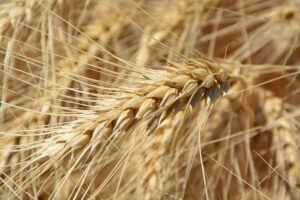
Albania’s dependence on grain imports has increased in 2025 amid a decline in domestic production and an increase in abandoned farmland, with Serbia becoming the main supplier of grain, the Serbian Economist reports, according to Pamfleti website.
Albania imported more than 374,000 tons of grain in 2025, almost 40,000 tons more than in 2024, with wheat and corn being the main imports.
Agro-economist Zef Gjeta linked the increase in imports to the lack of real reforms and public funding of the agro-sector, emphasizing that without support for farmers, the country loses its production potential and becomes more dependent on external supplies.
The structure of supplies has changed – Serbia has become the first exporter of grain to Albania, while previously significant volumes came from Russia and Romania. At the same time, procurement costs, according to the source’s assessment, remained close to 2024 levels due to shorter logistics and the strengthening of Albania’s national currency, despite the increase in physical volumes.
Albania also exported 248 tons of grain worth about 28 million lek, almost double the amount from a year earlier, but these volumes remain small. The country’s farmland area is estimated at about 700,000 hectares, with the area under cereal crops shrinking and the area of abandoned land growing, experts warned.
https://t.me/relocationrs/2148
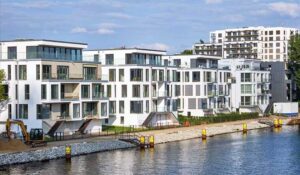
In recent years, Albania has transformed from a “hidden beach destination” into one of the most dynamic real estate markets in the Mediterranean. In 2024, foreigners invested around €380 million in Albanian real estate — 17% more than in 2023. This is the third consecutive year that real estate has ranked first in terms of attracting foreign investment, accounting for around 24% of total FDI inflows.
According to a study by the Experts Club information and analytical center, in recent years, foreigners have accounted for about a quarter of all home purchase and sale transactions in Albania. Most of the interest is concentrated on the coast — Saranda, Ksamil, Vlora, Durres, and the vicinity of Tirana. Below is an informal top 10 list of countries whose citizens are most actively investing in real estate in Albania: Italians — their “own” Riviera at half the price. Italians were among the first to discover Saranda and Ksamil. Demand from Italy has doubled in recent years, especially for apartments by the sea.
Poles, Czechs, and Slovaks — investors focused on profitability. These buyers account for up to 90% of demand in some resort areas, investing in small apartments for daily rent with an expected ROI of 10-16%.
Germans and Swiss are looking for stability and quality. They prefer the “quiet” segment on the coast and in Tirana, with good infrastructure and stable rental income.
Scandinavians appreciate Albania’s climate and nature.
Norway, Sweden, and Finland are also actively buying real estate, choosing high standards of living at moderate prices.
The French and British are “latecomers” but active. Interest in Albania from these countries is growing, attracting them with relatively low prices compared to southern France and Spain.
Americans are betting on “early entry.” Albania remains a “new” destination for Americans, with growing interest in villas and large apartments.
Ukrainians are a growing but niche segment. After 2022, interest from Ukraine has grown significantly, and Ukrainians prefer the coast for relocation and obtaining a residence permit.
Russians and other post-Soviet investors — due to sanctions pressure, their share has decreased, but interest still remains, especially through companies and relatives.
Citizens of Kazakhstan and Belarus continue to invest actively, especially on the coast and in large cities.
Other EU countries are actively buying on the south coast, especially during the high tourist season.
Why Albania attracts foreign investors:
Free access to housing. Foreigners can freely buy apartments, houses, and commercial real estate, with the exception of agricultural land.
High profitability and price growth. Annual rental yields on the coast can reach 7% and above, and in peak tourist locations — up to double digits.
Strong investment flow. In 2024, foreign investment in real estate amounted to approximately €380 million, and in the second quarter of 2025, this figure reached a record €149 million.
Residence permit and “life package.” Laws on foreigners allow you to obtain a residence permit based on investment in housing.
Risks and prospects: The sharp influx of foreign investors is already leading to higher housing prices for the local population. However, Albania remains an EU candidate country with large-scale infrastructure projects (a new airport in Vlora, reconstruction of the port in Durres), which supports long-term demand for housing.
Despite growing competition in the market, Albania retains its potential as “Europe’s last affordable Riviera,” making it attractive to investors, but professional legal due diligence and an understanding of real returns are required to enter the market.
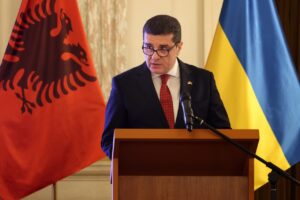
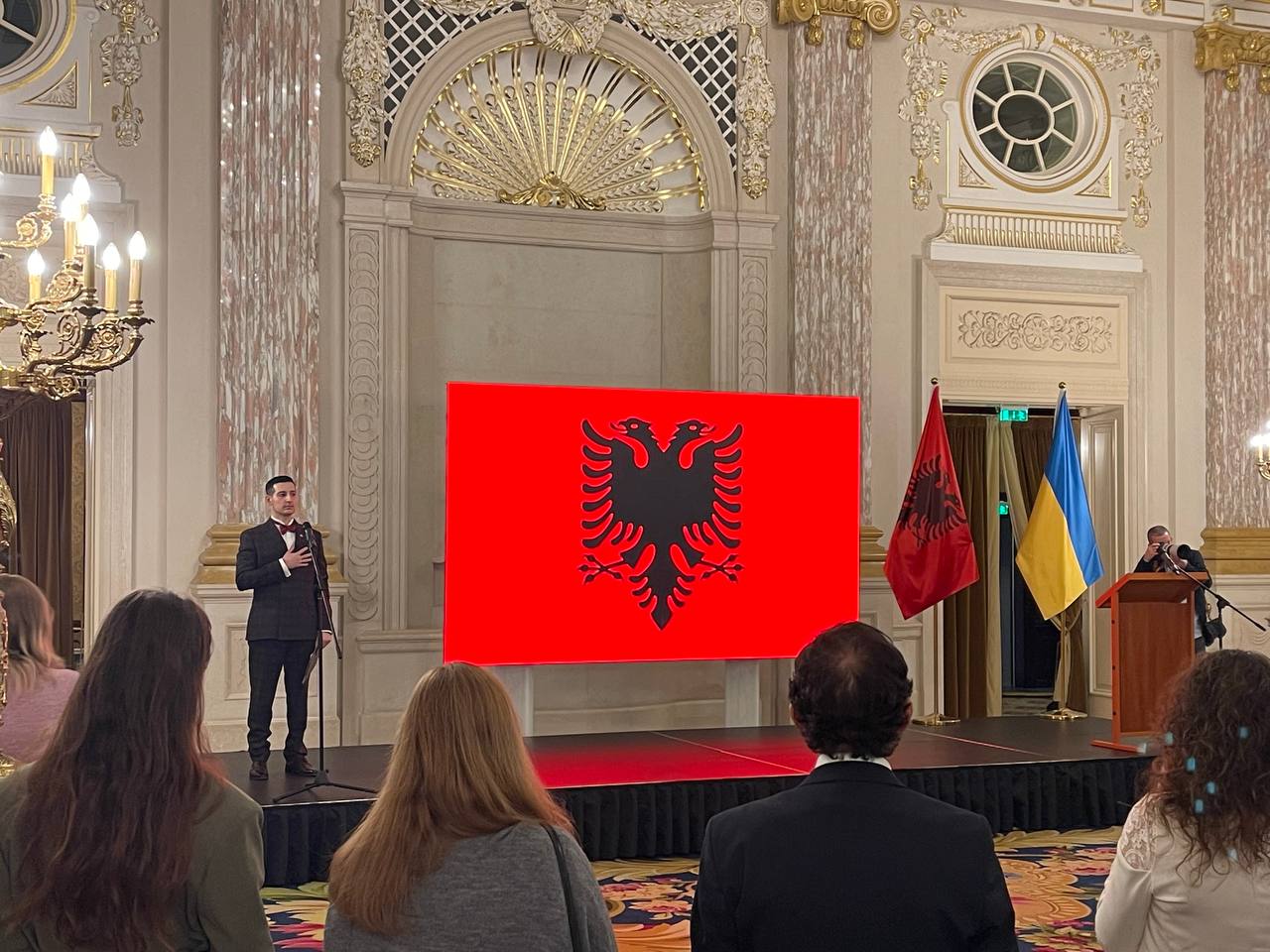
On Thursday, 27 November, the Fairmont Grand Hotel Kyiv hosted a reception organised by the Embassy of the Republic of Albania in Ukraine to mark the 113th anniversary of Albania’s independence. The event was attended by Deputy Minister of Foreign Affairs Yevhen Perebyinis, members of parliament, representatives of the military and local authorities, the diplomatic corps, scientific and cultural institutions, as well as the Albanian community in Ukraine.
In his speech, Albanian Ambassador to Ukraine Ernal Filo recalled that on 28 November 1912, the creation of the Albanian state was proclaimed in the city of Vlora, and stressed that this year’s anniversary is being celebrated in Kyiv for the first time since the opening of the Albanian Embassy. He described this as a ‘new chapter in diplomatic relations’ and a symbol of the deepening of relations between the two countries and solidarity with Ukraine in the face of Russian aggression.
The ambassador emphasised Albania’s unwavering support for Ukraine’s sovereignty and territorial integrity, as well as our country’s European course. He recalled that Albania, as a member of NATO, consistently stands on the side of Ukraine in the UN, the Council of Europe and the NATO Parliamentary Assembly, opposing attempts to change Europe’s borders by force.
A separate section of the speech was devoted to economic cooperation. According to the ambassador, bilateral trade between Albania and Ukraine has exceeded €65 million in recent years, with positive dynamics in the agro-industrial sector, metallurgy, construction materials and food products. Ukrainian companies are showing interest in the Albanian market in the areas of grain supply, energy, logistics and agricultural technology, while Albanian exports to Ukraine include minerals, medicinal plants, building materials and tourism services.
The ambassador noted that 57 companies with 100% Ukrainian capital and six joint ventures with Albanian partners are already operating in Albania, primarily in the Vlora region, which is becoming a ‘gateway’ for investment, tourism and maritime activities. In his opinion, this creates a basis for further expansion of economic cooperation.
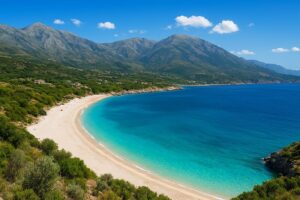
Filo also highlighted Albania’s growing role as a tourist destination and invited more Ukrainian tourists and investors to the country, emphasising the potential of the Albanian Riviera, the mountainous north and the historic cities of Berat and Gjirokastër. He called culture ‘the most beautiful bridge’ between nations, mentioning Albanian polyphonic music, Mediterranean cuisine and contemporary art.
The ambassador made a special mention of the long-standing Albanian diaspora in Ukraine – communities in Odesa, Zaporizhzhia, Mykolaiv and Kharkiv, which have preserved their language and traditions for generations and serve as a ‘living bridge of friendship’ between the two countries.
Speaking about the war, Ernal Filo stated that Albania will continue to stand with Ukraine, freedom and international law, and that true peace is impossible without justice. He cited the example of the reconstruction of a school in Kharkiv with the support of the municipality of Tirana as a symbol of human solidarity.
In the final part of his speech, the ambassador emphasised the common goal of Albania and Ukraine – full integration into the European Union, welcomed the European Council’s decision to open negotiations on Ukraine’s membership and called Europe the ‘common home’ of the two nations.
Diplomatic relations between Ukraine and the Republic of Albania were established on 13 January 1993. The Embassy of Ukraine in Albania began operating in Tirana in 2020, marking a new stage in the development of bilateral relations. The Albanian Embassy in Ukraine was officially opened in Kyiv on 17 January 2025 – it is the first foreign diplomatic mission opened in Ukraine after the start of the full-scale invasion by the Russian Federation.