
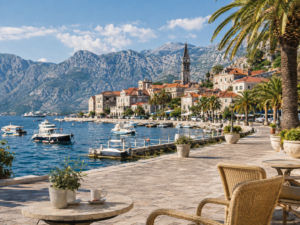
Montenegro and Albania have been included in Forbes’ list of the best overseas destinations for retirement in 2026, according to the Experts Club information and analysis centre.
Forbes published its annual review, The Best Places To Retire Abroad In 2026, on July 31, later updating it on August 5. The publication selected 96 recommended places in 24 countries on five continents, with half of the countries represented located in Europe.
When compiling the list, Forbes took into account the cost of living, the quality and cost of healthcare, taxes, crime levels and political stability, transportation accessibility, the possibility of obtaining long-term residence status, the prevalence of the English language, as well as risks associated with climate change and natural disasters.
At the same time, no ranking from first to 24th place was compiled — the countries are presented in alphabetical order. Therefore, for example, Albania’s position near the beginning of the list does not mean that Forbes recognized it as the best country for retirees.
The list includes Albania, Argentina, Austria, Belize, Canada, Colombia, Costa Rica, Cyprus, France, Greece, Ireland, Italy, Malaysia, Malta, Mauritius, Mexico, Montenegro, Panama, Portugal, Slovenia, Spain, Thailand, Uruguay and Vietnam. Mauritius and Vietnam were included in the annual list for the first time.
In Montenegro, Forbes highlighted Podgorica, Bar, Perast and Tivat. The publication estimates the cost of living in the country at less than half the U.S. average, the level of serious crime as low, and the political situation as stable.
Forbes assesses the quality of healthcare as adequate, although it notes that foreigners with complex medical problems often turn to specialists in Italy or Germany.
A separate advantage of Montenegro is the possibility of obtaining a residence permit through the purchase of real estate. According to the conditions cited by Forbes for American retirees, the path to permanent residence begins with a renewable one-year residence permit, for which it is necessary to confirm pension income of more than $19,000 per year.
At the same time, Forbes draws attention to the risks of wildfires, floods and earthquakes — an especially relevant factor against the backdrop of major fires on the Adriatic coast in the summer of 2026.
In neighboring Albania, Forbes recommends considering Tirana, Durrës, Sarandë and Vlorë.
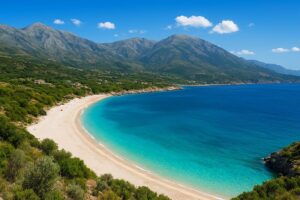
According to the publication, the cost of living there is approximately half the U.S. level. Among the advantages cited are the Mediterranean climate, the seacoast, a relatively low crime rate and a relatively simple procedure for legalizing residence.
For Americans, it is particularly convenient that they can stay in Albania for up to a year as tourists, which provides enough time to arrange a longer-term status. Forbes states that for retirement immigration, a couple will subsequently need to confirm about $20,000 in annual income from abroad.
Among the traditional European destinations, Forbes retained Portugal, Spain, Italy, France and Greece.
Portugal is assessed as a country where the cost of living is approximately one-third lower than in the United States, with relatively affordable healthcare and a comparatively simple D7 program for financially independent foreigners to reside in the country.
In Spain, expenses, according to Forbes, are approximately 30% lower than in the United States, while healthcare is characterized as high-quality and inexpensive. At the same time, the publication pays particular attention to wildfires, extreme heat and flooding. As a result, some areas, including the Costa del Sol, were removed from the list of specifically recommended locations this year, while in France, Bordeaux was removed.
Vietnam became one of the most affordable destinations: Forbes estimates living expenses at approximately one-quarter of the U.S. level. However, a significant disadvantage is the absence of a dedicated retirement visa, which means foreigners have to use successive 90-day electronic visas.
Mauritius entered the list for the first time thanks to its relatively low cost of living, affordable healthcare and a special permit for foreign retirees. Forbes estimates the cost of living at more than 50% below the U.S. level and states that a couple must confirm about $18,000 in annual retirement income.
Thus, one of the notable results of the list for the Balkans was the inclusion of both Albania and Montenegro, while Serbia was not included in the Forbes 2026 list. At the same time, this does not mean that the publication considered it less suitable for retirees: Forbes compiles an editorial selection rather than a comprehensive comparative ranking of all countries in the world.
The study itself is primarily aimed at US citizens – Forbes compares expenditure with US levels, takes into account tax treaties with the US, Social Security rules and eligibility for Medicare. For citizens of other countries, the financial, tax and immigration conditions may differ significantly.
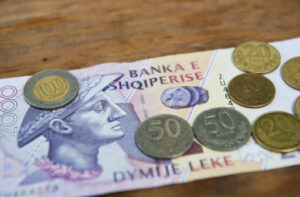
According to The Serbian Economist, foreign direct investment inflows into Albania rose by 3.4% in 2025 to 1.63 billion euros, up from 1.58 billion euros in 2024, the country’s central bank reported. Amid a decline in FDI in several countries in the region, Albania became one of the few markets in Southeast Europe where foreign investment continued to grow.
The Netherlands was the largest source of investment, contributing 201.9 million euros. Next were Italy with 186.9 million euros and Kosovo with 186.4 million euros. This geographic distribution differs from that of Montenegro, where the largest sources in 2025 were Serbia, Turkey, and Germany.
The main sector for foreign capital in Albania is real estate. In 2025, it attracted 560.9 million euros, or approximately one-third of total FDI. Insurance and financial services ranked second with 291.14 million euros, while wholesale and retail trade ranked third with 161.89 million euros.
The Albanian example demonstrates the same regional trend as Montenegro, but on a larger scale: foreign investors are actively investing in real estate, especially against the backdrop of growing interest in the coast, tourism, relocation, and infrastructure development. For Tirana and coastal cities, this means an increase in construction activity and prices, but at the same time, it exacerbates the issue of housing affordability for the local population.
Until recently, the Albanian market was viewed as peripheral, but now it is competing for capital with Montenegro, Croatia, Greece, and other Southern European destinations. At the same time, the volume of foreign direct investment in Albania already significantly exceeds that of Montenegro: 1.63 billion euros versus 531 million euros in net inflows in Montenegro.
Albania’s strengths lie in the size of its market and growing interest in real estate, tourism, financial services, and trade. Its weakness lies in the high concentration of investment in sectors that do not always ensure rapid productivity growth. As in Montenegro, the key question for long-term development is whether the country will be able to transform interest in real estate and services into more substantial greenfield projects, industry, logistics, and export capacity.
Albania is cementing its position as one of the most dynamic investment markets in the Balkans. But growth driven by real estate creates the same dilemma as in Montenegro: money flows in quickly, but the lasting impact on employment, exports, and productivity depends on whether more complex investment projects follow construction.
https://t.me/relocationrs/3162

According to The Serbian Economist, Albania’s Ministry of Finance has submitted a draft bill for public discussion that would increase property taxes and revise the system of tax breaks for homeowners.
Under the proposal, the tax on residential real estate could rise from the current 0.05% of the property’s value to 0.1–0.2%. Higher rates are also proposed for commercial properties, with the total tax burden depending on the property category and its intended use.
One of the key changes concerns owners of second and subsequent properties. If the property is not their primary residence, tax exemptions will not apply. Thus, owners of vacation homes, investment apartments, and additional housing will have to pay the full rate.
In effect, the government is attempting to distinguish between social housing and investment real estate. For families who own only one apartment, the tax increase may be partially offset. For owners of multiple properties, the tax burden will rise more significantly.
The reform is particularly important for Albania’s real estate market, where housing prices have risen rapidly in recent years in Tirana, Durres, Vlora, Saranda, and other locations linked to tourism and investment demand. Amid active construction, interest from foreign buyers, and the growth of short-term rentals, the government is seeking to increase local budget revenues and align property taxation more closely with the market value of assets.
Albania is gradually transitioning from the old model of fixed or low taxes to a more modern system where the tax base is tied to the property’s value. This approach is in line with the recommendations of international financial organizations, but it could prove painful for property owners, especially if the cadastral and market valuations of residential properties are revised upward.
For foreign investors, these changes mean that the annual cost of maintaining a second home on the coast or an investment property in Tirana will become somewhat more expensive. That said, even after the increase, the tax burden in Albania will remain relatively moderate compared to many EU countries.
The key question for the market is how exactly the authorities will assess property values and how quickly the new system will be implemented in practice.
The Albanian real estate market remains one of the most dynamic in the Balkans. Growth in tourism, the development of coastal cities, and interest from foreigners are sustaining demand; however, the tax increase could gradually cool speculative purchases and widen the gap between residential housing and investment real estate.
https://t.me/relocationrs/3077
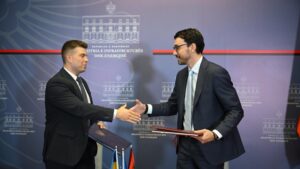
Ukraine and Albania have signed an agreement on international road transport, which provides for regular freight and passenger transportation, according to Deputy Prime Minister for Recovery and Minister of Community and Territorial Development Oleksiy Kuleba.
“In practice, this means more opportunities for exporting Ukrainian goods, simplifying operations for carriers, developing new transport routes through the countries of Southeast Europe, and improving transport accessibility for citizens of both countries,” Kuleba wrote on Telegram on Tuesday.
According to him, Albania has now become the 37th country with which Ukraine will have “transport visa-free travel.”
It is noted that the ministry is also continuing to work on expanding Ukraine’s international transport links and opening new markets for carriers.
ALBANIA, CARRIERS, ROAD TRANSPORT, transport visa-free travel, UKRAINE
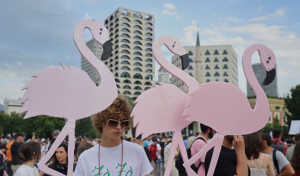
According to Serbian Economist, a project to build a large resort on the Albanian coast linked to Jared Kushner and Ivanka Trump has faced protests and environmental criticism due to its proximity to protected natural areas inhabited by flamingos, sea turtles, and other species.
The project in question is a tourism development on Albania’s Adriatic coast, in the area of Vlorë, Sazan Island, and the Vjosa-Narta zone. Thousands of Albanian residents took to the streets in Tirana to protest against a resort complex worth approximately EUR 1.4 billion linked to Jared Kushner’s investment firm, Affinity Partners. The project involves the creation of a luxury tourist complex on one of the most valuable stretches of the Albanian coast.
Environmentalists’ main concerns stem from the fact that construction could impact natural areas near the Narta Lagoon and the Vjosa-Narta region, which is considered a critical habitat for migratory birds and other species. Activists point out that the region is home to pink flamingos, seals, and sea turtles, and that large-scale development could damage coastal ecosystems.
BirdLife International stated that work related to the resort threatens one of Europe’s most important coastal habitats. The organization claims that construction and preparatory work could damage areas critical for biodiversity and migratory birds.
The protests have been dubbed the “flamingo revolution” by Albanian and international media. Protesters are using flamingos as a symbol of the protection of the natural area. According to media reports, the protests intensified after fences and construction equipment appeared on part of the site, as well as following reports of clashes between activists and security guards.
Albanian Prime Minister Edi Rama defends the project, stating that it is important for the development of high-end tourism and attracting foreign investment. According to Reuters and AP, authorities view the development as part of a strategy to transform Albania into a more prominent destination for premium tourism on the Adriatic.
Critics, for their part, point to the need for greater transparency, environmental impact assessments, and public debate. At the heart of the controversy are not only flamingos and sea turtles, but also a broader question: can Albania develop luxury tourism without losing natural areas that are themselves part of the country’s tourist appeal?
The project has also taken on a political dimension due to its connection to the family of U.S. President Donald Trump. Jared Kushner is his son-in-law, and Ivanka Trump has publicly supported the idea of developing a tourism project in Albania. At the same time, international media emphasize that this is a private development project linked to Kushner’s investment firm, not a U.S. government project.
For Albania, the conflict surrounding the resort has become a test for its entire model of tourism development. The country is actively promoting the Adriatic and Ionian coasts as an alternative to the more expensive Mediterranean markets, but the growth in investment is increasing pressure on natural areas, infrastructure, and local communities.
According to Serbian Economist, Albania is stepping up tax oversight of the short-term rental market, which has become one of the country’s fastest-growing segments of the tourism real estate sector in recent years. The tax administration has launched a sectoral plan for the tourism sector through 2026, under which the activity of property owners on Airbnb, Booking.com, and other platforms will be cross-checked against tax returns.
In essence, Albania is becoming one of the first countries in Europe to transition tax oversight of short-term rentals via digital platforms to an automated format using artificial intelligence. This makes the country a regional test case for stricter control over revenue from tourism real estate.
The main tool of the new control system will be an AI-based automated monitoring system. Algorithms will scan the Albanian segments of Airbnb and Booking on a weekly basis, analyzing nightly rates, price trends, actual occupancy rates, booking calendars, as well as the number and dates of guest reviews.
Private homeowners renting out one or more apartments through Airbnb and Booking are not required to register as sole proprietors, but must file an annual individual DIVA tax return and pay income tax at a rate of 15%. The tax is calculated on net income after deducting the platform’s commission. Separate clarifications regarding new obligations for short-term rentals starting in 2026 also highlight the use of DIVA as a digital system for reporting individual income.
The authorities are paying special attention to VAT. In Albania’s tourism sector, a reduced rate of 6% applies instead of the standard 20%, but it may only be applied by properties that have passed a physical inspection and received an official classification certificate from the Ministry of Tourism. If an owner applies the 6% rate without such a certificate, the tax authority may retroactively assess VAT at the full 20% rate, along with fines and penalties.
Another requirement concerns cashless payments. By May 30, 2026, all accommodation facilities in Albania, including hotels, hostels, campgrounds, and certified guesthouses, must install physical POS terminals to accept payments. At the same time, the limit on cash transactions between commercial entities has been reduced from 150,000 to 100,000 lek.
For the real estate market, this marks the end of a period of lax oversight of income from short-term rentals. In recent years, Albania has experienced an investment boom in resort real estate, particularly along the coast, where buyers have relied on income from tourist rentals.
But now, the profitability of such properties will increasingly depend not only on occupancy and price, but also on the owner’s tax compliance.
For foreign investors, the new rules mean they must consider the property’s tax model in advance.
The Albanian model reflects a broader trend in the region. Montenegro is also tightening control over payments and taxes in the real estate and tourism sectors, but Albania is taking the next step—using digital monitoring and AI to compare actual activity on platforms with tax reporting.



