
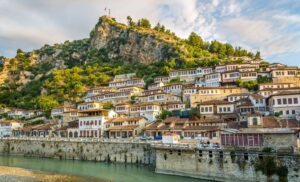
The Experts Club analytical center analyzed Albania’s economy for the first 10 months of 2025 and presented its analysis and forecast. Based on the results of the first ten months of 2025, Albania continues to have one of the highest growth rates in Europe, with low inflation, stable currency reserves, and continued growth in tourism, but it faces a slowdown in industrial output and an expanding trade deficit.
According to IMF mission estimates and national statistics, Albania’s real GDP grew by approximately 3.4–3.6% year-on-year in the first half of 2025, which is comparable to 2024 figures and above the European average. The main drivers of growth remain the service sector, construction, and tourism: foreign tourists alone spent around €2.1 billion in the country in the first six months, which is 7–8% more than a year earlier.
International institutions expect the economy to grow by around 3.4-3.7% by the end of the year: after its autumn mission, the IMF raised its forecast to 3.5% for 2025, while the World Bank and the EBRD also expect growth of over 3%.
Inflation in the country remains low and close to the target level. According to the IMF and national statistics, annual consumer price inflation in 2025 is around 2–2.3%.
The labor market situation is improving moderately. The unemployment rate in the second quarter of 2025 fell to 8.5%, which is significantly below the historical average (around 14%).
Industry remains the most vulnerable sector. According to estimates by research centers and statistics, industrial production in Albania in the first quarter of 2025 declined by approximately 2.1% compared to the same period in 2024, while in the second quarter the decline slowed to around 0.5%. Manufacturing output in June 2025 was 0.9% lower than a year ago. This reflects the problems of traditional export industries, primarily textiles and clothing, which are under pressure due to the strengthening of the national currency and demographic outflow.
The external sector remains a weak spot in the macroeconomy. According to Albanian think tanks and INSTAT, the trade deficit in goods widened to about 25.3% of GDP in the first half of 2025, despite high tourism revenues. Remittances from migrants grew by about 5% to €1.2 billion, remaining an important source of external revenue, while foreign direct investment stabilized at around €1.1 billion over the same period.
At the same time, external stability appears comfortable. According to Trading Economics, Albania’s international reserves reached $7.3 billion in September 2025. In its final Article IV statement, the IMF explicitly notes “strong reserves, declining public debt, and one of the highest growth rates in Europe” as a basis for further reforms and deeper integration with the EU.
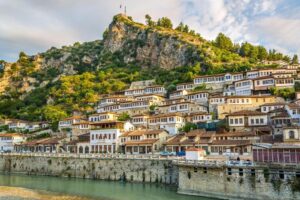
Relocation conducted an analysis of the Albanian housing market in the first half of 2025. In 2025, the market is moving towards normalization after an extremely turbulent period from 2022 to 2024. There are fewer building permits, the growth in construction costs has slowed down, prices in the capital have stabilized, and prices on the coast remain high. The share of deals involving foreigners is close to one in five for the half-year, based on the latest Bank of Albania survey (data for H2’2024), and their investments exceeded €380 million in 2024.
Building permits. In Q1 2025, 258 permits for new buildings were issued (-17% y/y). This is a sign of caution on the part of developers after record years and a factor that will restrain supply in 2025-2026 (we are awaiting data for Q2).
Construction costs. The housing construction cost index (INSTAT) rose by 1.0% y/y in Q1 2025, significantly slower than a year ago (3.4% y/y), which partially relieves price pressure from materials and labor.
Prices: capital vs. coast
According to the Bank of Albania (latest published market survey, H2’2024), about 18% of apartments sold in Albania were purchased by non-residents, of which ≈77% were EU citizens. This is an important benchmark for the first half of 2025: the share of foreigners remains significant, especially in coastal municipalities.
Mortgage loans finance a significant portion of transactions, but the share of cash purchases remains high in resort areas.
Rentals and profitability
Foreign buyers
As for forecasts, supply will grow moderately. As for prices, there will be more stable dynamics in the capital and higher seasonal volatility on the coast. Demand from non-residents will remain strong, especially in coastal locations and rental projects.
Source: http://relocation.com.ua/analysis-of-the-housing-market-in-albania-in-the-first-half-of-2025/
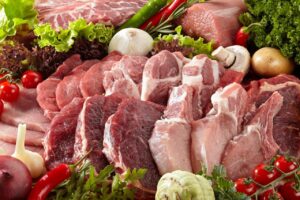
Albania is considering importing beef, lamb, and processed products from Ukraine, and also wants to increase exports of root vegetables to the Ukrainian market, according to the Ministry of Agrarian Policy and Food following a meeting between its head, Vitaliy Koval, and the Ambassador of the Republic of Albania to Ukraine, Ernal Fil.
The minister noted that in 2025, Ukraine shifted its state policy towards livestock farming and began to increase the production of cattle, red meat, and processed products, which attracted the interest of Albania, where demand for meat products has grown due to an increase in tourism.
“Albania is interested in importing meat (beef and lamb) and processed products from Ukraine. At the same time, they want to increase the supply of root vegetables to the Ukrainian market, especially in February-May, when we have less of our own. To do this, certain trade procedures between the countries need to be simplified,” Koval said.
The parties agreed at the ministerial level to discuss steps to strengthen cooperation in the agricultural sector at the embassies.
The head of the Ministry of Agrarian Policy emphasized that, in addition to cooperation in the agricultural sector, Ukraine and Albania have many points of contact. In particular, the agricultural sector accounts for a significant share of GDP in both countries and provides employment for a large number of people.
To intensify cooperation, Koval proposed holding the inaugural meeting of the Ukrainian-Albanian Joint Commission this year.
According to SERBIAN ECONOMIST, on April 24, 2025, Albania reintroduced visa-free travel for Belarusian citizens, allowing them to stay in the country for up to 30 days. This decision cancels the previously introduced visa restrictions and makes Albania accessible again to Belarusian tourists without the need to obtain a visa.
Main conditions for visa-free entry
Validity: the visa-free regime is valid until September 30, 2025.
Maximum length of stay: up to 30 days from the date of entry.
Purpose of travel: tourism and short-term private visits.
Documents: you must have a valid passport that is valid for at least 3 months after the date of departure from Albania.
Earlier, in April 2025, Albania suspended the visa-free regime for Belarusian citizens, requiring them to obtain a visa for entry. However, in light of the current changes, Belarusian citizens can once again visit Albania without a visa, which contributes to the development of tourist and cultural ties between the two countries.
Belgrade. May 5. SERBIAN ECONOMIST
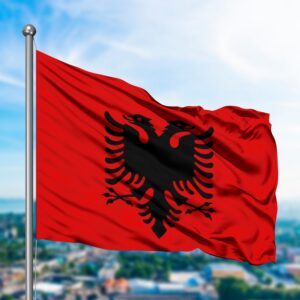
On April 24, 2025, the Government of Albania officially suspended the agreement on mutual visa waiver with the Republic of Belarus signed in February 2020. This decision cancels the partial suspension introduced in May 2024, which applied only to diplomatic passports. Now Belarusian citizens are required to obtain a visa to enter Albania.
Earlier, in May 2024, Albania partially suspended the agreement, limiting visa-free entry for holders of diplomatic and service passports. The current measure completely abolishes the visa-free regime for all categories of Belarusian citizens.
The decision takes effect immediately and is published in the official gazette of Albania.
Source: https://t.me/relocationrs/881

Foreign Ministers of Ukraine and Albania, Andriy Sibiga and Igli Hasani inaugurated the Embassy of Albania in Ukraine, Foreign Minister Andriy Sibiga said on Platform X on Friday evening.
On October 20, the embassies of Albania, Argentina, Palestine, Palestine, North Macedonia, Portugal and Montenegro were reportedly damaged as a result of enemy shelling in Kiev.
In February 2024, then Ukrainian Foreign Minister Dmytro Kuleba said after talks with his Albanian counterpart Igli Hasani that Albania plans to open its embassy in Kiev in the near future.
TheRepublic of Albania recognized the independence of Ukraine on January 4, 1992. Diplomatic relations between the two countries were established on January 13, 1993.



