
The Council of the European Union has approved a proposal of the European Commission to provide EUR 1.2 billion of micro-financial assistance to help Ukraine to cope with the economic fallout of the COVID-19 pandemic.
The respective decision was taken on May 20 under the written procedure during sitting of the EU Council.
It is expected that after this Kyiv and Brussels will begin negotiations regarding the future Memorandum, which should specify the conditions for the allocation of the second tranche. Further, the Memorandum should be ratified by the Verkhovna Rada of Ukraine, after which Ukraine will receive the first tranche in the amount of EUR 600 million, which is unconditional. The horizontal condition for obtaining macro-financial assistance is mandatory cooperation with the IMF.
On May 15, European Parliament backed the commission’s proposal.

The French government has allocated technical assistance to the Ukrainian state concern Ukroboronprom in the amount of about EUR 900,000 Aivaras Abromavičius, director general of the state concern, has said.
“This is a sign of confidence in Ukraine, it is a sign of confidence in the changes that are taking place now in the Ukroboronprom concern … This is an amount close to EUR 900,000, one of the largest amounts that the French government has allocated to Ukraine,” he said at a briefing in Kyiv on Wednesday.
According to Abromavičius, this assistance will be used to fight corruption and raise corporate governance standards.
“France’s technical assistance will be directed in two main areas. This is, firstly, the anti-corruption area, and secondly, the improvement of corporate governance standards. In the area of anti-corruption policy, we plan to carry out a comprehensive criminalistics, so-called forensic, audit on some processes, contracts, which, unfortunately, the financial audit does not have the opportunity to reach,” he said.
He said that the forensic audit reveals hidden schemes and frauds that look like legitimate transactions, but are actually fraudulent, and there have been a lot historically in the concern.
Abromavičius stressed that the allocated funds would help build the best corporate governance standards in Ukroboronprom, according to Western standards.
“Within the project, we plan to develop new principles of corporate governance both at enterprises and at the concern itself. This is a large-scale project that requires time, which requires not only our efforts, but, as I said, the support of international partners. Branches of government will be involved, as well as Ukroboronprom partners themselves,” he added.
Abromavičius said that the French Embassy in Ukraine would choose a consultant company from the Big Four, and it will help find the best model for organizing a business.
“That is, we are starting to build a modern company,” he stressed.
According to Abromavičius, the forensic audit process should take four months.
“But, unfortunately, this information will be more for the leadership of the country, for the leadership of Ukroboronprom and for law enforcement agencies,” he said.
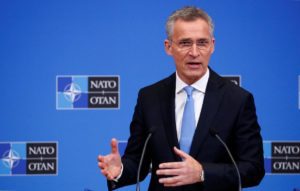
NATO member countries should actively help Ukraine, said Secretary General of the Alliance Jens Stoltenberg on Monday.
I urge all allies to provide more assistance to Ukraine in practice, he said during his speech in London.
Speaking about Kyiv’s desire for rapprochement with NATO, Stoltenberg noted that the reforms that Ukraine urgently needs will play an important role in this regard.
Since 2015, Ukraine has received from the European Union, as well as from EU member states, about EUR 18 billion of assistance, which is many times higher than the amount of financial assistance provided to Kyiv by the United States in the form of loan guarantees in the amount of $1 billion, Special Adviser to the President of the European Commission on relations with Ukraine, former European Parliament deputy from Germany Elmar Brok said.
“The United States has given 1 billion on loan… The European Union has given 11 billion on loan in runs, another 3 billion has been given via international financial institutions [EUR], and alone Germany has given 1.4 billion [EUR]. So, let’s say altogether the European Union member states have given at least EUR 18 billion in the last five years. That is the real figures,” Brok said in an interview with Interfax-Ukraine, commenting on accusations against the EU and, in particular, Germany and France that they are not providing enough assistance to Ukraine which was voiced during a telephone conversation between the presidents of Ukraine and the United States, Volodymyr Zelensky and Donald Trump.
At the same time, the European politician emphasized that a substantial part of the EUR 18 billion provided to Ukraine by the European Union and its members are grants, while Washington does not provide anything to Kyiv for free.
Brok also recalled that in addition to the amount he mentioned, the European Union also provided other assistance to Ukraine, which is stated in the agreements between Kyiv and Brussels, such as the Association Agreement and the FTA and the visa-free regime between the parties.
“The United States has not given such agreements. Look, the EU gives twenty times more to Ukraine than the Americans,” the special adviser to the president of the European Commission said on relations with Ukraine.
The U.S. Senate has adopted a draft National Defense Authorization Act (NDAA), which foresees the expanded assistance to Ukraine in the sphere of security and defense in 2020 compared with 2019, the Ukrainian Embassy in the United States has reported.
“The U.S. Senate has passed a draft document proposing to expand the security assistance to Ukraine to $300 million,” the Embassy said.
According to the report, this is $50 million more than the current year’s sum. The document assigns $100 million only for lethal weapons.
“It is proposed to expand U.S. assistance in strengthening the defense capability of the Armed Forces of Ukraine by including coastal defenses; anti-ship missiles; and systems that enhance the effectiveness of troop control, in particular, air defense and coastal defense,” the Embassy said.
According to the procedure, the National Defense Authorization Act (NDAA) for 2020 will come into force after it is approved by the House of Representatives, as well as signed by the President of the United States.
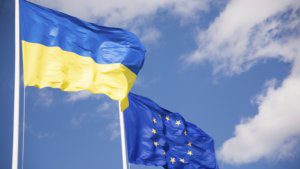
Ukrainian President Petro Poroshenko has said that the European Commission has made a favorable decision on the provision of a first tranche of the fourth macrofinancial assistance of the European Union (EU) to Ukraine in the amount of EUR 500 million and thanked the European Commission for its decision. “Sincerely grateful to the European Commission for positive decision to disburse to Ukraine first tranche of the 4th EU macrofinancial assistance program in the amount of EUR 500 mln,” Poroshenko said on its Facebook page on Friday.



