
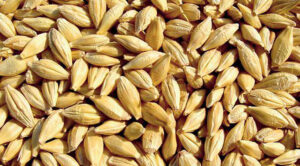
As of November 1, 2026, Ukraine had harvested 6.12 million metric tons of barley, which is 15.7%, or 830,000 metric tons, more than during the same period in 2025, according to data from the State Statistics Service of Ukraine published on November 20.
Winter barley accounted for the bulk of the production increase, with its gross harvest rising by 40.4% to 3.29 million metric tons.
At the same time, spring barley production decreased by 4%, to 2.83 million metric tons.
Thus, winter crops accounted for about 53.8% of the total barley harvest, while spring crops accounted for 46.2%.
The positive trend in total production was accompanied by a significant increase in yield. According to the State Statistics Service, the average barley yield rose from 38.4 centners per hectare in 2025 to 43.8 centners per hectare in 2026.
The increase amounted to 5.4 centners per hectare, or about 14.1%.
The results indicate that the growth in barley production in 2026 was primarily due to increased crop productivity, particularly for winter barley.
Barley is used in Ukraine to produce compound feed, malt, and food products, and is also exported to foreign markets. The increase in its gross harvest expands the raw material base for the livestock and processing industries.
In total, Ukrainian farmers had harvested 46.9 million metric tons of grains and legumes by early November, which is 9.7% higher than last year’s figure.
Source: State Statistics Service of Ukraine, report dated November 20, 2026.
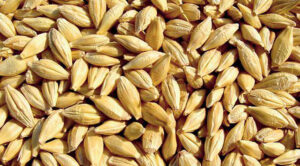
In its November report, the U.S. Department of Agriculture (USDA) raised its forecast for feed grain production in Ukraine in the 2026/27 marketing year (MY) by 400,000 metric tons compared to October—to 39.49 million metric tons—primarily due to a revision of the barley harvest estimate.
According to data from the World Agricultural Supply and Demand Estimates (WASDE) report dated November 10, the previous forecast for forage grain production was 39.09 million metric tons.
Since the corn harvest estimate remained unchanged at 31.8 million metric tons, the USDA currently estimates production of other feed crops—including barley, rye, oats, sorghum, and millet—at 7.69 million metric tons, up from 7.29 million metric tons in the October forecast.
Thus, the increase in the forecast for feed grain production in Ukraine is specifically linked to crops other than corn.
In the November report, U.S. analysts specifically noted an upward revision to the estimate for barley production in Ukraine.
At the same time, the forecast for total feed grain exports from Ukraine was lowered from 23.77 million to 21.77 million metric tons, or by 2 million metric tons.
The bulk of the reduction is attributable to corn, with exports projected at 20 million metric tons, down from 22 million metric tons in October.
Accordingly, projected exports of other feed grains total about 1.77 million metric tons and remain unchanged from the previous forecast.
Meanwhile, the USDA raised its estimate of ending stocks of all feed grains in Ukraine from 8.7 million to 11.1 million metric tons.
Of this total, 7.53 million metric tons are corn, while stocks of other feed crops are estimated at about 3.57 million metric tons, compared to 3.17 million metric tons in the October forecast.
According to a separate USDA Grain and Feed Quarterly report released on November 2, 2026, the barley harvest in Ukraine is estimated at 6.6 million metric tons, and the rye harvest at 326,000 metric tons on a bin-weight basis.
Globally, the USDA has raised its forecast for barley production in the 2026/27 marketing year by 1 million metric tons, to 161.1 million metric tons.
Growth is expected primarily in Australia and Ukraine, while the production forecast for Russia has been lowered.
An increase in global barley trade is also projected, driven in part by a rise in Australian exports.
Barley is one of Ukraine’s major grain crops. It is used in livestock farming, the feed and malting industries, and is also exported to foreign markets.
The increase in the harvest creates additional supply of raw materials for domestic consumption and export; however, realizing export potential will depend on demand and the capacity of the transportation infrastructure.
Sources: USDA, WASDE, November 10, 2026, p. 21 (PDF); USDA, Grain and Feed Quarterly, November 2, 2026 (PDF).

Ukraine’s gross barley harvest in 2026 increased by 22.8% compared to the same period last year, reaching 6.60 million metric tons, the Ministry of Agrarian Policy and Food reported on November 10. According to the published data, farmers completed the barley harvest on an area of 1.48 million hectares, which is 9.8% more than the threshed area as of November 7, 2025.
The average yield of the crop rose from 39.8 centners per hectare to 44.5 centners per hectare, or by 11.9%.
Last year, as of the same date, farmers harvested 5.37 million metric tons of barley from an area of 1.35 million hectares. Thus, the increase in gross harvest amounted to approximately 1.23 million metric tons.
Unlike wheat, where yield was the main factor driving the increase in production, growth in the barley segment was driven by both an expansion of planted area and higher productivity.
Barley is of great importance to the Ukrainian agricultural sector as both a feed and food crop. A significant portion of the crop is used in the production of compound feed, livestock farming, and the malting industry. The crop is also a component of Ukraine’s grain exports.
The increase in the gross barley harvest boosts the physical volume of raw materials available for domestic use and exports. At the same time, actual export volumes will depend on demand, market prices, and logistical capabilities.
As of November 10, Ukrainian farmers had harvested over 47 million metric tons of grains and legumes.
Original source: Ministry of Agrarian Policy of Ukraine, November 10, 2026.
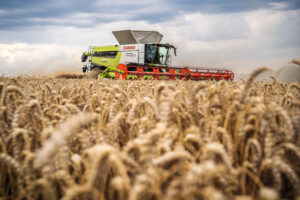
Ukrainian farmers have completed the wheat harvest, yielding 26.26 million metric tons of grain from an area of 5.12 million hectares, which is 15.3% higher than the 2025 harvest, the Ministry of Agrarian Policy and Food of Ukraine reported on November 3.
The average wheat yield in 2026 was 51.3 centners per hectare, compared to 45.1 centners per hectare last year, an increase of 13.7%.
At the same time, the area harvested for wheat increased by only 1.4%, or approximately 70,700 hectares. Thus, the main factor behind the increase in gross production was higher yields.
Barley also showed positive growth. Its gross harvest reached 6.60 million metric tons from an area of 1.48 million hectares, which is approximately 22.8% more than the figure at the end of October last year.
The average barley yield increased from 39.7 to 44.5 centners per hectare. At the same time, the area under cultivation expanded by approximately 9.8%.
The pea harvest has also been completed. According to the ministry, 834,100 metric tons were harvested from 302,200 hectares, with an average yield of 27.6 centners per hectare.
Compared to 2025, the gross harvest of peas increased by 26.2%, and the yield increased by approximately 13%.
In total, the harvest of the three main early grain and legume crops—wheat, barley, and peas—amounted to about 33.69 million metric tons.
The increase in yields for these crops is important for securing the domestic food market, supporting the flour milling and animal feed industries, and building Ukraine’s export reserves.
At the same time, wheat remains Ukraine’s largest grain crop in terms of gross volume already harvested in 2026, although the ongoing corn harvest may alter the ratio between crops.
Sources: Ministry of Agrarian Policy, data as of November 3, 2026; official statistics on the 2025 harvest.
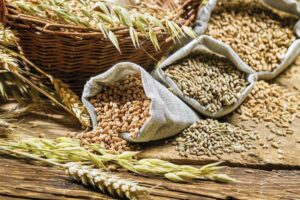
According to Experts.news, as of November 4, 2026, Ukrainian farmers had planted 4.448 million hectares with winter grain crops, which is 400,300 hectares, or 8.3%, less than on the same date last year, the Ministry of Agrarian Policy and Food of Ukraine reported.
According to the ministry, 85.4% of the projected area for winter grain crops—totaling approximately 5.21 million hectares—has been planted.
The largest declines were seen in winter wheat and barley plantings. Specifically, 3.953 million hectares—or 87.1% of the forecast—have been sown with wheat and triticale. This is 350.5 thousand hectares, or 8.1%, less than on the same date in 2025.
Winter barley has been planted on 420,500 hectares, which is only 70.8% of the projected area. Compared to last year, its planted area has decreased by 58,200 hectares, or 12.1%.
At the same time, the area planted with winter rye increased by 12.7%, to 74.3 thousand hectares. Farmers have already completed 96.9% of the forecast for this crop.
The pace of grain planting has slowed in recent weeks. During the week of October 28 through November 4, the planted area increased by 234,600 hectares, whereas the previous week saw an increase of 285,300 hectares, and the week before that—536,800 hectares.
Thus, the weekly increase in grain plantings decreased by 17.8%, and compared to the figure from two weeks ago, it has more than halved.
In total, farmers still need to plant about 763,000 hectares of winter grains to meet the forecast, including approximately 588,000 hectares of wheat and triticale and 173,000 hectares of barley.
As of the same date in 2025, Ukrainian farmers had planted 4.848 million hectares of winter grains. At that time, wheat plantings totaled 4.304 million hectares, barley—478,700 hectares, and rye—65,900 hectares.
The current figures reflect the progress of the fall planting campaign for the 2027 harvest. The final area planted with winter grains will depend on the completion of fieldwork, and the future harvest will also depend on how well the crops survive the winter and on spring weather conditions.
Sources: Ministry of Agrarian Policy, operational data on winter crop planting as of November 4, 2026; official planting statistics as of November 4, 2025.
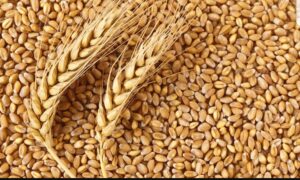
As of October 27, 2026, Ukrainian farmers had harvested 41.7 million metric tons of grains and legumes from an area of 8.32 million hectares, or 72% of the projected planted area. The average yield reached 50.2 centners per hectare, compared to 45.8 centners per hectare last year, according to the Ministry of Agrarian Policy and Food of Ukraine.
Thus, the grain yield increased by approximately 9.6%, which helped offset delays in the harvesting of certain late-maturing crops.
For comparison: as of October 31, 2025, farmers had harvested 40.20 million metric tons of grain from 8.77 million hectares, or 76% of the total area. When comparing these figures, the difference in reporting dates must be taken into account.
According to the ministry’s data, the harvest of wheat, barley, and peas has been fully completed in Ukraine.
The gross wheat harvest totaled 26.24 million metric tons from an area of 5.12 million hectares, which is 15.2% higher than last year’s figure of 22.78 million metric tons. The average yield increased from 45.1 to 51.2 centners per hectare, or by 13.6%.
The barley harvest grew by 23.2%—from 5.36 million to 6.60 million metric tons. At the same time, the harvested area increased by 9.8%—to 1.48 million hectares, and the yield rose from 39.7 to 44.5 centners per hectare.
An even more significant increase was recorded for peas. Pea production reached 833,600 metric tons, compared to 660,700 metric tons last year, an increase of 26.2%.
The area planted with peas grew by 11.4%, to 302,200 hectares, and the average yield was 27.6 centners per hectare, compared to 24.4 centners per hectare a year earlier.
Thus, the growth in production of the three main early-season grain and legume crops was driven by both higher yields and an expansion of the planted areas for certain crops.
At the same time, the corn harvest remains at a relatively early stage. As of October 27, farmers had threshed only 29% of the projected area, harvesting 7.89 million metric tons of this crop.
The future trend of the total grain harvest in 2026 will largely depend on the results of the corn harvest, which remains one of Ukraine’s main export crops.
Ukraine ranks among the world’s major producers and exporters of grain crops. Wheat and corn account for a significant portion of the country’s agricultural exports, while barley and peas are supplied to both the domestic market and foreign buyers.
Source: Ministry of Agrarian Policy and Food of Ukraine, harvest data as of October 27, 2026.



