

According to Experts Club, consuming a small amount of concentrated tomato paste daily for three months may have a positive effect on certain measures of memory and attention in healthy middle-aged people, according to the results of a clinical study by Spanish researchers.
According to the New York Post, participants in the experiment consumed about 35 grams of concentrated tomato paste daily—roughly two tablespoons. The study was published in the scientific journal Antioxidants.
The randomized crossover study involved 47 healthy adults aged 40–55, 42 of whom completed the experiment. Participants went through two three-month periods: during one, they consumed concentrated tomato paste daily at a rate of 0.5 g per kilogram of body weight; during the other, they followed a diet low in lycopene. There was a one-month break between periods.
According to the results of neuropsychological tests, the participants’ selective attention scores improved after the period of tomato paste consumption. Concentration scores increased by an average of 7.2 points, and information processing speed scores increased by 8.3 points. Improvements in associative memory were also observed, particularly the ability to match faces with names.
The researchers also noted a trend toward increased levels of the brain-derived neurotrophic factor (BDNF)—a protein involved in supporting neurons, neuroplasticity, and memory processes. However, this increase was on the borderline of statistical significance.
Functional MRI scans of some participants revealed changes in the connections between neural networks associated with attention and cognitive functions. The study authors suggest that tomato consumption may contribute to the functional reorganization of brain networks.
Scientists cite lycopene—a carotenoid antioxidant found in abundance in tomatoes and tomato products—as one possible factor behind this effect. Lycopene is capable of crossing the blood-brain barrier and possesses antioxidant and anti-inflammatory properties. At the same time, the researchers emphasize that tomatoes contain many other biologically active substances, so it is currently impossible to determine whether the observed effect is linked exclusively to lycopene.
The authors also caution against overinterpreting the results. The study was small, lasted only a few months, and was conducted among healthy middle-aged adults. It does not prove that tomato paste prevents dementia or can be used to treat cognitive impairment.
Original study: PubMed – Tomato Intake Improves Cognitive Performance and Modulates Functional Brain Networks in Healthy Adults.
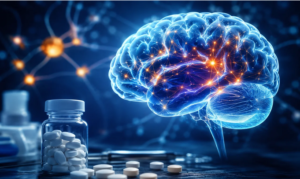
A new, potentially multibillion-dollar market is emerging in the global pharmaceutical industry for drugs that target the orexin system in the brain. The first drug in this new class has already received approval from the U.S. regulatory agency for the treatment of narcolepsy, while pharmaceutical companies are beginning to explore the same mechanism for other sleep disorders, attention disorders, cognitive disorders, and neurological diseases.
On August 11, 2026, *The Economist* described these developments as a potential “Ozempic moment” for the brain—drawing an analogy with GLP-1 drugs, which were initially developed primarily to treat diabetes but later radically transformed the obesity treatment market and began to be investigated for a whole range of other diseases.
In the case of brain disorders, the orexin system could become such a universal mechanism.
A key milestone occurred on August 5, 2026, when the U.S. Food and Drug Administration (FDA) approved Takeda’s drug Orzeyful (oveporexton) for adults with type 1 narcolepsy.
This is the first approved drug that directly targets the biological mechanism of this disease.
Type 1 narcolepsy is associated with the death of brain cells that produce orexin—a neuropeptide that regulates wakefulness, sleep, and muscle tone. When orexin is deficient, the brain has a harder time maintaining a stable state of wakefulness and distinguishing between sleep and wakefulness.
Traditional therapies have primarily targeted individual symptoms—for example, by promoting alertness or reducing cataplexy. Oveporexton works differently: the drug activates the orexin receptor OX2R, thereby partially restoring the missing signal.
This is precisely what makes this new approach particularly interesting for the pharmaceutical industry.
The FDA’s decision was based, in particular, on two 12-week randomized, double-blind, placebo-controlled trials involving 273 adult patients with type 1 narcolepsy.
Patients who received oveporestone showed improved ability to remain alert during the day, as well as reduced subjective sleepiness and frequency of cataplexy episodes. Improvements were also observed in other symptoms of the disease.
However, the drug is not without side effects. The FDA lists insomnia, frequent urination, urinary urgency, and increased salivation among the most common side effects.
So, for now, we’re not talking about a “brain-boosting pill,” but rather a medication with a specific medical indication and known risks.
However, the pharmaceutical industry’s interest extends far beyond type 1 narcolepsy.
A good illustration of the scale of these expectations is Eli Lilly’s deal with the British company Centessa Pharmaceuticals.
On June 24, 2026, Lilly completed its acquisition of Centessa, gaining a portfolio of experimental OX2R receptor agonists.
When announcing the deal on March 31, Lilly estimated the initial purchase price at approximately $6.3 billion, with up to an additional $1.5 billion potentially payable depending on the achievement of certain regulatory milestones. Thus, the potential value of the deal reaches about $7.8 billion.
Centessa’s lead drug—cleminorexton, formerly known as ORX750—has already completed a Phase 2a trial in patients with Type 1 and Type 2 narcolepsy and idiopathic hypersomnia. Lilly notes that other drugs in this platform could potentially be studied for a broader range of neurological, neurodegenerative, and neuropsychiatric disorders.
In fact, one of the world’s largest pharmaceutical companies paid billions of dollars for the opportunity to secure a position in a new class of drugs even before most of its potential applications had been proven.
Takeda and Lilly are not the only players in the market.
Alkermes is developing its own OX2R agonist, alixorexton. By 2026, it will already be in Phase 3 trials for narcolepsy types 1 and 2 and in Phase 2 trials for idiopathic hypersomnia.
At the same time, the company is beginning to explore other molecules in this class. ALKS 7290 is in the early stages of development for the treatment of attention-deficit/hyperactivity disorder, and ALKS 4510 is being studied as a potential treatment for fatigue associated with multiple sclerosis and Parkinson’s disease. For now, both programs are still in the early clinical stages.
It is precisely the potential to extend the application of a single biological mechanism to numerous diseases that explains the comparison with GLP-1.
Orexin was discovered relatively recently—in the late 1990s. It is produced by a small group of neurons in the hypothalamus, but their signals spread throughout numerous areas of the brain.
The orexin system is involved in more than just maintaining alertness. It is linked to attention, motivation, energy balance, mood, and other functions of the central nervous system.
Takeda explicitly views orexin as a system linked to sleep and wakefulness, attention, mood, metabolism, and respiration.
This means that pharmacological intervention targeting orexin receptors could theoretically be beneficial not only in cases where there is a direct deficiency of this neuropeptide.
Following the approval of oveporexton, *Nature Reviews Drug Discovery* also noted that the pharmaceutical industry is already exploring broader indications for drugs in this class.
The history of GLP-1 has shown pharmaceutical companies just how valuable a mechanism can be that targets not a single symptom but a fundamental system of the body.
GLP-1 drugs have expanded from treating diabetes to a global market for obesity therapy and are now being studied for a multitude of comorbidities.
Orexin-based drugs may follow a similar trajectory: a rare and well-studied disease serves as the first proof of concept for a new mechanism, after which developers begin testing it for much more common conditions.
This is precisely why the FDA’s approval of oveporexton is important not only for patients with narcolepsy.
It marked the first time a major regulatory agency confirmed that restoring a specific neurochemical signal can directly influence the fundamental mechanism of a brain disorder.
The comparison is interesting, but it’s important not to take it literally.
Proven efficacy currently exists primarily for type 1 narcolepsy. For type 2 narcolepsy and idiopathic hypersomnia, other drugs are in the clinical trial phase, while the use of orexin agonists for ADHD, Parkinson’s disease, multiple sclerosis, and other conditions is still in much earlier stages.
There is no evidence that these drugs will become universal cognitive stimulants or will be able to treat a wide range of mental and neurodegenerative disorders.
Therefore, the main significance of these developments lies not in the emergence of an “Ozempic for the brain” as a single miracle drug, but in the emergence of a new pharmacological platform.
And if further research confirms the ability to safely regulate wakefulness, attention, and other brain functions through the orexin system, this class of drugs could indeed become one of the most important new areas in global neurology and psychiatry.
The combination of the first FDA approval, several competing clinical programs, and multibillion-dollar investments from the largest pharmaceutical companies indicates that the industry is already placing a serious bet on this mechanism.
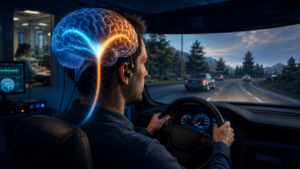
Nur ein kleiner Teil der Menschen ist in der Lage, zwei komplexe Aufgaben gleichzeitig zu erledigen, ohne dass sich die Ergebnisse merklich verschlechtern. Dies zeigte eine Studie der Psychologen Jason Watson und David Strayer von der University of Utah.
Die Arbeit mit dem Titel Supertaskers: Profiles in Extraordinary Multitasking Ability wurde in der wissenschaftlichen Fachzeitschrift Psychonomic Bulletin & Review veröffentlicht. An der Studie nahmen 200 Personen teil.
Die Teilnehmer wurden in einem hochrealistischen Fahrsimulator getestet. Zunächst erledigten sie die Aufgaben getrennt. Anschließend steuerten sie gleichzeitig ein Auto und absolvierten den komplexen auditiven OSPAN-Test, der das Einprägen von Informationen und die Lösung kognitiver Aufgaben erforderte.
Bei der überwiegenden Mehrheit der Teilnehmer verschlechterten sich beim Übergang zum Multitasking entweder die Ergebnisse beim Autofahren, beim kognitiven Test oder bei beiden Aufgaben gleichzeitig.
Allerdings zeigten 2,5 % der Teilnehmer – also etwa fünf von 200 Personen – bei der gleichzeitigen Ausführung beider Aufgaben keinerlei Verschlechterung ihrer Ergebnisse. Die Forscher bezeichneten sie als „Supertaskers“ – Menschen mit einer ungewöhnlich hohen Fähigkeit zum Multitasking.
Darüber hinaus erzielten diese Teilnehmer auch bei der getrennten Ausführung jeder einzelnen Aufgabe hohe Ergebnisse: Bei allen wichtigen Messwerten des Fahrens und des Arbeitsgedächtnistests gehörten sie zum besten Viertel der Stichprobe. Statistische Modellierungen zeigten, dass das Auftreten einer solchen Gruppe nur mit geringer Wahrscheinlichkeit durch reinen Zufall erklärt werden konnte.
Die Studie stellte die Annahme infrage, dass die Fähigkeit, die Aufmerksamkeit effektiv auf mehrere komplexe Aufgaben zu verteilen, bei allen Menschen gleich ausgeprägt ist. Die Autoren kamen zu dem Schluss, dass erhebliche individuelle Unterschiede bei den Mechanismen der Aufmerksamkeit und der kognitiven Kontrolle bestehen.
Dabei sollte der Wert von 2,5 % nicht unmittelbar als Beweis dafür interpretiert werden, dass genau dieser Anteil der gesamten Weltbevölkerung über außergewöhnliche Multitasking-Fähigkeiten verfügt. Die Studie wurde mit einer Stichprobe von 200 Teilnehmern durchgeführt und untersuchte eine konkrete Kombination von Aufgaben – das Autofahren und eine komplexe Belastung des Arbeitsgedächtnisses.
Die Arbeit hat zudem praktische Bedeutung für die Frage der Nutzung von Telefonen am Steuer. Ihre Ausgangsannahme basierte auf früheren Studien, die zeigten, dass Telefongespräche in der Regel die Fähigkeit des Fahrers beeinträchtigen, die Verkehrssituation zu kontrollieren. Die Entdeckung einer kleinen Gruppe von „Supertaskers“ war eine Ausnahme von der allgemeinen Regel und kein Beweis dafür, dass Multitasking für die meisten Fahrer sicher ist.
Die Studie wurde am Fachbereich Psychologie der University of Utah durchgeführt.

Men who have children, on average, perform better on certain cognitive tests and have a lower estimated brain age compared to childless men, according to a study published in *Scientific Reports*.
The study authors analyzed data from 303,196 participants in the UK Biobank of European descent who had no brain or nervous system diseases. The researchers compared results from tests of reaction time and visual memory, and separately examined MRI data from 13,584 individuals to assess what is known as relative brain age.
According to the study, having children was associated with faster reaction times and fewer errors on visual memory tests in both women and men. The most pronounced difference was observed in participants with two or three children compared to those without children.
For men with two children, the estimated brain age was on average 0.6 years younger than that of childless men, and for men with three children, it was 0.7 years younger. For women with two children, the brain appeared on average 0.5 years younger, and for those with three children, 0.7 years younger.
The researchers emphasize that this is an association, not a proven cause-and-effect relationship. In their assessment, the results may be influenced not only by parenting responsibilities themselves but also by lifestyle factors associated with having children: social activity, daily cognitive load, emotional support, routine, reduced alcohol or tobacco use, and other variables.
The authors also note that the effect did not increase linearly with the number of children. In men, the relationship was U-shaped: the most pronounced differences were observed among fathers of two or three children, whereas with more children, the effect was less clear-cut.
Additional research in this area suggests that caring for others may be associated with a younger brain age. Specifically, a study published in 2025 in Social Cognitive and Affective Neuroscience showed a lower estimated brain age among grandmothers and caregivers of people with dementia compared to a control group.
Scientists see a possible explanation in the fact that caring for a child or another person requires constant shifting of attention, planning, memory, emotional control, and social interaction. Such a workload may serve as a kind of training for the brain, although further research is needed to confirm a causal effect.
Data from the Harvard Study of Adult Development also point to the importance of social connections for health and longevity.
The project’s researchers noted that people with warmer and more stable relationships live longer on average and maintain better health, while social isolation is associated with higher risks to physical and mental well-being.
Thus, parenthood may be one of the factors associated with a more active social and cognitive life. However, the researchers do not claim that having children in and of itself guarantees healthier brain aging. The study shows a statistical association that must be considered alongside lifestyle, health, stress levels, income, education, and the quality of social relationships.

American neurologists have introduced the Brain Care Score, an interactive questionnaire that helps assess brain health and determine what lifestyle changes can reduce the risk of stroke, dementia, and depression.
Aording to the description provided by the developers at the McCance Center for Brain Health (Massachusetts General Hospital), the scale is 21 points and takes into account 12 modifiable factors – from blood pressure, sugar and cholesterol levels to nutrition, sleep, physical activity, smoking, alcohol consumption, stress, social connections and “meaning/purpose in life.” .
The effectiveness of the approach was evaluated using UK Biobank data: in a study of nearly 399,000 participants, a higher Brain Care Score was statistically associated with a lower risk of dementia and stroke at a median follow-up of 12.5 years (in particular, a 5-point increase was associated with a reduction in risk across different age groups).



