

Toronto and Vancouver saw the most significant declines in housing prices among the 23 largest global markets analyzed by UBS in 2026.
Over the past four quarters, real housing prices in both Canadian cities have fallen by approximately 10%, according to the UBS Global Real Estate Bubble Index 2026.
The correction was particularly severe in Toronto. From 2014 to 2022, real prices there doubled due to rapid population growth, investment demand, and cheap financing.
After 2022, the situation changed. Due to rising interest rates, restrictions on foreign buyers, and an increase in supply, real prices are now nearly 30% below their peak, according to UBS.
In Vancouver, real prices have fallen by nearly 10% since mid-2025 and are about 20% below their 2022 peak. Home sales have dropped to their lowest level in about 25 years, while the number of properties on the market remains significantly above the long-term average.
As a result, UBS now classifies both cities as only moderate risk: Toronto’s index stands at 0.63, and Vancouver’s at 0.62. Just a few years ago, the Canadian markets were considered among the most overheated in the world.
A correction is also underway in Germany, though less sharply. Real prices in Frankfurt and Munich have fallen by nearly 4% over the past year. In Frankfurt, housing prices—adjusted for inflation—are already about 25% below their 2021 peak.
At the same time, UBS notes that a structural housing shortage persists in both Germany and many other major cities, which limits the potential for further price declines.
Kyiv was not included in this study.

Canada ranked first in terms of the balance of positive and negative attitudes among Ukrainians among Ukraine’s 50 largest trading partners, while China, which leads in trade turnover, received the lowest indicator, and attitudes toward Poland deteriorated significantly, according to the results of a study by Active Group and the Experts Club information and analytical center.
According to the published ranking, the balance of positive and negative assessments of Canada amounted to plus 73.8 percentage points. It was followed by Sweden – plus 70.6 p.p., the Netherlands – 69.7 p.p., Finland and Norway – 69.3 p.p. each, France – 69.1 p.p., Italy – 67.1 p.p., Lithuania – 65.9 p.p., Switzerland and the United Kingdom – 65.6 p.p. each.
This indicator is the difference between the shares of positive and negative responses. In particular, 76.3% of respondents have a positive attitude toward Canada, 2.5% have a negative attitude, and 19.2% have a neutral attitude.
The worst balance was recorded for China – minus 25.4 p.p.: 18.2% of respondents assess it positively, 43.6% negatively, and 33.9% neutrally. India also has a negative indicator – minus 14.3 p.p., Hungary – minus 12.7 p.p., and Lebanon – minus 9.2 p.p.

Doctor of Sociological Sciences and head of the Kyiv branch of the Sociological Association of Ukraine Olga Bezrukova called China an illustrative example of the gap between the scale of economic interaction and the country’s public image.
“We saw that China is Ukraine’s largest economic partner in terms of total trade turnover, but this is in no way converted into a positive public image. This shows that Ukrainian citizens clearly distinguish between the pragmatism of economic interaction and the overall assessment of a state. Economic dependence and interaction do not equal public sympathy for this country,” she emphasized at a press conference at the Interfax-Ukraine agency on Tuesday.
One of the most noticeable changes was the deterioration in attitudes toward Poland. While in March 2026 the balance of assessments stood at plus 41.7 p.p., in August positive and negative responses were practically equal, with a slight predominance of negative ones. A positive attitude was expressed by 34.6% of respondents, a negative one by 37%, and a neutral one by 25.4%.

“At the beginning of the invasion, Poland was perceived almost as the main partner. We asked about the rapprochement between Ukraine and Poland, political and economic, even about uniting into some kind of common union, and we saw enormous positive results. But here we see: Poland seemingly still remains a key partner, but the idea of unification has already been forgotten, and we see stable negativity,” said Active Group founder Andriy Yeremenko.
He linked the deterioration in assessments to the position of part of the Polish authorities, which he considers anti-Ukrainian.
At the same time, the balance of attitudes toward Hungary improved from minus 33.6 p.p. in March to minus 12.7 p.p. in August, although negative assessments still prevail. For the United States, the indicator rose from plus 19.4 to plus 38.4 p.p. Some 55% of respondents have a positive attitude toward the United States, 16.6% a negative attitude, and 25.6% a neutral attitude.
When asked who contributes most to achieving peace in Ukraine, 44.6% of respondents named European Union countries, 25.2% the United States, 23.3% the United Kingdom, 4.1% China, 1.8% India, and 1% Brazil. Regarding priority development of trade and economic relations, 69.9% chose EU countries and the United Kingdom, 11.9% the United States, and 8.4% China.

According to Bezrukova, assessments of the U.S. role in achieving peace remained relatively stable throughout the three waves of the study.
“General sympathy toward a country and an assessment of its functionality at the international level are related but not identical things. Images of countries are multidimensional. A person may change their emotional attitude toward a state but continue to recognize its international weight,” the sociologist explained.
Another model, she said, is demonstrated by India: 48.3% of respondents express a neutral attitude toward it, but among formed assessments negative ones prevail – 31.5% versus 17.2% positive.
The economic indicators were presented by Experts Club founder, deputy director of the Interfax-Ukraine agency and PhD in Economics Maksym Urakin. According to State Customs Service data cited by him, in the first half of 2026 Ukraine’s trade turnover amounted to $70.3 billion, exports to $21 billion, and imports to $49.3 billion. The negative balance of trade in goods reached $28.3 billion.
“If we compare this with the first half of 2025, there was also an imbalance then, but now exports have increased by approximately 5%, while imports have risen by almost 30%. That is, the deficit increased by more than $10 billion over the year. Therefore, it is very important for us to analyze our main partners,” he emphasized.
According to the materials presented, trade turnover with China in January-June amounted to about $14.68 billion. Ukraine exported $778 million worth of goods to China and imported $13.90 billion, forming a deficit of approximately $13.12 billion. Poland remained the largest buyer of Ukrainian goods, with a volume of $2.38 billion. Türkiye ranked second among export markets with $1.78 billion, and Italy third with $1.28 billion.
In terms of total trade volume, China is followed by Poland – $7.05 billion, Türkiye – $4.90 billion, Germany – $4.48 billion, and the United States – $3.07 billion. Yeremenko highlighted Türkiye as an example of a combination of significant trade turnover and predominantly positive perception: 52.3% of respondents have a favorable attitude toward it, while 7.4% have a negative attitude.
Urakin separately drew attention to partners with which trade provides Ukraine with a positive balance. In the first half of the year, the largest was with Spain – $578.1 million, Egypt – $527.1 million, and Moldova – $467.2 million. They were followed by Algeria – $309.2 million, the Netherlands – $221.5 million, and Lebanon – $220.5 million. Libya, Tunisia, Iraq, and Yemen also entered the top ten.
At the same time, neutral attitudes prevail toward a number of these partners. Egypt is assessed neutrally by 61.3% of respondents, Algeria by 65.8%, and Tunisia by 67.3%. Participants in the press conference linked this to insufficient awareness among Ukrainians about these countries and emphasized the need for more active economic and public diplomacy.

“It is necessary to develop not only general awareness better. First of all, business associations, the Ministry of Economy and the Ministry of Foreign Affairs need to work to develop bilateral relations and improve the balance. In conditions where Ukraine already lacks financing and we live, essentially, at the expense of external borrowing, cooperation should be expanded with countries where we can have a positive balance,” said Active Group director Oleksandr Pozniy.
Urakin recommended that embassies accredited in Ukraine ensure full communication in the Ukrainian language, openness to the media, and regular reporting on the results of cooperation.
“The first recommendation is to regularly show concrete deeds, concrete actions, the presence here of foundations, embassies, teams, diplomats in the humanitarian sphere and in science. Second, to be open to questions and requests from the media and the public. We also need to use our sociology to draw conclusions and cement our relations, primarily trade relations,” he added.
This is the third wave of the study; the previous ones were conducted in August 2025 and March 2026. The survey was conducted in August 2026 using self-completed online questionnaires in the SunFlowerSociology panel. A total of 800 Ukrainian citizens aged 18 and over were surveyed. According to the organizers, the sample is representative by age, gender and region, and the stated maximum theoretical statistical margin of error at a 95% confidence level is 3.5%.
ACTIVE GROUP, CANADA, CHINA, EXPERTS CLUB, POLAND, PUBLIC OPINION, TRADE, UKRAINE, UNITED STATES

To help Ukraine repair and strengthen its energy infrastructure ahead of another winter under attack from Russia, Canada has announced new support.
The announcements were made during Ukrainian President Volodymyr Zelenskyy’s visit to Canada and his meeting with Canadian Prime Minister Mark Carney
According to the website of the Office of the Prime Minister of Canada, the Canadian government will provide the European Bank for Reconstruction and Development with new loan guarantees totaling nearly 435 million Canadian dollars to support energy security, including the purchase of natural gas during the winter and backup generators for electricity production during shortages.
Canada is allocating 200 million Canadian dollars in concessional loans through Export Development Canada to support Ukraine’s reconstruction. As emphasized by the Prime Minister’s Office, this will help Ukraine repair critical infrastructure while providing Canadian companies with the opportunity to support critical projects.
The support package includes an additional 10 million Canadian dollars for the Ukraine Energy Support Fund, bringing the total to $100 million, to support Ukraine’s energy infrastructure, including the procurement and delivery of critical energy equipment to enhance Ukrainians’ resilience to energy disruptions.
In addition, Canada announced a contribution of 2 million Canadian dollars to the International Energy Agency’s (IEA) Joint Work Program to support the development of Ukraine’s energy resources. This funding will strengthen Ukraine’s energy resilience, provide regulatory support, and promote clean energy projects.

Nova Post, part of the Nova Group, has entered the Canadian market, bringing the total number of countries where it operates to 18, according to a company statement released on Wednesday.
“Canada, like all of North America, is one of the key directions for Nova Post’s international expansion,” Oleksiy Taranenko, CBDO of the NOVA Group, is quoted as saying in the release.
According to him, the company has already processed over 3,000 shipments, most of which consisted of goods from Ukrainian manufacturers.
The next steps are expected to include further network expansion, the introduction of a franchise program, the launch of new products, and faster delivery times.
Nova Post clarified that customers can arrange international shipments from Canada online via the company’s website or mobile app, as well as drop off a package at one of 1,100 partner UPS stores or hand it over to a courier.
It is noted that delivery time between Canada and Ukraine starts at 5 days. Shipping costs from Canada to Ukraine are CAD 37 for documents and packages up to 1 kg; CAD 47 for packages up to 2 kg; CAD 99 for packages up to 10 kg; and CAD 215 for packages up to 30 kg.
Nova Post reminded customers that it is possible to ship goods from Ukraine to Canada without paying import duties. This service is made possible by the Canada-Ukraine Free Trade Agreement (CUFTA).
Specifically, for most shipments, only the harmonized sales tax (HST) is payable, which the sender can pay when arranging delivery; however, no tax applies to packages valued at up to 20 CAD (625 UAH).
As reported in early August, Nova Post has opened 266 new service locations since the beginning of 2026, thereby expanding its presence to 16 countries and 235 cities.
The largest number of new service points were opened in Moldova—155—followed by Poland—63—Spain—18—the Czech Republic—14—Germany—11—Slovakia—2—and one service point each in Austria, Italy, and Romania.
Vyacheslav Klimov, co-owner of Nova Poshta, noted during the “Dialogues with NV” event dedicated to European integration that Nova Post Europe, part of the NOVA Group, plans to double its network of branches in Europe by 2026 and keep its strategic focus on ensuring the fastest possible delivery times.
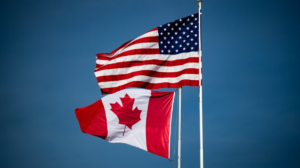
On August 27, U.S. President Donald Trump signed an executive order renaming Lake Ontario “Lake America.”
However, it is important to note that this does not constitute an international renaming of the lake. Lake Ontario is located on the border between the U.S. and Canada, and Trump’s executive order applies only to federal agencies and official U.S. geographic names. Canada is under no obligation to recognize the new name and continues to use “Lake Ontario.”
According to Executive Order No. 14420, the U.S. Secretary of the Interior, together with the U.S. Board on Geographic Names, must add the name “Lake America” to the federal Geographic Names Information System within 30 days. After that, the new name must be used in documents, maps, and communications by U.S. federal agencies.
Trump explained this decision by citing the lake’s economic and historical significance to the United States. The text of the executive order highlights the lake’s role in American trade, shipping, and military history, as well as Washington’s investments in protecting the Great Lakes ecosystem.
The decision was made against the backdrop of a new escalation in trade relations between the U.S. and Canada. Negotiations between the two countries on a trade agreement were suspended on August 21 after Canadian Prime Minister Mark Carney stated that the terms proposed by Washington did not serve the country’s interests. Canada subsequently announced that it was preparing corresponding trade measures.
The Canadian side did not recognize the renaming. Carney stated that in Canada, the body of water would continue to be called Lake Ontario. The name “Ontario” itself comes from the language of Indigenous peoples and was in use long before the modern United States and Canada came into existence.
While signing the executive order, Trump also floated the idea of further geographical renaming.
“We have a bay, and now we have a lake. We need an ocean,” the U.S. president said, adding that Washington could theoretically consider a new name for the Atlantic or Pacific Ocean—or both. So far, there are no executive orders or official procedures regarding the renaming of oceans.
This decision continues the trend of geographical renaming during Trump’s second presidential term. In January 2025, he ordered U.S. federal agencies to use the name “Gulf of America” instead of “Gulf of Mexico” and restored the name “Mount McKinley” to Denali in Alaska.
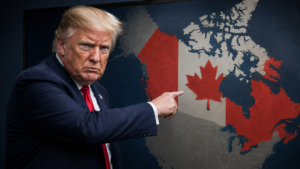
U.S. President Donald Trump has sharply stepped up pressure on Canada amid an escalating trade conflict between the two countries, calling Canadian leaders “clowns” and warning of significantly harsher economic consequences if Ottawa does not change its position.
Trump published the statement on Truth Social on August 24, 2026, following a new exchange of accusations with Canadian Prime Minister Mark Carney and Ontario Premier Doug Ford.
“America has carried Canada on its back for decades, but that will no longer happen,” the U.S. president wrote. At the end of his message, he called for the Canadian leadership to be made to “fall in line,” otherwise the consequences for the country would be “much worse.”
Trump spoke particularly harshly about Doug Ford, who had previously threatened to use electricity and critical mineral supplies to the United States as a retaliatory measure against U.S. tariffs.
The U.S. president also said that Canada was economically dependent on the United States and noted that a significant share of the electricity, oil and gas received by the country was transported through U.S. territory.
Official statistics, however, show a more complex picture. The two countries’ energy systems are indeed extremely closely interconnected, but Canada remains a major net exporter of energy resources to the United States.
According to the Canada Energy Regulator, in 2025 Canada exported CAD157.5 billion worth of oil, petroleum products, natural gas and gas condensate to the United States, while importing only CAD34.4 billion worth of similar products from the United States.
About 90.8% of Canadian hydrocarbon exports were sent specifically to the United States. In particular, Canada exported 4.3 million barrels of oil per day, of which about 3.9 million barrels went to the U.S. market.
In the opposite direction, Canada imported about 0.5 million barrels of oil per day, with approximately 76% of these supplies coming from the United States. Canada is also a major net exporter of natural gas: in 2025, it supplied about 8.6 billion cubic feet of gas per day, almost entirely to the United States, while simultaneously importing 2.5 billion cubic feet per day, predominantly from the United States.
The two countries’ electricity systems are also integrated. In 2025, Canada exported 32.7 TWh of electricity to the United States and imported 22.1 TWh. At the same time, all of Canada’s international electricity trade is conducted with the United States.
Thus, Trump’s statements have some basis in terms of the Canadian economy’s high dependence on U.S. transportation and energy infrastructure. At the same time, however, Canada is one of the most important suppliers of energy resources to the United States itself. In 2025, it accounted for 63.4% of U.S. crude oil imports, almost 100% of natural gas imports and 81.3% of electricity imported by the United States.
Trump’s statements followed the collapse of U.S.-Canadian trade negotiations.
The United States has already imposed 50% tariffs on approximately $20 billion worth of Canadian goods, while on August 24 Trump additionally threatened to raise tariffs on all cars, trucks and automotive components imported from Canada to 50% beginning January 1, 2027.
Washington had previously proposed reducing duties on Canadian passenger cars and light trucks from 25% to 15% and on steel and aluminum from 50% to 25% as part of an agreement. The negotiations collapsed, however, because of several disagreements.
Canada is preparing retaliatory measures. Ottawa announced that it would impose retaliatory tariffs on U.S. goods beginning September 8, while provincial authorities have not ruled out using energy and critical minerals as additional instruments of pressure.
Ontario Premier Doug Ford said that, in the event of further escalation, “everything is on the table,” including restrictions on supplies of electricity and strategic raw materials. According to him, electricity from Ontario supplies about 1.5 million homes and businesses in the United States.
Canadian Prime Minister Mark Carney, in turn, said that Ottawa was prepared to return to negotiations only if Canada was treated as a sovereign partner rather than as a territory dependent on the United States.
Trade relations between the two countries remain among the largest in the world. In 2025, trade in goods and services between the United States and Canada amounted to approximately $872.3 billion, with about three-quarters of Canadian merchandise exports going to the U.S. market.
Another claim made in Trump’s message is not supported by official statistics. The U.S. president said that unemployment in Canada had reached 10%, while the latest data from Statistics Canada showed that it stood at 6.4% in July 2026 — its lowest level in two years.



