
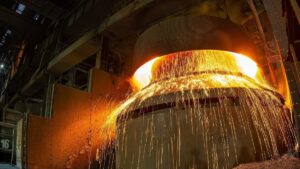
Metinvest, Ukraine’s largest mining and metallurgical holding company, increased steel production by 13% in January–June 2026 compared to the same period last year—to 1.026 million metric tons—and pig iron production by 18%, to 934,000 metric tons.
According to a press release from the parent company, Metinvest B.V., published on July 31, in the second quarter, pig iron production at Kametstal rose by 13% compared to the previous quarter—to 496,000 metric tons—while steel production increased by 26%, to 572,000 metric tons. This growth was driven by the stabilization of the power supply since March 2026.
In addition, the first-half figures were compared to a relatively low base from last year, when blast furnace No. 9 was shut down for major repairs in April–June.
Production of commercial semi-finished products in the first half of the year increased by 19% to 357,000 metric tons. Production of commercial pig iron more than doubled to 64,000 metric tons, while production of billets rose by 6% to 293,000 metric tons.
Production of finished steel products increased by 6% to 1.303 million metric tons. Output of long products rose by 6% to 717,000 metric tons, thanks to increased production volumes at Kametstal and the Bulgarian company Promet Steel.
Production of flat rolled products decreased by 1% to 545,000 metric tons. Specifically, output of hot-rolled coils fell by 9%, and that of galvanized cold-rolled coils by 2%, while production of hot-rolled heavy plate remained virtually unchanged at 431,000 metric tons.
Pipe output totaled 41,000 metric tons following the group’s acquisition of the Romanian company Metinvest Tubular Iași in December 2025.
In the second quarter, finished product output fell by 3% compared to the first quarter, to 642,000 metric tons. This was due to a 13% decline in flat-rolled steel output caused by a temporary shutdown of the rolling mill at the Italian company Ferriera Valsider in March–May.
Coke production in the second quarter rose by 9% to 279,000 metric tons following the stabilization of coal supplies. For the first half of the year, the figure remained at the same level as the corresponding period last year, totaling 535,000 metric tons.
Metinvest is a vertically integrated group of mining and metallurgical companies. The group’s production assets are located in Ukraine, European Union countries, and the United Kingdom. The main shareholders are the SCM Group, with a 71.24% stake, and Smart Holding, with a 23.76% stake.
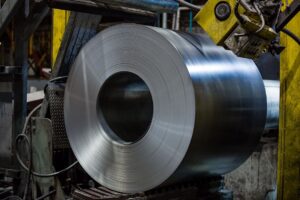
The Zaporizhzhia Metallurgical Plant “Zaporizhstal” reduced its rolled steel shipments by 6.3% in January–June of this year compared to the same period last year—to 1,272,200 metric tons from 1,317,500 metric tons.
According to the company’s press release, steel production for the first six months of the year totaled 1,442.9 thousand metric tons (compared to 1,564.1 thousand metric tons in January–June 2025), while pig iron production totaled 1,556.2 thousand metric tons (compared to 1,719.4 thousand metric tons).
In June, Zaporizhstal produced 301.2 thousand metric tons of pig iron and 284.9 thousand metric tons of steel, and shipped 243.7 thousand metric tons of rolled steel, whereas in the previous month it produced 242.1 thousand metric tons of pig iron, 243.4 thousand metric tons of steel, and shipped 208.9 thousand metric tons of rolled steel.
As reported, in 2025, Zaporizhstal increased its rolled steel output by 15.2% compared to the previous year—to 2,794.6 thousand metric tons from 2,426.7 thousand metric tons. Steel production amounted to 3,212,200 metric tons (compared to 2,890,800 metric tons in 2024), and pig iron production to 3,567,800 metric tons (compared to 3,106,300 metric tons).
In 2024, Zaporizhstal increased its rolled steel output by 18.1% compared to 2023—to 2,426,700 metric tons from 2,054,700 metric tons—and its steel output by 17.2%, to 2,890.8 thousand metric tons, and pig iron by 14.2%, to 3,106.3 thousand metric tons.
“Zaporizhstal” is one of Ukraine’s largest industrial enterprises, whose products are in high demand among consumers both in the domestic market and in many countries around the world.
Zaporizhstal is a joint venture of the Metinvest Group, whose main shareholders are PJSC System Capital Management (71.24%) and Smart Steel Limited (23.76%). Metinvest Holding LLC is the management company of the Metinvest Group.
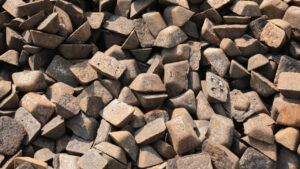
In January–April of this year, Ukraine increased its exports of processed pig iron by 11.2% in volume terms compared to the same period last year—to 638,303 thousand tons from 574,057 thousand tons.
According to statistics released by the State Customs Service (SCS), 181,670 thousand tons of pig iron were exported in April, 168,493 thousand tons in March, in February – 194,345 thousand tons, and in January – 93,795 thousand tons.
In January–April, pig iron exports in monetary terms increased by 7.6% – to $243.568 million from $226.282 million.
Exports were primarily directed to the United States (91.92% of shipments in monetary terms), Italy (3.73%), and Turkey (2.65%).
In the first four months of this year, the country did not import any pig iron, whereas in the first four months of last year, it imported 29 tons worth $55,000.
As reported, in 2025 Ukraine increased its pig iron exports by 53.5% in volume terms compared to the previous year—to 1,980,620 tons—and by 51.9% in revenue—to $759.882 million. Exports were mainly directed to the United States (68.25% of shipments in monetary terms), Italy (20.26%), and Turkey (3.63%).
Over the past year, the country imported 39,000 tons worth $78,000 from Germany (51.95%) and Brazil (48.05%), while in January–December 2024, 38 tons of pig iron worth $90,000 were imported.
Starting March 12, 2025, pursuant to a decision by President Donald Trump, a 25% tariff began to be levied on imports of Ukrainian steel products, excluding cast iron.
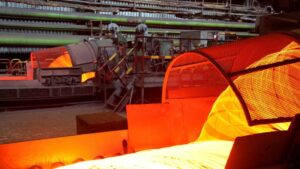
The Kametstal plant, part of Metinvest’s mining and metallurgical group and established at the Dniprovsky Metallurgical Plant (Kamenskoye, Dnipropetrovsk Oblast), has mastered the technology for refurbishing cast iron ladles for metallurgical enterprises.
According to a press release, Kametstal’s metallurgical equipment repair shop has mastered a new area of expertise: the repair of pig iron ladles. This decision is aimed at supporting the smooth operation of the blast furnace shop and will help effectively restore critical equipment in-house.
It is noted that this year’s launch of new services at the Central Repair and Maintenance Unit began with mastering the repair of cast iron ladles. This is a strategic move: the stable operation of the blast furnace shop directly depends on the number of ladles “in service.” Since the need to repair such equipment has grown, while personnel resources remain limited, the repair team has taken proactive measures. The team’s initiative, supported by the plant’s management, will address the shortage of operational equipment and ensure the stability and productivity of pig iron production.
According to the repair technology, restoration work is carried out based on the results of defect detection, which is conducted jointly with specialists from the blast furnace shop. This allows for the precise identification of weak spots and the scope of necessary repairs.
The main repair operations include sealing cracks on the vertical walls of the ladles, as well as eliminating through-wall damage in the bottom section. Such burn-throughs occur due to the aggressive action of molten iron in areas where the refractory lining is most worn. Repair crews cut out the damaged sections and replace them with new steel “patches.” Special attention is paid to the upper part of the ladle—the neck—where worn-out metal structures are replaced. The entire process involves a full cycle of technical work: dismantling damaged elements, manufacturing replacement parts, and their subsequent installation.
Dmytro Lubenets, head of the metallurgical equipment repair shop, explained that they approach the repair of each pig iron ladle individually: from defect detection and drawing development to in-house manufacturing of parts.
“The first restored unit has already returned to the blast furnace shop; we are currently restoring the second one. Since the results of the pilot repair are quite satisfactory, we decided, together with the blast furnace operators, to systematize this process: ladles that go out of service will be sent directly to the Central Repair and Maintenance Unit. This will allow us to quickly return them to service after repair and, thus, maintain the stability of the production process. In these difficult wartime conditions, such cooperation is crucial—it is our way of overcoming staff shortages and maintaining production momentum,” said the shop foreman.
It should be noted that CMU specialists have mastered the technology for repairing slag ladles with significant wear and defects. Previously, such ladles were written off for disposal and replaced with expensive new ones. In 2025, 15 ladles were repaired and returned to the blast furnace shop for further operation.
“Kametstal” was established on the basis of PJSC “Dniprovsky Coke Chemical Plant” (DKHP) and PJSC “Dniprovsky Metallurgical Plant” (DMP).
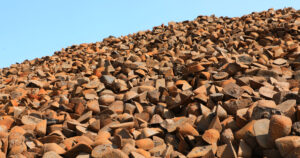
In January-April of this year, Ukraine increased exports of processed cast iron in physical terms by 37.4% compared to the same period last year, to 574,057 thousand tons from 417,941 thousand tons.
According to statistics released by the State Customs Service (SCS) on Tuesday, during the period in question, exports of pig iron in monetary terms increased by 46% to $226.282 million.
Exports were mainly to the US (83.05% of shipments in monetary terms), Italy (11.34%), and Poland (2.7%).
In the first four months of the year, the country imported 29,000 tons worth $55,000 from Brazil (68.52%) and Germany (31.48%), while in January-April 2024, 15 tons of pig iron worth $35,000 were imported.
As reported, on March 12 of this year, in accordance with a decision by President Donald Trump, the US began imposing a 25% tariff on imports of Ukrainian steel products, except for pig iron.
In 2024, Ukraine reduced exports of processed pig iron in physical terms by 3.4% compared to 2023, to 1 million 290.622 thousand tons, and in monetary terms by 6.1%, to $500.341 million. Exports were mainly to the US (72.64% of shipments in monetary terms), Turkey (8.03%), and Italy (7.30%).
In 2024, the country imported 38 tons of pig iron worth $90 thousand from Germany, while in the same period of 2023, it imported 154 tons of pig iron worth $156 thousand.
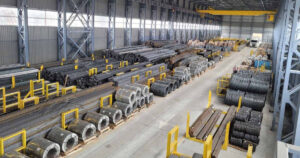
According to preliminary data, Ukrainian metallurgical enterprises increased their production of total rolled products in January-April of this year by 0.5% compared to the same period last year, to 1.982 million tons from 1.973 million tons.
According to information from the Ukrmetallurgprom association on Friday, steel production during this period increased by 1% to 2.425 million tons, and pig iron production increased by 8.1% to 2.363 million tons.
In April, 547,000 tons of rolled steel, 692,000 tons of steel, and 661,000 tons of pig iron were produced, compared to 478,400 tons of rolled steel, 550,500 tons of steel, and 563,200 tons of pig iron in the previous month.
As reported, Ukraine increased its total rolled steel production in 2024 by 15.8% compared to the previous year, to 6.222 million tons from 5.372 million tons. Steel smelting during this period increased by 21.6% to 7.575 million tons, and pig iron by 18.1% to 7.090 million tons.
In 2023, Ukraine increased its total rolled steel production by 0.4% compared to 2022, to 5.372 million tons, but reduced steel production by 0.6%, to 6.228 million tons, and pig iron production by 6.1%, to 6.003 million tons.
In 2022, the country reduced total rolled steel production by 72% compared to 2021, to 5.350 million tons, steel by 70.7%, to 6.263 million tons, and pig iron by 69.8%, to 6.391 million tons.
In 2021, 21.165 million tons of pig iron (103.6% compared to 2020), 21.366 million tons of steel (103.6%), and 19.079 million tons of rolled steel (103.5%) were produced.



