
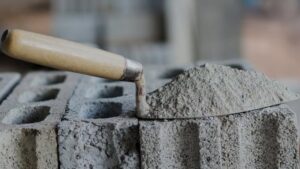
Members of the “Ukrcement” association expect the newly formed Cabinet of Ministers to engage in an open dialogue with the industry regarding problematic issues and to prioritize the interests of domestic producers, Lyudmyla Kripka, executive director and head of the scientific and technical information department at the “Ukrcement” association, told the “Interfax-Ukraine” news agency.
“We expect the new government to engage in an open dialogue and be willing to listen to the industry’s position on problematic issues. We hope that protecting domestic producers will remain a priority of state policy, and that there will be a timely and state-oriented response to the challenges currently facing the cement industry,” she noted.
Among the achievements of the current government, Kripka highlighted the successful harmonization of national standards with European Union legislation as part of the implementation of Ukraine’s Law “On the Supply of Construction Products to the Market.” In addition, she emphasized the support provided to domestic producers, which has been a key factor in maintaining the competitiveness of Ukrainian industry.
At the same time, despite numerous appeals by the Association and its partners to the government, it has not been possible to protect Ukrainian cement producers from the discriminatory impact of the CBAM (Carbon Border Adjustment Mechanism), Kripka added.
“The default CO2 emission values set for Ukraine have effectively become a barrier to the export of Ukrainian cement products to European Union countries,” she explained.
For building materials manufacturers, it is important that issues related to infrastructure development, national reconstruction, and industrial policy remain among the government’s priorities regardless of the organizational model of central executive bodies, Kripka said in response to a question about the possible separation of a standalone Ministry of Infrastructure from the Ministry of Community and Territorial Development.
“We believe that the effectiveness of public administration is determined not so much by the number of ministries as by the quality of their work, the level of coordination, and the speed of decision-making. Furthermore, any structural changes should not lead to delays in the implementation of government programs, duplication of functions, or complications in business interactions with government agencies,” the executive director concluded.
The “Ukrcement” Association was established in January 2004 through the reorganization of the Ukrainian Concern of Cement Industry Enterprises and Organizations “Ukrcement.” The association comprises five groups of companies, including nine cement plants.
CABINET OF MINISTERS, CBAM, CEMENT, RECONSTRUCTION, UKRCEMENT
The “Ukrcement” Association advocates for a measured increase in rail freight rates, which, on the one hand, will help JSC “Ukrzaliznytsia” (UZ) maintain its capacity to transport cargo, and on the other hand, will not lead to the closure of operating enterprises.
“As business representatives for whom rail transport accounts for more than half of all shipments, we have no interest in a scenario where transport collapses, just as we have no interest in the collapse of any industrial sector. Therefore, we are ready to cooperate to find a realistic solution to today’s complex situation. By agreeing to the tariff increase, we want to see where the additional payments from businesses will go and understand how delivery times to consumers and the turnaround time for empty railcars will be reduced,” said Pavlo Kachur, chairman of the “Ukrcement” Association.
He emphasized that UZ deserves respect and support for its work in transporting cargo for the front lines and national defense, but the situation with the freight transportation of products manufactured in Ukraine—both for the domestic market and for export—is becoming critical and requires joint, and possibly even emergency, measures and actions at the level of the Cabinet of Ministers. “This is not about a single industry or a specific plant, but about Ukraine’s economy as a whole. Therefore, it is the duty of manufacturers and Ukrainian Railways to work together to achieve a positive outcome,” noted the head of the cement manufacturers’ association.
The expert pointed out that, according to Ukrainian Railways, freight transportation remains profitable, businesses pay market rates for transportation, and an additional increase in tariffs is needed to cover losses from passenger transportation.
He highlighted the pressing problems facing the domestic railway: a lack of traction, an exodus of skilled personnel due to low wages, and the (chronic) unprofitability of passenger (especially commuter) transportation. In particular, the situation with traction is critical. According to Ukrzaliznytsia’s estimates, the current average speed of freight car transport is 37 km per day, compared to the standard of 200 km for single-car shipments and 300 km for scheduled services. The average daily number of scheduled locomotives not assigned to formed trains reaches 50.
“The top priority for improving transportation is to secure backup traction. The market expects Ukrzaliznytsia to present a program for modernizing its locomotive fleet as soon as possible. For our part, we see the most realistic and expedient solution to this problem as opening access for the transport of products using our own traction to the nearest marshalling yards. Ukrzaliznytsia’s experience with such transport operations, successfully tested by PJSC “Ivano-Frankivskcement,” has demonstrated its effectiveness and economic benefits for both the manufacturer and Ukrzaliznytsia, and could significantly free up Ukrzaliznytsia’s locomotives for more profitable operations,” Kachur believes.
He emphasized the staffing issue, noting that low wages are causing an exodus of skilled personnel (primarily locomotive engineers, assistant engineers, loaders, and station workers). “As a result of the tariff increase, competitive wages for employees involved in the transportation system—locomotive engineers, assistant engineers, train dispatchers, and station workers—must become a priority,” says the head of “Ukrcement.”
Regarding passenger transportation, he drew attention to the negative trend of increasing volumes of unprofitable passenger service against the backdrop of declining freight volumes. “The financial pressure on operating businesses due to the cross-subsidization mechanism is exceeding reasonable limits,” Kachur stated. In his view, before raising freight rates, Ukrainian Railways should propose a model for optimizing passenger transportation.
The business community expects Ukrainian Railways to take systematic and responsible steps—such as developing programs to modernize the locomotive and railcar fleets and establishing a model for commuter transportation. As soon as possible, the procedure for admitting private traction must finally be adopted (as provided for in regulatory documents), indicators for freight delivery and the circulation of empty railcars must be approved, and the issue of decommissioning railcars must be revised (based on technical condition rather than a calendar schedule).
“We need extraordinary measures, at least for the duration of the war, which will include a measured increase in freight rates, full transparency toward businesses and the public regarding the allocation of funds received from the rate increases—in particular, raising the salaries of locomotive engineers, assistant engineers, freight handlers, and station employees to market levels,” Kachur noted.
In his opinion, given the scale of the problems, the consideration and adoption of anti-crisis measures should take place at the level of the Cabinet of Ministers.
As previously reported, on Monday, the Ministry of Community and Territorial Development of Ukraine published a draft order providing for a 30% indexation of rail freight tariffs effective August 1, 2026, and the standardization of tariffs for the transportation of empty railcars. Ukrzaliznytsia plans to make a separate decision regarding the next stage of freight rate indexation, which could take effect on January 1, 2027.
According to the Ministry of Development, in 2025, freight volumes decreased by 12.5% compared to the previous year, and Ukrzaliznytsia’s net loss amounted to 7.6 billion UAH. In the first four months of 2026, the loss reached 9.3 billion UAH.
CEMENT, locomotive, TARIFF, UKRCEMENT, UKRZALIZNYTSIA, качур

Ukrainian cement exports to the EU are nearly blocked with the implementation of the second phase of the CBAM (Carbon Border Adjustment Mechanism); our country must take a proactive stance in supporting its own producers, emphasized Lyudmila Kripka, Executive Director of the “Ukrcement” Association.
“The conditions that the Ukrainian cement industry faced at the start of the second phase of the CBAM, that is, at the beginning of this year, can be more realistically described not as a ‘barrier’ but as an ‘embargo.’ We were assigned default CO2 emission values for cement from Ukraine at 1,518 kg/t of clinker, which is nearly double the actual figures, even using the wet production method,” Kripka said at the “Trade Wars: The Art of Defense” conference in Kyiv on Wednesday.
She also noted that there are currently no verifiers in the EU for the purposes of the CBAM, but even if there were, the arrival of European verifiers in Ukraine (a mandatory requirement in the first year) is unlikely due to the high level of security risks.
“Under such conditions, exports are impossible in principle! And we see the consequences: cement production has decreased, budget revenues have shrunk, and foreign exchange earnings have fallen, leading to an even greater imbalance in the country’s trade balance,” Kripka noted.
The “Ukrcement” Association, both on its own and together with partners whose products fall under the CBAM mechanism, appealed throughout 2025 to the government, the EC, and all stakeholders regarding the application of the declaratory principle for the duration of the war and reconstruction (this is possible under Part 7 of Article 30 of the CBAM Regulation on force majeure, which has devastating consequences for the economy and industrial infrastructure). However, according to Kripka, EC officials reassured them that the impact of the CBAM’s implementation on the Ukrainian economy would be minimal. First-quarter results showed that the impact is significant, effectively blocking exports.
“Currently, the EC acknowledges that the default value is incorrect; they also see a problem with the certification of verifiers, which concerns not only Ukraine but also EU countries. They promise to correct these issues within a month,” Kripka said.
According to her, these encouraging statements have prompted companies to resume exports, but the risk of catastrophic sanctions remains for companies and dealers that made these shipments.
At the same time, the cement industry is one of the leaders in domestic industry in terms of systematic preparation for the full launch of the CBAM.
“We have made significant progress in the use of alternative fuels, have concrete examples of launching our own ‘green’ power generation, conduct continuous emissions monitoring (CEM), and have verified these emissions using verifiers available in the country,” Kripka said.
Therefore, she emphasized, in response to the question “what is holding back the development of exports to EU countries,” one can point to “uneven competitive conditions.”
“We see that the world is shifting toward a model of economic pragmatism and the protection of domestic markets. Under these conditions, Ukraine has very limited time to adapt its economy to the new reality. “We must take a proactive stance in supporting our own producers,” Kripka explained.
She cited neighboring Poland as an example of healthy “aggressive pragmatism.” In 2024, Ukrainian cement exports to Poland totaled 854,000 tons. Poland produced 17.7 million tons of cement that year. In fact, exports from Ukraine accounted for 3.7% of Poland’s production. Meanwhile, front-page headlines in the press spoke of the “disappearance of Polish cement plants,” and an inter-factional parliamentary group called “Support for the Development of Poland’s Cement Industry” was established in the Polish Sejm.
Kripka emphasized that in order not to be left behind in industrial competitiveness, our country must take a proactive stance in supporting its own producers.

According to the results for January-September 2025, cement producer Mykolaivcement increased its net profit 1.9 times compared to the same period in 2024, to UAH 455.3 million.
According to information on the company’s website, income from ordinary activities for the first nine months of this year increased by 33.7% compared to the same period in 2024 and amounted to UAH 1.9 billion. Gross profit grew by 48.1% and reached UAH 706.3 million.
According to the company, its retained earnings in January-September 2025 decreased by 80.6% to UAH 109.5 million. Current liabilities in the reporting period increased by 56.8% to UAH 7 million, and long-term liabilities by 0.6% to UAH 1.29 billion. The total amount of the company’s assets in January-September decreased by 23.1% to UAH 1.8 billion.
The company reported that in the third quarter, it produced 204.5 thousand tons of products worth UAH 520.4 million. Sales amounted to 210.7 thousand tons worth UAH 835.8 million. Raw materials account for 64% of the production cost structure, electricity for 15.1%, and packaging for 6.8%.
As noted in the report, in the third quarter of 2025, Mykolaivcement’s activities were significantly affected by martial law, exchange rate fluctuations, and the political and economic situation in the country. A decrease in the amount of construction work due to martial law and a decline in the purchasing power of potential customers led to a decrease in demand for products.
In addition, the company reported that the shortage of skilled workers, the slow pace of Ukraine’s economic recovery, and other macroeconomic and geopolitical factors pose significant challenges for the company.
According to the National Securities and Stock Market Commission (NSSMC), as of the first quarter of 2025, the sole shareholder of PJSC Mykolaivcement is the Dutch company CRH Ukraine B.V. (100%).
Mykolaivcement is part of the CEMARK group of cement manufacturers and the CRH group of building materials manufacturers.
CRH is a leading manufacturer of building materials in the world and the largest in North America and Europe. It has 3,200 businesses in 28 countries, employing approximately 71,000 people.
The company also has a presence in Asia. CRH’s American depositary shares are listed on the New York Stock Exchange.
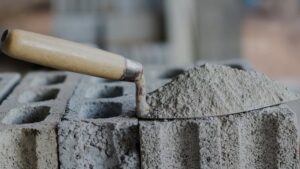
The Experts Club information and analytical center, with the assistance of the Ukrainian Cement Manufacturers Association (Ukrcement), has conducted an analysis of the Ukrainian cement industry.
Over the past five years, the Ukrainian cement industry has experienced a peak in production in 2021, a sharp decline in 2022, a gradual recovery in 2023, and stabilization in 2024. However, the current level is still far from pre-war indicators.
According to trade union and industry reviews, output was about 11 million tons in 2021, fell to 5.4 million tons in 2022, recovered to 7.43 million tons in 2023, and reached 7.93 million tons in 2024. In 2025, manufacturers are talking about an actual “ceiling” — approximately 8 million tons under current risks and logistics, which is likely to be the maximum figure.
The dynamics of domestic cement consumption show a similar trend of “decline and normalization.” In 2021, before the full-scale invasion, consumption was around ~10.6 million tons. In 2022, the cement market fell sharply to approximately 4.5 million tons, rose to 6.2 million tons in 2023, and stabilized at around 6.3 million tons in 2024. Thus, the country approached a stable level of “war” demand, which is almost half of the pre-war level, within the range of 6–6.5 million tons.
The structure of demand has changed: the share of traditional residential and commercial construction has given way to infrastructure and defense projects. The key short-term drivers are fortification works, shelters, emergency repairs of roads and bridges, as well as targeted housing programs such as “єОселя,” which supported demand in 2023–2024, although they did not return it to the 2021 level. The market expects demand to remain stable in 2025, sensitive to the volume of budgetary and international financing.
Amid declining domestic demand, a natural step to support production capacity utilization was the gradual reorientation of part of the cement output to foreign markets. In 2021, cement exports amounted to about 971,000 tons (9% of production), and in 2024, about 1.7 million tons (21.3% of production). The main destinations remain neighboring countries—Poland, Romania, Hungary, and Moldova—as confirmed by both statistical data and industry estimates. The industry has repeatedly emphasized that as soon as domestic consumption begins to grow, the export share will decline in favor of Ukrainian construction sites.
Imports, on the contrary, have declined. After approximately 1 million tons in pre-crisis 2020, deliveries in 2024 decreased to ~40 thousand tons (including niche items such as white cement). This was also influenced by anti-dumping duties: against Turkey — 33–51% (in effect until September 2026), and against Russia/Belarus/Moldova, measures have been extended until 2030. Under the current conditions, when production capacities and logistics are adapted to the “military” level of consumption, demand is fully covered by domestic resources.
The market structure in 2024–2025 is highly concentrated. The key producers are PJSC Ivano-Frankivskcement, the CRH group (after the AMCU approved the deal to acquire CRH’s Dyckerhoff/Buzzi assets — PJSC VIPCEM, Podolsky Cement JSC, Mykolaivcement PJSC, Cement LLC) and Kryvyi Rih Cement PJSC. Despite market discussions, legal disputes, and attention from antitrust authorities—which is to be expected for transactions of this scale—the CRH deal creates potential for integration into global production and logistics chains, attracting new investments, modernizing production, and raising the standards of the competitive environment. In the context of the country’s future large-scale recovery, the agreement opens up opportunities to strengthen supply stability, improve product quality, and develop a competitive environment.
Who is currently driving domestic consumption? In peacetime, the main stabilizers of demand were mass housing construction and infrastructure. In 2023–2025, basic demand will be driven by roads and engineering structures (including fortifications and shelters), municipal and energy facilities, selective reconstruction projects, as well as the private sector — repairs and local construction.
Road construction is an important factor in economic and social development. The introduction of the latest technologies, the use of high-quality materials, and compliance with environmental requirements are key aspects of the successful development of this industry.
The development of the construction and repair of cement concrete roads based on cement mixtures can play a key role in stimulating stable cement consumption in conditions of war and reconstruction. This infrastructure direction makes it possible to maintain the production capacity of enterprises, jobs, and economic activity, despite a significant reduction in residential and commercial construction. Thanks to their durability and endurance, cement concrete pavements are the optimal solution for both military and civilian logistics. The implementation of such projects not only ensures constant demand in the industry, but also the development of related sectors, creating a multiplier effect for the economy even in crisis conditions. This issue will be the focus of a specialised seminar organised by NIRI and the Ukrcement Association on 15-16 October 2025, where the advantages and role of cement concrete solutions in the reconstruction of Ukraine will be discussed (details at ukrcement.com.ua).
In terms of sales channels, the market remains predominantly B2B: most of the cement is purchased by contractors, road and infrastructure companies, large developers, reinforced concrete manufacturers, and concrete plants. The B2C channel (retail chains of building materials, small contractors) continues to play a significant role in repairs and low-rise construction, but in terms of total volume, it is inferior to the project segment. Industry reviews of construction projects and reports on fortification works in 2024–2025 provide further confirmation of the “infrastructure” shift.
The geography of foreign sales shows a stable “corridor” and proximity to the EU. According to trade statistics for 2023, Romania accounted for the largest value of supplies, followed by Poland and Hungary; in 2024, Romania, Poland, and Hungary remained in the lead.
This reflects shortages in the EU border markets and the competitiveness of Ukrainian prices with close logistics.
What limits growth. Military risks and energy infrastructure (in particular, the availability of electricity), regional logistics, as well as regulatory and competitive issues. A large-scale jump in consumption (approximately 12–13 million tons) requires a steady inflow of investment resources for reconstruction of around $35 billion per year — the association considers such a scenario to be technically and operationally realistic. Predictable competition rules and price monitoring are important in the equation so that the “reconstruction” multiplier is not absorbed by costs.
Conclusion by Experts Club. The industry has found a “military balance”: production of about 8 million tons, domestic consumption of ~6.3 million tons, and exports as insurance at the level of 1.5–1.7 million tons. With the scaling up of energy restoration and strengthening programs, a shift from exports to the domestic market is logical. The key to acceleration is stable financing of infrastructure and housing, affordable energy, and maintaining fair competition between major players. In such a scenario, cement remains one of the first materials that quickly transforms the budget into employment and GDP — through concrete, reinforced concrete structures, roads, and fortifications.
Sources: Global Cement (production and consumption; import duties), Interfax-Ukraine/Ukrcement (exports in 2024; estimates of reconstruction needs), OEC (export destinations in 2023), CEMBUREAU (imports, exports, and consumption, in particular the benchmark for 2024), industry and business media regarding the CRH/Dyckerhoff deal and the competitive situation.
Source: https://expertsclub.eu/rynok-czementu-ukrayiny-doslidzhennya-experts-club/
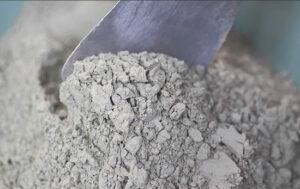
Ukraine has extended anti-dumping duties on imports of cement from Moldova, Russia, and Belarus, as well as coated rolled metal products from China and Russia, for five years. According to a statement released by the
Ministry of Economy on Thursday, the decision was made by the Interdepartmental Commission on International Trade (ICIT) on May 21, 2025, following appeals from Ukrainian companies.
“If you are a manufacturer and face aggressive non-market competition, please contact the Ministry of Economy to initiate anti-dumping investigations. Ukraine adheres to the principles of openness but is ready to protect its market in accordance with WTO rules,” the release quotes First Deputy Prime Minister and Minister of Economy Yulia Svyrydenko as saying.
As reported, in 2019, the ICIT imposed anti-dumping duties on imports of cement clinker and Portland cement to Ukraine under codes 2523 10 and 2523 29, at the following rates: 57.03% on cement from Belarus; 94.46% on cement from Moldova; 114.95% on cement from Russia. The duties were imposed for a period of five years. In May last year, at the request of Dickerhoff Cement Ukraine, Ivano-Frankivskcement, supported by
Kryvyi Rih Cement, the ICIT initiated a review of these duties, which extended their validity for up to one year.
As it became known at the conference “Trade Wars: The Art of Defense,” organized by Ilyashev & Partners in Kyiv this week, Lafarge Ciment (Moldova) SA offered voluntary price restrictions in order to return to the
Ukrainian market. Market participants called for the proposed prices to be made public.
As for imports into Ukraine of certain types of rolled steel with anti-corrosion coating originating from Russia and China, anti-dumping measures were introduced in 2019 for five years for manufacturers/exporters of goods from Russia at a rate of 47.57% and from China at a rate of 22.78%. In May last year, at the request of PJSC Mariupol Metallurgical Plant named after Ilyich and LLC Unistil, the MCMT launched a new investigation as part of a review of these duties.
BELARUS, CEMENT, CHINA, IMPORT, MOLDOVA, rolled metal, RUSSIA



