
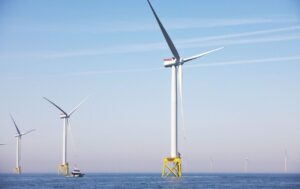
The Ukrainian industrial company Interpipe has joined another project in the renewable energy sector, supplying pipes for an offshore wind farm in the North Sea off the coast of the United Kingdom.
According to the company, construction of the plant, located 69 km off the coast of Suffolk, England, is in its final stage—the installation of turbines.
As specified, Interpipe’s pipes were previously used in the construction of the foundations for the future wind turbines. The company’s products serve as a mooring system near the wind turbine foundations, where service personnel boats can dock. In total, nearly 2,500 tons of pipes of various sizes were manufactured and shipped for this project.
“The distinctive feature of the pipes for this order lies in their wall thickness and the need to adhere to geometric parameters, as well as in the requirements for the metal’s corrosion resistance in a marine environment. It is very important for us to meet the expectations of our customers and end-users,” explained Jorge Ruiz, sales manager for pipes in European markets.
The project is scheduled to launch in late 2026 – early 2027. The plant will generate at least 1.4 GWh of electricity and will be able to supply over 1.3 million households.
Interpipe is a Ukrainian industrial company and a manufacturer of steel pipes and railway products. The company’s products are supplied to 70 countries worldwide through a network of sales offices located in key markets in the Middle East, North America, and Europe. In 2025, the company contributed 5.556 billion UAH to budgets at all levels.
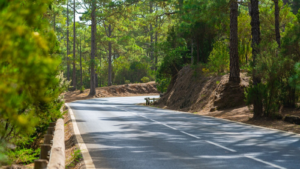
The state-owned enterprise “Forests of Ukraine” will resume work on 25 projects involving the construction of forest roads with a total length of nearly 90 km in April, the company’s press service announced on Facebook. According to the report, construction of the projects began in the fall of 2025 in the Carpathian, Northern, Podillia, Polissia, and Kyiv branches. Work was suspended for the winter, but contractors are now resuming the projects.
“During the construction of forest roads, temporary storage sites are being established for the storage, sorting, and shipment of forest products. Road signs and signal posts are being installed. Economic and social factors are being taken into account during implementation, and fire safety measures are being ensured,” stated “Forests of Ukraine.”
According to the state-owned enterprise, a new road in the Nadvirna Forest District, over 2 km long, will provide access to forest stands with a timber stock of 22,700 cubic meters. In the Korosten Forest District, the completion of a 3-kilometer road will shorten the route for logging trucks by 10 km. It is expected that thanks to logistics optimization, the cost per cubic meter of timber in this area will decrease by approximately 20%.
“Forests of Ukraine” clarified that construction in the Putyl Forest District will shorten the route for residents of mountain settlements to the district center by 10 km. In addition, major repairs to the road in the Mekshuniv Forest District (Chernihiv Oblast) will ensure that firefighting equipment can reach a body of water, which will be equipped with a pier for rapid water intake.
Overall, the state-owned enterprise plans to build 60 forest roads with a total length of over 200 km by 2026.

On 26 March, the Parkovy Exhibition and Convention Centre hosted the 2026 Investment and Construction Congress, as well as the REM Awards and ‘Interior of the Year. Real Estate 2026’ ceremonies, which brought together 4,033 participants – developers, investors, architects, and representatives from government and business.
According to the organisers, this year’s congress was dedicated to the role of real estate and development as tools for economic growth, Ukraine’s recovery and the transformation of the urban environment.
The event featured an official opening attended by representatives of state and city authorities, as well as a press conference entitled “Urban Environment Development Strategy: Me, You, Society”, which set the tone for the event. The programme also included a panel discussion titled “The Property Market in 2026”, a discussion on the interaction between developers and estate agents, a session on factors driving property value growth, and a discussion on urban planning reform.

According to the organisers, the key takeaways from the congress were the market’s transition from a phase of adaptation to the formation of a new model, the growing role of development in the country’s reconstruction, a shift in focus from square metres to the quality of the environment, and the increasing importance of trust, reputation and human capital for companies in the sector.
The evening part of the event included the presentation of awards to the winners of the REM Awards and the ‘Interior of the Year 2026’ competition, as well as a charity auction and a special performance by Valery Kharchyshyn, frontman of the band ‘Druga Rika’.
The general partner of the event was ‘Creator-Bud’, the premium partner was Europzol, and the general media partners were ‘Interfax-Ukraine’ and ‘Focus’. The event was organised by the DMNTR media group.
Details about the congress and a photo report have been published on the event’s official website.
Interfax-Ukraine is the official information partner of the event.

Karmel (Khmelnytskyi), a manufacturer of concrete plants, plans to invest $10 million in the construction of another plant in Khmelnytskyi for the production of concrete manufacturing equipment, according to Dmytro Kysilevsky, deputy chairman of the Verkhovna Rada Committee on Economic Development.
“As part of its expansion plans, Karmel has purchased a plot of land on the outskirts of Khmelnytskyi for the construction of a new plant to produce concrete manufacturing equipment. The future plant will cover an area of 18,000 square meters—twice the size of the company’s current plant operating in Khmelnytskyi. Earthwork has already begun on the acquired site,” he wrote on his Facebook page on Monday.
Kysilevsky added that the decision to expand production was made in response to growing demand in domestic and export markets, particularly in the U.S.
“The company’s new production site will allow us to triple our capacity for manufacturing concrete plants. Additionally, we plan to launch production of new equipment—self-propelled concrete plants, as well as waste processing lines,” the MP noted.
Currently, according to his data, the company’s production volume stands at 40 concrete plants per year. Thirty percent of the equipment produced is exported.
In addition to stationary and mobile concrete mixers, the plant manufactures silos, cement dispensers, aggregate hoppers, water towers, and gantry cranes designed in-house.
Kysilevsky noted that the average localization rate for equipment manufactured by the Karmel plant is 70%, and products are sold on the domestic market, in particular, through the “Made in Ukraine” policy aimed at supporting Ukrainian manufacturers.
Specifically, concrete plant equipment is covered by a state program that compensates 15% of the cost of Ukrainian-made machinery, and a significant portion of the plant’s products is purchased using state grants of up to 8 million UAH.
“The company is currently considering the possibility of including its silos in the program to compensate 25% of the cost of agricultural machinery products,” the MP said.
According to information on its website, Karmel was founded in 1997. The company specializes in the manufacture of concrete production plants, concrete mixers, and a wide range of related equipment. The company’s production facilities, with a total area of over 40,000 square meters, are located in Ukraine and abroad. KARMEL has representative offices in Europe, Asia, and Africa, and its exports cover more than 20 countries.

Construction has begun on the Tera Hall shopping and entertainment center (Chernivtsi, 236 Ruska St.), with its opening scheduled for the third quarter of 2028, according to the press service of the consulting firm Retail & Development Advisor (RDA), which serves as the exclusive broker for the shopping center.
According to RDA CEO Andriy Lototsky, the total area of the four-story complex will be 16,150 square meters, with 11,600 square meters dedicated to retail. The shopping center’s anchor tenants will be the Silpo supermarket and the Kraina Mriy children’s entertainment center. Other retail chains will include stores selling clothing and footwear, home goods, household appliances, jewelry, books and stationery, as well as impulse-buy items and service providers. According to him, the project’s target audience will be families with children, motorists, and active young people aged 20–40, and the estimated projected traffic for the shopping center will be approximately 10,000 visitors per day on weekdays and 13,000–14,000 on weekends.
As Tera Hall Director Svitlana Gomeniuk clarified, the permit for the construction of the shopping center was obtained in January 2026, after which preparatory work began on the site. By the end of this year, the developer plans to complete the monolithic and main structural work.
“It is of fundamental importance to us that the complex complies with modern building codes, safety standards, and energy efficiency requirements. Solar panels are planned for its roof, which will ensure autonomous power supply, and heating will be provided by its own gas boiler room,” Gomenyuk said.
The preliminary design of the complex was developed in collaboration with the architectural firm Guess Line Arch. As part of the project, the developer will also build a large parking lot with 240 spaces; in case of air raid alerts, the shopping center will feature a shelter designed to accommodate 1,500 people.
Retail & Development Advisor is a Ukrainian consulting company that provides a full range of services in the field of retail and office real estate. It offers services in architectural concept development, brokerage, property management, outsourcing of shopping center development/leasing departments, market analytics, and more.
CHERNIVTSI, CONSTRUCTION, Kraina Mriy, SHOPPING MALL, Tera Hall, СИЛЬПО

According to Serbian Economist, Serbia plans to start construction of its first nuclear power plant by 2035 and is cooperating with French energy company EDF as part of its preparations, Minister of Mining and Energy Dubravka Jedovic Handanovic said in an interview with RTS.
The minister stressed that EDF can help Serbia with its experience and knowledge in preparing the project. At the same time, she said, no decision has yet been made on the specific technology for the future nuclear power plant.
The preparatory process for the construction of the nuclear power plant is estimated to take approximately four years: by mid-2027, the authorities intend to complete the first phase, which involves analyzing the regulatory framework and requirements, after which the second phase, including preparation for construction, will begin. The ministry noted that the first additional studies are planned to be carried out jointly with EDF with the support of the French Development Agency (AFD) on the basis of an intergovernmental agreement between Serbia and France.
Against the backdrop of the launch of the nuclear agenda, Serbia is simultaneously in contact with other potential partners and technology suppliers.
Potential partners and companies involved in the preparation and negotiations:
France – EDF (as well as Egis Industries as part of the preliminary technical study contractors).
Serbia also signed a memorandum with Korea Hydro & Nuclear Power (KHNP, South Korea) on cooperation in the field of nuclear energy and personnel training.
Serbia considered Rosatom (Russia) as a possible partner for the exchange of experience.
Separately, it was reported that Emirates Nuclear Energy Company (ENEC, UAE) was ready to share its roadmap for the development of a nuclear program.
The United States (agreements/information exchange between regulators and willingness to support program preparation) and China (memorandum with the China Institute of Atomic Energy) were also mentioned in the context of contacts.
https://t.me/relocationrs/2404



