
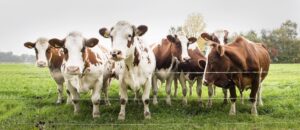
As of August 1, 2026, the cattle herd in Ukraine had decreased by 15,900 head, or 0.9%, compared to July 1—to 1.751 million head, while the number of cows decreased by 8,600 head, or 0.9%, to 932,600 head, according to the Association of Milk Producers (AMP), citing preliminary data from the State Statistics Service (SSS).
Compared to August 1, 2025, the cattle herd decreased by 400,000 head, or 19%, and the number of cows fell by 208,000 head, or 18%.
The industrial sector held 953,000 head of cattle, which is 2,000 head, or 0.2%, fewer than a month earlier, but 29,500 head, or 3%, more than a year ago. The number of cows on agricultural enterprises decreased by 3,800 head, or 1%, over the month—to 392,800 head—but increased by 11,200 head, or 3%, over the year.
Private households kept 798,100 head of cattle, which is 14,000 head, or 1.7%, fewer than a month earlier, and 430,000 head, or 35%, fewer than a year ago. The number of cows in this sector decreased by 5,000 head, or 0.9%, over the month—to 539,800 head—and by 219,000 head, or 29%, over the year.
“The cattle herd in Ukraine, including cows, continues to shrink, primarily due to the decline in the backyard farming sector. The commercial sector increased its cow herd compared to the same period last year. However, farmers sold off part of their cows in July,” the AVM noted.
According to the association, the recovery of the herd is being negatively affected by rising production costs for raw milk, low purchase prices, and the likely increase in feed costs. According to preliminary data from the State Statistics Service, cattle slaughter volumes in January–July 2026 totaled 79.24 thousand metric tons, which is 6% more than last year.
The largest number of cows in the commercial sector were kept in the Poltava region—52,400 head; Cherkasy—46,100; Chernihiv—38,000; Kyiv—35,400; and Khmelnytskyi and Vinnytsia—32,500 head each. In total, these six regions account for about 60% of the cows in Ukraine’s commercial sector.
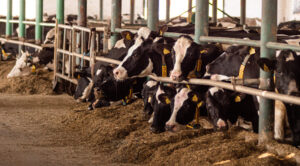
According to experts.news, as of June 1, 2026, there were 1,786,900 head of cattle in Ukraine, including 941,200 cows, the Milk Producers Association reported on June 26, citing preliminary data from the State Statistics Service.
Compared to June 1, 2025, the cattle herd decreased by 383,000 head, or 18%, while the number of cows decreased by 208,000, also by 18%. Over the month, the total cattle herd increased slightly—by 2,100 head—while the number of cows decreased by 3,300.
About 53% of the herd is held by agricultural enterprises, with the remaining 47% held by private households.
In the industrial sector, there were 951,200 head of cattle as of early June, including 391,900 cows. Over the year, enterprises increased their cattle herd by 4% and their number of cows by 3%.
At the same time, private households held 835,700 head of cattle, of which 549,300 were cows. Over the past year, the private sector lost 33% of its cattle herd and 28% of its cows. It is precisely this reduction in livestock holdings by private households that remains the main cause of the overall decline in the country’s figures.
An increase in the number of cows at agricultural enterprises was recorded in 11 regions. The largest increases in herd size were observed in Rivne Oblast (29%), Lviv Oblast (22%), Kharkiv Oblast (13%), Ternopil Oblast (11%), and Khmelnytskyi Oblast (9%). In Kyiv Oblast, the number of cows in the commercial sector increased by 3%.
The largest cattle herds across all farm categories were held in Poltava Oblast—168,000 head, Vinnytsia Oblast—160,000, Khmelnytskyi—143,400, Odesa—131,600, Chernihiv—126,100, Cherkasy—125,400, and Kyiv—105,700 head. These seven regions accounted for approximately 54% of the country’s total cattle population.
The Milk Producers Association attributes the decline in the herd size to low milk purchase prices, rising costs of feed, fuel, and fertilizers, insufficient farm modernization, and the consequences of hostilities. Farms in frontline regions are also forced to transport their livestock to central and western regions.
According to the association’s estimates, approximately 850 of Ukraine’s 1,375 thousand dairy farms require renovation to meet European standards for animal husbandry. The estimated investment need is approximately EUR219 million.
At the beginning of 1991, Ukraine had 24,623,400 head of cattle, including 8,378,200 cows. By early 2001, the cattle herd had declined to 9,424,000 head, and the number of cows to approximately 4,958,000.
In 2013, Ukraine had 4.646 million head of cattle and 2.554 million cows. As of early 2021, these figures stood at 2.874 million and 1.673 million head, respectively.
As of January 1, 2025, the cattle herd was estimated at 2.002 million head, including 1.155 million cows. By the beginning of 2026, these figures had fallen to 1.804 million head of cattle and 1.022 million cows.
Thus, from the beginning of 1991 to the beginning of 2026, the total cattle herd in Ukraine decreased by approximately 92.7%, or 13.6 times. The number of cows decreased by 87.8%, or 8.2 times.
By June 1, 2026, the number of cows fell below 1 million heads for the first time—to 941,200. Compared to 1991, this represents a decline of nearly 89%, or 8.9 times.
When comparing long-term indicators, changes in statistical coverage should be taken into account. Data for 2015–2021 do not include the temporarily occupied Crimea, Sevastopol, and parts of the Donetsk and Luhansk regions, while figures from 2022 also exclude other occupied territories and parts of combat zones.
Despite the sharp overall decline in livestock numbers, industrial dairy farms in relatively safe regions are partially increasing their herds of productive cows. However, this is not yet sufficient to compensate for the mass exodus of smallholder farms from livestock production.
https://www.experts.news/posts/poholivya-vrkh-v-ukrayini-za-rik-skorotylosya-na-18
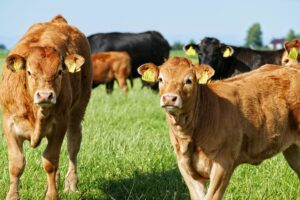
As of July 1, 2026, the cattle herd on agricultural enterprises in Ukraine had increased by 4% compared to the same date last year—to 955,200 head, while on private farms it decreased by 35%—to 811,800 head, according to the Association of Milk Producers (AMP), citing preliminary data from the State Statistics Service (SSS).
According to State Statistics Service data, as of July 1, 2026, there were 1.767 million head of cattle in Ukraine, including 941,200 cows.
About 54% of the cattle herd was kept on agricultural enterprises, and another 46% on private farms.
Agricultural enterprises had 396,600 cows, which is 4% more than a year ago, while the number of cows on private farms decreased by 29% to 544,600 head.
“The cow herd is shrinking mainly in the backyard farming sector but remains relatively stable in the commercial sector. The decline in the cattle herd is a long-standing problem in Ukraine due to the lack of an effective government program to support dairy farming. Since 2014, the cow herd in the commercial and backyard farming sectors has nearly halved, and the situation has been further exacerbated by Russia’s full-scale invasion and unfavorable market conditions,” the AVM emphasized.
The association noted that the recovery of the herd is being negatively impacted by low milk purchase prices, rising production costs, the relocation of farms from frontline regions, and adaptation to EU environmental and phytosanitary requirements.
According to the AVM’s assessment, without the modernization of dairy processing plants and an increase in purchase prices, there is a risk of a further reduction in the herd size, as farmers are increasingly selling their livestock amid high global beef prices.
According to the State Statistics Service, the largest herds of dairy cows in the commercial sector are concentrated in Poltava Oblast—52,800 head, Cherkasy Oblast—46,000 head, Chernihiv Oblast—38,800 head, Kyiv Oblast—35,600 head, and Vinnytsia Oblast—33,000 head. In total, these five regions account for about 52% of Ukraine’s commercial cow herd.
CATTLE, Cow, FARM, livestock farming, State Statistics Service
The cow herd in Ukraine will continue to shrink and, as of January 1, 2028, could fall to 917,000 head, compared to an estimated 1.055 million head at the beginning of 2026, while milk production, after many years of decline, will stabilize at around 6.7 million metric tons per year, according to the study “The Dairy Industry of Ukraine in the Context of European Integration.”
Vadym Chagarovsky, Chairman of the Ukrainian Dairy Enterprises Association, noted during the study’s presentation at Agro Ukraine Week 2026 that despite the steady decline in the cow herd in Ukraine, productivity is rising and the volume of milk sent for processing is increasing.
According to the study, the total dairy cow herd across all farm categories decreased from 2.018 million head in 2018 to 1.055 million head in 2026, a decline of 48%.
The largest decline is occurring on private farms, where the herd size decreased by 55% between 2018 and 2026—to 660 thousand head—and may fall to 500 thousand head by 2028.
At the same time, following a prolonged decline, the herd size at agricultural enterprises is projected to grow from 395 thousand head in 2026 to 417 thousand head in 2028.
Milk production in Ukraine has also declined in recent years—from 10.2 million metric tons in 2017 to 6.9 million metric tons in 2025, or by 33%.
At the same time, the study’s authors predict that the long-standing decline in milk production will come to an end and that production will stabilize at 6.7 million metric tons in 2026–2027.
Milk production at agricultural enterprises will continue to grow—from 3.4 million metric tons in 2026 to 3.7 million metric tons in 2027—while production on private farms will decrease from 3.3 million metric tons to 3 million metric tons, respectively. The share of industrial milk production is forecast to increase from 46% in 2025 to 55% in 2027.
Chagarovsky also emphasized that the Ukrainian dairy industry retains its potential for growth thanks to industrial production and the modernization of enterprises.
According to the study, Ukraine’s dairy industry currently produces 6.9 million metric tons of milk per year, accounts for about 0.25% of GDP, and generates 124 billion hryvnia in output. Ukraine’s share of global milk production stands at 0.7%.
To transition to an industrial model of sector development and increase production to 10 million metric tons of milk per year, investments totaling EUR9 billion are needed to establish a raw material base. Specifically, this includes increasing the herd by 750,000 cows and constructing approximately 700 industrial dairy farms. According to the study’s authors, an additional EUR6 billion needs to be allocated to modernizing and expanding processing capacities.
The study “Ukraine’s Dairy Industry in the Context of European Integration” was prepared by the Ukrainian Dairy Industry Association.
Cow, dairy industry, EUROPEAN INTEGRATION, INVESTMENTS, MILK, PRODUCTION
Industrial dairy farming in Ukraine continued to recover in 2025, with the number of cows on farms and individual enterprises increasing by 2.3% and raw milk production increasing by 7.6% over 10 months, according to the Ukrainian Dairy Industry Association (UDIA).
“This year, dairy farms will produce 0.2 million tons of milk more than in 2024, and milk supplies for processing will exceed 3.6 million tons (compared to 3.2 million tons last year). These results were made possible by favorable prices in 2023-2024, which stimulated active investment in the construction and expansion of farms,” the business association noted.
The SMPU noted that the situation worsened in the fall due to a sharp drop in world prices: butter in the EU fell in price by more than 30%, cheese by almost a quarter, and the price of dry milk fell significantly. This led to a decline in purchase prices for raw milk worldwide: FrieslandCampina has lowered them by almost 25% since August; prices have fallen in the US, New Zealand, and Mercosur countries. Since November, the decline has also significantly affected Ukraine, and it will continue in winter.
Globally, the low cost of raw materials could lead to bankruptcies among small farms, especially in the EU. Ukraine has a certain advantage in this situation, as it follows the “American model” with large dairy farms (averaging 300+ cows), modern technologies, its own feed base, and lower credit burdens.
“After the end of the price crisis, which is estimated to last until spring 2026, the global supply of milk will decline and prices will begin to recover. This will create new opportunities for the entire Ukrainian dairy sector, both milk suppliers and processors,” emphasized the association of dairy producers.
The SMPU called on milk suppliers to work together to develop long-term contracts.
As of November 1, 2025, there were 2.2 million head of cattle in Ukraine’s private and industrial sectors, including 1.11 million cows, which is 3% and 1% less than in October of this year and 10% and 10% less than in the same period last year, according to the Association of Milk Producers (AMP), citing data from the State Statistics Committee.
The industry association specified that about 47% of animals are kept on industrial farms, and 53% on private farms.
According to the AMU, the industrial sector has 947,100 head of cattle, which is 2,000 head more (+0.2%) than on October 1, 2025. The number of cows is 384,100, an increase of 500 head (+0.1%) over the last month. Over the past year, the number of cattle on farms has increased by 28,600 (+3%), and the number of cows has increased by 8,800 (+2%).
At the same time, there are 1.74 million head of cattle in the private sector, which is 64 thousand head (-6%) less than on October 1, 2025. As of November 1, 2025, the number of cows in private households was 721,200, which is 17,000 (-2%) less than a month ago. Over the past year, the number of cattle in private households has decreased by 253,000 (-19%), and the number of cows has decreased by 137,000 (-16%).
AVM analyst Georgy Kukhaleishvili noted that the number of cows is declining mainly in the private sector. The decline in cattle numbers is a long-standing problem in Ukraine due to the lack of an effective state program to support dairy farming. The war has only exacerbated the situation.
The expert recalled that most farms in Ukraine were built in the 1970s and 1980s and no longer meet the requirements for keeping animals. The lack of premises suitable for keeping cows creates the conditions for a further reduction in livestock numbers. Many farmers are not investing in increasing their cow herds during the war and are experiencing a shortage of working capital. Farmers’ production costs are rising faster than the prices of finished products due to the increase in the cost of feed, the cost of electricity, the devaluation of the hryvnia, and the decline in the purchasing power of the population.
However, dairy farms in relatively safe regions of Ukraine are modernizing existing facilities and building new ones. They are also increasing their high-yielding cow herds. According to AVM estimates, as of November, at least 40 farms are modernizing and expanding their facilities.
However, in October, the growth rate of the cow herd in the industrial sector also slowed down, which may be related to the continuing “bearish trend” in the dairy market and the decline in prices for exchange-traded commodities and raw milk. Over the past month, the number of cows has not changed and has not grown on dairy farms in 14 regions, not only in the frontline regions, but also in relatively safe areas of central and western Ukraine, such as Ivano-Frankivsk, Chernivtsi, Zhytomyr, Cherkasy, and Kirovohrad regions, the AVM summarized.



