

According to the Interfax-Ukraine Culture project, the novel “Null” (“Zero”) by Polish writer Szczepan Twardoch, dedicated to the war in Ukraine, won in the “Fiction” category of the Książka Roku 2025 reader poll on the Polish platform Lubimyczytać, as reported on the platform’s website .
“The novel ‘Null’ is a story about war, memory, and what war does to a person,” note the organizers of the Książka Roku poll on the Lubimyczytać platform
The Lubimyczytać announcement notes that this year, readers cast 277,259 votes across 16 categories, and the winners were announced during a ceremony at the International Book Fair in Poznań.
In the fiction category, Twardoch’s novel beat out Valérie Perrin’s “Colette” and Jakub Malecki’s “Obiekty głębokiego nieba.” The “Null” platform describes it as a painfully contemporary story about the war in Ukraine, which was initially conceived as an essay for a German publisher but later evolved into a full-fledged novel.
As the poll organizers note, the book combines themes of war, historical memory, and the human experience of history, and raises questions about what war does to a person. This is not Twardoch’s first such recognition: last year, his novel “Korowód” won in this same category. In addition, “Null” previously also received an award as an Empik network bestseller.
The novel was published in February 2025 by Marginesy. Translations into German, Slovak, and Belarusian have since appeared, and the Ukrainian translation is being prepared by the publishing house “Fabula.”
Szczepan Twardoch is one of the most famous contemporary Polish writers, and his books have already been published in Ukrainian in Ukraine. In 2024, the writer was honored with the Stand with Ukraine Award for his support of Ukraine: following the start of Russia’s full-scale invasion, he has been involved in humanitarian and volunteer aid, and he refused permission to publish his novel *The King* in Russia until the war ends.
As reported, on March 16, the DTEK photo exhibition “Do Svitla / Into the Light” will open at the “Sens” bookstore on Khreshchatyk in Kyiv. The exhibition is dedicated to one of the harshest winters Ukraine has endured during the war, as well as to the people who helped the country survive, according to the bookstore’s press service.
https://interfax.com.ua/news/culture/1151986.html

Ukraine has begun accepting submissions for the Ivan Franko Award in the field of information activities, one of the state awards for authors whose publications, television and radio works, and scientific research shape historical memory and public consciousness. Works can be submitted from March 2 to May 1, 2026, according to the State Committee for Television and Radio Broadcasting.
“The competition is open to new original journalistic works that contribute to the establishment of the historical memory of the people, their national consciousness and identity, and are aimed at state-building and the democratization of Ukrainian society,” the statement said.
These are works that have already been published or made public in their final form within the last three years, but no later than six months before being nominated for the award. The award itself is traditionally presented annually on Ivan Franko’s birthday, August 27. The amount of each award is 10,000 hryvnia.
The award will be presented in four categories: for the best publication in print media, for the best work in television, for the best work in radio broadcasting, and for the best scientific work in the field of information. At the same time, the same candidate cannot be nominated with two or more works at the same time.
To participate, you must submit an application with a brief description of the work and the author, a copy of the work on a physical medium with confirmation of its publication, and a copy of your passport. Documents are accepted by the State Committee for Television and Radio Broadcasting.
Ivan Franko (1856-1916) was a Ukrainian writer, poet, publicist, and scholar, one of the key figures of the national revival of the late 19th and early 20th centuries. He was born in the village of Nahuyevychi in the Lviv region, studied at Lviv University, and was involved in journalism and public and political activities. Franko is the author of poetry collections, prose works, and dramas, as well as numerous literary and scientific works; among the most famous are the poem “Moses,” the novel “Boryslav Laughs,” and the novella “Zakhary Berkut.” Franko’s work combines social themes, national ideas, and a European intellectual context; his texts have been translated into many languages.
The Ukrainian children’s art festival “Veselka” was held in Novi Sad, Serbia, organized with the participation of the Ukrainian Embassy and the Ukrainian diaspora. The event became a platform for cultural unity and support for Ukrainian families living in Serbia.
The Veselka festival brought together children and families of Ukrainian origin from different cities in Serbia, offering them master classes, concerts, and interactive zones. The aim of the event was to preserve ties with Ukrainian roots, support the emotional well-being of migrant children, and strengthen the cultural infrastructure of the diaspora.
Exact data on the number of Ukrainian citizens and residents in Serbia varies. According to the Serbian Ministry of Internal Affairs, approximately 22,000 Ukrainian citizens have been registered in the country since the start of the war.
However, statistics on the number of Ukrainians living permanently or under temporary protection are not published regularly.
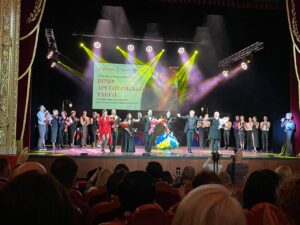
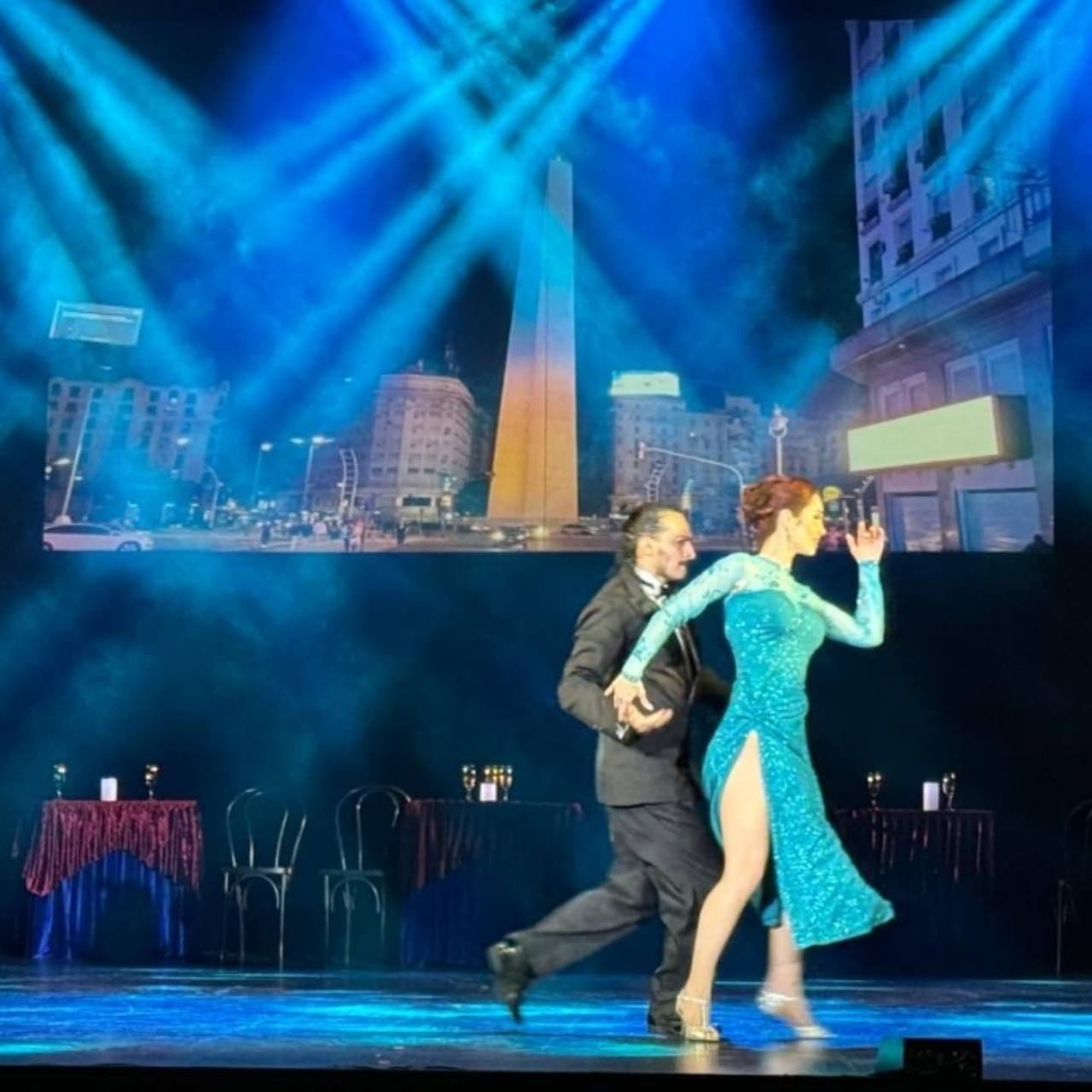
On October 25, 2024, the Kyiv National Academic Operetta Theater hosted the Argentine Tango Evening, a joint international project with the participation of Argentine and Ukrainian artists. The event was organized with the support of the Embassy of the Argentine Republic in Ukraine and brought together numerous fans of Argentine culture who had the opportunity to enjoy the skills of dancers, musicians, and singers.
“It is a great honor for me to be here today at the Kyiv Opera House, where we can present the richness of the Argentine tango and also show our cultural ties with Ukraine. This event is a testament to the cultural diplomacy that unites our peoples and promotes mutual understanding,” said Ambassador of Argentina to Ukraine Elena Leticia Teresa Mikusinski.
The Ambassador expressed her gratitude to Ukrainian partners, in particular to the General Director of the Kyiv Operetta Bohdan Strutynskyi, whose support was important for the realization of this project.
“Tonight was made possible by the hard work of teams from both countries. Their talent and dedication to tango culture is a valuable contribution to the development of our cooperation. This is not only an artistic event, but also a symbol of our partnership, which will continue in the future,” she added.
The Ambassador paid special attention to the performances of Argentine artists, including dancers Romina Garcia Fleury and Nicolas Correa from Tucumán, as well as the famous tango dancer Analia Celis.
“We are grateful to the Ukrainian people for the hospitality and support that our artists feel here in Kyiv, especially in such difficult times. Such cultural events are an example of the power of art to unite people,” said Jelena Mikusinski.
In conclusion, the Ambassador expressed her hope for further development of cultural ties between Argentina and Ukraine.
“This tango evening is just one of many steps towards a deeper cultural exchange between our countries. We are pleased that Ukraine remains open to Argentine culture,” she concluded.
Famous dancers and choreographers from the city of Tucumán – Nicolás Correa and Romina García Fleury, Argentine tango singer Analia Celis, as well as Ukrainian tenor Yuriy Godo and other artists – performed on stage.
Argentine tango is a unique cultural phenomenon that originated in the late nineteenth century in Buenos Aires and quickly gained popularity around the world. Tango is not only a music and dance style, but also a symbol of Argentine culture that reflects the passion, emotions, and drama of human relationships. This genre of dance and music combines the rich influence of African, Spanish and European rhythms, creating an atmosphere that captivates both the audience and the performers.
The Embassy of the Argentine Republic in Ukraine actively supports cultural exchange and promotes the development of bilateral relations between Ukraine and Argentina. Diplomatic relations between the two countries were established in 1992, when Argentina officially recognized Ukraine’s independence. Since then, the Embassy has been actively working to deepen cooperation in various fields, including culture, education, economy and science.
ARGENTINA, CULTURE, Elena Leticia Teresa Mikusinski, EMBASSY, UKRAINE, танго
The European Union’s Creative Europe program will continue to support Ukraine’s culture and creative industries sector in 2025, the Ministry of Culture and Strategic Communications reports.
“Ukrainian audiovisual projects have the opportunity to take full part in the competitions of the Media subprogram, which aims to support the European film and audiovisual industries and to develop, distribute and promote European works, taking into account the modern digital environment,” the ministry said in a statement.
It is noted that six such competitions have been announced, namely: European co-development; video game and immersive content development; television and online content; talent and skills development; 360° media; innovative tools and business models.
According to the announcement, grant applications can be submitted from October 1, 2024.
“The total amount of funding for projects that will receive grants under the above competitions is EUR 81.5 million. The total budget of the EU’s Creative Europe program in accordance with the Annual Work Program 2025 is EUR 340 million,” the agency added.
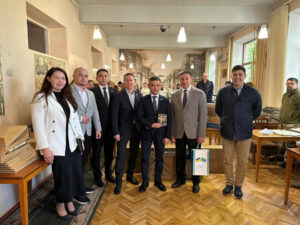
In the framework of international cooperation and cultural exchange, representatives of the Embassy of the Republic of Kazakhstan in Ukraine visited the Central State Historical Archive of Ukraine in Kyiv. The main purpose of the visit was the ceremony of handing over digital copies of the Kamianets-Podilskyi Armenian Voytov Court record books written in the Armenian-Kipchak language.
The ceremony was attended by counselors of the Embassy Alibek Alibekov, Yevgeniy Katrenov and Daniyar Satybaldin, director of the Central State Historical Archive of Ukraine Yaroslav Fayzulin, as well as archive staff and representatives of Kazakh business.
These unique historical documents are of great importance for the cultural heritage and history of both Ukraine and Kazakhstan. They testify to the rich cultural and historical ties between the peoples who lived on the territory of modern Ukraine and Kazakhstan.
The representatives expressed special gratitude to Kazakh businessman and philanthropist Aidyn Rakhimbayev, who made it possible to obtain these historical documents. Aidyn Rakhimbayev is known for his numerous charitable projects and support of cultural initiatives. In gratitude for his cooperation, five modern computers were donated to the Central State Historical Archive of Ukraine on behalf of Mr. Rakhimbayev.

This gesture contributes to strengthening bilateral relations between the two countries, as well as supports the preservation of historical heritage and the development of cultural ties.
Ancient Kipchak books are handwritten documents created in the Middle Ages, when the Kipchaks (Polovtsians) were one of the most powerful nomadic peoples in Eastern Europe and Central Asia. These books contain valuable historical, legal, and literary texts that reflect the social life, traditions, and legal systems of the time.
The Armenian-Kipchak language is considered to be a unique historical and linguistic phenomenon that arose as a result of the long coexistence of Armenian and Kipchak communities on the territory of modern Ukraine. This language was used by Armenians living in the Crimea, Kamianets-Podilskyi, and other cities where the Kipchaks had significant influence. The Armenian-Kipchak language is a mixed language that combines elements of the Kipchak (Polovtsian) and Armenian languages, making it a unique cultural heritage.
The Kamianets-Podilskyi Armenian Voytiv Court was a judicial institution that operated in Kamianets-Podilskyi during the Middle Ages. It resolved legal issues of the local Armenian community. The record books of this court are valuable sources on the history of law, ethnography, and social life of the society of that time. These books have been stored in the archive for centuries and have now become available thanks to their digitization.

Kazakhstan has now received digital copies of unique ancient Kipchak books, which are now available for study and research, enriching the historical heritage of both countries.
On July 22, 1992, the Republic of Kazakhstan and Ukraine established diplomatic relations. And in December 1994, the Embassy of the Republic of Kazakhstan in Ukraine was opened.



