

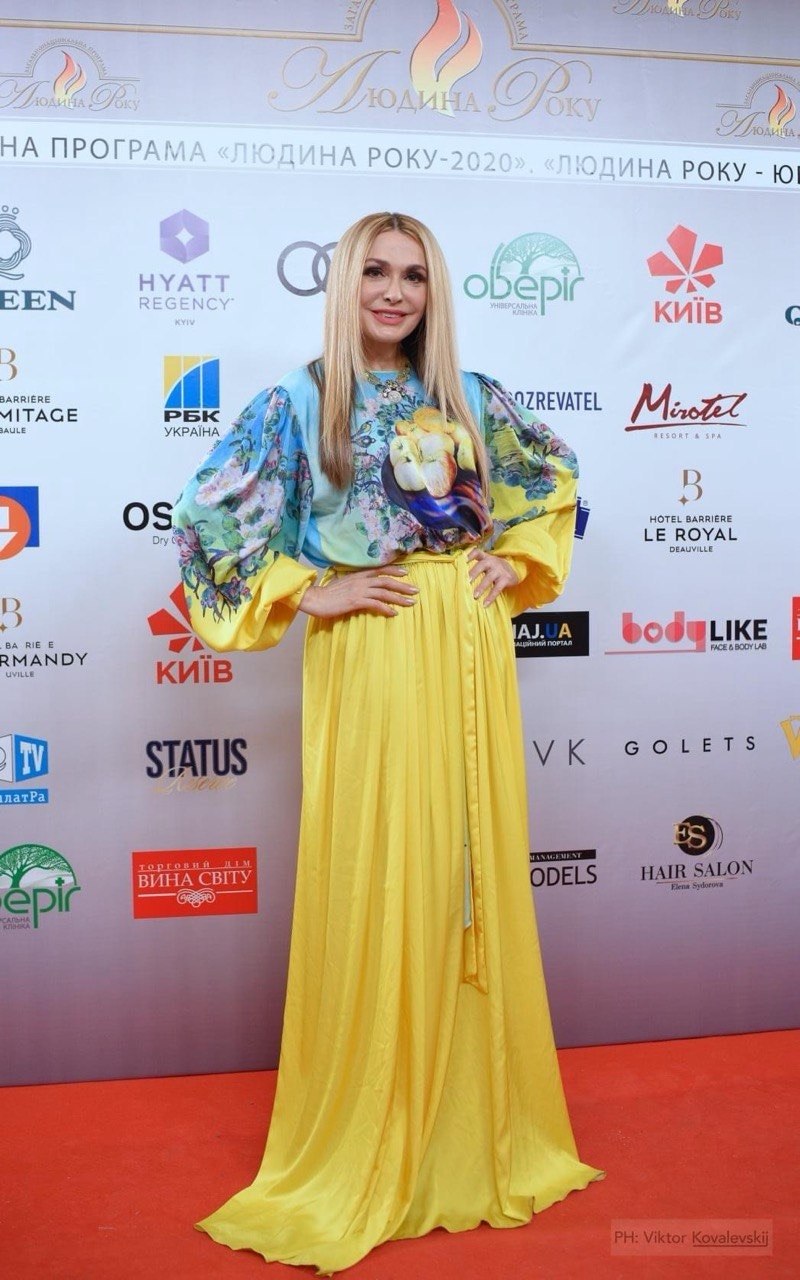
People’s Artist of Ukraine Olga Sumska has been awarded the title of “Artist of the Year” by the 30th anniversary nationwide “Person of the Year 2025” program, according to a press release from the program.
Sumska is a Ukrainian theater and film actress, television host, winner of the Taras Shevchenko National Prize of Ukraine, and recipient of the Order of Princess Olga, Third Class. Her professional career in theater and film spans more than 40 years.
The actress was born on August 22, 1966, into the Sumskaya family of actors. In 1987, she graduated from the acting department of the Ivan Karpenko-Karyi Kyiv Institute of Theater Arts, and from 1988 to 2005, she worked at the Lesya Ukrainka Theater in Kyiv.
Sumska began her acting career at age 16 with the role of the young lady, the Centurion’s daughter, in the film *Evenings on a Farm Near Dikanka*. She went on to play leading roles in the films *The Voice of the Grass*, *The Trap*, *Tiger Hunters*, *Carpathian Gold*, *The Notes of the Snub-Nosed Mephistopheles*, and other projects.
In total, the actress’s filmography includes over 100 roles in Ukrainian cinema. One of Sumskaya’s most famous roles was the lead in the historical TV series “Roxolana,” which brought her widespread popularity.
From 2022 to 2025, Sumskaya continued her active theater career and toured cities across Ukraine. During this period, the performances in which she appeared often had a charitable component and were aimed, in particular, at supporting the Armed Forces of Ukraine.
In recent years, the actress has appeared in the plays “Bravo, Julia,” “Our Kaidashs,” “Chasing Two Hares,” “Basic Instinct,” “Sublimation of Love,” and “The Return of the Prodigal Father.” Her film and television work in recent years includes *The Landlord*, *The Landlord 2: On Our Own Land*, *The Saga*, *Crazy Neighbors*, *Homeowners’ Association Meeting*, and *When You Get Divorced*.
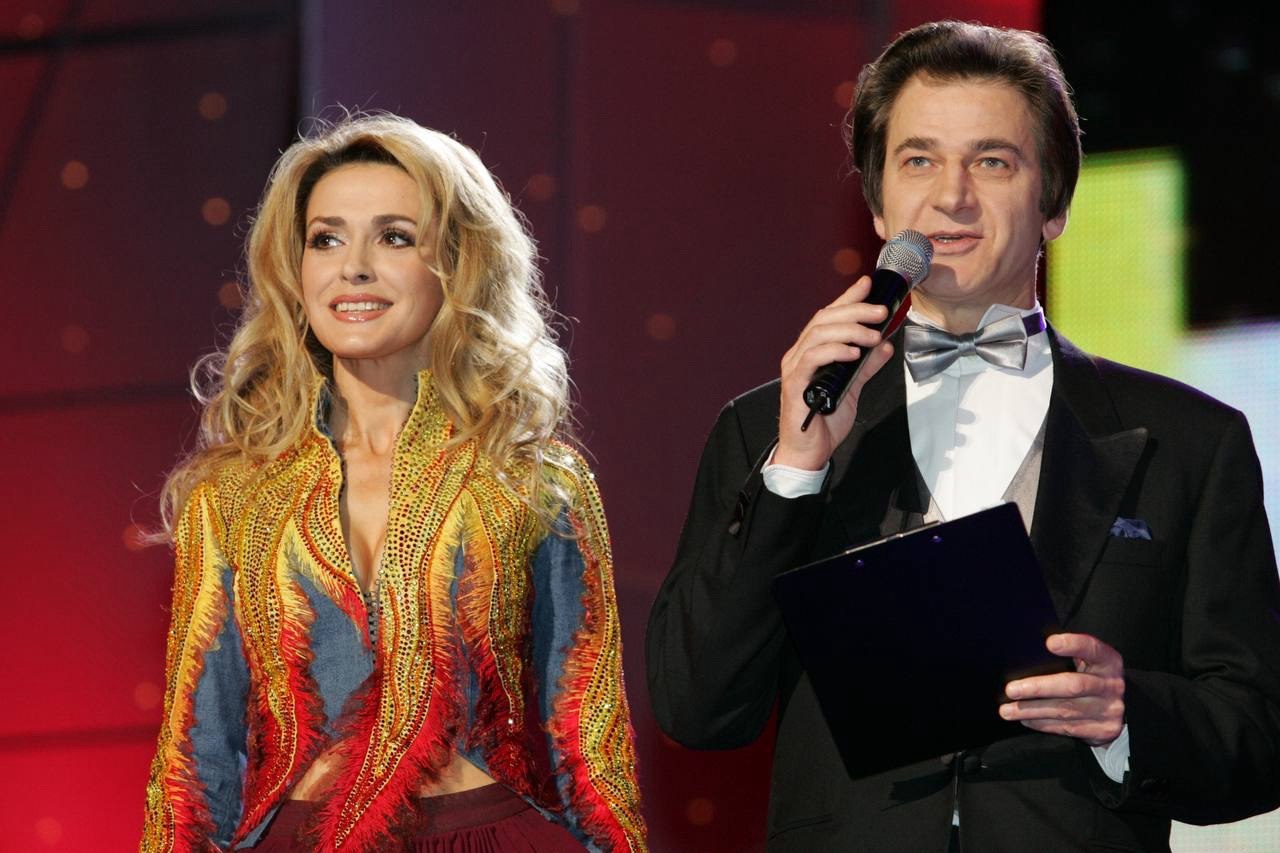
In addition to her work in theater and film, Sumskaya participates in charitable initiatives and fundraising efforts for the Ukrainian military, as well as in cultural projects aimed at supporting and promoting Ukrainian theater and cinema.
In 2025, the actress was chosen as the muse of the “Mykolaichuk OPEN” International Film Festival.
“Theater and film are spaces for a living dialogue with the audience, where empathy, hope, and faith in humanity are born,” reads Sumskaya’s creative credo in the program’s announcement.
The nationwide “Person of the Year” program was held for the 30th time in 2025. The program honors representatives from various spheres of Ukraine’s social, economic, and cultural life.
Open4Business is an information partner of the nationwide “Person of the Year” program.

Ukraine has been named the Guest of Honor at the 24th Pisa Book Festival, which takes place October 2–4 in Pisa, Italy.
“This year’s guest country is Ukraine, which is presenting a rich and diverse program covering literature, history, and art, organized under the patronage of the Ukrainian Embassy in Rome,” the festival states on its website.
In particular, the festival will feature writer Andriy Kurkov, as well as writers and translators Olena Kostyukovych, Yaryna Hrush, and Olena Ponomariova.
As part of the program dedicated to Ukraine, an exhibition of Ukrainian illustrators titled “Yellow and Blue” is on display at Palazzo Blu through January 10, 2027.
In total, this year’s festival features 90 booths from Italy’s leading independent publishers, as well as professional meetings with editors, translators, and distributors.
Over 100 events are scheduled as part of the festival, which will welcome more than 200 guests.
The festival was founded in 2003 to support independent Italian publishers.

“Creating an exhibition like this will help us showcase the greatness of Ukraine… Reinterpreting our history, opening up the world of this history, and presenting it through the lens of experts strengthens our international standing. I strongly agree with the lectures by Timothy Snyder (an American historian—IF-U) when he says that the
Trypillian civilization—it is very important to use this term—is part of the European space,” said Foreign Minister Andriy Sibiga at the exhibition’s presentation on the eve of its opening on Thursday.
Sybiga emphasized that the Ministry of Foreign Affairs will make every effort to expand knowledge about the unique Trypillian civilization through UNESCO’s framework.
“In May 2026, we included the ‘Prekukuten-Ariushd-Kukuten-Trypillia’ archaeological and cultural complex on UNESCO’s Tentative List, and we are doing everything possible to have it inscribed on the UNESCO World Heritage List,” said Deputy Prime Minister for Humanitarian Policy and Minister of Culture Tetiana Berezhna.
According to her, it is very important for this exhibition to gain popularity in educational institutions and be promoted in schools.
“Trypillia is one of the components of our identity, just like language. A state and a nation begin with identity,” said Viktor Yushchenko, President of Ukraine (2005–2010).
As reported by a correspondent for the Interfax-Ukraine news agency, virtual reality technology allows visitors to “step into” a world from 7,000 years ago and find themselves inside a reconstructed Trypillian settlement, visit the dwellings of the Trypillians, see the domestic areas, the potter’s workshop, and the sacred zone, and examine everyday household items. Here, visitors can observe how the Trypillians cultivated the land and grew grain, how they prepared and baked bread from it, worked with metal, and created items necessary for daily life. Agriculture, crafts, daily life, and beliefs come together in the VR space to form a comprehensive picture of life in the Trypillian community.
The virtual exhibition features digitized artifacts from the collections of the National Museum of the History of Ukraine, the Kyiv Regional Archaeological Museum, and the Museum of the History of Kyiv: ceramics, anthropomorphic and zoomorphic sculptures, tools, and household items.
The project combines archaeological and historical data, 3D modeling, VR technology, and interactive elements. The exhibition is part of the cultural and educational platform “Ukraine. The World of Trypillia,” which uses popular formats—art books, theater, and VR—to tell the story of Trypillian culture in a new way.
The exhibition was organized with the support of the Ukrainian Cultural Foundation as part of the “Cultural Heritage” grant program and in collaboration with the platform’s general partner—the “MHP-Hromadi” Charitable Foundation.
French actress, singer, and writer Marina Vlady died on September 24, 2026, at the age of 88. Her family informed AFP of her death. According to the actress’s children, she died at her home surrounded by her loved ones.
Marina Vlady, whose real name was Katerina Marina Vladimirovna Polyakova-Baidarova, was born on May 10, 1938, in Clichy, near Paris, to a family of immigrants from the Russian Empire. Her father, Vladimir Polyakov-Baidarov, was an opera singer, and her mother, Militsa Enwald, was a ballerina. All four daughters of the family pursued careers in the arts. The actress chose the stage name “Vlady” in honor of her father, Vladimir.
Vlady began acting in films as a child. One of her first notable roles was in André Cayatta’s film *Avant le déluge* (1954), after which the 16-year-old actress received the French Suzanne Bianchetti Award as a promising young performer.
During the same period, she starred alongside Marcello Mastroianni in Giuseppe De Santis’s film *Days of Love* (*Giorni d’amore*, 1954). Her leading role in the Franco-Swedish film *The Witch* (*La Sorcière*, 1956) brought her widespread popularity in Europe.
One of Vlada’s most famous works was the film adaptation of Madame de La Fayette’s novel *The Princess of Clèves* (*La Princesse de Clèves*, 1961), directed by Jean Delannoy. It was her portrayal of the Princess of Clèves that became one of the actress’s most recognizable roles in French cinema.
International professional recognition came in 1963. For her role in Marco Ferreri’s film *L’ape regina* (*Le Lit conjugal*), Marina Vladi received the Cannes Film Festival award for Best Actress.
In the 1960s and 1970s, the actress worked with a number of leading European directors. She appeared in Orson Welles’ *Chimes at Midnight* (1965), Jean-Luc Godard’s *Two or Three Things I Know About Her* (1967), Bertrand Tavernier’s *Que la fête commence* (1975), and Jacques Ruffio’s drama *Sept morts sur ordonnance* (1975). According to various estimates, Vlady appeared in more than 80 feature films during her career, and when television work is included, her on-screen legacy was even greater.
A special place in Marina Vlady’s biography is occupied by her relationship with the poet, actor, and singer-songwriter Vladimir Vysotsky. They met in Moscow in 1967 and married in 1970. Their marriage lasted until Vysotsky’s death in July 1980.
Because Vladi lived primarily in France and Vysotsky in the USSR, they spent a significant portion of their married life apart. The actress regularly visited him in the Soviet Union.
After Vysotsky’s death, Vladi did a great deal to preserve his memory. In 1987, she published an autobiographical book titled *Vladimir, or The Interrupted Flight*, dedicated to their relationship, their life together, and the poet’s final years. The book was later adapted for the stage.
Vladi was involved in more than just film. She acted in theater, performed as a singer—including recording songs with her sisters—and was also actively engaged in literary pursuits. In total, she wrote 13 books—novels, memoirs, and autobiographical works. In 2005, her memoir *24 Images Second* was published.
Marina Vlady remains one of the most prominent figures in French and European cinema of the second half of the 20th century, having combined popular cinema, art-house films, theater, music, and literature throughout her career.
The nationwide “Person of the Year” program is holding its 30th anniversary season, dedicated to Ukrainians whose professional and public achievements became a notable part of the country’s life in 2025.
Among the season’s laureates will be servicemen and servicewomen of the Defense Forces of Ukraine, doctors, rescuers, energy workers, agricultural workers, volunteers, entrepreneurs, diplomats, scientists, cultural figures and representatives of other fields.
As part of the anniversary season, it is also planned to honor representatives of international diplomacy and present special awards for individual achievements.
The “Person of the Year” program has existed for three decades and honors representatives of various professions and fields of activity for their contribution to the development of Ukraine and society.
The organizers note that after the beginning of the full-scale war, a special place among the laureates is occupied by people whose activities are directly connected with the defense of the country, support for the population, the functioning of critical infrastructure, the economy and Ukraine’s international representation.
“Person of the Year – 2025 is, above all, gratitude to the people who bring victory closer, strengthen the state and shape its future,” the organizers note.
Over 30 years of its existence, the program has formed a significant list of laureates from public administration, business, science, medicine, culture, sports and other fields. The anniversary season continues the tradition of public recognition of people whose work results are important for the country.
Information about the 30th season of the program was published on August 31, 2026.
Open4Business is the official partner of the nationwide “Person of the Year” program.
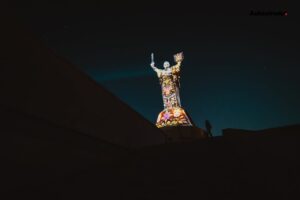
The Ukrainian infrastructure company Autostrada has sponsored the audiovisual art installation “The Future Remembers,” dedicated to the 35th anniversary of Ukraine’s independence.
As the company announced on August 21, the installation was realized on the “Motherland” monument in Kyiv. Through large-scale light projections, the monument is transformed into a dynamic canvas that, through images of historical memory and the experiences of different generations, illustrates the connection between Ukraine’s past, present, and future.
Autostrada noted that its support for the project is rooted in the values of sustainability, unity, and the preservation of historical and cultural heritage.
“We know very well that any complex engineering structure requires a solid foundation. For a nation, that foundation is its historical and cultural heritage. It is culture that preserves memory, maintains the connection between generations, and shapes shared meanings,” the company stated.
The “The Future Remembers” art installation will be on display daily from 9:00 p.m. to 11:00 p.m. until September 1.
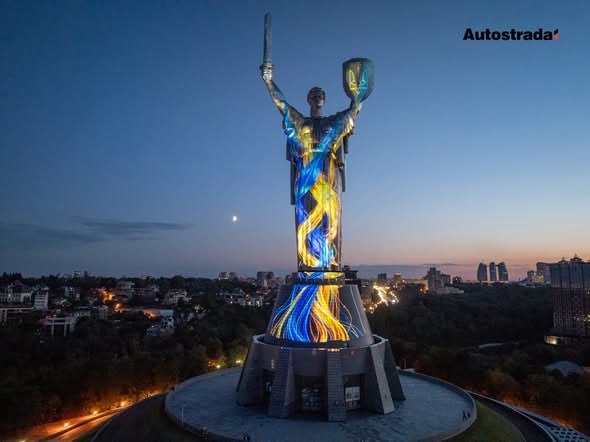
The “Motherland” monument, on which the light installation is displayed, is one of Kyiv’s most recognizable landmarks and part of the National Museum of the History of Ukraine in World War II.
Autostrada is a Ukrainian group of companies specializing in infrastructure construction. Its main areas of activity include road, bridge, industrial, and underground construction, as well as design. According to the company, its team consists of over 8,000 employees, its fleet includes more than 5,000 pieces of equipment, and its own production base comprises over 60 enterprises and manufacturing facilities.
Amid the full-scale war, Autostrada is participating in the restoration of transportation infrastructure and engineering structures. According to the company, during this period, more than 3,000 km of roads and over 200 bridges have been repaired, and approximately 50 infrastructure facilities have been restored. Among the company’s current major projects are the construction of the metro line to Vynohradyr in Kyiv and work on the Podil-Voskresensky Bridge.
Autostrada was founded by businessman Maksym Shkil. The company is part of the MS Capital holding company he established.
Autostrada, CULTURE, KYIV, philanthropy, Ukrainian independence



