

Gasoline-powered passenger cars accounted for over 14.6 billion hryvnia in customs revenue for the state budget from passenger car imports, which totaled 32.1 billion hryvnia, the State Customs Service reported on its website.
At the same time, diesel cars generated 8.4 billion UAH in revenue, hybrids—7.1 billion UAH, and electric cars—2 billion UAH.
The State Customs Service notes that, overall, from January through June, Ukrainians imported over 169,000 passenger cars with a total value of nearly 96.6 billion hryvnias, 70% of which were used cars, generating 17.7 billion hryvnias in customs duties for the state budget, while new cars accounted for 14.4 billion UAH.
Gasoline-powered cars, which remain the most popular, accounted for 54.5% of total imports. In second place were diesel cars (20.3%), which not only significantly outpaced electric cars (13%) but also surpassed hybrids (12.1%).
Hybrids were the most expensive among imported cars, with an average price of nearly $27,000 per vehicle; diesel cars averaged $16,000; electric cars, over $10,000; and gasoline-powered cars, $9,000.
According to the State Customs Service, cars have been imported from more than 50 countries since the beginning of 2026, but the undisputed leaders are: the United States—73,200 (43% of the total number of imports); Germany—17,300 (10%); and Poland—14,600 (9%).
In total, nearly 105,100 cars were imported from these countries, accounting for 62% of the total.
As previously reported, according to the State Customs Service, the volume of passenger car imports into Ukraine—including cargo-passenger vans and race cars (UKT ZED code 8703)— amounted to $2.18 billion in January–June 2026, which is 14.6% less than the figure for the first half of 2025 ($2.554 billion).

According to Serbian Economist, Serbia has extended tariff quotas on imports of cement and certain types of steel products through the end of 2026. Once the established import volumes are exhausted, additional duties of 50% will be imposed.
The restrictions were originally introduced from January 1 through June 30, 2026, based on a government decree aimed at protecting industries of strategic importance to Serbia’s economy. However, the measure’s validity has been extended through December 31, with a simultaneous revision of some quotas and the list of commodity codes.
The quotas apply to Portland cement, hot-rolled and cold-rolled steel, rebar, hot-rolled wire rod, and certain other iron and steel products.
Quotas have also been established for certain categories of nails and wire, welded pipes, reinforcing mesh, and lattice structures. Goods that are not produced in Serbia have, in certain cases, been exempted from the restrictions.
The additional duty is added to the standard customs rate. For example, if the standard duty is 10%, once the quota is exhausted, the total burden on the importer can reach 60%.
In the first phase, the total quota volume was 421,1 thousand metric tons. Of this, 250,35 thousand metric tons were allocated to cement, 44,7 thousand metric tons to hot-rolled steel, and approximately 7,2 thousand metric tons to cold-rolled products.
Another 67,85 thousand metric tons consisted of quotas for rebar and wire rod in coils, and 51 thousand metric tons—for rebar in bars.
The quotas are allocated among countries based on their share of shipments to the Serbian market in 2020–2024. The largest volumes are allocated to the European Union, Turkey, Bosnia and Herzegovina, North Macedonia, and Albania.
Ukraine also received a separate country quota; in previous years, it supplied Serbia with rolled steel, rebar, wire, and other iron and steel products.
For hot-rolled steel, the total quarterly quota is approximately 22,000 metric tons. Products of Ukrainian origin account for just over 1,000 metric tons per quarter.
An additional 600 metric tons per quarter is allocated for shipments of rebar and hot-rolled wire rod in coils from Ukraine. Once these volumes are exhausted, the relevant products may be subject to an additional 50% duty.
In 2024, Serbia imported $23.15 million worth of iron and steel from Ukraine, as well as an additional $9.55 million worth of finished iron and steel products.
However, not all Ukrainian exports are subject to the new restrictions. The application of quotas depends on the specific customs code of the product.
For Ukrainian metallurgical and metalworking enterprises, Serbia’s decision means that small, regular shipments will be eligible for preferential terms only within the established quotas.
Larger shipments or goods cleared after the quota has been exhausted may become uncompetitive due to a sharp increase in customs costs.
The Serbian government explains the restrictions as necessary to preserve domestic cement and steel production, support traditional trade flows, and ensure the stability of the domestic market.
Additional factors include the tightening of European protective measures against steel imports and the rising costs Serbian companies face for energy and compliance with environmental requirements.
For Serbian manufacturers, the decision may provide additional protection against foreign competition. At the same time, the quotas pose a risk of rising raw material costs for construction companies, manufacturers of metal structures, pipes, wire mesh, and other businesses that rely on imported rolled steel and wire.
https://t.me/relocationrs/3280

Ukraine exported 1.82 million metric tons of rapeseed during the 2025/2026 marketing year, compared to 3.2 million metric tons in the previous season, according to the Ukrainian Grain Association.
Germany was the main market for Ukrainian rapeseed, accounting for 876,000 metric tons. Belgium imported 453,000 metric tons, the Netherlands—247,000 metric tons, the Czech Republic—112,000 metric tons, and the United Kingdom—109,000 metric tons.
According to the UGA, the decline in rapeseed exports was due to a lower harvest and the introduction of an export duty on this crop.
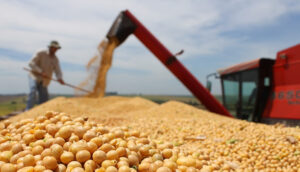
In the 2025/2026 marketing year, Ukraine exported 2.7 million metric tons of soybeans, compared to 3.8 million metric tons in the previous season, according to the Ukrainian Grain Association.
Turkey was the largest buyer of Ukrainian soybeans, purchasing 923,000 metric tons. The top five importers also included the Netherlands (382,000 metric tons), Germany (298,000 metric tons), France (159,000 metric tons), and Egypt (151,000 metric tons).
According to the UGA, the decline in soybean exports was due to a lower harvest and the introduction of an export duty on this crop.

Turkey’s decision to open an import quota for 3 million tons of corn with a reduced tariff rate of 5% has significantly altered market conditions, according to the information and analytical agency “UkrAgroConsult.”
“This move is expected to stabilize domestic prices in Turkey and meet high demand. The country’s domestic balance dictates the need for active imports: domestic production amounts to about 8 million tons, while consumption exceeds 10 million tons,” analysts noted.
According to the agency, Ankara’s customs policy remains strict: a 130% tariff applies outside the quota. However, the market is adapting thanks to temporary preferential regimes. Under these conditions, Ukraine is strengthening its presence and already accounts for 85–87% of Turkish imports due to significant supply and favorable logistics.
“Currently, the key competitive factor is the speed of shipments and traders’ willingness to assemble flexible shipments. Market dynamics are driven by raw material shortages within the importing country and the efficiency of logistics chains,” emphasized UkrAgroConsult.
Among the main trends, experts highlighted the transformation of demand due to quotas and the dominance of regional suppliers amid shortages. The agency forecasts that Ukraine will maintain its status as Turkey’s key partner precisely due to the speed of deliveries, despite protective tariffs on non-quota volumes.

The introduction of a 10% export duty on soybeans and rapeseed will reduce the profitability of these crops, leading to a 30% reduction in soybean acreage in 2026, experts from the American Chamber of Commerce (ACC) reported during a press briefing in Kyiv.
“Our forecasts indicate a possible 30% reduction in soybean acreage compared to the previous season. The export duty acts as an economic barrier, making the cultivation of this crop less attractive to producers. Farmers won’t take losses every year—if the financial result is negative, they’ll simply change their crop mix,” the experts explained.
The business association noted that under normal conditions, corn could be an alternative, but currently its investment appeal is also in question due to rising production costs.
“Prices for fuel and fertilizers have risen significantly, particularly due to the escalation of the situation surrounding Iran and the blockade of the Strait of Hormuz. This significantly increases farmers’ costs for growing corn, which, combined with the low profitability of oilseeds due to tariffs (on soybeans and rapeseed – IF-U), puts farmers in a difficult position ahead of the spring planting season,” the briefing participants emphasized.
Experts expressed confidence that if regulatory policy does not change, there is a risk that farmers will abandon rapeseed and soybean cultivation in the long term. This will lead to domestic processors, who lobbied for the introduction of tariffs to obtain cheap raw materials, eventually facing a physical shortage of those materials due to reduced production.
As reported, pursuant to Law No. 4536-IX of July 16, 2025, a 10% export duty on rapeseed and soybeans was introduced in Ukraine effective September 4, 2025. The document provides for a gradual reduction of the rate by 1% annually, starting January 1, 2030, to 5% by 2035. At the same time, the law includes a preferential regime for direct producers and cooperatives, who are exempt from paying the duty when exporting their own-grown products.



