
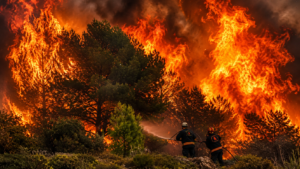
The 2026 fire season in Europe has become one of the most difficult in terms of the geographical spread of fires and the scale of their consequences, with Ukraine ranking among the continent’s most affected countries, the Experts Club information and analytical center reports, citing data from the Global Wildfire Information System (GWIS), the European Forest Fire Information System (EFFIS) and other European bodies.
As of August 31, the area affected by fire in Ukraine was estimated by GWIS at 413.1 thousand hectares, or about 0.69% of the country’s territory. If the Russian Federation is not included in the direct comparison, as the system also takes into account the vast territories of Siberia and the Far East, Ukraine ranks first among the countries of geographical Europe in terms of the absolute area affected by fires.
It is followed by Spain — 242.1 thousand hectares, Italy — 118.3 thousand hectares, France — 105.1 thousand hectares, and Portugal — 60.5 thousand hectares.
In Ukraine, fire statistics have an additional specific feature due to the war. Satellite systems record the territory affected by fire but do not determine its cause. Therefore, alongside heat, drought, careless handling of fire and arson, shelling, explosions and fires along the front line may also play a significant role.
The greatest burden relative to the size of the territory is recorded in the Balkans. In Montenegro, about 1.7% of the country’s territory has been affected by fire, in Bosnia and Herzegovina — more than 1%, and in North Macedonia — about 0.75%. Altogether, Montenegro, Bosnia and Herzegovina, North Macedonia, Albania and Serbia have about 142 thousand hectares of burned areas.
A separate feature of the season has been a sharp increase in fire activity in countries where large fires are traditionally less common. In Belgium, the area affected by fires has already exceeded the average for 2012–2025 by more than ten times, in the Netherlands — by approximately three times, in Austria — by 2.5 times, and in France — by almost 2.5 times.
In the EU itself, by August 30, 636.1 thousand hectares of burned areas had been recorded within 1,861 major fires. This is 36% less than in the record year of 2025, but more than twice the long-term average for the same period.
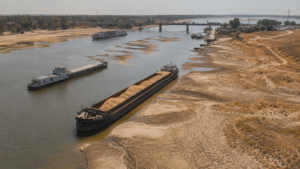
Extreme heat and a prolonged drought have led to a sharp drop in the water level of the Danube in Romania, according to the Experts Club information and analysis centre. In the area around the port of Beșet, the movement of cargo, passenger and cruise ships has virtually ground to a halt, and operators are being forced to reduce their cargo loads or seek alternative routes.
According to Romania’s National Institute of Hydrology and Water Management, on July 18 the water discharge at the point where the Danube enters the country near Baziaș fell to 1.7 thousand cubic metres per second. This is approximately 64% below the long-term average for July, which is 4.7 thousand cubic metres per second. The forecast for the period through July 25 assumes that the discharge will remain within the range of 1.65–1.8 thousand cubic metres per second.
On July 19, the Lower Danube Administration recorded readings below the conventional zero level of the gauging stations along a significant part of the Romanian section of the river. In Bechet, the reading was minus 65 cm, in Calafat minus 140 cm, in Giurgiu minus 128 cm, and in Cernavodă minus 173 cm. These values do not indicate a negative depth, but they do demonstrate an extremely low water level relative to the benchmarks used at the gauging stations.
The most difficult situation developed near Bechet. Vessels loaded with grain are unable to depart, while ferry services between Romania’s Bechet and Bulgaria’s Oryahovo were temporarily suspended. Trucks and passenger cars have to use other border crossings, which increases the distance, delivery time and burden on road bridges across the Danube.
The problems have also affected the tourism sector. Several cruise ships travelling from Budapest towards the Danube Delta were unable to continue their journey. Tour operators began transporting passengers by bus and changing travel programmes, including redirecting tourists to Bucharest. The suspension or reduction of cruise routes may reduce the revenues of port cities, hotels, restaurants and tour companies along the entire river.
Low water levels are already affecting Romanian agriculture. In some areas, the Danube’s level has fallen below the minimum mark required for pumping stations to operate, leaving some fields without irrigation. This increases the risk of lower harvests and a further rise in farmers’ costs.
Consequences for All Danube Countries
If the low water level persists or spreads to other sections of the river, the consequences will be felt by all ten countries through which the Danube flows directly: Germany, Austria, Slovakia, Hungary, Croatia, Serbia, Bulgaria, Romania, Moldova and Ukraine. The Danube is the backbone of a major European transport corridor linking the industrial regions of Central Europe with the port of Constanța and the Black Sea.
For Germany and Austria, the main risk will be disruption to through freight transport along the Rhine–Main–Danube system. Vessels will be forced to carry smaller loads, while some shipments may shift to rail and road transport. This increases the cost of delivering raw materials, fuel and industrial products. The cruise sectors of Vienna, Linz, Passau and other cities may also face route cancellations or reductions.
Slovakia and Hungary risk experiencing delays in deliveries through the ports of Bratislava, Komárno and Budapest. For Hungary, an additional problem will be a reduction in cruise traffic between Budapest and the Lower Danube. If low water levels persist, the cost of transporting grain, petroleum products, metals and mineral raw materials may rise.
For Croatia and Serbia, the reduction in fairway depth means possible restrictions on the operations of the ports of Vukovar, Novi Sad, Pančevo, Smederevo and Prahovo. Serbian exporters of grain, fertilisers and metallurgical products may have to divide cargoes among a larger number of vessels or redirect them to rail transport. Imports of petroleum products and industrial raw materials may also become more expensive.
Bulgaria and Romania are already experiencing direct consequences in the form of the suspension of the Oryahovo–Bechet ferry, restrictions on freight traffic and irrigation problems. A further decline in the water level could complicate the operations of the river ports of Ruse, Lom, Vidin, Galați, Brăila and Constanța, as well as increase the burden on bridges and land border checkpoints.
For Moldova, the risks are associated with the operation of the port of Giurgiulești and access to the Lower Danube. A reduction in vessels’ permitted draught may lead to smaller shipment volumes per consignment, higher fuel import costs and more expensive exports of agricultural products.
For Ukraine, low water levels pose a threat to the operation of the ports of Reni, Izmail and Ust-Dunaisk. Shallow depths may reduce the loading capacity of barges and sea-going vessels, increase the cost of transporting grain, metal, containers and other products, and complicate traffic between Ukrainian ports, Constanța and Central Europe.
According to the Danube Commission, a significant share of river transport consists of grain, food and animal feed cargoes, iron ore, petroleum products, fertilisers and metal products. Therefore, prolonged low water levels may affect not only transport companies but also prices in agriculture, metallurgy, energy and the food industry throughout the region.
In April 2026, the Danube Commission warned that periods of low water and sharp fluctuations in hydrological conditions were becoming a permanent factor changing the operating conditions of river transport. European countries will have to deepen and maintain the fairway more actively, improve the exchange of navigation data and develop railway routes for the rapid redirection of cargo.

According to Serbian Economist, the silver stickleback—Lagocephalus sceleratus, a poisonous fish that is gradually spreading throughout the Adriatic Sea—is being recorded with increasing frequency in Montenegrin waters.
This species entered the Mediterranean Sea via the Suez Canal and has been moving westward in recent years. Previously, the main populations were more commonly found off the coasts of Greece, Turkey, and Cyprus, but now the fish is regularly spotted in the Adriatic as well, including along the coast of Montenegro.
For the region, this is not only an environmental problem but also an economic one. The silver pufferfish is dangerous to fishermen: its powerful teeth can easily damage fishing lines, tackle, and nets. In addition, the fish can deliver a painful bite, so experts recommend not handling it with bare hands or attempting to gut it yourself.
The main danger is not related to the bite, but to consuming the fish. The tissues and internal organs of the silver pufferfish contain tetrodotoxin—a potent toxin that is not destroyed by conventional heat treatment. Therefore, this fish must not be eaten, sold, or used in cooking.
The spread of the pufferfish illustrates how the Adriatic’s marine ecosystem is changing. Warming waters, changes in the migration routes of marine species, and the connection between the Mediterranean Sea and the Red Sea via the Suez Canal are contributing to the arrival of species new to the region.
For Montenegro, where the coastline is vital for fishing, tourism, and the restaurant industry, this is becoming a new risk factor. Fishermen will have to account for damage to their gear and a possible decline in catches, while tourist areas will need to inform visitors that they should not touch unfamiliar fish, let alone eat them.
https://t.me/relocationrs/3144

Russian aggression on the territory of Ukraine has caused unprecedented destruction of the natural environment, destruction of ecosystems, and large-scale pollution of the air, soil, and water resources. Since the start of the full-scale invasion, the amount of damage caused to the environment has reached 6.01 trillion hryvnia, according to the Ministry of Economy, Environment, and Agriculture, citing data from the State Environmental Inspection.
“These are the largest environmental losses recorded in Europe in modern history,” the Ministry of Economy emphasized.
According to the State Environmental Inspection’s estimates, the total amount of damage includes UAH 1.29 trillion in damage to soil, UAH 967 billion in damage to atmospheric air, UAH 117.8 billion in pollution and contamination of water resources, and UAH 3.63 trillion in destruction of nature reserve areas.
One of the most destructive incidents was the fires at oil depots, according to the State Environmental Inspection. For example, after a strike on an oil depot in the village of Kryachky in the Kyiv region, toxic emissions into the atmosphere reached more than 41,000 tons, and soil pollution exceeded permissible limits by 17 times. Similar incidents occurred in Chernihiv, Sumy region, Rubizhne, and Severodonetsk, where Russian missiles hit tanks containing ammonia and nitric acid, causing dangerous chemical emissions.
The destruction of hydraulic structures also has long-term consequences, the agency emphasized. The blowing up of the Kakhovka hydroelectric power plant dam in 2023 caused a large-scale ecological and hydrological collapse in southern Ukraine and the Black Sea region. Natural complexes were destroyed, hydrology was altered, and protected areas were affected. The destruction of the Oskil Reservoir dam had similar consequences, with 76% of the water volume lost and the aquatic ecosystem destroyed.
In total, 20% of Ukraine’s nature conservation areas were affected by the war, including 2.9 million hectares of the Emerald Network. Significant damage was done to the Kinburn Spit, Oleshky Sands, Kakhovka Reservoir, Lower Dnipro, dozens of Ramsar sites, and other valuable ecosystems. Several national parks and reserves remain under occupation, including Askania-Nova and the Black Sea Biosphere Reserve.
The State Environmental Inspection has highlighted problems with Ukrainian soils. Explosions, fires, and chemicals are changing their structure, reducing fertility, and causing heavy metals and toxic compounds to accumulate. The soil contains elevated levels of copper, lead, nickel, combustion products, sulfur and nitrogen compounds. This affects the quality of agricultural products, human health, and ecosystem restoration.
Ukraine is not the only country experiencing the environmental consequences of the war. There has been a documented cross-border impact: as a result of Russian strikes, approximately 3 million tons of harmful substances have been released into the atmosphere and spread across neighboring European countries. Large-scale fires—on oil products, critical infrastructure, and forests—have caused millions of additional tons of toxic emissions.
“At the end of 2024, the environmental damage from the full-scale war amounted to 2.78 trillion hryvnia, and today it already exceeds 6 trillion. Unfortunately, this figure continues to grow every day, as does the scale of destruction of Ukrainian nature. The environmental damage caused by Russia is measured not only in trillions of hryvnias — decades are needed to restore the destroyed ecosystems. And the scale of environmental destruction will go far beyond Ukraine,” said Deputy Minister of Economy, Environment, and Agriculture Ihor Zubovych.
The Ministry of Economy, Environment, and Agriculture stated that UAH 6.01 trillion is only the confirmed losses in territories controlled by Ukraine. The final scale of environmental damage will be known after complete de-occupation and the possibility of conducting a full investigation.
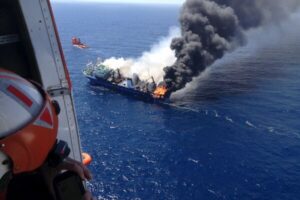
Ukraine has announced an international tender for the purchase of a modern multifunctional vessel for Danube ports, which will perform environmental, emergency rescue, and technical tasks.
According to a statement by the State Enterprise “Ukrainian Sea Ports Authority” (USPA), the vessel will be designed to operate in the ports of Izmail, Reni, and Ust-Dunaysk, which are currently key logistics hubs in the south of the country.
According to the technical specifications, the new vessel will be able to collect oil products and debris from the water surface, extinguish fires on ships and port facilities, and perform tugboat and mooring functions, assisting large ships in maneuvering.
The project is being implemented as part of the RELINC (Restoration of Essential Logistics Infrastructure and Network Connectivity) program with the support of the International Bank for Reconstruction and Development (IBRD).
Experts note that the new vessel will not only strengthen the port infrastructure, but will also be an important element of the environmental safety of the entire Danube.
Danube ports currently handle more than 40% of all Ukrainian agricultural exports and play a key role in international logistics, especially after the blockade of Black Sea routes.
The Danube is approximately 2,850 km long, the second longest river in Europe after the Volga.
The river basin flows through 10 countries — Germany, Austria, Slovakia, Hungary, Croatia, Serbia, Romania, Bulgaria, Moldova, and Ukraine — and flows into the Black Sea through the Danube Delta, part of which is located in the Odesa region.
According to estimates by the European Commission and the International Commission for the Protection of the Danube River (ICPDR), the level of pollution in the river remains moderate, but there is an accumulation of heavy metals, pesticides, and microplastics, especially in the tributaries.
The main sources of pollution are industrial discharges, agrochemicals, household waste, and shipping.

Samples of sea water in the water area of Odessa showed an excess of pollutants and a sharp drop in salinity due to the Russian occupants of the dam of the Kakhovskaya hydroelectric power plant on the Dnieper, but no cholera pathogens were detected, according to the Telegram channel of the Odessa City Hall “Odessa. Officially” on Tuesday.
“In samples of seawater sampled on June 10 from points in Odessa cholera pathogen and cholera-like vibrios were not detected … In samples of seawater sampled at the beach “Langeron” excess of iron in 4.8 times, salinity below the norm in 2.7 times; in samples taken at the 16-th station B. Fountain samples recorded excess of suspended solids in 1.8 times, iron – in 5.2 times, the salinity is 2.9 times below the norm,” the statement said.
At the same time, it is reported that the drinking water supplied to Odessa complies with sanitary norms. “Drinking water corresponds to the State sanitary norms and rules 2.2.4-171-10 “Hygienic requirements for drinking water intended for human consumption”, – reported in the City Hall.
The Odessa City Council reminded that the order of the Odessa Regional Military Administration of July 16, which established a special mode of movement of citizens in certain areas of the Odessa region, prohibits staying on the Black Sea coast, in particular within the beach areas, is still in force.



