

The administration of U.S. President Donald Trump has proposed imposing a fee of $70,000 for an international student’s initial participation in the Optional Practical Training (OPT) program and an additional $30,000 for subsequent extensions, including those for STEM graduates.
The corresponding draft rule from the U.S. Department of Homeland Security (DHS) was published on October 8, 2026, in the Federal Register. This decision has not yet taken effect: the document is currently open for public comment, with comments accepted until November 9.
The OPT program allows international students with an F-1 visa to temporarily work in the U.S. in their field of study during or after their studies. Typically, graduates can work under OPT for up to 12 months, and an additional extension is available for STEM fields.
Under the new scheme proposed by DHS, a certified college or university would be required to pay the fee before the institution submits an OPT recommendation to the SEVIS system. Without confirmation of payment of the new fee, a student will not be able to obtain a work authorization.
If the rule is approved as currently proposed, the cost of accessing OPT will increase tenfold. Currently, obtaining a work permit costs approximately a few hundred dollars, whereas the proposed model calls for $70,000 for the initial recommendation and an additional $30,000 for each subsequent one.
DHS justifies the reform by citing the need to combat fraud and abuse in the OPT program, as well as to protect the U.S. labor market. In the draft rule, the agency refers to cases of fictitious employment of international graduates and potential violations in the program identified by ICE.
Reuters notes that OPT is one of the key pathways through which international graduates of U.S. universities gain their first work experience in the U.S. and then often transition to H-1B work visas. Therefore, the introduction of such a high fee could significantly reduce the number of graduates who remain to work in the country after completing their studies.
At the same time, the group potentially affected is very large. According to Open Doors 2025, there were 1.178 million international students at U.S. colleges and universities during the 2024–25 academic year, accounting for about 6% of all U.S. higher education students. Of these, 294,300 participated in OPT, with the number of program participants rising by 21% over the course of the year.
The largest numbers of international students come to the U.S. from India (363,000), China (266,000), South Korea (42,300), Canada (29,900), and Vietnam (25,600).
There are significantly fewer Ukrainian students at U.S. universities, but their numbers are growing. According to Open Doors 2025, 2,346 students from Ukraine were studying or participating in OPT in the U.S. during the 2024–25 academic year, which is 7.5% more than the previous year.
By comparison, there were 2,183 Ukrainian students in the U.S. during the 2023–24 academic year. At that time, about 55% of them were enrolled in bachelor’s programs, 26% in master’s and doctoral programs, 14% were participating in OPT, and another 5% were in non-degree programs.
Thus, if the composition of the Ukrainian student population remains roughly the same, the new fees could affect several hundred Ukrainians who plan to stay in the U.S. for professional practice after graduating from American universities. However, Open Doors does not provide the exact number of Ukrainians specifically on OPT in the 2024–25 academic year in its publicly available summary statistics.
Overall, the Ukrainian community in the U.S. is significantly larger than the student population. According to an estimate by the Migration Policy Institute based on the American Community Survey, more than 510,000 immigrants born in Ukraine were living in the U.S. in 2024, and the entire Ukrainian diaspora, including people of Ukrainian descent, was estimated at approximately 1.4 million people.
Critics of the proposal warn that the new fee could make U.S. universities less attractive to international applicants and redirect some students to the United Kingdom, Canada, Australia, and EU countries. The Presidents’ Alliance on Higher Education and Immigration has already stated that such a high financial barrier could seriously disrupt the existing system for attracting foreign graduates to the U.S. labor market.
However, the initiative’s final fate remains uncertain. After the public comment period ends, DHS may amend the proposal, drop some provisions, or adopt the final rule. Additionally, Reuters notes that the new restrictions are likely to face legal challenges.

Ukrainian students have been selected as recipients of the HEC Imagine program, which provides young people from countries affected by war and crises with the opportunity to study at HEC Paris, one of France’s leading business schools.
This was reported by the Embassy of Ukraine in the French Republic following the “Imagine pour la Paix” event, dedicated to supporting the program’s participants.
The event took place at UNESCO headquarters in Paris and brought together representatives from HEC Paris, the French business community, program partners and donors, diplomats, and students.
Among those attending were Jean-Noël Barro, France’s Minister for Europe and Foreign Affairs—an HEC Paris alumnus—as well as Gaël Veissier, former French Ambassador to Ukraine, who currently heads the Crisis Response and Support Center at the French Ministry for Europe and Foreign Affairs.
HEC Imagine fellows shared their personal experiences and insights about studying in France.
The HEC Imagine program was created to support talented students whose education and career prospects have been threatened by wars and other crises. Ukrainian students were among the program’s first participants.
According to HEC Paris, the HEC Imagine Fellows project began in 2022. From the very beginning, the scholarships enabled students from Ukraine, Afghanistan, and Syria to study at HEC.
The program provides not only financial support for tuition but also facilitates the students’ integration into the academic and professional environment at HEC Paris.
The Ukrainian Embassy in France emphasized that supporting the education of Ukrainians takes on special significance amid the war and the destruction of Ukraine’s educational and scientific infrastructure.
“The reconstruction of Ukraine is not just about rebuilding buildings and infrastructure. Above all, it is an investment in people: future entrepreneurs, economists, engineers, and managers who will create jobs, attract investment, and build a modern, European Ukraine,” the Ukrainian Embassy noted.
The diplomatic mission also thanked HEC Paris for its support of Ukrainian students and the Association des étudiants ukrainiens en France for helping to organize Ukraine’s participation in the event.
HEC Paris is one of Europe’s most renowned business schools. The institution specializes in training professionals in the fields of management, finance, entrepreneurship, and business administration, and its graduates work in international companies, financial institutions, the public sector, and their own businesses.
The HEC Imagine program is part of a broader initiative that combines support for students from conflict-affected countries with a discussion on the role of business and education in rebuilding and securing peace.
Sources: Embassy of Ukraine in the French Republic, HEC Paris, UNESCO.

Huawei Ukraine has announced that it is accepting applications from students at Ukrainian higher education institutions to participate in the annual Student Tech Challenge-2026 team competition, which is held with the support of the Ministry of Education and Science of Ukraine.
According to the company’s press release, participants will develop technological solutions for challenges in the fields of telecommunications, computer networks, and digital energy. Winners will receive prizes and the opportunity to join an internship program at Huawei Ukraine.
The competition will be held in three main categories: Radio Access Network Planning, Datacom Engineering, and Digital Energy. Teams will develop their projects with the assistance of the company’s faculty coaches and mentors.
The first stage of the Student Tech Challenge will run from October 6 to 26 and will include online meetings, solution development, and presentation preparation. The semifinals are scheduled for October 26–27, after which the finalist teams will continue working with mentors. Project pitches will take place on November 4–5, either online or in person in Kyiv, and the finals and awards ceremony will be held on November 6.
Teams of two to five students from Ukrainian higher education institutions are invited to participate. Eligible participants include undergraduate students in their third year or higher and first-year master’s students majoring in engineering, technical, and related polytechnic fields. Knowledge of English at a minimum B1 level is required, as project presentations will be conducted in English.
Detailed contest rules are available on the official Student Tech Challenge website.
Huawei Ukraine has been operating in the Ukrainian market since 2000, and Huawei Ukraine LLC was registered in Kyiv in May 2005. The company is engaged in the supply, commissioning, maintenance, and technical support of Huawei telecommunications equipment and software.
One of the company’s areas of activity in Ukraine is the training of specialists in the field of information and communication technologies. In particular, since 2016, the international educational program “Huawei Seeds for the Future” has been implemented in Ukraine, and the Huawei ICT Academy network has been expanding in partnership with Ukrainian universities.
Source: Huawei Ukraine press release on the “Interfax-Ukraine” website.
EDUCATION, Huawei Ukraine, Student Tech Challenge, TECHNOLOGY, СТУДЕНТ

Andriy Butenko, Ukraine’s Minister of Education and Science, discussed with Seymur Mardaliyev, the Ambassador of the Republic of Azerbaijan to Ukraine, the recognition of higher education documents, the expansion of cooperation between universities, and the preparation of bilateral events in the field of education and science.
“As of early 2026, more than 5,400 Azerbaijani citizens were studying in Ukraine—about one-third of all international students. The Ukrainian side reaffirmed its interest in maintaining this cooperation and creating appropriate conditions for pursuing an education,” according to a statement from the Ministry of Education.
It is noted that special attention was given to the recognition of diplomas from Ukrainian higher education institutions in Azerbaijan.
In particular, the Ukrainian side proposed to thoroughly examine the relevant issues within the framework of a specialized working group.
The meeting also addressed the issue of documentation required for the admission and arrival of Azerbaijani students coming to study in Ukraine.
In addition, the meeting participants discussed preparations for a visit to Azerbaijan by a delegation from the Ministry of Education led by Deputy Minister Mykola Trofimenko.
“The proposed program includes a working group meeting on the recognition of educational documents, as well as meetings with the leadership of the relevant ministry and university rectors. The visit is intended to facilitate the development of joint decisions and the establishment of direct partnerships between higher education institutions in both countries. The possibility of organizing a meeting between the education ministers of Ukraine and Azerbaijan by the end of this year was also discussed,” the statement reads.
The parties also discussed preparations for the 14th meeting of the Joint Intergovernmental Commission on Economic Cooperation and the signing of an intergovernmental agreement on scientific and technical cooperation.
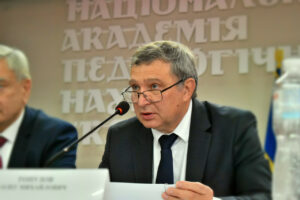
The General Assembly of the National Academy of Pedagogical Sciences of Ukraine elected Oleg Topuzov as president of the Academy for a five-year term—from September 18, 2026, to September 17, 2031.
According to the results of a secret ballot, 185 assembly members supported his candidacy, nine voted against, and two ballots were deemed invalid. Topuzov was the only candidate for the position.
He succeeded Vasily Kremen, who had led the academy since 1997. The General Assembly unanimously elected Kremen as honorary president of the National Academy of Pedagogical Sciences for life.
In presenting the academy’s development program, Topuzov outlined four core principles of operation: continuity, competence, openness, and effectiveness.
“My task is not to start from scratch. My task is to preserve the best of what we have and, together with you, to usher in a new phase of our academy’s development,” he stated.

Among the main areas of focus for the new leadership, Topuzov highlighted strengthening the influence of educational science on the formation of state education policy, rebuilding human capital, overcoming educational gaps, supporting young scholars, and researching the impact of artificial intelligence on the education system.
One of the key initiatives is to be a systematic foresight study on the development of education in Ukraine through 2035. It will cover possible scenarios for the development of preschool, K-12, vocational, higher, and adult education, taking into account demographic changes, labor market needs, technological development, and European integration.
“Our research should not end with just monographs, articles, or recommendations. It must influence government decisions,” Topuzov emphasized.
He identified scientific support for education during wartime and postwar reconstruction as a separate priority. This refers, in particular, to the psychological resilience of children and youth, support for educators, inclusion, and the reintegration of veterans and Ukrainians returning from abroad.
According to the new president of the National Academy of Pedagogical Sciences, Ukraine’s recovery must begin with the restoration of human capital.
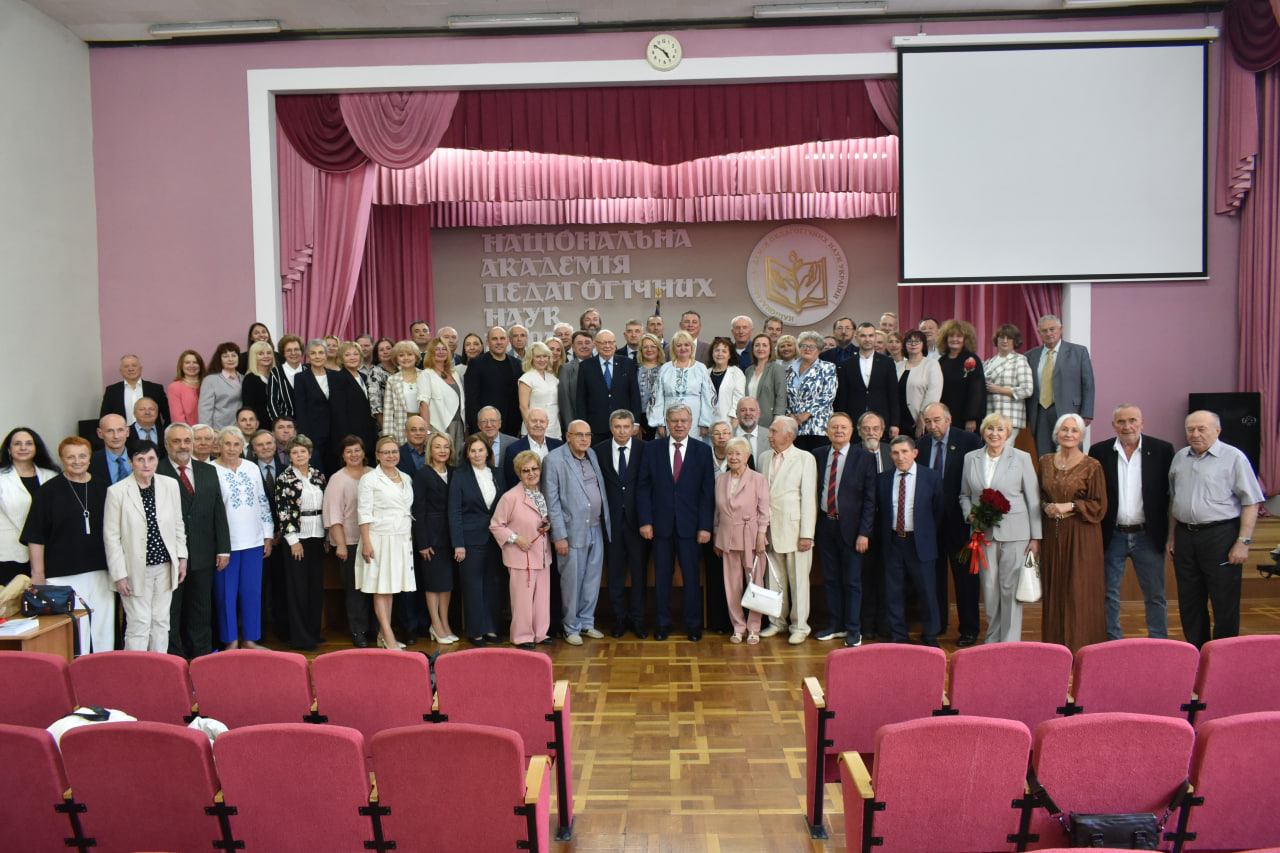
Topuzov also proposed launching a university-wide program titled “Artificial Intelligence and the Future of Education.” Research should cover changes in the role of teachers, approaches to assessing knowledge, issues of academic integrity, and the competencies students will need over the next 10–20 years.
The NAPN’s European integration will involve expanding joint research, participating in international consortia and programs such as Horizon Europe, Erasmus+, and COST, promoting academic mobility, and increasing the number of joint international publications.
For young researchers, there are plans to create the “Young Scientist of the National Academy of Pedagogical Sciences of Ukraine” program, which will provide grant support, mentorship, international mobility, and participation in major research projects.
During the annual meeting, the results of the NAPN’s activities for 2017–2026 were also presented. During this period, the Academy’s institutions completed 163 fundamental and 195 applied research projects, produced more than 14,000 scientific articles, and published over 250 monographs, preprints, and other scientific works.
The NAPN’s electronic library collection has grown to 40,000 full-text resources, and the number of downloads has reached 19 million. The Academy’s institutions participated annually in nearly 50 international scientific and educational projects and programs.
During the meeting, the Academy’s new leadership was also formed. Volodymyr Lugovoy and Vitaliy Panko were elected vice presidents of the National Academy of Pedagogical Sciences, and a new presidium was formed consisting of 29 members, 22 of whom had not previously served on it.
The National Academy of Pedagogical Sciences of Ukraine conducts fundamental and applied research in the fields of education, pedagogy, and psychology; participates in the development of educational standards, curricula, and textbooks; and provides scientific support for reforms in the education system.

Ukrainian universities are joining the European Researchers’ Night initiative, which will take place on September 25 this year. Specifically, Zaporizhzhia Polytechnic National University will host “Science Night 2026” on that day, while Lviv Polytechnic is coordinating a separate European Researchers’ Night 2026–2027 project as part of the Horizon Europe program.
According to Zaporizhzhia Polytechnic, “Science Night 2026” will take place on September 25 on the university campus and will be aimed primarily at schoolchildren, prospective students, and young people. The program includes interactive experiments, scientific demonstrations, a children’s science conference, and international events featuring foreign partners. The event will be held with due consideration for the security situation; the university notes that shelters are available.
A separate international conference as part of “Science Night” is also scheduled for September 25. Researchers from European universities are expected to participate.
In addition, for the first time at this level, Ukraine is represented by a separate project in the European Researchers’ Night program. Lviv Polytechnic has become the coordinator of the international project STEM for Science, Technology, Awareness & Researchers (STEM4STAR), selected for funding under the
European Researchers’ Night and Researchers at Schools 2026–2027 program of Horizon Europe.
According to the university, 241 applications from various European countries were submitted to the competition, and funding was recommended for 49 projects. STEM4STAR received the highest scores from experts across all criteria. The project involves organizing science festivals, European Researchers’ Night events, demonstrations of modern technologies, geospatial games, mapping challenges, mapathons, STEM programs, and startup competitions in Lviv. Some sessions will also take place in schools and colleges across Western Ukraine.
European Researchers’ Night is a pan-European initiative funded by the EU through the Marie Skłodowska-Curie Actions. In 2026, the main event will take place on September 25. According to the European Research Council, over 1 million participants are expected across approximately 40 countries. Universities and research institutions will host open labs, experiments, science shows, discussions, exhibitions, and interactive events for the general public.



