

The leader of the Servant of the People party, First Deputy Speaker of the Verkhovna Rada Oleksandr Kornienko, estimates the cost of holding elections in Ukraine at UAH 6 billion.
“There are no complicated calculations here, since 90% of these costs are the salaries of commission members. Since the last elections, the 2019 parliamentary elections, the minimum wage and average salary have increased by several thousand hryvnia, and some indicators have doubled. Therefore, if elections previously cost UAH 2.5-3 billion, then simply multiplying that figure by two, the current cost would be UAH 6 billion,” Kornienko said in an interview with the Azerbaijani news agency Report.
He also noted a number of issues related to compensation for commission members abroad. “How can this be implemented? If, for example, we follow our regulations, some of these people will be there, and some may be on business trips. These are all additional expenses. So, these issues remain unresolved,” said the first deputy speaker.
According to Kornienko, partner countries “understand that they will finance these elections.”
“We are negotiating with them,” he said.
At the same time, the party leader said that he would not like to discuss the issue of election participants, since “there are more pressing problems in the country right now, such as the energy crisis.”
“Unfortunately, the aggressor country has deprived us of both democracy and the opportunity to hold elections on time… Let’s see how events unfold, including political ones. Now we need to do everything we can to at least be able to hold these elections,” Kornienko concluded.

According to Serbian Economist, Serbia is discussing the possibility of holding presidential and parliamentary elections on the same day, although the next elections are scheduled for 2027.
Political experts link the possible appointment of elections to an earlier date, including 2026, with the political calculations of Serbian President Aleksandar Vučić and the results of regular public opinion polls, rather than with formal calendar frameworks.
Combining the presidential and parliamentary elections could give Vučić the opportunity to head the parliamentary list and position himself as a candidate for prime minister, but the nomination of a strong candidate in the presidential election potentially creates a separate center of political capital within the ruling coalition.
At the same time, the leader of the Serbian Progressive Party, Miloš Vučević, has previously stated that combining parliamentary and presidential elections “is not an issue” on which there is currently a decision or a specific plan, and that such issues are resolved “in accordance with the law and the Constitution,” taking into account the overall political and social situation.

According to Serbian Economist, Serbian President Aleksandar Vucic said that early parliamentary elections in the country could be held in October, November, or December 2026, the Beta agency reported.
According to Vučić, the date of the elections will depend on the agreements of the political participants, if they are ready for dialogue.
Student groups have previously demanded the appointment of early elections, while part of the opposition claims that the authorities are in no hurry to announce them.
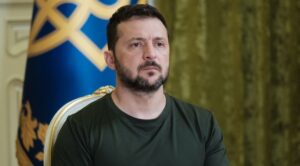
Ukrainian President Volodymyr Zelensky said that he is asking the US and Europe to ensure security for the elections, after which Ukraine will be ready to hold them in the next 60-90 days.
“Not only that, I am now asking, and I am stating this openly, for the US to help me, possibly together with European colleagues, to ensure security for the elections. Then, in the next 60-90 days, Ukraine will be ready to hold elections. I personally have the will and readiness to do so,” Zelensky told reporters on Tuesday.
At the same time, the president noted that the issue of elections in Ukraine depends primarily on Ukrainians, not on the people of other countries.
He stressed that he is ready for the elections, but explained that security and a legislative basis for their legitimacy are necessary for the elections to be held.
“Further, since this is how things have turned out, I ask that the deputies of our faction, in principle, our parliamentarians, prepare legislative proposals on the possibility of changing the legislative framework and the law on elections during martial law,” Zelensky added.
According to him, he is waiting for proposals from partners and deputies and is ready to go to the polls.
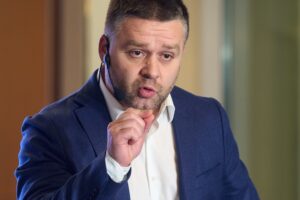
The Serbian Economist reports that the candidate of the National Liberal Party of Romania (PNL), backed by Prime Minister Ilie Bolojan, Ciprian Ciuc won the early election for mayor of Bucharest with about 36% of the votes after almost all ballots were counted.
According to Romanian and international media, Ciuc beat far-right Alliance for the Unification of Romanians (AUR) candidate Anca Alexandrescu, who received about 22% of the vote, as well as Social Democratic Party (PSD) nominee Daniel Belutse, who came in third. The election was seen as a test of the influence of AUR, which is leading in part of the nationwide polls.
The post of mayor of the Romanian capital became vacant after the former mayor Nicusor Dan was elected president of the country in 2025, necessitating an extraordinary vote. The victory of the EU-oriented liberal candidate is seen by observers as an important political success for incumbent Prime Minister Bolojan and his pro-European ruling coalition amid the growing popularity of right-wing and far-right forces in the region.
Analysts note that the outcome of the Bucharest election reduces the risk that one of the first capitals of an EU member state could become a city governed by a radical right-wing party, while strengthening the government’s position ahead of further political battles at the national level.
https://t.me/relocationrs/1901
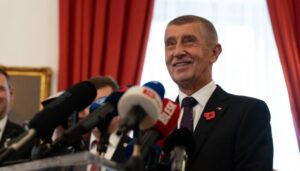
On Monday, November 3, ANO party leader and likely future Czech Prime Minister Andrej Babiš signed a coalition agreement with the far-right Freedom and Direct Democracy (SPD) party and the Motorists for Themselves political force, Radio Prague International reports, citing European Truth.
After four weeks of negotiations, the parties agreed on the main program goals of the future government, as well as the distribution of ministerial portfolios among the parties.
“The agreement defines political priorities, the number of ministers, and the principles of government personnel formation,” ANO representatives said.
The next step will be to submit proposals for the composition of the government, followed by a vote in parliament.
Tomio Okamura, leader of the SPD, who was nominated jointly by the SPD, ANO, and Motorists, is expected to become speaker of the Chamber of Deputies.
During the election campaign, Okamura repeatedly made anti-Ukrainian statements, in particular regarding the restriction of the rights of Ukrainian refugees in the Czech Republic.
After the election of the speaker of parliament, the current government must resign, which will pave the way for the formation of a new cabinet headed by Babiš.
On October 27, Czech President Petr Pavel officially tasked Andrej Babiš with forming a government after the ANO party won the parliamentary elections on October 3–4, 2025.
ANO received the most votes among all political forces, ahead of the Together coalition and the Social Democrats.
According to preliminary data, Babiš’s cabinet will consist of 15 ministers, half of whom will be appointed by ANO, five by the SPD, and two by the Motorists party.
Andrej Babiš already headed the Czech government in 2017–2021. His ANO party positions itself as “centrist” and advocates strong state support for business. The SPD is known for its Eurosceptic and anti-immigration positions, while the Motorists for Themselves party advocates for the liberalization of traffic rules and lower taxes for the transport sector.
ANO, Babiš, CZECH REPUBLIC, ELECTIONS, GOVERNMENT, PARLIAMENT, SPD, Томіо Окамура



