
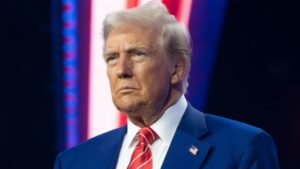
In response to the recent fines imposed by the European Union on the American tech companies Apple, Google, and Amazon, U.S. President Donald Trump called the move “discrimination” and promised additional investigations and tariffs.
“The European Union is at it again and, as always, has targeted major American companies directly! After fining Apple $15 billion, Meta $3 billion, Amazon $2.5 billion, and many others for no reason at all, we have just been informed that Google—a truly cutting-edge and amazing company—has been fined another $1 billion without any explanation,” he wrote on the social media platform Truth Social.
Trump emphasized that the total amount of fines imposed on Google exceeded $18 billion.
“This illegal and highly discriminatory practice began at such high levels during the first year of Joe Biden’s administration, but it will not continue under a Trump administration,” he stressed.
Trump noted that the U.S. “will immediately launch a Section 301 investigation into the practice of ‘robbing’ American companies and, as a result, American taxpayers.”
The U.S. president promised a “very high price” for the European Union for “this illegal and highly unethical behavior.”
“The fines will be completely rescinded, and we expect a substantial tariff to be imposed on them as soon as possible,” Trump promised.
As reported, the European Commission (EC) announced on Thursday its decision to impose a fine of 890 million euros on Google for violating the Digital Markets Act (DMA).
Source: https://truthsocial.com/@realDonaldTrump/posts/116976043318889040
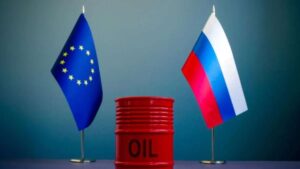
The European Union has established a legal framework allowing member states to sell Russian oil that was previously seized and confiscated in the course of cracking down on sanctions evasion.
The relevant provision is included in EU Council Regulation No. 2026/1848 of July 23, 2026, which formalized the 21st package of sanctions against Russia. The document states the need to enable national competent authorities to safely dispose of shipments of Russian oil that they seize and confiscate. Disposing of the cargo may include selling it to third parties.
However, the new provision does not grant EU authorities the automatic right to stop any tanker simply because it is transporting oil of Russian origin. First, the state must have legal grounds to detain the vessel and confiscate the cargo—for example, a violation of the sanctions regime, the absence of a valid flag, the provision of false documents, or other violations of European, national, or international law.
The new regulation primarily specifies what authorities may do with the cargo after its lawful confiscation. Once the confiscation procedure is complete, the former owner does not automatically receive the right to the proceeds from the sale of the cargo. However, the regulation does not establish a uniform procedure for distributing the proceeds across all EU countries, nor does it provide for their automatic transfer to Ukraine. Such decisions will depend on national legislation and the specific case.
According to Euractiv, the measure is primarily aimed at cargo from vessels used to circumvent EU oil sanctions. The option to sell the cargo is intended to address a practical problem: confiscated oil must be unloaded, stored, and safely sold, which entails significant costs and environmental risks.
The mechanism is part of the 21st EU sanctions package, adopted on July 23. The package also increases pressure on the Russian oil sector, traders, and the shadow fleet, and suspends the automatic review of the price cap on Russian oil until July 15, 2027.
In practice, the new rule may make it easier for EU member states to take action against vessels suspected of circumventing sanctions. However, each detention and confiscation must have a separate legal basis, and the owners of the vessels and cargo will be able to challenge such decisions in national and international courts.
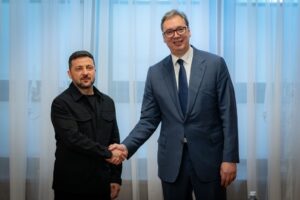
According to Serbian Economist, Serbian President Aleksandar Vucic reaffirmed that the country’s accession to the European Union remains Belgrade’s strategic goal and expressed hope to host Ukrainian President Volodymyr Zelenskyy on a bilateral visit.
Vucic made these remarks in an interview with Rainer Novak, editor-in-chief of the Austrian newspaper Die Presse, published on July 23.
“The European path is our strategic goal. There are no other paths for us. This means that we must cooperate closely with all candidate countries,” said the Serbian president.
According to him, it is in the European Union that he sees his country’s future.
Speaking about relations with Ukraine, Vučić stated that he sees no reason to abandon cooperation with Kyiv. He reiterated that Serbia supports Ukraine’s territorial integrity and provides it with financial, medical, energy, and humanitarian aid.
“I hope we will be able to welcome him to Serbia on a bilateral basis,” said Vučić, referring to Zelenskyy.
Vucic also announced that Serbia is ready to participate in the reconstruction of one of Ukraine’s smaller cities. In addition, the parties are discussing the development of a road and rail route from Trieste through Croatia, Serbia, Romania, and Moldova to Ukraine.
The Serbian president had previously reaffirmed his support for Ukraine’s sovereignty and territorial integrity, but did not sign the final declaration, which condemned Russian aggression and called for increased sanctions pressure on Moscow.
Commenting on criticism of cooperation with Kyiv, Vučić stated that Ukraine had not taken any action against Serbia and had not recognized Kosovo’s independence.
“We cannot oppose someone just because someone else opposes them. I see no reason why we should not cooperate with Ukraine,” he said.
At the same time, Vučić emphasized the need to take into account Serbia’s relations with Asian countries and Russia and reaffirmed the country’s military neutrality.
Serbia was granted EU candidate status in March 2012, and membership negotiations began in January 2014. In recent years, the opening of new negotiation chapters has effectively stalled, despite Belgrade’s statements that it is ready to meet the technical criteria for membership.
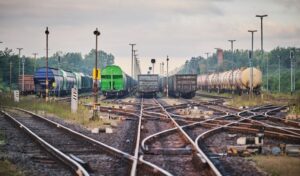
According to “Serbian Economist”, the Hungarian government plans to allocate 3.55 trillion forints, or about 9.8 billion euros, by 2035 for the modernization of the national railway network.
Hungarian Prime Minister Péter Magyar and Minister of Transport and Investment Dávid Vitézi presented the program on July 22 at the Rakospalota-Újpest station in Budapest. Authorities are calling it one of the largest railway projects in the country’s history.
The program is designed to be implemented in several phases. Its main objectives will be to improve the reliability of transportation, reduce travel times, reconstruct tracks and stations, modernize the rolling stock, and develop international rail routes.
The government intends to ensure competitive rail service to all administrative centers in Hungary, modernize regional lines, and expand commuter service around Budapest and other major cities. Specific areas of focus will include the development of freight transport, the establishment of a rail link to Budapest Airport, and the integration of national and urban transportation systems.
It is planned to allocate 1.1 trillion forints from EU Cohesion Funds and 700 billion forints from the European Recovery and Resilience Facility (RRF) to implement the program. An additional 400 billion forints is planned to be raised through loans from the European Investment Bank, with a similar amount to be secured through concession projects. Approximately 950 billion forints will be allocated to projects under the next EU budget cycle for 2028–2034.
The government plans to purchase at least 35 new InterCity trains and 42 commuter electric trains, as well as begin renovating the country’s ten busiest train stations. The average age of MÁV trains and HÉV commuter trains is currently about 43 years, and 42% of the rail network is subject to significant speed restrictions.
On major routes, the government aims to increase the average speed to 100 km/h. Certain sections are planned to be upgraded to accommodate trains traveling at speeds of 160–200 km/h.
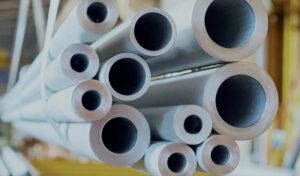
PJSC “Centravis Production Ukraine” (Centravis Production Ukraine, Nikopol, Dnipropetrovsk Oblast), a subsidiary of Centravis Ltd., reported a 6.6% increase in production for January–June of this year—from 6,770 metric tons to 7,220 metric tons;
According to a press release on Monday, exports in monetary terms increased by nearly 15%—from 2.56 billion UAH to 2.94 billion UAH; the amount of taxes paid rose by nearly 11% to 361.5 million UAH.
“The first half of the year was another challenging period for us, one that put the entire team to the test. First and foremost, this was due to the security situation in Nikopol, where our main production facilities are located. The situation remains consistently difficult, and so far there is no reason to expect a significant improvement in the near future,” said the company’s CEO, Yuriy Atanasov.
According to him, in June, the EU—one of the company’s key markets—decided to significantly restrict opportunities for exporting Ukrainian steel products. Specifically, the EU set a quota of 6,524 metric tons for Ukrainian seamless stainless steel pipes, even though Ukraine exported 11,306 metric tons last year. “In effect, a single regulatory decision has closed off nearly half of the European market for us. The consequences of this decision could be extremely painful for both the company and the Ukrainian economy,” the CEO stated.
He added that the new trade restrictions could significantly impact Centravis’s production figures in the second half of the year. The market for seamless stainless steel pipes is quite conservative, and finding and attracting new customers in other regions takes time. One consequence of the new trade restrictions was the company’s decision to mothball its production facility in Uzhhorod—which is largely geared toward EU customers—starting September 1.
At the same time, the company plans to continue diversifying its supply geography by stepping up its efforts in the U.S., Latin American, and Middle Eastern markets, where Centravis has sales offices.
As previously reported, Centravis increased its pipe production by 6% in Q1 2026—from 3,210 metric tons in the first quarter of 2025 to 3,400 metric tons in the first quarter of 2026. Export volumes grew even more—by 10%, from 1.24 billion UAH to 1.37 billion UAH. The company also increased its tax payments to budgets at various levels.
In the first three months of 2026, “Centravis” paid 170.6 million UAH in taxes, which is 19% more than during the same period last year.
In 2025, the company produced 13.77 thousand metric tons of products. Almost the entire volume is exported to foreign markets. The company’s main markets remain Europe, the United States, and the Middle East.
Centravis’s production facilities are located in Nikopol and Uzhhorod. The company also has sales offices in the United States, Germany, Italy, Switzerland, Poland, and the United Arab Emirates.
Centravis was founded in 2000 and ranks among the top ten largest manufacturers of seamless stainless steel pipes in the world. Its main production facilities are located in Nikopol (Dnipropetrovsk Oblast). In 2023, the company opened a branch in Uzhhorod.
The Centravis Ltd. holding company was established on the basis of CJSC “Nikopol Stainless Steel Pipe Plant” and the service and trading companies of LLC “Production and Commercial Enterprise ‘YUVIS’.” Its shareholders are members of the Atanasov family. Centravis Ltd. owns 100% of the shares in Centravis Production Ukraine PJSC.
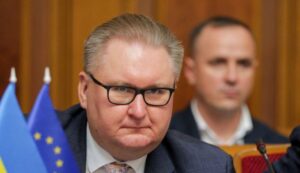
Ukrainian President Volodymyr Zelenskyy announced that Taras Kachka will serve as Ukraine’s representative to the European Union in Brussels and, at the same time, perform the duties of Ukraine’s trade representative.
“We are still awaiting decisions on four more clusters. I believe that Taras will be able to implement this most effectively at Ukraine’s Mission to the EU in Brussels. Given Taras’s proven track record and experience in trade policy, he will combine this work with the European Union with the role of Ukraine’s trade representative within the framework of our bilateral trade agreements with key partners,” Zelenskyy wrote on his Telegram channel on Friday.



