

Antigua and Barbuda could lose visa-free access to the Schengen Area by the end of 2026 due to the European Union’s concerns about its citizenship-by-investment program, said Prime Minister Gaston Brown. According to him, Brussels has warned of a possible revocation of visa privileges if the EU’s security concerns regarding the program are not addressed.
This refers to the Citizenship by Investment Program—a scheme under which foreign investors can obtain citizenship of Antigua and Barbuda through a fee or investment. For purchasers of such passports, mobility remains the key commercial benefit: the country’s passport currently allows for short-term visa-free entry into the Schengen Area.
Brown made it clear, however, that the government does not intend to shut down the citizenship-by-investment program, even under pressure from the EU. For Antigua and Barbuda, it remains an important source of non-tax revenue and a tool for financing development. The authorities hope to convince the European side that additional electronic travel monitoring could serve as an alternative to a full-fledged visa regime.
Pressure on Caribbean programs has intensified following the reform of the EU’s visa mechanism. In October 2025, the European Parliament supported an update to the rules that allows for the faster suspension of visa-free travel for countries that pose security risks or violate the conditions of visa liberalization. “Golden passport” schemes effectively fall into a separate category of such risks.
In its eighth report on the visa suspension mechanism, the European Commission explicitly stated that citizenship-by-investment programs in visa-free countries pose a “non-zero risk” to the Schengen Area. Although countries in the Eastern Caribbean have already raised the minimum investment threshold to $200,000 and tightened applicant screening, Brussels considers the situation problematic.
This is a warning sign for the investment migration market. Vanuatu has already become the first country to lose visa-free access to the EU due to “golden passports”: the European Union permanently revoked the visa-free travel agreement with this Pacific nation in December 2024, following a previous suspension of the arrangement in 2022.
Antigua and Barbuda has already faced similar pressure from the United States. In early 2026, Washington suspended visa services for the country’s citizens, citing concerns that the citizenship-by-investment program could be exploited by criminal organizations to gain access to the U.S.
If the EU does indeed impose visa requirements, the value of an Antigua and Barbuda passport for foreign investors will plummet. For small island economies in the Caribbean, this could mean not only a drop in demand for CBI programs but also a reevaluation of the entire model of attracting capital through the sale of citizenship.
For investors, the conclusion is becoming increasingly clear: a “golden passport” without sustainable visa-free access to the EU is transforming from a tool for mobility into a much riskier asset. European policy is gradually shifting from tolerance of investment citizenship to direct control and the possible revocation of visa benefits.
Antigua and Barbuda, EU, golden passport, INVESTMENT, VISA-FREE TRAVEL
The European Commission has launched the Connectivity Agenda Platform—a new platform to coordinate investments in transport, energy, digital infrastructure, and trade between Europe and Central Asia via the Black Sea region and the South Caucasus.
At the same time, the European Commission has signed agreements with international financial institutions to mobilize up to 2 billion euros for strategic infrastructure projects in the Black Sea region and the South Caucasus.
The platform was presented at a high-level ministerial meeting attended by representatives from EU countries, Armenia, Kazakhstan, Kyrgyzstan, Moldova, Tajikistan, Turkmenistan, Turkey, Ukraine, and Uzbekistan, as well as the G7 and international financial institutions.
The main goal of the initiative is to integrate projects for the development of the Trans-Caspian Transport Corridor into a single system; the EU views this corridor as one of the key routes between Europe and Central Asia, bypassing unstable or politically risky routes.
Investments are planned to be directed toward transportation infrastructure, border crossing points, and trade facilitation. The participants also agreed to enhance the operational efficiency of the Trans-Caspian Corridor and asked the European Commission to assess its performance and propose priority measures to improve the route’s competitiveness.
For Ukraine, this initiative is important in several respects. First, Kyiv has been included in the framework for discussions on regional connectivity between the EU, the Black Sea, the South Caucasus, and Central Asia. Second, the development of alternative trade routes reinforces the importance of the Black Sea corridor for exports, logistics, and the restoration of the region’s transit role. Third, such projects could become part of Ukraine’s broader integration into European transport, energy, and digital networks.
The Connectivity Agenda is part of the Global Gateway strategy. This strategy aims to strengthen the EU’s external connections through investments in infrastructure, energy, digital solutions, and sustainable trade.
The European Commission notes that the Trans-Caspian Transport Corridor is already gaining strategic importance as a more resilient route between Europe and Central Asia. According to Marta Kos, European Commissioner for Enlargement, trade along this route could increase fivefold over the next 15 years.
In fact, the EU is seeking to create a new infrastructure architecture along the Europe–Black Sea–South Caucasus–Central Asia axis. For businesses, this means potentially more routes, less dependence on specific transit routes, and new opportunities in logistics, energy, digital projects, and trade.

In Ukraine, a requirement takes effect on July 1 stipulating that all freight vehicles registered for the first time for international transport must be equipped with second-generation smart tachographs (G2v2).
According to a statement from the Ministry of Community and Territorial Development, this requirement is part of Ukraine’s obligations under the Agreement on the Liberalization of Freight Transport with the EU.
“We are consistently harmonizing our legislation with EU standards so that Ukrainian companies can operate under the same rules as their European counterparts,” Deputy Minister of Community and Territorial Development Serhiy Derkach is quoted as saying in the press release.
The ministry explained that second-generation smart tachographs will automatically record drivers’ work and rest periods, as well as determine the vehicle’s location.
However, the ministry emphasized that this requirement applies only to trucks that are registered in Ukraine for the first time on or after July 1, 2026, for the purpose of international transport.
It is noted that there are currently over 100 centers operating in Ukraine that issue and service cards for smart tachographs. As a result, more than 29,000 such cards have already been issued.
Training is also underway for inspectors of the State Service of Ukraine for Transport Safety on how to use the new devices, which will enable them to effectively inspect both Ukrainian and foreign vehicles, the press release added.
EU, Ministry of Development, tachograph, TRANSPORTATION, TRUCK
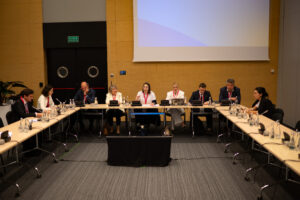
The funds directed toward the recovery of Ukrainian business must simultaneously perform a second function — preparing companies to work in the EU single market, participants said during a discussion held as part of the Ukraine Recovery Conference in Gdańsk.
The key issue of the panel was whether current instruments for supporting Ukrainian business sufficiently combine short-term recovery with long-term preparation for European integration. Participants discussed how to ensure that every euro of recovery not only helps companies survive the consequences of the war, but also brings them closer to the standards, rules and practices of the EU single market.
The discussion focused on the results of regional business dialogues conducted by the Office of the Deputy Prime Minister and the Ukraine2EU program. Over six months, more than 600 companies from six sectors of the economy joined the dialogues. One of the main conclusions was that the companies best prepared for the EU market often achieved this not thanks to separate recovery programs, but due to the requirements of European buyers.

“For business, European integration is not an abstract political process, but a very practical set of requirements: European standards, certification, proper corporate governance, transparent financial reporting, compliance with regulatory requirements and the ability to be a reliable partner for European buyers and investors. Our regional dialogues with business showed that the biggest gap today lies not in attitudes toward European integration — Ukrainian business predominantly supports this course — but in insufficient understanding of specific requirements, future changes and practical tools that will help prepare for integration into the EU single market. That is why our task is to make this process as understandable, practical and accessible as possible for Ukrainian entrepreneurs,” said Viktoriia Lobun, adviser to the Deputy Prime Minister for European and Euro-Atlantic Integration of Ukraine.
According to Ukraine2EU program manager Mante Makauskaite, regional dialogues are only one element of broader work to prepare the Ukrainian economy for EU membership.
“Preparing business for EU accession cannot be reduced only to informing companies about the rules. Companies need practical tools: consultations, sectoral road maps, support in implementing standards, access to partnerships and an understanding of how the single market works. It is precisely this comprehensive preparation that allows the economy not only to adapt to EU requirements, but also to use accession as an opportunity for growth,” Makauskaite said.
Participants in the discussion emphasized that for some Ukrainian enterprises, it was the buyer from Germany, Poland or another EU country who became the main incentive for introducing standards, improving the quality of reporting, auditing, internal procedures and compliance. At the same time, this creates a risk that companies without direct access to buyers in the EU remain outside the process of practical preparation for the European market.
Gabriel Blanc, head of the European Commission’s Ukraine Investment Framework, noted that existing instruments for supporting Ukraine already take into account the connection between recovery and European integration, but their effect must be even more targeted for business.

“The Ukraine Facility, Ukraine Investment Framework and instruments of international financial institutions already create a foundation for recovery to be linked to Ukraine’s future EU membership. But our task is to make this link as practical as possible for companies. Support must help not only restore assets, but also improve the managerial, financial and regulatory readiness of business to operate in the single market,” Blanc stressed.
The issue of access to financing was discussed separately. For banks and financial institutions, what matters is not only the political context of Ukraine’s future accession to the EU, but also the existence of a bankable, understandable and transparent project. High-quality accounting, clean financial data, reliable audit and corporate governance were considered elements that simultaneously make a company more attractive for investment and closer to the requirements of the EU single market.
“A bank does not finance the calendar of a country’s accession to the EU, but a specific project that can be assessed, structured and supported. Transparent financial data, high-quality reporting, a clear business model, audit and the company’s ability to meet its obligations are important to us. But these very things are also part of the homework that business must do for integration into the single market,” said Karol Tofil, director for international partnerships at the Polish state development bank.
According to him, preparation for the single market and preparation for attracting financing are often one and the same process.
“When a company brings order to its reporting, management, data and compliance, it simultaneously becomes more understandable to the bank and stronger as a potential participant in European supply chains. These are not two separate tracks, but one logic of increasing trust in business,” Tofil added.
Participants in the discussion noted that the most vulnerable group remains regional small and medium-sized enterprises, medium-scale producers and companies focused mainly on the domestic market. It is they who may feel the future approximation to EU rules most strongly, but at the same time they have the least access to cheaper financing, advisory support, buyers from the EU and programs for preparing for standards.
Kateryna Havrys, director for strategic development of international markets, regulatory policy and government relations at Epicentr K LLC, noted that for large business, the issues of recovery, investment and preparation for the EU market are already connected at a practical level.
“For a company that works in retail, the agricultural sector, manufacturing and energy, European standards are not theory, but daily operational work. Recovery requires capital, but capital itself does not solve the problem if the company does not have access to equipment, technologies, specialists, certification and long-term planning. Business needs instruments that simultaneously help rebuild and become competitive in the EU,” Havrys said.
According to her, from the point of view of companies, support must be more comprehensive.
“Business lacks not only access to money. Often it lacks the right type of financing, guarantees, advisory support, assistance with project preparation and an understanding of exactly how to turn an investment into compliance with EU standards. This is what needs to be changed in support instruments,” the representative of Epicentr K emphasized.
Another challenge named was that some Ukrainian owners are already investing in production directly in EU countries, where financing is cheaper and the rules of the single market are already in force. This process is a form of integration of Ukrainian capital into the European space, but at the same time it raises the question of how to reduce the risk gap between investments in Ukraine and in EU countries.
In this context, participants discussed the role of guarantees, risk-sharing mechanisms, blended financing and advisory support. The point was that a Ukrainian project must become no less bankable and understandable for financial institutions than a similar project in Poland or Lithuania.
Lesia Kuzmenko, associate director and deputy head of the EBRD in Ukraine, stressed that business support must begin even before the moment when a project becomes fully bankable.
“The most difficult task is to help a company go from a potentially interesting idea to a project that can be financed. This requires not only loans, but also guarantees, risk sharing, advisory support, work on corporate governance, financial reporting, standards and business resilience. In many cases, precisely such preparation simultaneously makes a company attractive for investment and closer to the EU market,” Kuzmenko said.
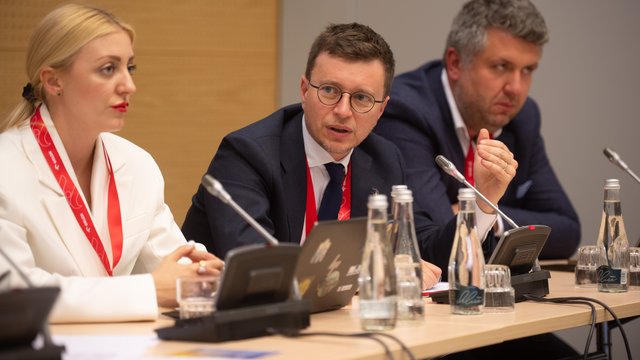
A separate part of the discussion was devoted to the EBRD as one of the largest investors in Ukraine’s real economy. According to data presented during the panel, as of June 1, 2026, the total amount of EBRD financing for Ukraine stood at EUR 23.74 billion in 696 projects. It was also noted that for the second year in a row, more than 90% of EBRD projects and 57% of its investments were in the private sector.
Participants of the panel also considered Ukraine’s integration into the EU not only as a matter of assistance to Ukraine, but also as an element of strengthening European competitiveness. Ukrainian companies that comply with EU standards can become part of production chains, agricultural and industrial potential, biomass, logistics corridors and the skilled labor market needed for an enlarged single market.
The Polish direction of cooperation was considered as one example of practical integration. During the discussion, it was noted that more than 3,600 companies with Polish capital operate in Ukraine, while almost 27,000 companies with Ukrainian capital operate in Poland. They constitute the largest group of foreign companies in Poland — almost 28% of all foreign enterprises.
Maciej Legutko, director of the international cooperation department at the Employers of Poland association, noted that Ukrainian-Polish production ties already have a significant scale, but moving to a new level requires removing barriers in standards, financing and risk perception.
“Polish business sees Ukraine not only as a market, but also as a partner for joint value-added chains. But for a Ukrainian supplier to enter a Polish or broader European production chain as an equal partner, it must confirm standards, stability, quality of management and the ability to fulfill contractual obligations. Poland’s experience before joining the EU shows that precisely this preparation opens business access to scaling,” Legutko said.
At the same time, standards, financing, the risk profile of Ukrainian projects and the ability of companies to confirm their compliance with customer requirements remain barriers to the full entry of Ukrainian suppliers into Polish and broader European production chains.
Darius Skusevičius, ambassador-at-large for the coordination of Ukraine’s recovery and reconstruction at the Ministry of Foreign Affairs of Lithuania, stressed that support for Ukrainian business is an investment in Europe’s future economic architecture.
“For Lithuania, the logic of early engagement is very simple: Ukraine is already part of European economic security, even if the membership process is still ongoing. By investing in preparing Ukrainian companies for EU standards, we are investing not in charity, but in the future competitiveness, resilience and strategic autonomy of Europe,” Skusevičius said.
As part of the discussion, Lithuania’s bilateral business partnership program was announced, which is intended to become an example of a practical approach to preparing Ukrainian companies. Its logic lies in partnership with a company from the EU, which finances not only a specific operation, but also the preparation of business for the standards and requirements of the single market.
“Partnership with a company from the EU should help Ukrainian business not just sell a product, but also learn to work according to the rules of the market it is entering. This is a model in which the standard is embedded from the very beginning, and preparation becomes part of the investment,” Skusevičius added.
Participants in the discussion concluded that the recovery of Ukrainian business must be linked to investment readiness, access to financing, EU standards and inclusion in European value-added chains. Recovery without preparation for the single market may help companies survive the crisis, but does not guarantee their competitiveness after Ukraine joins the EU.
Ukraine Recovery Conference is an international conference on Ukraine’s recovery that brings together governments, international financial institutions, business, local self-government bodies and civil society to mobilize support for reconstruction, investment and Ukraine’s economic resilience. URC 2026 took place on June 25–26 in Gdańsk under the joint chairmanship of Poland and Ukraine. The forum focused on supporting Ukraine’s reconstruction, attracting investment for Ukrainian business, as well as on the sectors most affected by Russian aggression, in particular energy, critical infrastructure and logistics.
BLANC, EU, HAVRYS, MAKAUSKAITE, SKUSEVIČIUS, UKRAINE, UKRAINE RECOVERY CONFERENCE, urc, КУЗЬМЕНКО, ЛЕГУТКО, ЛОБУНЬ, ТОФІЛЬ
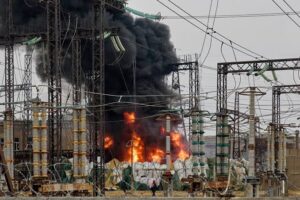
The European Bank for Reconstruction and Development (EBRD) has approved a EUR15 million senior loan for Kharkiv to restore its centralized heating system, backed by a EUR17 million grant from the European Union, the bank announced on its website.
“The loan is part of a broader financing package that also includes a EUR17 million investment grant from the European Union. Given the risks posed by the war, the loan will also receive a partial guarantee from the EU based on first-loss coverage,” the statement said, noting that the project is awaiting final approval.
The loan and EU grant funds will finance the purchase of up to 22 small and medium-sized modular natural gas-fired boiler plants, along with cogeneration units, as well as five small cogeneration units in existing boiler plants.
The project’s implementation will restore centralized heat supply services, which were interrupted in February 2026 following critical damage to Kharkiv Combined Heat and Power Plant No. 5. The total annual reduction in greenhouse gas emissions from the project is estimated at 19,091 metric tons of CO2-eq.
CHP-5, EBRD, EU, heat supply, KHARKIV
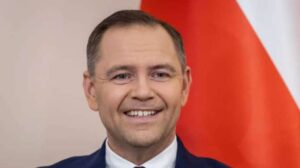
Polish President Karol Nawrocki stated that Ukraine’s accession to the European Union would pose a threat to Polish agriculture.
“I acknowledge that Ukraine’s accession to the EU poses a threat to Polish agriculture. As President of Poland, and while understanding Ukraine’s aspirations, I will always advocate for fair treatment of Polish farmers and Polish agricultural products, particularly in the context of the ‘Green Deal’ and EU decisions,”
Navrotsky said, according to a press release from the Office of the President.
He also added that Poland has “land that is far too beautiful” to “surrender Polish agriculture to either ideology or someone else.”



