

On June 12, the European Bank for Reconstruction and Development (EBRD) plans to approve a loan of up to EUR 15 million for Kharkiv to restore heat supply following critical damage in February 2026 to the city’s largest combined heat and power plant, CHPP-5.
According to the bank’s materials, the financing is planned to be used to purchase up to 22 small and medium-sized modular gas-fired boiler houses with cogeneration units, as well as five small cogeneration units for existing boiler houses.
The loan is part of a broader EUR32 million package, which also includes an investment grant from the European Union (EU) of up to EUR17 million.
Given the war risks, the EBRD loan is also expected to receive a partial EU guarantee to cover first-loss risk.
According to the EBRD’s estimates, the project will reduce greenhouse gas emissions by 19,100 metric tons of CO2 equivalent per year.
It is noted that the project is expected to restore access to basic heat supply services for a broad and vulnerable group of consumers, including 99,300 residents—more than 16,500 of whom are internally displaced persons (IDPs)—as well as 23 educational institutions and seven medical facilities.
According to the EBRD, as of early 2026, 212,000 IDPs were officially registered in Kharkiv.
The project is being implemented under the Resilience and Livelihoods Facility (RLF) program.
EBRD, EU, heat supply, KHARKIV, TPP-5
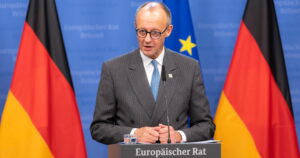
Peace in Russia’s war against Ukraine can only be achieved through negotiations involving Ukraine, Russia, Europe, and the United States, according to a government statement delivered by German Chancellor Friedrich Merz in the Bundestag on Thursday.
“Our goal for Ukraine remains a just and long-term peace that also takes our security interests into account. For this reason, we support Ukraine. That is the truth. We are doing this today and will continue to do so tomorrow, for as long as necessary,” Deutsche Welle quotes Merz as saying.
Merz stated that support for Ukraine includes a 90 billion euro loan approved by the EU and increased sanctions pressure on Russia; the German government supports efforts aimed at ending the war through negotiations.
“To counter Russia’s open willingness to escalate, we are strengthening NATO’s eastern flank. At the same time, we support efforts aimed at ending this aggressive war by Russia through negotiations. Lasting peace will only be achieved through negotiations involving Ukraine, Russia, the U.S., and Europe. There will be no other option,” the German chancellor noted.
“By waging a defensive war against Russia, Ukraine is also defending our freedom, as well as freedom and security throughout Europe,” Merz added. “After all, Ukraine is part of Europe. In the long term, it will also become part of the European Union,” he emphasized.
Assessing Ukraine’s path toward European integration, the chancellor noted that the country has made significant progress on the path of reforms.
“That is precisely why, a few days ago, I proposed granting Ukraine associate membership in the EU. This would mean Ukraine’s regular participation in EU Council meetings and meetings of the relevant ministerial councils. A Ukrainian commissioner, for now without a portfolio or voting rights, would become Kyiv’s representative in Brussels,” Merz once again explained the essence of his proposal.
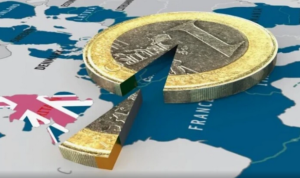
The European Union is tightening the rules for screening foreign direct investments. The EU Council has approved an updated regulation that will strengthen oversight of deals in strategic sectors—energy, transportation, artificial intelligence, digital infrastructure, critical raw materials, and dual-use goods.
The new rules will replace the mechanism in place since 2020. The main change is that all EU countries must have their own investment screening systems, and the approach to such deals will become more uniform across the entire union.
This is particularly important for Ukraine amid EU accession negotiations and future post-war reconstruction. The country needs significant foreign capital for energy, infrastructure, industry, logistics, defense technologies, IT, and raw material extraction. It is precisely these sectors that will now be under closer scrutiny from Brussels.
In practice, this means that Ukraine will have to gradually align its regulations with European standards for investor screening. This may apply to major deals involving capital from third countries, especially when it comes to strategic assets, critical infrastructure, or dual-use technologies.
For Ukrainian businesses, the new rules are also important when entering the EU market. The acquisition of assets, the creation of joint ventures, or investments in sensitive sectors in EU countries may be subject to more detailed scrutiny.
On the other hand, this could be an advantage for Ukraine. If Kyiv establishes a transparent system for monitoring foreign investments, it will boost confidence from the EU and major international investors.
For Ukraine, the main takeaway is simple: in the country’s recovery, it will be not only the volume of foreign capital that matters, but also its origin, transparency, and compliance with EU economic security standards.
The European Bank for Reconstruction and Development (EBRD) and the European Union (EU) are expanding their support program for micro, small, and medium-sized enterprises (MSMEs) and larger companies in Ukraine, which will enable the mobilization of EUR2 billion in new financing through EBRD partner banks thanks to EUR315 million in additional EU support, the financial institution announced on its website.
The additional EU support is being implemented through the Ukraine Investment Framework (UIF) program and includes EUR200 million in guarantees, EUR105 million in grants, and EUR10 million in technical assistance.
As noted in the press release, the new package is expected to provide loans to at least 3,000 MSMEs and preserve approximately 180,000 jobs.
Funds will be provided through the EBRD’s partner financial institutions in Ukraine. According to the bank’s assessment, the expansion of the program should support businesses’ access to financing amid the war, particularly against the backdrop of rising borrowing costs, disrupted logistics, and companies’ need to replace or modernize damaged equipment.
Ukrainian companies will be able to receive investment incentives in the form of EU grants to cover 10% to 30% of the cost of critical capital investments, primarily in high-efficiency and “green” technologies.
At least 50% of these grant incentives will be directed toward priority categories of MSMEs: enterprises with assets damaged or destroyed as a result of the war, businesses in frontline zones, veteran-owned companies, enterprises supporting the reintegration of internally displaced persons and people with disabilities, micro-companies, startups, small farms, as well as businesses led by women and young people.
The program also provides for support to restore activity in Ukraine’s insurance market, specifically the development of solutions for insuring military risks. As part of a pilot project, insurance subsidies are planned to be provided to MSMEs.
Part of the expanded support will be implemented through the Enterprise Security Enhancement (ESE) mechanism, which the EBRD is rolling out on a pilot basis in collaboration with partner financial institutions in Ukraine. It allows banks to reduce the debt burden for borrowers whose assets have been damaged by the war.
To implement this mechanism, it is planned to use EUR 200 million in first-loss guarantees provided by the EU as part of the new phase of the program. Such coverage of credit risk associated with the loss of assets due to the war is intended to support lending for capital investments and the continuity of economic activity.
This support builds on the first phase of the Financial Inclusion Recovery Program, which confirmed significant demand from Ukrainian businesses for financing through partner banks.
As reported, in May the EBRD launched a pilot ESE donor mechanism in Ukraine to partially write off business debt on investment loans in the event of damage to financed assets resulting from hostilities: with PrivatBank—in the amount of EUR 6.8 million, and with Raiffeisen Bank—EUR 1.2 million.
In 2025, the EBRD allocated a record EUR2.9 billion in financing to Ukraine, including EUR1.2 billion through partner financial institutions, as well as EUR504 million under portfolio risk-sharing programs, which facilitated new lending of up to EUR1.6 billion.
The European Bank for Reconstruction and Development (EBRD) and the European Union (EU) are launching the “Ukrainian SME Recovery” program, which is expected to provide approximately EUR135 million in financing and advisory support for small and medium-sized enterprises, larger companies, and startups in Ukraine, the financial institution announced on its website.
EU support under the program is being implemented through the Ukraine Investment Framework (UIF) and amounts to EUR46 million, including EUR41 million in guarantees and approximately EUR5 million in technical assistance.
According to the announcement, the program provides for financing at least 15 investment projects by Ukrainian companies, as well as advisory support for up to 34 startups.
The first component of the program will be implemented through the EBRD’s Risk Sharing Framework (RSF) in collaboration with partner banks. EU guarantees will be used to cover the first-loss risks of the EBRD and partner banks on a parity basis.
According to the bank’s assessment, this will expand Ukrainian companies’ access to long-term financing, particularly for the restoration and expansion of production assets and capacity.
The second component involves expanding the EBRD’s Star Venture program in Ukraine, aimed at supporting high-potential startups and developing an innovative ecosystem.
Under this initiative, selected startups, accelerators, and venture capital firms will receive advisory support. The funding is intended to help early-stage companies cover operational and market development costs and enhance their readiness to attract commercial investment.
The EBRD is the largest institutional investor in Ukraine. Since the start of Russia’s full-scale invasion in February 2022, the bank has allocated nearly EUR10 billion to Ukraine.

Ukrainian men of conscription age who are already under temporary protection in European Union countries should not lose their status under the current scheme. Any restrictions currently under discussion within the EU are likely to apply primarily to new applicants, should the temporary protection scheme be extended or amended after March 2027.
The discussion began following reports in the European media that some EU countries are considering restricting access to extended temporary protection for Ukrainian men of conscription or mobilisation age. This does not refer to the immediate withdrawal of status from those already in the EU, but to the possible parameters of the future regime once the current period of temporary protection expires.
The current temporary protection for Ukrainians in the EU has been extended until 4 March 2027. This mechanism was first activated in March 2022 and allows Ukrainians to live, work, and access education, healthcare and social support in EU countries without going through the standard asylum procedure.
The European Commission has previously emphasised that the current rules on temporary protection apply to all Ukrainians eligible for this status, with no specific exception for men of conscription age. Any potential changes must be discussed by EU member states and will require a separate political and legal decision.
According to Eurostat, as of the end of March 2026, 4.33 million people from Ukraine were under temporary protection in EU countries.
Germany remained the largest host country – around 1.275 million people, or 29.4% of all recipients of temporary protection in the EU. Poland was in second place – 961,400 people, or 22.2%, and the Czech Republic in third – 379,800, or 8.8%.
The composition of Ukrainians under temporary protection remains predominantly women and children. According to Eurostat, adult women accounted for 43.3% of all beneficiaries of temporary protection, minors for 30.1%, and adult men for 26.6%.
In absolute terms, this means that approximately 1.87 million adult women, around 1.30 million children and approximately 1.15 million adult men were under temporary protection in the EU.
A rough estimate suggests there are between 0.9 and 1.1 million Ukrainian men of working age and potentially conscriptionable age under temporary protection in the EU. This is an indicative estimate, not official statistics on those liable for military service.
The discussion of possible restrictions is linked to two parallel processes. On the one hand, the EU is seeking a long-term model for the millions of Ukrainians who have been under temporary protection for over four years. On the other hand, Ukraine has an acute need for human resources for defence and economic recovery.
At the same time, any changes within the EU will be legally sensitive. Restricting access to protection on the basis of gender, age or conscription status could spark debates about discrimination, human rights, the national powers of states and the alignment of EU policy with Ukraine.
Thus, the current status of Ukrainians in the EU will remain in place until at least March 2027. The question of whether there will be new restrictions for men of conscription age after that date is still under discussion and has not yet been decided.



