
Ukrainian pharmaceutical manufacturers expect the government to facilitate the launch of tools for 2D verification of medicines in Ukraine.
As Petro Bagriy, president of the Association of Ukrainian Drug Manufacturers (AULU), told the “Interfax-Ukraine” news agency, this specifically involves facilitating pharmaceutical manufacturers’ access to software that will allow them to verify pharmaceutical products using a 2D code compatible with European systems, as well as the introduction of certain tax incentives for the purchase of the necessary equipment.
Bagriy noted that these issues were discussed during the most recent working meeting of members of the newly established “National Organization for the Verification of Medicines” (NOVLM).
“There is a provision in the new law on medicines stipulating that 2D coding of medicines must be operational in Ukraine by 2028. Such verification is one of the tools for combating counterfeit medicines. Ukraine is integrating into the EU, where this is a mandatory requirement, as only medicines verified by a 2D code are permitted for sale within the EU. Moreover, when exporting their medicines, Ukrainian pharmaceutical manufacturers label their products with 2D codes. But this is expensive; it requires significant investment in equipment and the renovation of packaging facilities,” he said.
The president of the Association of Pharmaceutical Manufacturers of Ukraine (AVLU) believes that not only pharmaceutical manufacturers but also distributors, pharmacies, and healthcare facilities that purchase medicines should participate in the launch of the system.
“We want to build a completely transparent system that will fully satisfy all participants, discriminate against no one, and provide equal rights and opportunities. In addition, it is important for the system to be fully integrated into the EU. We are discussing the possibility of engaging a software developer who will support the 2D verification—specifically, the one who developed it for EU countries—so that our product is fully integrated into all EU markets,” he emphasized.
Bagriy noted that, as a result, the QR codes used in Ukraine will be accepted in Europe, which will help promote Ukrainian medicines in European markets and also simplify the circulation of imported medicines in Ukraine.
“For example, ‘Farmaka,’ which will apply its code to its products, will find it easier to sell them in European pharmacies, and ‘Sanofi’ products will be easier to verify in Ukraine,” explained the president of the AULU.
He noted that “there is an initiative to exempt equipment imported for the implementation of the 2D-coding program for medicines from import duties and VAT.”
In addition, Bagriy reported that the Ministry of Health “is helping to negotiate a preferential price for the software in order to facilitate the financing of this project.”
“We have made a request, and the Minister of Health has promised us support so that we can gain access to software that has already been developed in the EU and be able to use it at a discounted price,” he said.
The president of the Association of Pharmaceutical Companies of Ukraine noted that the pilot system is scheduled to launch on January 1, 2027, and the system is expected to be fully operational as of January 1, 2028.
As previously reported, five pharmaceutical industry associations have registered the “National Organization for the Verification of Medicines” (NOVLM) to prevent and combat the circulation of counterfeit medicines in Ukraine in cooperation with European counterparts and the European Organization for the Verification of Medicines.
According to the “Serbian Economist,” Serbia’s lack of progress in its EU accession negotiations could create additional challenges for Ukraine and Moldova, as some EU countries are insisting on maintaining a geographical balance between candidates from Eastern Europe and the Western Balkans.
Euronews reports this, citing EU diplomats.
Ukraine has opened two of the six negotiation clusters in recent weeks, but further acceleration of the process may face demands to simultaneously advance Serbia’s application.
“Progress in one direction creates pressure to move forward in the other as well,” one European diplomat told Euronews.
In early July, the European Commission once again recommended opening Cluster 3—dedicated to competitiveness and inclusive growth—for Serbia. Negotiations regarding Serbia have effectively remained stalled since December 2021.
However, eight EU member states opposed opening the chapter: the Netherlands, Sweden, Finland, Belgium, Estonia, Lithuania, Bulgaria, and Croatia. Denmark, Luxembourg, and Latvia are also not yet ready to support this decision. The consent of all 27 EU member states is required to open a negotiation chapter.
Opponents of Serbia’s advancement point to Belgrade’s insufficient progress in the areas of the rule of law, judicial independence, and democratic standards. Another reason is Serbia’s refusal to join the EU’s sanctions against Russia.
The European Commission, on the other hand, believes that Belgrade has implemented some of the recommendations, repealed controversial changes to judicial legislation, improved cooperation with the EU on foreign policy, and strengthened ties with Ukraine. At the same time, Brussels acknowledges that Serbia needs to continue reforming its judicial and prosecutorial systems.
France, Spain, and a group of countries calling themselves the “Friends of the Western Balkans” advocate for preserving Serbia’s membership prospects. They fear that Ukraine’s rapid progress against the backdrop of Belgrade’s prolonged stagnation will be perceived as the application of double standards.
Euronews emphasizes that the negotiation processes for Ukraine and Serbia have not yet been formally merged. However, as Kyiv and Chisinau push to open the remaining clusters by the end of the year, demands for equal treatment of the candidate countries may intensify.
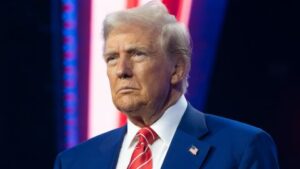
In response to the recent fines imposed by the European Union on the American tech companies Apple, Google, and Amazon, U.S. President Donald Trump called the move “discrimination” and promised additional investigations and tariffs.
“The European Union is at it again and, as always, has targeted major American companies directly! After fining Apple $15 billion, Meta $3 billion, Amazon $2.5 billion, and many others for no reason at all, we have just been informed that Google—a truly cutting-edge and amazing company—has been fined another $1 billion without any explanation,” he wrote on the social media platform Truth Social.
Trump emphasized that the total amount of fines imposed on Google exceeded $18 billion.
“This illegal and highly discriminatory practice began at such high levels during the first year of Joe Biden’s administration, but it will not continue under a Trump administration,” he stressed.
Trump noted that the U.S. “will immediately launch a Section 301 investigation into the practice of ‘robbing’ American companies and, as a result, American taxpayers.”
The U.S. president promised a “very high price” for the European Union for “this illegal and highly unethical behavior.”
“The fines will be completely rescinded, and we expect a substantial tariff to be imposed on them as soon as possible,” Trump promised.
As reported, the European Commission (EC) announced on Thursday its decision to impose a fine of 890 million euros on Google for violating the Digital Markets Act (DMA).
Source: https://truthsocial.com/@realDonaldTrump/posts/116976043318889040
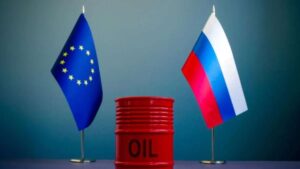
The European Union has established a legal framework allowing member states to sell Russian oil that was previously seized and confiscated in the course of cracking down on sanctions evasion.
The relevant provision is included in EU Council Regulation No. 2026/1848 of July 23, 2026, which formalized the 21st package of sanctions against Russia. The document states the need to enable national competent authorities to safely dispose of shipments of Russian oil that they seize and confiscate. Disposing of the cargo may include selling it to third parties.
However, the new provision does not grant EU authorities the automatic right to stop any tanker simply because it is transporting oil of Russian origin. First, the state must have legal grounds to detain the vessel and confiscate the cargo—for example, a violation of the sanctions regime, the absence of a valid flag, the provision of false documents, or other violations of European, national, or international law.
The new regulation primarily specifies what authorities may do with the cargo after its lawful confiscation. Once the confiscation procedure is complete, the former owner does not automatically receive the right to the proceeds from the sale of the cargo. However, the regulation does not establish a uniform procedure for distributing the proceeds across all EU countries, nor does it provide for their automatic transfer to Ukraine. Such decisions will depend on national legislation and the specific case.
According to Euractiv, the measure is primarily aimed at cargo from vessels used to circumvent EU oil sanctions. The option to sell the cargo is intended to address a practical problem: confiscated oil must be unloaded, stored, and safely sold, which entails significant costs and environmental risks.
The mechanism is part of the 21st EU sanctions package, adopted on July 23. The package also increases pressure on the Russian oil sector, traders, and the shadow fleet, and suspends the automatic review of the price cap on Russian oil until July 15, 2027.
In practice, the new rule may make it easier for EU member states to take action against vessels suspected of circumventing sanctions. However, each detention and confiscation must have a separate legal basis, and the owners of the vessels and cargo will be able to challenge such decisions in national and international courts.
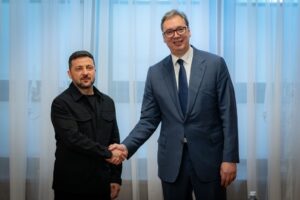
According to Serbian Economist, Serbian President Aleksandar Vucic reaffirmed that the country’s accession to the European Union remains Belgrade’s strategic goal and expressed hope to host Ukrainian President Volodymyr Zelenskyy on a bilateral visit.
Vucic made these remarks in an interview with Rainer Novak, editor-in-chief of the Austrian newspaper Die Presse, published on July 23.
“The European path is our strategic goal. There are no other paths for us. This means that we must cooperate closely with all candidate countries,” said the Serbian president.
According to him, it is in the European Union that he sees his country’s future.
Speaking about relations with Ukraine, Vučić stated that he sees no reason to abandon cooperation with Kyiv. He reiterated that Serbia supports Ukraine’s territorial integrity and provides it with financial, medical, energy, and humanitarian aid.
“I hope we will be able to welcome him to Serbia on a bilateral basis,” said Vučić, referring to Zelenskyy.
Vucic also announced that Serbia is ready to participate in the reconstruction of one of Ukraine’s smaller cities. In addition, the parties are discussing the development of a road and rail route from Trieste through Croatia, Serbia, Romania, and Moldova to Ukraine.
The Serbian president had previously reaffirmed his support for Ukraine’s sovereignty and territorial integrity, but did not sign the final declaration, which condemned Russian aggression and called for increased sanctions pressure on Moscow.
Commenting on criticism of cooperation with Kyiv, Vučić stated that Ukraine had not taken any action against Serbia and had not recognized Kosovo’s independence.
“We cannot oppose someone just because someone else opposes them. I see no reason why we should not cooperate with Ukraine,” he said.
At the same time, Vučić emphasized the need to take into account Serbia’s relations with Asian countries and Russia and reaffirmed the country’s military neutrality.
Serbia was granted EU candidate status in March 2012, and membership negotiations began in January 2014. In recent years, the opening of new negotiation chapters has effectively stalled, despite Belgrade’s statements that it is ready to meet the technical criteria for membership.
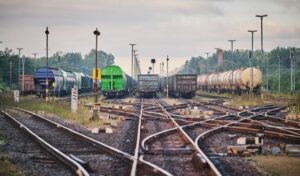
According to “Serbian Economist”, the Hungarian government plans to allocate 3.55 trillion forints, or about 9.8 billion euros, by 2035 for the modernization of the national railway network.
Hungarian Prime Minister Péter Magyar and Minister of Transport and Investment Dávid Vitézi presented the program on July 22 at the Rakospalota-Újpest station in Budapest. Authorities are calling it one of the largest railway projects in the country’s history.
The program is designed to be implemented in several phases. Its main objectives will be to improve the reliability of transportation, reduce travel times, reconstruct tracks and stations, modernize the rolling stock, and develop international rail routes.
The government intends to ensure competitive rail service to all administrative centers in Hungary, modernize regional lines, and expand commuter service around Budapest and other major cities. Specific areas of focus will include the development of freight transport, the establishment of a rail link to Budapest Airport, and the integration of national and urban transportation systems.
It is planned to allocate 1.1 trillion forints from EU Cohesion Funds and 700 billion forints from the European Recovery and Resilience Facility (RRF) to implement the program. An additional 400 billion forints is planned to be raised through loans from the European Investment Bank, with a similar amount to be secured through concession projects. Approximately 950 billion forints will be allocated to projects under the next EU budget cycle for 2028–2034.
The government plans to purchase at least 35 new InterCity trains and 42 commuter electric trains, as well as begin renovating the country’s ten busiest train stations. The average age of MÁV trains and HÉV commuter trains is currently about 43 years, and 42% of the rail network is subject to significant speed restrictions.
On major routes, the government aims to increase the average speed to 100 km/h. Certain sections are planned to be upgraded to accommodate trains traveling at speeds of 160–200 km/h.



