
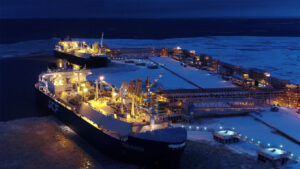
European Union countries imported a record amount of liquefied natural gas from Russia’s Yamal LNG project in the first half of 2026, despite the gradual implementation of a ban on Russian gas supplies, the Financial Times reported, citing data from the analytics firm Kpler and the environmental organization Urgewald.
According to the publication, European countries received approximately 9.9 million metric tons of LNG from “Yamal LNG” between January and June, which is about 18% more than during the same period in 2025. This marks the highest half-year figure since exports from the project began in 2017.
Reuters cites slightly different operational data: according to Kpler, shipments to the EU totaled 9.97 million metric tons and increased by 16%. The discrepancy between the figures may be due to updates in information regarding tanker movements and the actual unloading dates of the shipments. Overall, both sources confirm imports of approximately 10 million metric tons and the setting of a new record.
In total, 140 tanker shipments were dispatched from Yamal LNG in the first half of the year. Of these, 136—or more than 97%—arrived at EU ports. China received only four shipments during the same period. Thus, the European market effectively absorbed nearly all exports from Russia’s largest Arctic LNG project.
The estimated value of the shipments delivered to the EU is 5.96 billion euros, or about 6.82 billion dollars. The main destinations were terminals in France, Belgium, and Spain.
The increase in imports occurred as European companies prepared for the final cessation of Russian gas supplies. According to estimates by the EU Agency for the Cooperation of Energy Regulators (ACER), Russian LNG imports increased by 11% year-over-year in January–May 2026, while Russian pipeline gas supplies rose by 7%. Among the reasons cited by the agency is the early delivery of part of the contracted volumes before new restrictions took effect.
However, it is not yet accurate to say that the purchase of all Russian LNG is already banned in the EU. As of April 25, 2026, the ban applies to imports under short-term contracts concluded before June 17, 2025. Deliveries under previously concluded long-term contracts may continue until January 1, 2027. After that date, a complete ban on Russian LNG imports is set to take effect.
Therefore, a significant portion of Yamal LNG deliveries in the first half of the year could have been made under existing long-term contracts and did not formally violate European restrictions.
Data on the increase in the share of Russian gas in EU imports from 12% to 14% also requires clarification. According to the European Commission and the Council of the EU, Russian LNG and pipeline gas accounted for approximately 12% of European gas imports in 2025 overall. ACER estimated Russia’s share during the 2025–2026 winter season at approximately 14%. These figures relate to different periods and therefore cannot be directly interpreted as a definitive annual increase in market share of two percentage points.
The increase in supplies was also driven by the current restriction on the transshipment of Russian LNG at European ports for onward shipment to third countries. As a result, most of the gas arriving at EU terminals remains on the European market rather than being transshipped to other vessels for transport to Asia.
These record purchases highlight the tension between the EU’s policy of phasing out Russian energy sources and the need to ensure stable gas supplies amid a tight global market. At the same time, they highlight the Yamal LNG project’s dependence on European port, shipping, and financial infrastructure: with limited access to Asian routes, Russia has so far been unable to redirect a significant portion of its Arctic LNG to China.
The Yamal LNG project is located on the Yamal Peninsula in the Russian Arctic and is controlled by the Russian company Novatek. Novatek owns 50.1% of the project, with France’s TotalEnergies and China’s CNPC each holding 20%, and the Silk Road Fund holding 9.9%. The project’s production capacity is approximately 17.4 million metric tons of LNG per year.
The EU finalized its phased phase-out of Russian natural gas on January 26, 2026. A complete ban on Russian LNG is set to take effect on January 1, 2027, and on pipeline gas in the fall of 2027. In the event of a serious threat to energy supplies, the European Commission will be able to temporarily suspend certain restrictions for up to four weeks.
Original source Financial Times
EU countries have agreed to extend temporary protection for refugees from Ukraine for another year—until March 2028—but have imposed restrictions on granting it to new applicants who are subject to military service.
The decision was announced on Wednesday in Brussels, according to the EU Council’s press service.
“Today, EU countries agreed to extend the temporary protection status granted to refugees from Ukraine until March 4, 2028, fulfilling the EU’s commitment to support Ukraine and its people for as long as necessary. Extending protection for another year will provide clarity and predictability for all those fleeing the war,” the statement said.
At the same time, “recognizing both the need to protect displaced persons and Ukraine’s need to defend itself against Russia’s illegal war, EU countries agreed that temporary protection should be granted only to those who fulfill their military obligations in Ukraine.”
The press release notes that, “given Ukraine’s evolving defense needs, temporary protection will henceforth be granted only to those who are fulfilling their military obligations in Ukraine,” but this restriction will apply only to new applicants for temporary protection. “It will not apply to those who are already benefiting from temporary protection in the EU,” the press release explains.
The statement also clarifies that, in practice, to obtain temporary protection, individuals displaced from Ukraine will have to prove that they have fulfilled their military obligations. “ “For example, this can be done by presenting a passport with an exit stamp issued by the Ukrainian authorities, which confirms that they legally left Ukraine and, therefore, have fulfilled their military obligations. It can also be done by presenting a document, in paper or electronic format, confirming discharge from military service or the fulfillment of military obligations,” the statement notes.
Temporary protection has currently been extended until March 4, 2027, and since March 2022, more than 4 million displaced persons from Ukraine have been receiving protection in the EU.
Commenting on the decision, Jim O’Callaghan, Ireland’s Minister for Justice, Home Affairs, and Migration and current EU Presidency holder, said: “We remain unwavering in our support for Ukraine against Russia’s illegal war of aggression. Today, we decided to extend the protection status we provide to those fleeing the war for another year, until March 2028. This provides stability for those who have found safety in the EU. The message is clear: we continue to support Ukraine. And as part of our support, we also want to ensure that Ukraine can defend itself. That is why our temporary protection scheme takes into account Ukraine’s legitimate needs.”
The Council of the EU will formally adopt the decision to extend temporary protection in the coming weeks. The decision will be published in the Official Journal of the EU and will enter into force the following day.
The European Union is preparing a support mechanism for companies that would allow them to avoid relying solely on China for supplies of essential goods and would also mitigate the impact of Beijing’s measures in the event of a trade conflict, Bloomberg reported Saturday, citing sources.
“According to people familiar with the matter, this working tool will not come cheap and will require funding, while EU members are haggling over the long-term budget,” the agency reported.
However, the amount of funding needed, as well as the scale of China’s retaliatory measures in the event of a conflict, remain uncertain.
The mechanism being developed by the European Commission is intended to be part of the EU’s efforts to mitigate the effects of a significant trade deficit with China, which stands at 360 billion euros and affects all EU member states.
At the same time, the EU’s strategy for restructuring trade relations with China also calls for negotiations, diversification of supply chains, and more effective use of existing measures to support domestic producers. The European Commission also emphasized that none of the protective measures are directed exclusively against China.
The parties have set October 2026 as the deadline for reaching an agreement. In October, European Commissioner for Trade Maroš Šefčovič is scheduled to travel to China ahead of the EU summit in Brussels.
Bloomberg notes that Beijing controls the supply of mineral raw materials and microchips, which are critical to key sectors of European industry, including the defense and automotive sectors.
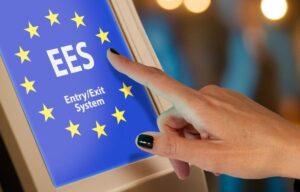
Nine European countries—Belgium, France, Germany, Greece, Italy, Malta, the Netherlands, Portugal, and Switzerland—have asked the European Commission to extend the temporary mechanism that eases the implementation of the new Entry/Exit System (EES) at the external borders of the Schengen Area.
The EES requires mandatory electronic registration of non-EU citizens when crossing the border, including facial recognition and fingerprinting. According to the countries that initiated the appeal, the first months of the system’s operation revealed serious problems at a number of airports and border crossing points: lines grew longer, processing times increased, and the burden on border services rose.
The current temporary mechanism allows for the waiver of biometric data collection in exceptional cases, while still maintaining electronic registration of travelers. Nine countries believe that abandoning this measure now could lead to new disruptions in border infrastructure operations.
For Ukrainian citizens, this issue has direct practical implications, as Ukrainians are also considered travelers from non-EU countries and are subject to the EES for short-term trips to the Schengen Area.
If the European Commission agrees to extend the temporary mechanism, this could:
reduce the risk of long lines at popular border crossings and major EU airports, especially during peak travel periods; reduce the likelihood of delays for Ukrainian tourists, drivers, business travelers, and seasonal workers when crossing the border;
give EU countries more time to fine-tune the system technically without suspending its operation.
However, Ukrainians should not expect the biometric registration requirement to be lifted. The EES remains a mandatory system, and in most cases, Ukrainian citizens entering the Schengen Area will be required to have their photo taken and provide fingerprints upon their first border crossing after the system’s launch.
Experts note that the extension of the simplified regime signifies a more flexible application of the rules at problematic border crossing points rather than a change in the requirements for travelers themselves.
The EES system is part of a broader reform of the EU’s external border controls and is intended to eventually replace traditional passport stamping with electronic recording of all entries and exits by third-country nationals.
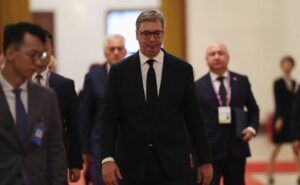
According to “Serbian Economist”, Serbia does not expect candidate countries to join the European Union anytime soon, but believes that the European path remains the best option for the region, Serbian President Aleksandar Vučić said at a conference of the speakers of the parliaments of EU candidate countries in Belgrade.
According to him, the EU is unlikely to be able to make quick decisions on enlargement in the coming years. However, Vucic emphasized that this does not mean Serbia and other candidate countries should halt their reforms.
The Belgrade Format is also important from an economic standpoint: Serbia is effectively promoting the idea that candidate countries should be partners rather than competitors. This is particularly relevant for the Western Balkans, Ukraine, Moldova, and Georgia, where European integration is increasingly viewed not only as a political project but also as a trade and logistics initiative.
Vucic placed special emphasis on Ukraine. He stated that Ukraine has demonstrated resilience and that Europe has much to gain from its potential. For Serbia, this also presents an opportunity to strengthen economic ties with Kyiv without waiting for formal EU membership.
Trade between Serbia and Ukraine in 2025 returned to roughly pre-war levels and, according to Serbian data, amounted to approximately $442 million. Serbian exports to Ukraine reached $202.9 million, while imports from Ukraine totaled $239.3 million. Electricity, mineral and chemical fertilizers, tires, and industrial goods play a significant role in the structure of Serbian exports. Ukraine supplies Serbia with iron ore, semi-finished rolled steel products, metal products, and agricultural goods, including frozen raspberries. In the first quarter of 2026, trade turnover had already reached $152.8 million, and Serbia recorded a trade surplus of $36.8 million. The parties have also resumed negotiations on a free trade agreement, which could become a key instrument for further growth in trade volumes.

Demand for short-term housing rentals in the EU through online platforms continued to grow in early 2026. From January through March, guests spent 144.3 million nights in short-term accommodations booked through Airbnb, Booking, or Expedia. This is 9.7% more than in the first quarter of 2025 and 16.6% higher than in the first quarter of 2024, Eurostat reported on July 2.
Malta showed the fastest growth—up 30.5% year-over-year. It was followed by Slovenia—up 24.7%, Slovakia—up 23.5%, and Cyprus—up 22.3%. Double-digit growth was also recorded in Finland, the Czech Republic, Ireland, Croatia, Greece, Germany, Italy, Sweden, Poland, Estonia, Latvia, and Lithuania.
Among the EU’s largest tourism markets, all seven of the most-visited countries also showed growth. Germany saw a 14.9% increase, Italy 14.7%, Poland 11.9%, France 8.1%, Spain 6.5%, Portugal 4.9%, and Austria 4%. This means that the market is growing not only in small countries with a low baseline but also in major tourism economies.
Eurostat clarifies that these figures specifically refer to guest nights in short-term accommodations booked through platforms, rather than hotels and campgrounds. For example, if a family of four stays in an apartment for three nights, this counts as 12 guest nights. The data is published as experimental statistics and is based on information that the platforms report directly to Eurostat.
Regional statistics are published with a delay. According to data for the fourth quarter of 2025, the most popular regions for short-term rentals through these platforms were Andalusia in Spain—9.9 million nights, the Canary Islands—8.2 million, and Île-de-France in France—7.2 million. Only regions from three countries—Spain, France, and Italy—made it into the top ten.
For investors, these statistics mean that focusing solely on overall market growth is no longer sufficient. It is necessary to take into account the specific country, city, seasonality, local restrictions on Airbnb and Booking, taxes, registration rules, and competition from hotels. In Europe, short-term rentals continue to grow, but are becoming an increasingly regulated and professional business.



