
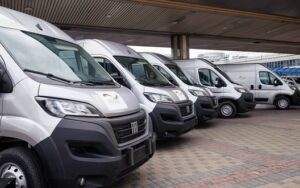
Germany has provided 5 pickup trucks and 5 cargo vans for track workers, communications specialists, and power engineers to help restore damaged infrastructure and resume train service as quickly as possible following Russian attacks on the railway, according to a statement by Ukraine’s Ministry of Recovery, Infrastructure, and Transport on its Telegram channel.
“After every strike, repair crews must be dispatched to the site as quickly as possible to restore infrastructure and train service. This requires people, equipment, and, of course, transportation.
We thank the railroad workers for their 24/7 efforts. And we thank Germany for its consistent support and practical assistance. It is important to us that this support continues and intensifies,” said Deputy Minister Volodymyr Shemaev.
The equipment was handed over by Boris Ruge, Ambassador Extraordinary and Plenipotentiary of the Federal Republic of Germany to Ukraine.
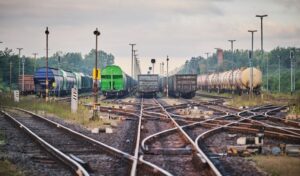
According to “Serbian Economist”, the Hungarian government plans to allocate 3.55 trillion forints, or about 9.8 billion euros, by 2035 for the modernization of the national railway network.
Hungarian Prime Minister Péter Magyar and Minister of Transport and Investment Dávid Vitézi presented the program on July 22 at the Rakospalota-Újpest station in Budapest. Authorities are calling it one of the largest railway projects in the country’s history.
The program is designed to be implemented in several phases. Its main objectives will be to improve the reliability of transportation, reduce travel times, reconstruct tracks and stations, modernize the rolling stock, and develop international rail routes.
The government intends to ensure competitive rail service to all administrative centers in Hungary, modernize regional lines, and expand commuter service around Budapest and other major cities. Specific areas of focus will include the development of freight transport, the establishment of a rail link to Budapest Airport, and the integration of national and urban transportation systems.
It is planned to allocate 1.1 trillion forints from EU Cohesion Funds and 700 billion forints from the European Recovery and Resilience Facility (RRF) to implement the program. An additional 400 billion forints is planned to be raised through loans from the European Investment Bank, with a similar amount to be secured through concession projects. Approximately 950 billion forints will be allocated to projects under the next EU budget cycle for 2028–2034.
The government plans to purchase at least 35 new InterCity trains and 42 commuter electric trains, as well as begin renovating the country’s ten busiest train stations. The average age of MÁV trains and HÉV commuter trains is currently about 43 years, and 42% of the rail network is subject to significant speed restrictions.
On major routes, the government aims to increase the average speed to 100 km/h. Certain sections are planned to be upgraded to accommodate trains traveling at speeds of 160–200 km/h.
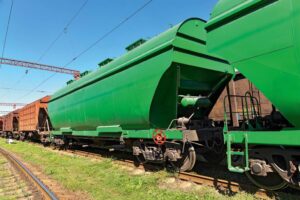
Ukraine’s export logistics entered 2026 in a new configuration, where Ukrzaliznytsia’s transition to a fixed tariff for grain car rental reduced cost volatility, according to the information and analytical agency UkrAgroConsult.
According to analysts, the main cargo flows are currently concentrated in the direction of the ports of Greater Odessa, where terminal utilization has stabilized at 50%. In early February, the number of grain cars heading for ports exceeded 9,000 units, which is associated with the active fulfillment of contracts and the need for working capital for farmers before spring field work.
“The dynamics of grain car traffic demonstrates continued pressure on infrastructure capacity. This situation indicates a resumption of activity by exporters, but at the same time leaves minimal margin for the logistics system,” experts noted.
The agency noted a shift in the competitive balance between modes of transport: railways retain a key role in mass shipments, while road transport is increasing its share due to faster turnover.
“This model of coexistence will become a long-term reality for Ukrainian exports,” UkrAgroConsult predicts.
EXPORTS, GRAIN, LOGISTICS, RAILWAYS, ROAD TRANSPORT, TARIFFS, УЗ
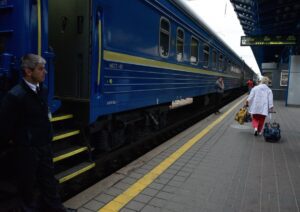
Ukrzaliznytsia plans to start restoring international passenger traffic in June, according to a message posted on the company’s website on Thursday.
According to it, in particular, preliminary agreements have already been reached on the resumption of railway communication with Austria and Hungary. In addition, negotiations are underway with PKP Intercity and the Polish railway to restore high-speed communication between the countries.
“Now in Ukraine and neighboring countries, there is a stabilization of the situation with the spread of coronavirus infection. This allows negotiations with the railway administrations of neighboring countries to restore international routes. Last week, we examined the readiness of infrastructure in the west of the country, bordering on European countries. There we started a number of projects. Therefore, I can say with confidence that Ukrzaliznytsia is ready to restore these transportations,” the press service quoted acting head of the company Ivan Yuryk as saying.
According to the company, Ukrzaliznytsia has already received approval for the running of Kyiv-Vienna direct cars since June. In addition, there are plans to restore trains running on the Chop – Zahony (Hungary) route. The message states that after the restoration of international passenger traffic, passengers will also be able to purchase tickets to Belarus and back online.
At the same time, Yuryk stressed that control over compliance with anti-epidemiological measures will be strengthened on international routes.
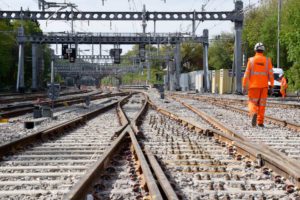
Investment projects in the framework of Trans-European Transport Network TEN-T investment plan include construction projects in the Eastern Partnership countries, including 4,800 km of roads and railways, six ports and 11 logistic centers in Ukraine, the press service of Deputy Prime Minister for European and Euro-Atlantic Integration Ivanna Klympush-Tsintsadze has reported.
Klympush-Tsintsadze at a meeting with Director-General of the European Commission on Mobility and Transport Henrik Hololei said that projects implementation in the framework of Trans-European Transport Network TEN-T investment plan is among government priorities, which includes Eastern Partnership countries. All projects stated in the plan require nearly EUR 13 billion of investment.
“All projects stated in the plan require nearly 13 billion euros of investment. It is planned to build 4,800 kilometers of roads and railways, 6 ports and 11 logistics centers for these funds,” the mission said.
Klympush-Tsintsadze also said that Ukraine is also counting on EU support, as well as on the timely signing of the Common Aviation Area Agreement, which will give impetus to the development of Ukrainian aviation industry, as it will increase the number of flights and passenger traffic.
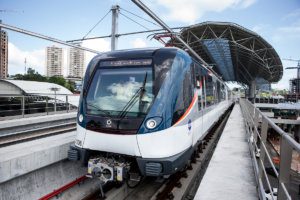
France’s Alstom, the producer of rolling stock and infrastructure solutions, is interested in cooperation with public joint-stock company Ukrzaliznytsia, Managing Director for Western and Central Asia at Alstom Bernard Peille said during the presentation of the first freight electric locomotive for Azerbaijan Railways in Astana (Kazakhstan), an Interfax-Ukraine correspondent has reported.
“We recently held talks with Ukrzaliznytsia. According to them, they will need about 210 locomotives of four different types in the next five years. Basically, as we know, they are freight locomotives. We are ready to do this, but everything depends on financing, as well as on what percentage of localization is required,” he told Interfax-Ukraine.
Peille also said that Alstom is actively seeking various options for financing supplies of traction to the Ukrainian railways.
Prima T8 AZ8A freight electric locomotive presented in Astana on Wednesday is made under a contract signed by the company and Azerbaijan Railways for supply of 50 locomotives, including Prima M4 AZ4A passenger locomotives.



